Um bravezoeyj@gmail.com

This author has not yet filled in any details.
So far bravezoeyj@gmail.com has created 75 blog entries.

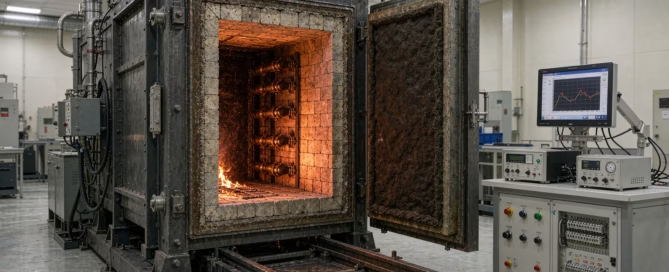
Was ist der Unterschied zwischen Entflammbarkeit und Brennbarkeit?? Eins ist eine Messung, Der Andere ist ein Urteil

Flammability and combustibility are not synonyms. Flammability is a graded property describing how a material ignites and burns under a defined ignition source, reported as a rate, a time, an index or a class. Combustibility is a binary verdict from a furnace at 750 degrees Celsius. This guide sets out what each word claims, which standard proves which, how the A1 and A2 limits are built from furnace and calorimeter results, why a non-combustible core can still carry a combustible facing, where fire retardant fits as a third and separate term, and how to write a specification that a supplier can actually be held to.

Von |2026-11-03T17:15:54+08:00November 3, 2026|Interpretation des Standards|0 Kommentare

Anforderungen an die Brandprüfung von Verbundbaustoffen: Warum das Panel niemals das Testexemplar ist

A composite building material is tested three separate ways and no single certificate covers all three. Its components are tested for non-combustibility and calorific value, the product is classified for reaction to fire as a non-homogeneous item, and the assembly it forms is tested for fire resistance or facade propagation. This guide sets out the component route under ISO 1182 und ISO 1716, the product route through EN 13823 und EN ISO 11925-2, the heat release and smoke data that composites need, the assembly tests in EN 1364-1 und EN 1365-1, and the large-scale tests in ISO 9705-1 and NFPA 285. It closes with a test matrix by product type, five failure modes unique to composites, and a checklist to settle before booking a laboratory.

Von |2026-11-03T17:15:54+08:00November 3, 2026|Interpretation des Standards|0 Kommentare

How to Measure Burning Rate in Flammability Testing: The Formula, the Timing Marks, and the Five Methods That Report It

Burning rate is the distance a flame front travels divided by the time it takes, expressed in millimetres per minute, and every method uses the same arithmetic: B = 60 × (D / T). What changes is the geometry, the ignition flame, the timing marks and the end point. This guide sets out the four settings that move the number before any material property is involved, walks through the 50 W horizontal bar method, Die 102 mm/min rule for vehicle interiors in 49 CFR 571.302, ASTM D635 for rigid plastics, ISO 9772 for foams and ISO 9773 for thin films, and explains why vertical cable tests report char extent rather than a rate. It closes with six checks for reading a burning rate report and the cases where a rate is the wrong specification entirely.

Von |2026-11-03T17:15:53+08:00November 3, 2026|Blog|0 Kommentare

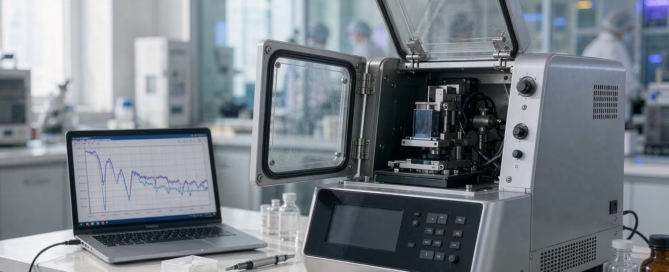
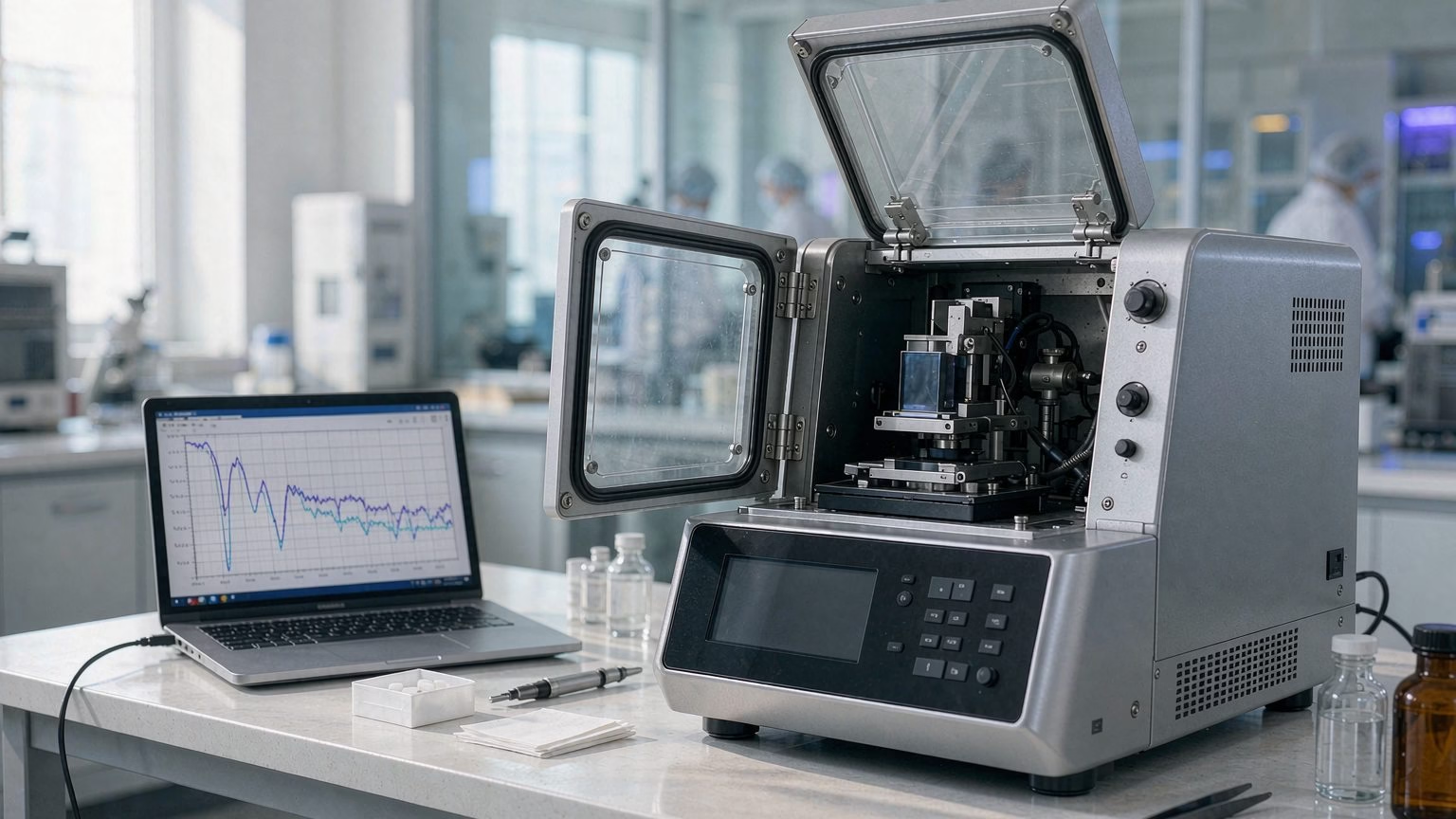
FTIR Spectrometer for Material Research Laboratories: What a Research Programme Needs That a QC Bench Does Not

A research laboratory needs an FTIR spectrometer to answer questions that were not defined when the instrument was bought, so the specification has to be written around capability rather than around a single application. This guide sets out the five capability axes, why resolution and signal-to-noise come from the same scan budget, what lies outside the standard 4000 Zu 400 cm⁻¹ window, which sampling modes a research programme actually needs, what NIST SRM 1921b certifies and why its uncertainty varies by more than an order of magnitude, how kinetics and hyphenation change the requirement, and the seven lines to insist on in a tender.

Von |2026-11-03T17:15:51+08:00November 3, 2026|Blog|0 Kommentare

How UV-Vis Spectroscopy Is Used in Pharmaceutical Testing: Assay, Dissolution, Content Uniformity and the Validation File

UV-Vis spectroscopy in pharmaceutical testing survives because it is fast, cheap per measurement and easy to defend — and it still owns dissolution and content uniformity where an HPLC queue would be a bottleneck. Four applications carry the work: assay of a single active, dissolution profiling in a flow cell, uniformity of dosage units, and identity or limit tests at a stated wavelength. This guide covers the measurement chain that has to be verified first, including wavelength accuracy against NIST SRM 2034 and the bandwidth dependence most laboratories miss, the validation evidence that Q2(R2) and Q14 now expect, the records required by 21 CFR 211, and the six mistakes that keep appearing in inspections.

Von |2026-11-02T09:51:58+08:00November 2, 2026|Blog|0 Kommentare

Feuerwiderstandsprüfung für Beton- und Zementprodukte: Abplatzungen, Deckungstiefe und die 2023 Eurocode

Fire resistance testing for concrete is less about combustibility than about whether an element keeps its load, its integrity and its insulation for the required period. Slabs and roofs go to EN 1365-2, columns to EN 1365-4, loadbearing walls to EN 1365-1, all read with EN 1363-1 on the ISO 834-1 curve. This guide covers the element routes, the deflection and insulation criteria that actually decide a classification, why explosive spalling removes cover in minutes, how polypropylene fibres and moisture control change the outcome, and why the 2023 edition of EN 1992-1-2 replaced the 2004 text that most project documents still cite.

Von |2026-11-02T09:51:49+08:00November 2, 2026|Interpretation des Standards|0 Kommentare

Was bedeutet die Brandklassifizierung A1?? A1 gegen A2, die zwei Tests dahinter, und was das Zertifikat tatsächlich sagt

An A1 fire classification means the product has been shown by test to make no measurable contribution to a fire: no sustained flaming in a 750 °C furnace and a gross calorific value at or below 2.0 MJ/kg. Both routes are required, which is why A2 exists for products that pass one but not the other. This guide sets out the exact A1 and A2 limits, explains the SBI step that decides A2, shows how A1 sits inside a full designation such as A1-s1,d0, compares the EN, GB 8624 and North American routes, and lists the five checks that catch a weak supplier certificate.

Von |2026-11-02T09:51:44+08:00November 2, 2026|Interpretation des Standards|0 Kommentare

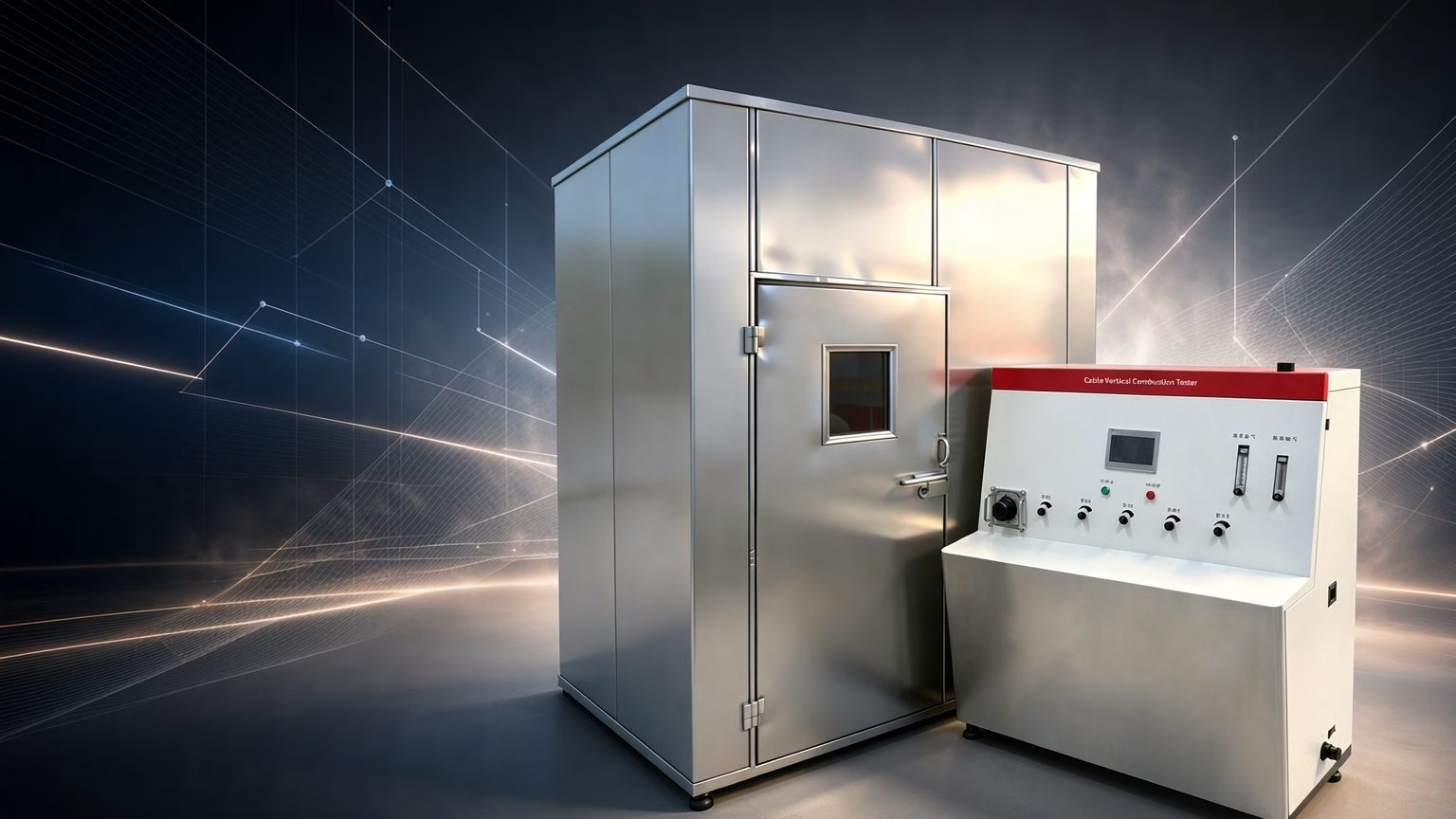
Brandprüfung für Kabelisolationsmaterialien: Was eine Verbindung beweisen muss, bevor das Kabel existiert

Cable insulation fire testing runs at two levels that are routinely confused. At compound level, a material is screened on oxygen index to ISO 4589-2, on halogen acid gas to IEC 60754-1 Und, for low-halogen claims, nach IEC 60754-3. At cable level, the finished construction is judged on flame propagation to IEC 60332-1-2 or on a bunched ladder to IEC 60332-3, and in Europe on heat release, smoke and acidity through the EN 13501-6:2018+A1:2022 class system. This guide separates the two levels, shows where PVC, XLPE, EPR and LSZH compounds realistically land, explains the a1 and a2 acidity sub-classes, and sets out what a compound supplier should actually declare.

Von |2026-11-02T09:51:39+08:00November 2, 2026|Interpretation des Standards|0 Kommentare

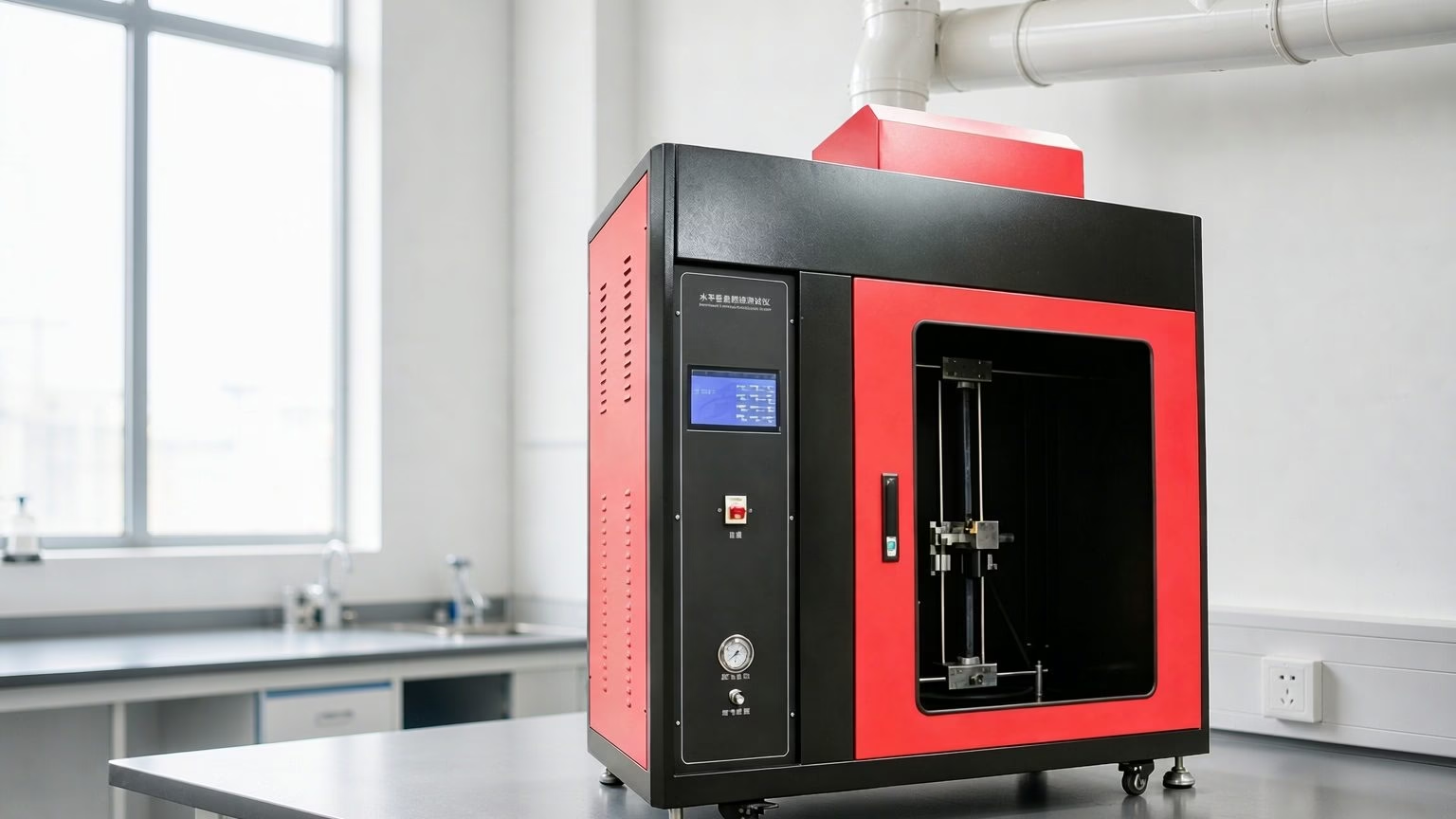
So wählen Sie einen Entflammbarkeitstester für Kunststoffe aus

To select a flammability tester for plastics, work backwards from the certificate rather than forwards from the catalogue. This guide maps each obligation — a UL yellow card, an IEC CB report, an appliance glow wire requirement, a formulation study — to the governing method and the apparatus it needs: Die 50 W horizontal and vertical cabinet for HB, V-0, V-1 und V-2; Die 500 W arrangement for 5VA and 5VB; glow wire for GWFI and GWIT; needle flame for small parts; oxygen index and cone calorimeter for development. It explains why specimen form and thickness decide the quotation, sets out the six items to settle before asking for a price, and gives an eight-point acceptance checklist for a new machine.

Von |2026-10-30T11:23:11+08:00Oktober 30, 2026|Interpretation des Standards|0 Kommentare

Fire Retardant Coating vs Fire Resistant Coating

The difference between a fire retardant coating and a fire resistant coating is the question each one answers. A retardant coating limits how fast fire spreads over a surface and earns a reaction-to-fire class under EN 13501-1 or a flame spread index under ASTM E84. A resistant coating protects a structural element for a stated period and earns a fire resistance rating under EN 13501-2, ASTM E119 or UL 1709. This guide sets the two test regimes side by side, explains why an intumescent coating has no rating of its own and is specified through section factor, dry film thickness and period, covers EN 13381-8 versus EN 13381-4, and lists the five specification errors that produce disputes.

Von |2026-10-30T11:23:07+08:00Oktober 30, 2026|Interpretation des Standards|0 Kommentare
Nach oben gehen