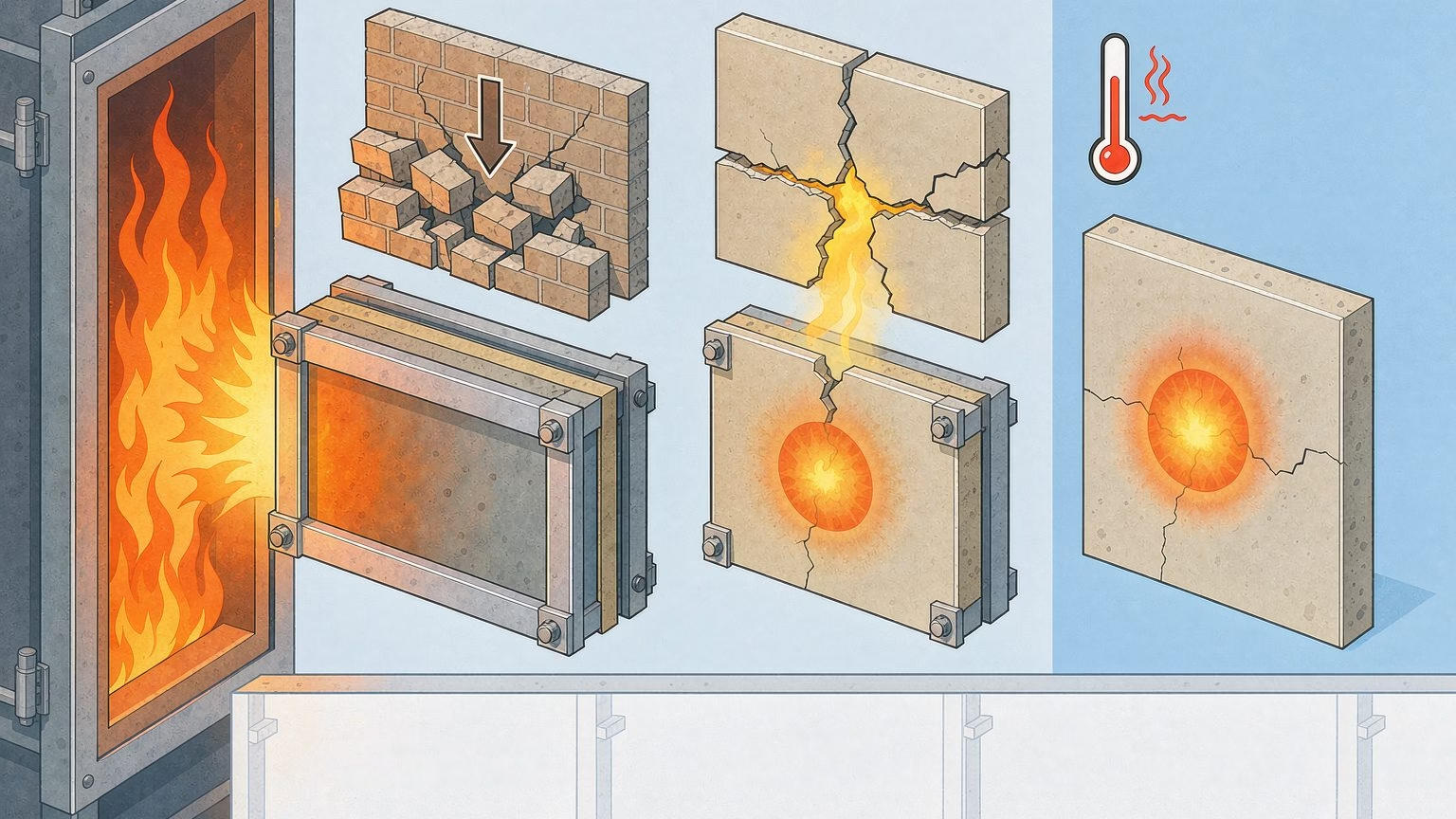
The Short Answer
Fire testing is the evidence layer of building material certification — the test report itself certifies nothing. The chain runs: type testing in a defined furnace or bench apparatus → classification under В 13501-1 (or the resistance side under EN 13501-2) → assessment under the product’s harmonised standard (hEN) → conformity evaluation through one of the AVCP systems set by the Construction Products Regulation (EU) Нет 305/2011 → a declaration of performance (DoP) and CE marking 1 2 5. Each step consumes the previous one’s output, and a weakness at any step — a withdrawn edition, an unverified thickness, a missing notified-body involvement — stalls everything downstream. Understanding how fire testing supports building material certification means understanding that chain, because the tests decide the class, the class decides the declared performance, and the declared performance is the document the market buys.
Where Building Material Certification Starts: The Evidence Layer
Before any stage of the chain moves, the manufacturer makes three decisions that the rest of the file inherits. Первый, what is being declared: the hEN (or European Technical Assessment, where no hEN exists) lists the fire characteristics that must appear on the DoP, and those characteristics select the tests. Второй, what build is being tested: substrate, thickness, joints, fixings and conditioning — the class will name this scope, and everything outside it is undeclared until further tested. Третий, who must be involved: the AVCP system from the hEN’s Annex ZA decides whether a notified laboratory alone suffices or a notified certification body must run the file [5].
Manufacturers who set these three down on paper before booking furnace time move through certification in one pass. Manufacturers who discover the AVCP system after testing routinely pay for a second round — not because the tests were wrong, but because they were run against a file structure the system does not accept.
The Chain at a Glance
| Этап | Input | Выход | Owner |
|---|---|---|---|
| 1. Type testing | Product specimens, conditioning | Test report(s) per method | Laboratory (notified for system 1/3) [5] |
| 2. Классификация | Test reports | В 13501 class string | Laboratory or assessment body [1][2] |
| 3. Product-standard assessment | Сорт + factory data | hEN conformity package | Manufacturer + notified body 4 [5] |
| 4. AVCP evaluation | Package per Annex V system | Certificate (system 1) or test evidence (3/4) | Notified body [5] |
| 5. Declaration & CE | DoP draft | Published DoP + CE mark | Manufacturer [5] |
The table compresses months of work, and the rest of this article walks the stages with the fire-specific detail.
Этап 1: Type Testing Produces the Raw Evidence
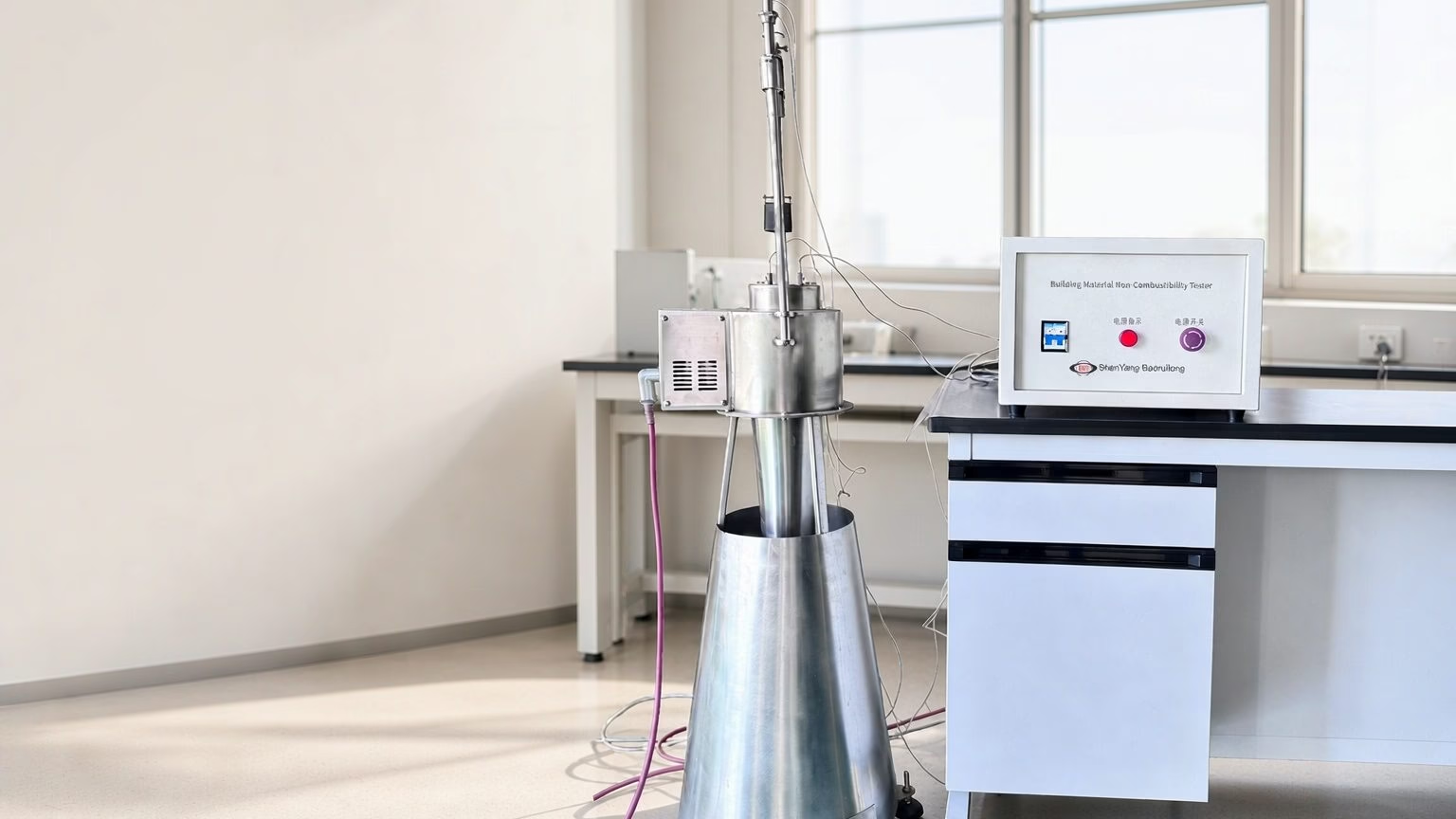
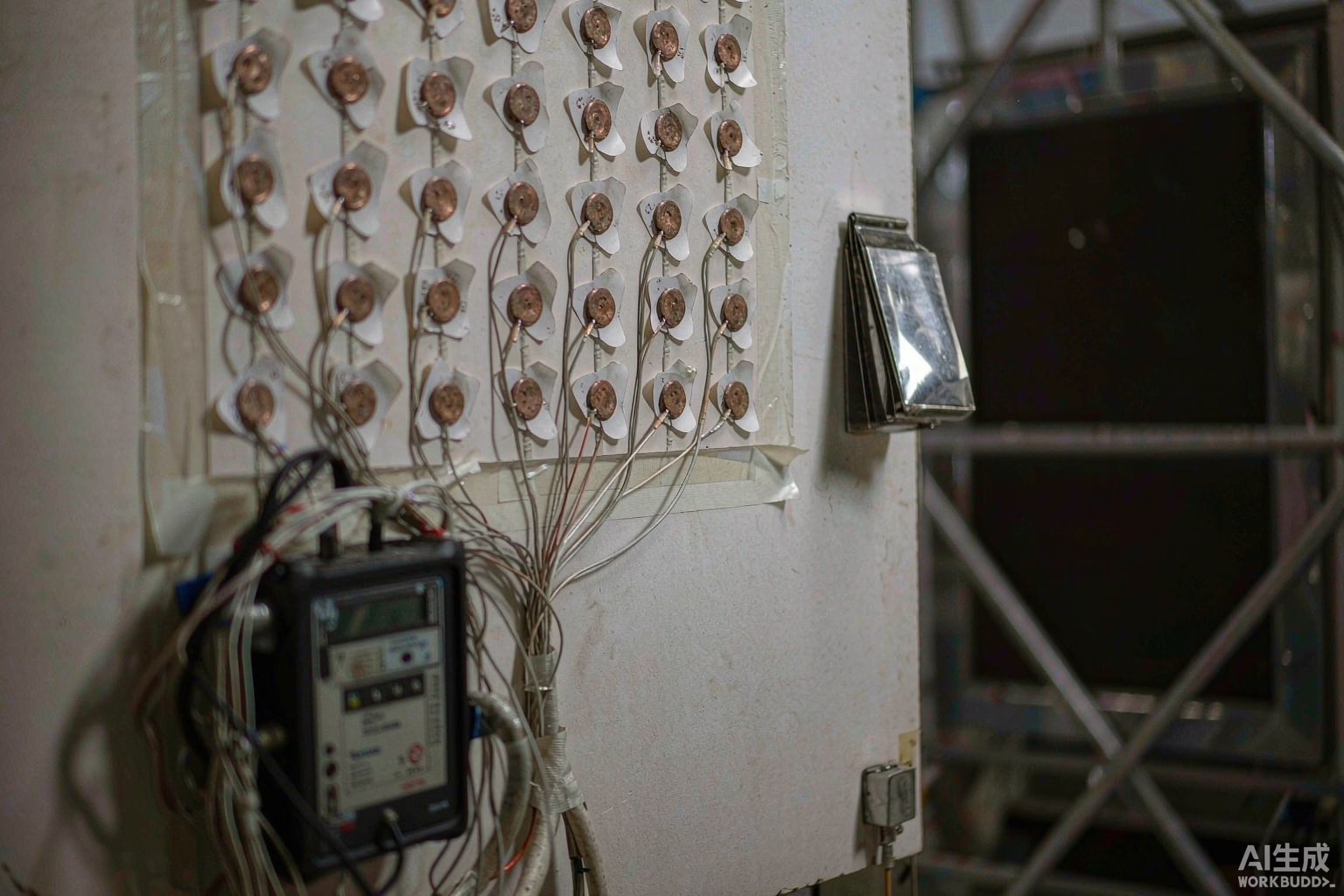
Certification starts with testing the product as it will be manufactured — not a hand-polished prototype. For reaction to fire, the backbone methods are the SBI test (В 13823) for heat release and smoke production, тот single-flame source test (В ИСО 11925-2) for ignitability, и испытание на негорючесть (ИСО 1182 / В ИСО 1716) that anchors the top classes [1]3 6. For loadbearing and separating products, fire resistance testing under EN 1363-1 and its part standards supplies the R/E/I data. Specimen conditioning, thickness verification and substrate choice are part of the evidence: a class earned on one substrate does not travel to another, and assessors read the report for exactly that scope statement.
Laboratories contribute more than the burn itself at this stage. A type-test file that will survive assessment records the specimen build (размеры, layers, fixing pattern), the conditioning regime, the apparatus calibration status, and the raw measurement curves — not only the summary result. When a notified body later reviews the file under system 1 or system 3, these are the lines it reads first; a summary without traceable raw data invites a re-test request that costs a full furnace campaign to answer.
Этап 2: The Report Becomes a Class
The laboratory converts test data into a class under В 13501-1:2018 — the current edition in force since December 2018 [1]. The Euroclass string (A1 through F, plus smoke s1–s3 and droplet d0–d2) is a classification of the tested construction, not of the product in the abstract. Edition currency matters at exactly this step: В ИСО 11925-2:2026 replaced the 2020 edition on 28 January 2026 [3], и В 13823 moved to the 2020+A1:2022 state when the base 2020 edition was withdrawn in July 2022 [6]. A classification report citing superseded editions can be rejected in an approval review, so the editions on the report cover are worth a line-by-line check.
Этап 3: The Harmonised Product Standard Defines What Gets Declared
A Euroclass alone is not a certified product. The product’s harmonised standard (hEN) — for doorsets В 16034, for cables В 50575, for linear drainage channels and cladding their own documents [4] — defines which fire characteristics must be declared and how. Where a product has no hEN, the voluntary route runs through a European Technical Assessment instead. The hEN also fixes the assessment and verification of constancy of performance (AVCP) system the product falls into, which is what decides whether a notified body must be involved.
Этап 4: AVCP — Who Signs What
The Construction Products Regulation sets several assessment systems; fire-relevant products cluster in three of them [5]:
| AVCP system | Who tests | Who certifies | Typical fire-relevant products |
|---|---|---|---|
| System 1 | Notified laboratory | Notified certification body issues a certificate of constancy + FPC audit | Products with high safety consequence (e.g. fire doors under EN 16034) |
| System 3 | Notified laboratory | Manufacturer self-declares against the test results | Many reaction-to-fire products (SBI-classified linings) |
| System 4 | Manufacturer | Manufacturer | Lowest-consequence products |
The practical consequence for a manufacturer is scheduling: system 1 requires the notified body both for testing and for the certificate, while system 3 needs the notified laboratory for the fire tests but lets the manufacturer assemble the declaration. Reading the hEN’s Annex ZA tells you which system applies before you book any furnace time.
Этап 5: The Declaration of Performance and the CE Mark
The manufacturer drafts the declaration of performance, listing the declared performances for every essential characteristic the hEN requires — the Euroclass string among them — and attaches the CE mark [5]. The DoP is the document a buyer, building authority or insurer reads, and it inherits every weakness upstream: a class declared beyond the tested field of application, or from a superseded edition, is a liability sitting in a legally binding document. Keeping the DoP’s declared values exactly aligned with the classification report is the discipline that survives audits.
Two DoP practices separate clean files from messy ones. The first is version discipline: when a classification is renewed under a new edition, the DoP is re-issued and the old version withdrawn from circulation — leaving both live invites a project to cite the superseded file. The second is scope discipline: a DoP that declares more variants than the test file covers converts a laboratory weakness into a manufacturer’s legal exposure, because the declaration is the manufacturer’s own signature, not the laboratory’s.
The Stage Everyone Forgets: Factory Production Control
Between the type test and the CE mark there is a stage that never appears in a brochure but decides whether a certificate stays valid: factory production control (FPC). Under system 1 the notified body does not test every batch. It audits the factory, approves the control plan, and then keeps returning — usually annually — to confirm the production line still makes the product that was tested. Under system 4 the manufacturer runs the same internal discipline without the external audit.
| FPC element | What it controls | What breaks without it |
|---|---|---|
| Raw material checks | Incoming grade, thickness, density, colour consistency | A change in supplier shifts the burn behaviour |
| Specimen frequency | How often production samples are re-tested | Drift goes undetected until a complaint |
| Approved test methods | The same method used in the type test | Trend data is not comparable to the file |
| Reference sample retention | A retained specimen for comparison | No baseline when a result drifts |
| Traceability records | Which production batch made which delivery | A claim cannot be tied to evidence |
| Non-conforming output | How out-of-spec product is quarantined | Non-conforming product reaches the market |
FPC is where building material certification becomes a running process rather than a one-off project, and it is where the manufacturer carries the real cost. The work is not the tests — the type test is front-loaded and visible — but the discipline: sampling schedules that keep running whether or not a batch feels doubtful, retained samples that someone must physically store, records that must survive a staff change. Manufacturers who budget only for the campaign and not for the running system discover the difference at the first surveillance audit, and the fix is a process change rather than a test.
This is also where the test report earns its keep in practice. A classification report that names the exact specimen build, conditioning regime and raw material grades is a report the factory can audit itself against; one that says only “sample of product X was tested” is not. The two documents may carry the same class string and support completely different levels of production control.
Where Certification Files Fail: the Recurring Audit Findings
| Finding | What it looks like in the file | Prevention |
|---|---|---|
| Superseded edition cited | 11925-2:2020 instead of 2026 [3] | Edition check at every report cover |
| Scope overreach | Variants declared beyond the tested substrate | Field-of-application statement per class |
| Missing notified-body traceability | System 1 file without a body number [5] | Annex ZA read before testing |
| Class string mismatch | DoP text ≠ classification report text | One source of truth for the class string |
| Orphan test data | Tests run that no declared characteristic consumes | Matrix plan before the first burn |
| Conditioned-out protection | Class earned pre-washing, product sold post-washing | Conditioning that matches the declared use |
None of these findings is exotic; each appears in real files because the chain’s stages were run by different people on different assumptions. The certification file is one document with six authors — laboratory, classifier, standards body, notified body, manufacturer, and the person who pastes values into the DoP template. Aligning those authors is what certification management actually is.
Beyond CE: Third-Party Schemes and Project Approvals
CE marking is the legal floor, not the commercial ceiling. Insurers, major projects and some national regimes layer additional requirements on top: third-party listing and labelling schemes (UL and FM in North America), national approvals for exceptional products, and project-specific reviews that ask for the full test reports rather than the class string. None of these replaces the CE chain — they check it, extend it, or ask for market-specific tests. A manufacturer exporting widely plans the test matrix once, with the report set that satisfies both the hEN route and the schemes their customers actually cite.
One scheduling fact shapes most of this: the test campaign, not the paperwork, is the long pole. Furnace time for a resistance test runs in weeks of continuous burning, and notified-body audits are booked against the factory’s calendar, not the laboratory’s. Manufacturers who need a CE mark for a specific tender date are usually constrained by the appointment queue rather than by the analysis. Building the matrix so that one campaign serves the hEN, the scheme and the project specification is the practical form of “plan once, use many times” — and it is why the same products appear in the certification file with the specimens described in enough detail to be reused.
What Buyers Should Check in a Certification File
| Check | Why it catches real failures |
|---|---|
| Editions on the classification report | 11925-2 moved to 2026; 13823 to A1:2022 [3][6] |
| Substrate and thickness scope | The class covers the tested build only [1] |
| Notified body number vs AVCP system | System 1 without a body number is void [5] |
| DoP values vs report values | Declared ≠ tested is the classic audit finding [4][5] |
| Field of application for resistance results | EXAP scope, not just the class code |
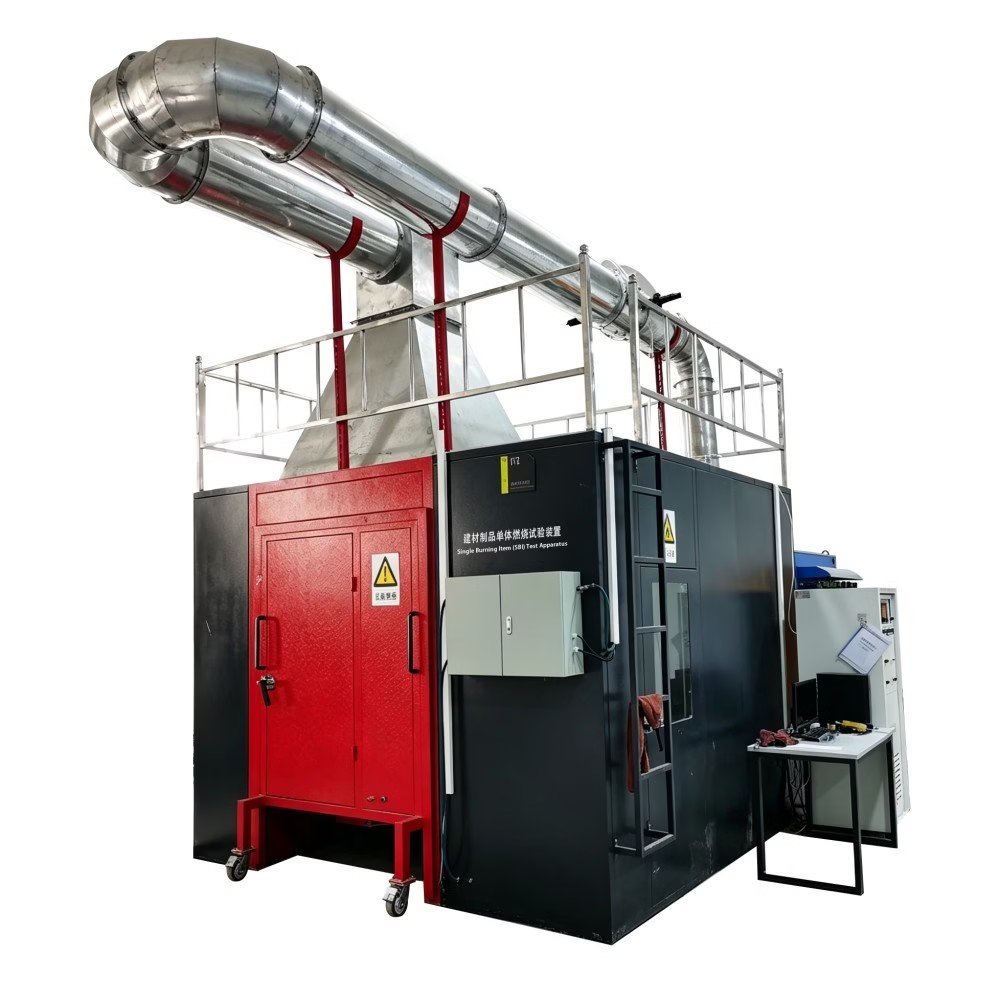
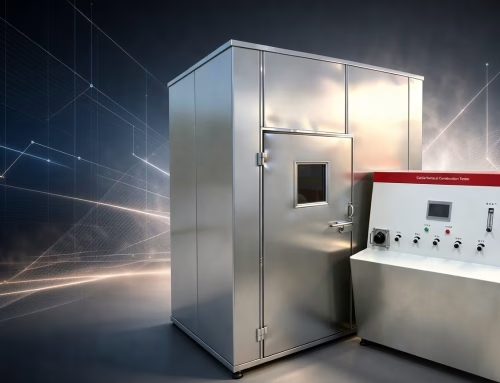
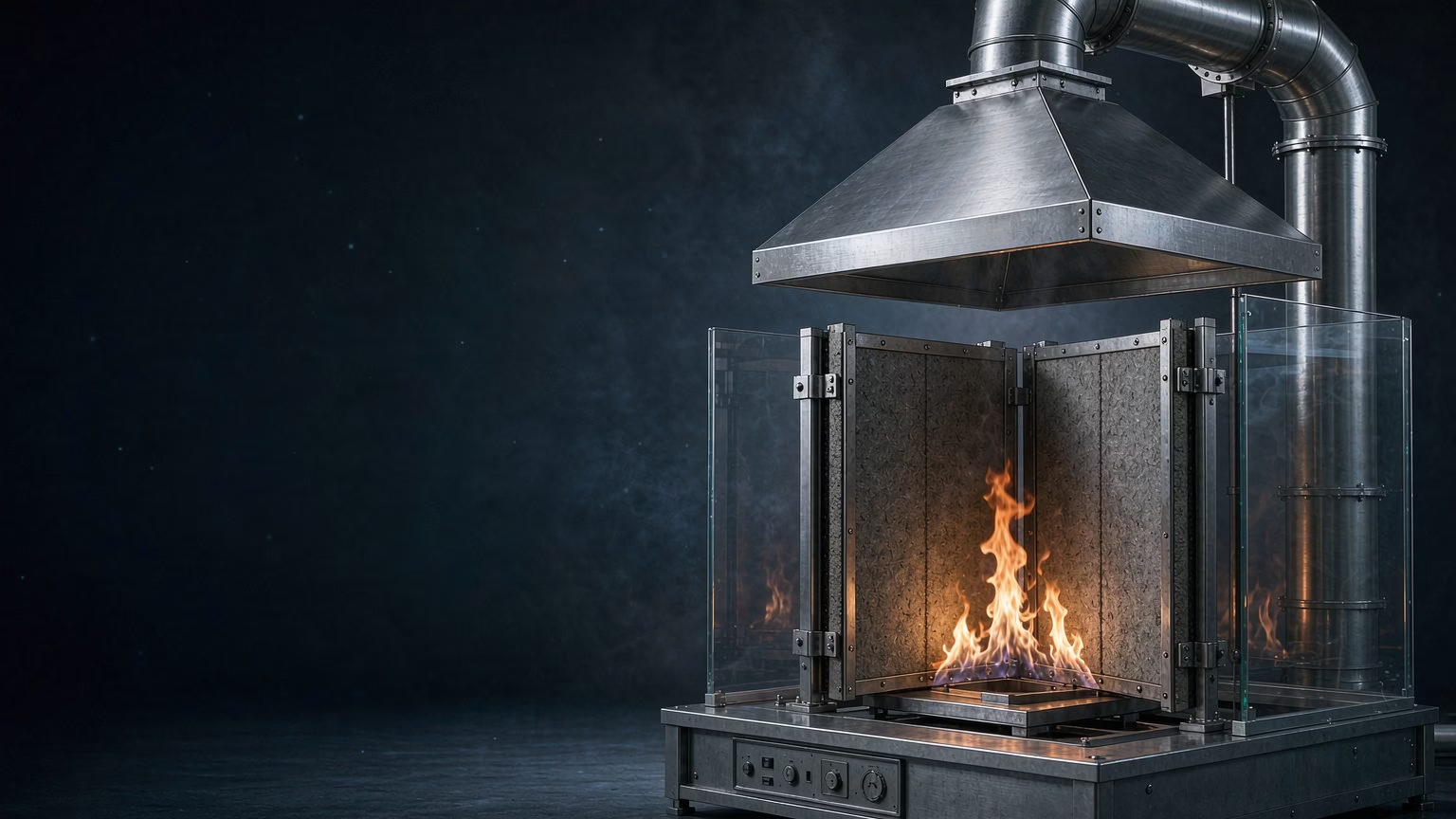
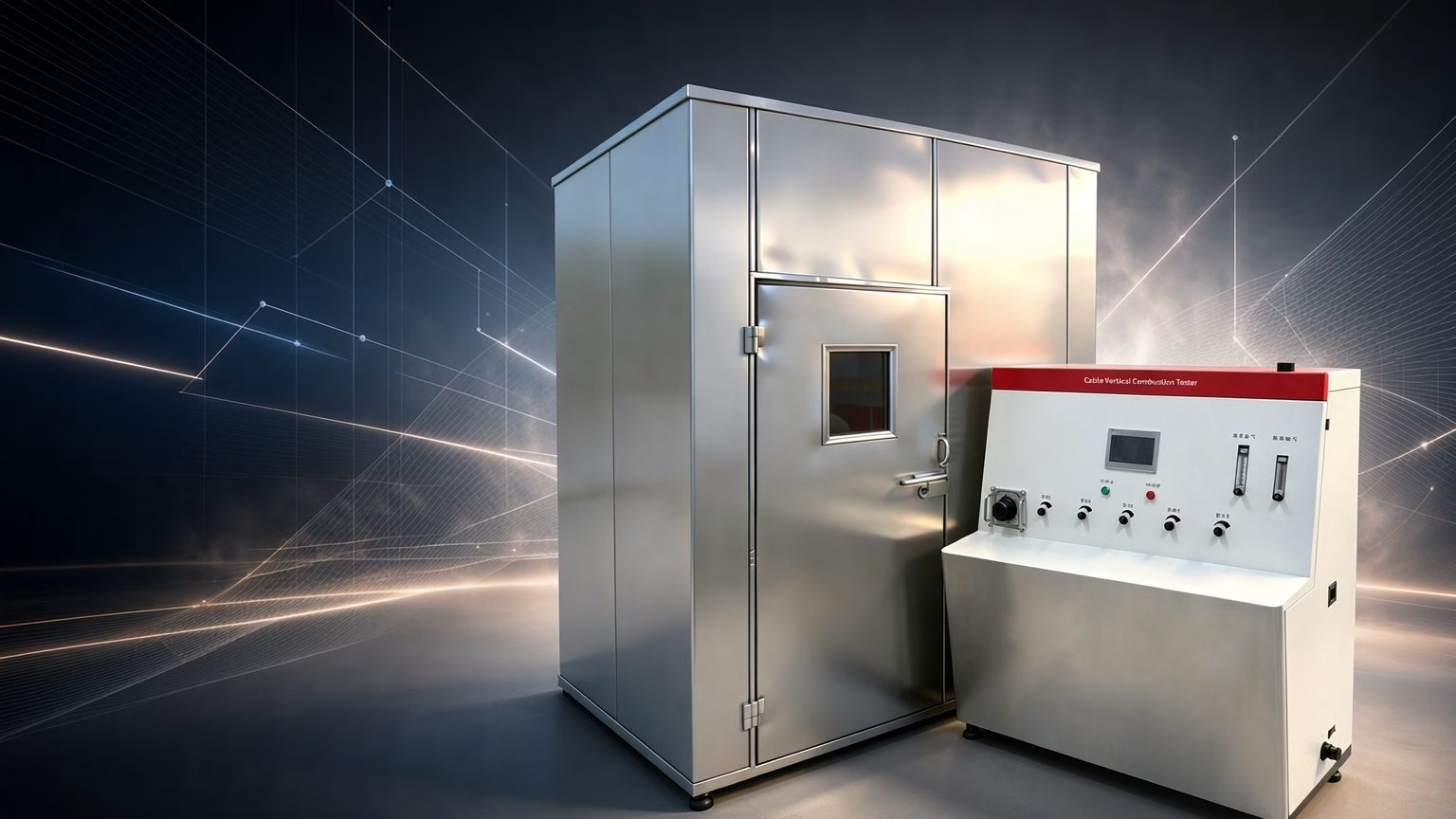
For laboratories building the evidence layer, the core benches are the SBI test apparatus for EN 13823, тот non-combustibility apparatus for ISO 1182, и конусный калориметр for upstream data. BRT Testing equips all three stages and supports the report formats assessors expect.
Часто задаваемые вопросы
Does passing a fire test mean my product is certified?
Нет. A fire test produces a report — evidence, not certification. Certification happens when that report is turned into a classification under EN 13501-1, assessed under the product’s harmonised standard through the correct AVCP system, and declared in a DoP with CE marking. Skipping the later stages is the most common gap in otherwise well-tested products.
What is the difference between a test report and a classification report?
The test report records what happened in the furnace or bench — temperatures, times, observations. The classification report converts those observations into the EN 13501-1 class string under the classification standard’s rules. Buyers and authorities typically require the classification report; laboratories issue both, and the two must trace to the same specimens and editions.
Which AVCP system applies to my product?
The product’s harmonised standard fixes the system in its Annex ZA. In broad terms: products whose failure has high safety consequence — fire doorsets are the canonical example — fall into system 1 with a notified certification body; many reaction-to-fire linings fall into system 3, requiring a notified laboratory for the fire tests but no certificate; the lowest-consequence products sit in system 4. Read the Annex ZA before booking tests, because it decides who must be involved.
Why do standard editions matter so much for certification?
Because the classification report must cite the editions in force when the assessment is made. В ИСО 11925-2 moved to the 2026 edition in January 2026, и RU 13823 to the 2020+A1:2022 state in July 2022. A report citing superseded editions invites rejection in approval reviews, and the fix — reclassification under current editions — is far cheaper than retesting if the original data are complete and traceable.
Can I declare a class for a product variant I did not test?
Only within a documented field of application or an extended application assessment. The class belongs to the tested construction — substrate, thickness, fixing and joints included. Variants outside that scope need either further testing or a formal EXAP-style extension; declaring a variant by assumption is the classic route to a void DoP.
Is CE marking the same as third-party certification?
Нет. CE marking is the regulatory requirement — the manufacturer declares conformity through the DoP, with notified-body involvement only where the AVCP system demands it. Third-party schemes (UL, FM and national approvals) are separate, market-driven layers that may require their own testing and audits. Many products carry both, and the test work overlaps but the documents do not substitute for each other.
What should a manufacturer prepare before the first fire test?
Three things: the production-consistent specimens with conditioning history, the target class and market read off the hEN’s Annex ZA, and a test matrix that covers every declared characteristic at once. Laboratories see the most rework when manufacturers arrive with a class target but no substrate or thickness plan — the test proves the build, so the build has to be defined first.
Заключение: A Decision Order
- Read the hEN’s Annex ZA: characteristics to declare and AVCP system [4][5].
- Book type tests in current-edition methods [3][6].
- Get the classification report under EN 13501-1/-2 [1][2].
- Assemble the AVCP package with the right notified-body involvement [5].
- Draft the DoP so every declared value traces to a report line [5].
Fire testing helps building material certification precisely because it is the one stage the manufacturer does not control alone: the laboratory’s apparatus, conditioning and report discipline become the foundation every later signature stands on. Treat the test phase as certification work — not as a preliminary — and the chain from furnace to CE mark runs in one pass. Building material certification, in other words, is not a certificate you apply for at the end; it is a chain you have to feed correctly at every stage, and the fire test is the first link. For the evidence layer — SBI, non-combustibility and cone calorimeter benches — start at the product pages above or contact BRT Testing with your target class and market list.
About the Author
Тестирование БРТ (Shenyang Baoruitong Automation Equipment) manufactures the reaction-to-fire and fire resistance equipment behind building product certification files — SBI apparatus, негорючие печи, cone calorimeters and fire resistance furnaces. The content team writes for manufacturers and laboratories navigating the CE route, with standard editions verified against UNI catalogue entries in November 2026.
Источники
- UNI—EN 13501-1:2018, Fire classification of construction products and building elements — Part 1: Classification using data from reaction to fire tests, current edition (19 Dec 2018). https://webstore.uni.com/en/en-13501-1-2018
- UNI—EN 13501-2:2023, Fire classification of construction products and building elements — Part 2: Classification using data from fire resistance tests, current edition (31 Может 2023). https://webstore.uni.com/en/en-13501-2-2023
- СОН — НЕ БОЛЬШОЙ 11925-2:2026, Reaction to fire tests — Part 2: Flame spread products (single burning item method), current edition (28 Jan 2026). https://webstore.uni.com/en/en-iso-11925-2-2026
- UNI—EN 16034:2014, Fire performance of doors, windows and shutter assemblies — Test and classification, current edition (01 Oct 2014). https://webstore.uni.com/en/en-16034-2014
- European Commission (DG GROW) — Construction Products Regulation (CPR), official topic page confirming Regulation (EU) Нет 305/2011 as the applicable product regulation for AVCP systems, declarations of performance and CE marking. https://single-market-economy.ec.europa.eu/sectors/construction/construction-products-regulation-cpr_en
- UNI—EN 13823, Reaction to fire tests — Part 2: ВОО (single burning item) тест; тот 2020 base edition was withdrawn on 2022-07-20 and the current state is 2020+A1:2022. https://webstore.uni.com/en/en-13823-2020