- What Each Technique Actually Measures
- FTIR vs UV-Vis: A Decision Table
- Where the Overlap Causes Expensive Mistakes
- Sample Preparation Decides the Real Workload
- Reading a Specification Sheet
- Quantitative Capability: Detection Limits and Linear Range
- When a Laboratory Needs Both
- Instrument Classes: Matching Hardware to Work
- Five Selection Mistakes
- Acceptance and Verification Checks
- Sıkça Sorulan Sorular
- The Decision Order
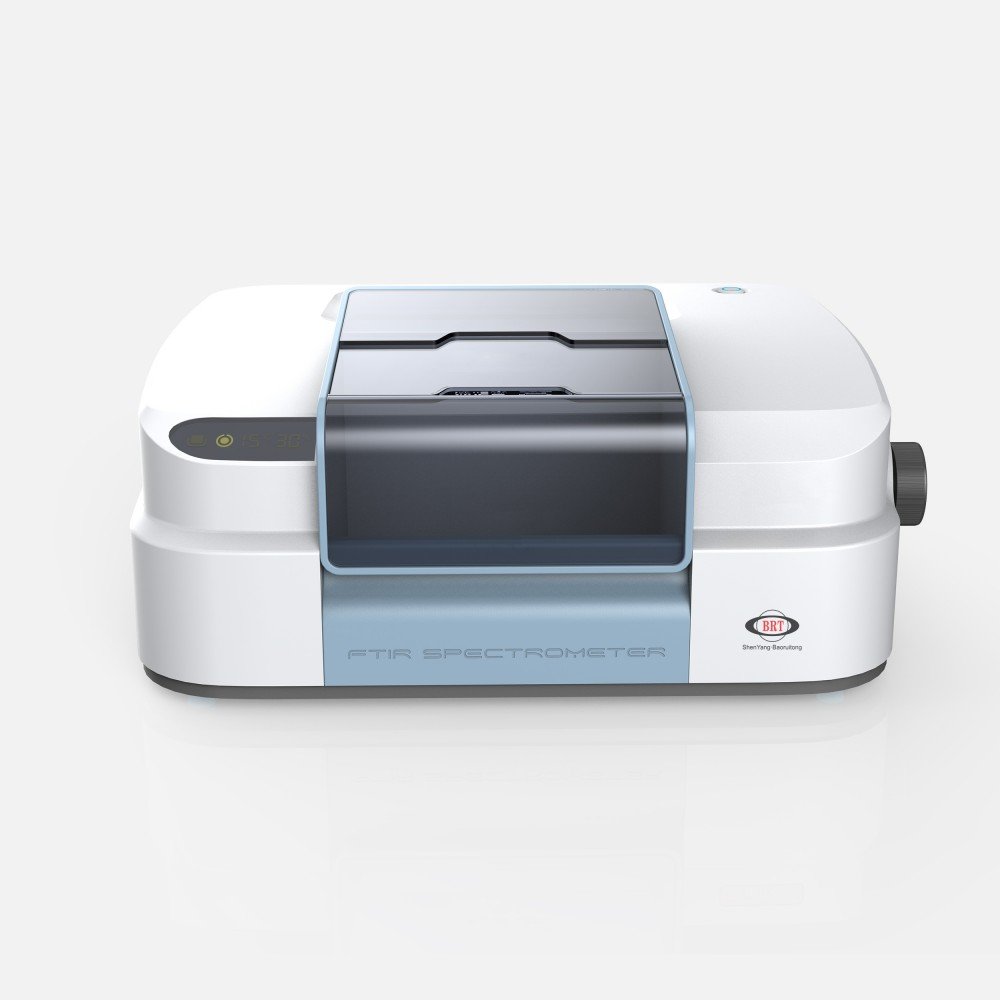
Choose FTIR when the question is what a material is made of; choose UV-Vis when the question is how much of a known substance is present in solution. FTIR shines mid-infrared light through or into a sample and reads the vibrational fingerprint of its chemical bonds, which makes it an identification tool for solids, films, powders and gases. UV-Vis passes ultraviolet and visible light through a liquid and measures absorption by electronic transitions, which makes it a quantification tool for dissolved species at concentrations from percent down to trace levels. Most laboratories eventually own both, because the two instruments answer different questions and neither substitutes for the other.
What Each Technique Actually Measures
The difference is not the brand of detector or the software. It is the physical interaction being observed, and that determines everything downstream — sample form, preparation effort, calibration approach and what the result can be used for.
FTIR Reads Molecular Vibrations
An FTIR spectrometer covers roughly 4,000 ile 400 cm⁻¹ in the mid-infrared. At those energies, absorption occurs when a bond changes its dipole moment as it stretches or bends: O–H, N–H, C–H, C=O, C≡N, C–O. Because the set of bonds and their local environment is specific to a molecule, the resulting spectrum acts as a fingerprint, and library searching against reference spectra is the standard identification route 1. The technique is qualitative first: it tells you polyethylene from polypropylene, an ester from an acid, a cured epoxy from an uncured one.
UV-Vis Reads Electronic Transitions
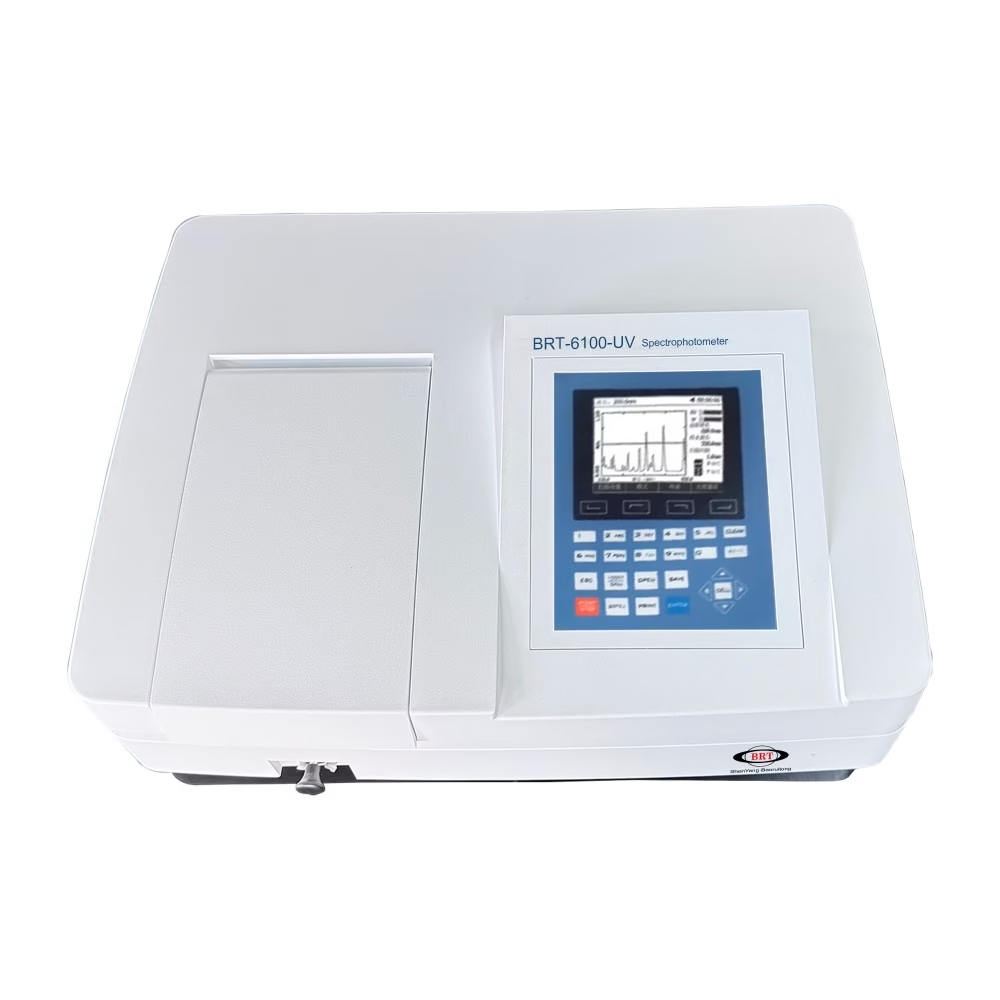
A UV-Vis spectrophotometer covers roughly 190 ile 1,100 nm depending on the configuration. Absorption there excites electrons in conjugated systems — aromatic rings, carbonyls, azo dyes, metal-ligand complexes. Those chromophores are far fewer in number than infrared-active bonds, so a UV-Vis spectrum is usually a broad band rather than a fingerprint. That is not a weakness: it makes the technique fast, stable and extremely well suited to measuring concentration through the Beer-Lambert relationship, which is why it dominates water analysis, pharmaceutical dissolution and enzyme assays 3.
FTIR vs UV-Vis: A Decision Table
Read the left column first. If the question you actually have is on that list, the right-hand columns settle the instrument choice before any specification discussion begins.
| The question in front of you | Technique | Why it wins |
|---|---|---|
| Which polymer is this part made from? | FTIR | Fingerprint match against a reference library |
| Is this incoming solvent the specified grade? | FTIR | Identity check in under two minutes by ATR |
| How much iron is in this water sample? | UV-Vis | Colour-forming reaction plus Beer-Lambert quantification |
| What is the concentration of this dye in the bath? | UV-Vis | Strong chromophore, wide linear range |
| What is this white powder in the complaint sample? | FTIR | Identifies the substance, not just its elemental content |
| Does this tablet contain the labelled API? | Both | UV-Vis quantifies; FTIR confirms identity |
| Has this polymer oxidised during ageing? | FTIR | Carbonyl growth is directly visible |
| What is the COD or colour of this effluent? | UV-Vis | Standardised photometric method at fixed wavelengths 7 |
| Which gases are in this emission stream? | FTIR | Multiple species in one spectrum with a gas cell |
| How much protein is in this fraction? | UV-Vis | Absorbance at 280 nm, routine and non-destructive |
The pattern is consistent: identification goes to FTIR, quantification in liquid goes to UV-Vis, and a small number of applications want both.
Where the Overlap Causes Expensive Mistakes
The FTIR vs UV-Vis decision becomes expensive when it is made on price alone, because the two instruments are not interchangeable at any price point. Two specific failures account for most of the cost.
“Both Are Spectroscopy” Is Not a Specification
The two instruments are bought through the same procurement category, which is why tender documents sometimes specify “a spectrophotometer” and leave the technique open. That is how a water laboratory ends up with an infrared instrument, or a polymer QC bench ends up with a UV-Vis unit and no way to identify an unknown pellet. Vendor literature tends to describe both as “molecular spectroscopy” and leave the distinction to the reader 11. Write the question into the specification, not the instrument name.
The Concentration Trap
FTIR can quantify, and UV-Vis can identify — but each is poor at the other’s core job. Quantitative FTIR works well for major components in a prepared matrix, and poorly for trace analytes in a complex solid. UV-Vis can distinguish compounds only if their spectra differ, which for many colourless organics they do not. Assuming the cheaper instrument can be stretched to cover both roles usually costs a year of method development and ends with a second purchase anyway.
Sample Preparation Decides the Real Workload
Instrument specifications are compared on paper; the laboratory experience is decided by what has to happen to the sample before the measurement.
FTIR: ATR, Transmission and Gas Cells
ATR has become the default because it removes preparation almost entirely: press the sample onto a diamond, ZnSe or germanium crystal, collect, wipe. Its limitations are chemical — ZnSe is attacked by strong acids and abrasives, germanium is brittle and has a limited pH window — and are covered in our ATR crystal comparison. Transmission still matters for thin films, KBr pellets and quantitative work where path length must be controlled, and gas cells are essential for emission and workplace-air measurements [1]. If you are choosing between ATR and transmission as a permanent configuration, the FTIR selection guide sets out the trade-offs.
UV-Vis: Kaseler, Path Length and Colour
UV-Vis sample preparation is simpler but not trivial. The solvent must be transparent at the measurement wavelength, which rules out most organics below 250 nm; the cuvette material must match the range, with quartz below 340 nm and glass or polystyrene above it; and the path length — commonly 10 mm, sometimes 50 mm for dilute samples — must suit the absorbance. Many inorganic analytes are invisible until derivatised with a colorimetric reagent, so the method includes a chemistry step that has its own timing and interference list [3]. Bizim UV-Vis principle and applications overview walks through the optical chain that sits behind those choices.
Reading a Specification Sheet
The same words mean different things on the two datasheets. This table translates the parameters that buyers compare most often; the definitions follow the vocabulary in ISO 6286 4, while the practical ranges quoted are typical of routine bench instruments rather than of research-grade units 910.
| Parametre | What it means on an FTIR | What it means on a UV-Vis |
|---|---|---|
| Resolution / bandwidth | Wavenumber spacing, typically 4 cm⁻¹; narrower resolves overlapping bands | Spectral bandwidth in nm, typically 1–4 nm; narrower sharpens peaks and lowers stray-light tolerance |
| Kesinlik | Wavenumber accuracy, checked with polystyrene film | Dalga boyu doğruluğu, checked with holmium oxide or deuterium lamp lines 5 |
| Photometric performance | Baseline flatness and noise over the mid-IR range | Photometric accuracy and stray light, checked with neutral density filters 6 |
| Scan speed | Interferometer speed; co-added scans trade time for noise | Fixed by the monochromator and detector; fast by nature |
| Source lifetime | Ceramic or wire source, years of use, cheap to replace | Deuterium and tungsten lamps, shorter-lived and consumable |
| Dominant cost driver | Accessory: ATR crystal, cell, microscope | Kaseler, reagents, lamp changes |
The photometric and wavelength checks are not optional decoration. UV-Vis results are quantities, yani bir 1 % transmittance error propagates straight into the reported concentration; FTIR results are usually identities, so a wavenumber shift shows up as a failed library match instead [3][4]. Bizim wavelength accuracy and stray light verification guide covers the reference materials and acceptance limits for the UV-Vis side.
Quantitative Capability: Detection Limits and Linear Range
UV-Vis is linear over roughly two to three absorbance units when stray light is low, which covers a concentration range of several decades on a fixed path length and can be extended further by changing the cell. That is what makes it a workhorse for trace colorimetric methods and for dissolution testing, where the same cuvette is read hundreds of times a day. The FTIR vs UV-Vis gap in quantitative reach is not a matter of model grade: it follows from the strength of the absorption bands themselves.
FTIR quantification is narrower. Absorbance in the mid-infrared saturates quickly on strong bands, path length in transmission is awkward to reproduce, and the sample matrix affects band shape 2. It works well for blend ratios, additive loading percentages and conversion studies — measurements where the component of interest is a meaningful fraction of the sample — and it is the better tool when the matrix is opaque, solid or a film. For anything at parts-per-million in a complex mixture, neither technique is the right answer: that is a chromatography question.
When a Laboratory Needs Both
Two situations justify two instruments rather than one compromise.
Polymer and plastics laboratories need FTIR to identify material and UV-Vis is rarely the partner; their second instrument is more often a DSC or a melt flow indexer. Where both appear together is in additives and colour: a masterbatch problem may need FTIR to confirm the carrier resin and UV-Vis to measure a colorant concentration in solution.
Water, environmental and pharmaceutical laboratories are the classic dual owners. A water lab quantifies with UV-Vis all day — colour, nitrate, phosphate, residual chlorine — and keeps an FTIR for the occasional contamination investigation, where an unknown deposit on a filter has to be identified before anyone can explain it. A pharmaceutical QC lab uses UV-Vis for assay and dissolution, and FTIR for raw-material identity, which many pharmacopoeial monographs specify as an infrared comparison.
Bizim portable FTIR option also changes the calculation: when identification has to happen at the reactor or on the warehouse floor rather than in the lab, a transportable unit can remove the sample-transport delay that makes a central lab feel slow.
Yiyecek, feed and forensic laboratories often end up with UV-Vis first because the methods they run are photometric — sugar, protein, colour, phosphate — and only add FTIR when a foreign-body or adulteration investigation forces identification. In that sequence the FTIR is justified by a specific case rather than by routine throughput, which is exactly the right way to justify a second instrument: name the case, then buy the bench.
Instrument Classes: Matching Hardware to Work
| Sınıf | FTIR side | UV-Vis side | Typical work |
|---|---|---|---|
| Routine QC, single technique | Bench FTIR with single-bounce ATR | Single-beam UV-Vis, fixed bandwidth | Identity checks, single-wavelength assays |
| Multi-user laboratory | Bench FTIR with ATR plus transmission compartment | Double-beam UV-Vis with variable bandwidth | Mixed sample types, method development |
| Regulated environment | FTIR with validated software and audit trail | Double-beam UV-Vis with certified reference kits | Pharmacopoeial or accredited methods 8 |
| Field or at-line | Portable FTIR, battery option | Portable colorimeter or field spectrophotometer | Incoming goods, environmental screening |
| Research | FTIR microscope, gas cell, heated ATR | UV-Vis-NIR with integrating sphere | Micro-samples, films, powders, turbid media |
The class matters more than the model number. A single-beam UV-Vis with good stray-light performance will outperform a double-beam instrument with a tired monochromator, and an FTIR with a scratched ATR crystal will fail identities that a cheaper unit resolves cleanly. Bizim UV-Vis buying guide ve single-beam vs double-beam comparison cover the geometry question in detail.
Five Selection Mistakes
Comparing wavenumber resolution with spectral bandwidth. They are not the same quantity and cannot be ranked against each other. Compare each instrument against the requirement of its own method.
Buying UV-Vis for identity work. If the substance has no distinctive chromophore, no amount of software will turn an absorption band into an identification. FTIR answers identity; UV-Vis answers quantity.
Ignoring the accessory budget. On the FTIR side, the ATR crystal, the transmission cell and the gas cell can rival the spectrometer in cost. On the UV-Vis side, the consumable stream is cuvettes and reagents. Both belong in the comparison.
Skipping the verification plan. Neither instrument is a black box that stays calibrated. Budget for polystyrene film, holmium oxide and neutral density filters, and for the staff time to run them [5][6].
Assuming a single vendor means a single software workflow. Data handling, library formats and audit trails differ between the two techniques even within one brand, and that difference is felt daily in a regulated lab.
Acceptance and Verification Checks
Reference materials are the difference between an instrument that is installed and one that is fit for purpose; NIST and its counterparts certify the values, and ISO/IEC 17025 fixes what the laboratory must record 12[8].
| Check | FTIR | UV-Vis | Reference material | Standart |
|---|---|---|---|---|
| Wavelength / wavenumber accuracy | Polystyrene film bands | Holmium oxide solution or filter | Certified reference | [5] |
| Fotometrik doğruluk | Baseline and absorbance repeatability | Neutral density filters | Certified transmittance | [6] |
| Resolution | Band separation at defined wavenumbers | Bandwidth confirmation | Instrument specification | [1] |
| Noise and stability | 100 % line flatness over time | Taban çizgisi düzlüğü ve kayması | Internal protocol | [4] |
| Linearity | Not usually assessed | Absorbance vs concentration series | Prepared standards | [3] |
| Dokümantasyon | Installation qualification record | Installation qualification record | Accredited calibration | [8] |
Sıkça Sorulan Sorular
Can UV-Vis identify an unknown material?
Only when the material has a distinctive chromophore and you have its reference spectrum. Most colourless organic compounds give featureless or overlapping bands in the ultraviolet, so UV-Vis cannot separate them. For an unknown solid, powder or film, FTIR is the appropriate first step because the vibrational fingerprint is far more specific.
Is FTIR better than UV-Vis for quantitative analysis?
HAYIR. FTIR quantifies well when the component is a substantial fraction of a prepared sample, but strong bands saturate and path length is hard to reproduce in solids. UV-Vis is the better quantitative tool for dilute solutions because absorbance is proportional to concentration over a wide, predictable range. Choose by matrix and concentration, not by instrument prestige.
How much sample does each technique need?
ATR-FTIR needs only contact with the crystal, so a few milligrams or a smear is enough, and the sample is recoverable in most cases. Transmission FTIR needs a prepared film or pellet. UV-Vis needs enough liquid to fill a cuvette, typically two to four millilitres, and the measurement is destructive only if the method adds reagents.
Do I need a double-beam UV-Vis?
Only if your measurements run long enough for lamp drift to matter, or if you need to subtract a blank continuously. A single-beam instrument with a stable source and a disciplined blank routine is adequate for most routine assays. The difference shows up in long kinetics runs, high-throughput sequences and methods with tight absorbance tolerances.
Can one instrument cover both techniques?
Not in the same optical bench. FTIR and UV-Vis use different sources, optics, detectors and materials, so a combined unit is a marketing convenience rather than a technical reality. Some benchtop platforms host both modules, but each module is a separate measurement channel with its own verification.
What reference materials should a new lab order first?
For FTIR, a polystyrene film for wavenumber calibration and a clean baseline standard. For UV-Vis, a certified holmium oxide standard for wavelength and a set of neutral density filters for photometric accuracy. Both are inexpensive relative to the instruments and both are required to demonstrate that the instrument is fit for purpose.
The Decision Order
- Write down the question you need answered, in one sentence, with the sample form and the expected concentration.
- If the answer is a name or a material type, the technique is FTIR; if it is a number in a liquid, it is UV-Vis.
- Match the accessory to the sample form before comparing instrument specifications.
- Check that the verification materials and the method’s acceptance limits are available in your region.
- Only then compare models, and compare them within the same technique class.
If you are still weighing the two routes, describe the samples and the questions to our application team and we will tell you which bench fits — the FTIR range ve UV-Vis range are both built for routine laboratory work rather than for brochure specifications.
Written by the BRT Testing application engineering team, Shenyang Baoruitong Otomasyon Ekipmanları A.Ş., Ltd.. — manufacturers of FTIR and UV-Vis instrumentation for industrial and contract laboratories.
Kaynaklar
- ASTM International — E1252-98 (yeniden onaylandı 2021) Standard Practice for General Techniques for Obtaining Infrared Spectra for Qualitative Analysis
- ASTM International — E168-16 (yeniden onaylandı 2023) Standard Practices for General Techniques of Infrared Quantitative Analysis
- ASTM International — E169-16 Ultraviyole-Görünür Kantitatif Analizin Genel Teknikleri için Standart Uygulamalar
- UNI Ente Italiano di Normazione — ISO 6286:1982
- NIST-SRM 2034, holmiyum oksit çözeltisi dalga boyu standardı (sertifika)
- NIST-SRM 930e, nötr yoğunluk filtreleri (sertifika)
- UNI Ente Italiano di Normazione — ISO 7887:2011
- UNI İtalyan Standardizasyon Kuruluşu - ISO/IEC 17025:2017
- Shimadzu — UV-Vis-NIR Spektroskopisi
- Bruker — FT-IR Spectrometers
- Thermo Fisher Scientific — Moleküler spektroskopi
- NIST — Standart Referans Malzemeleri