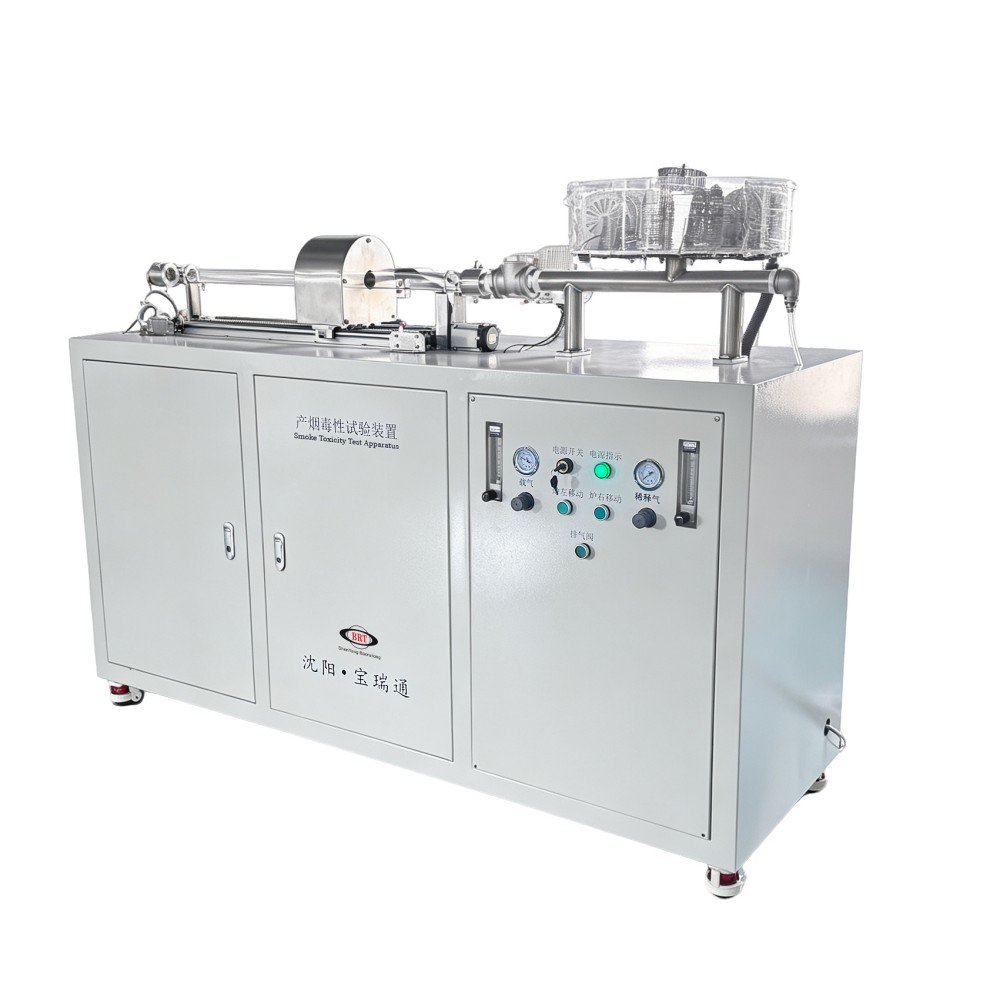
The CYD Smoke Toxicity Test Equipment (Material Smoke Hazard Tester) is a fully automated, high-precision laboratory testing system designed to evaluate the smoke toxicity hazard classification of solid materials, polymers, rail transit interiors, and building products. It strictly complies with mandatory national standard GB/T 20285-2006, DIN 53436, BS EN 17084, ISO 19702, and JIS A 1321 protocols.
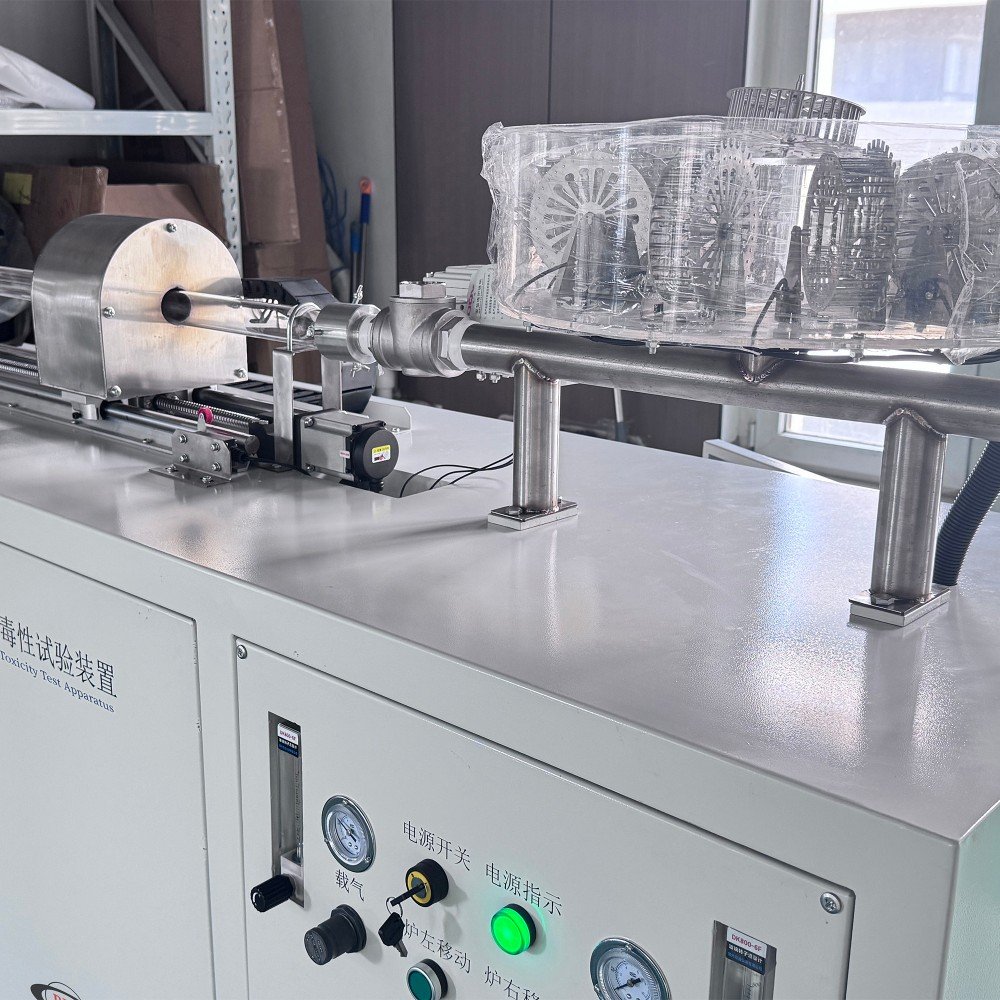
Featuring a moving annular electric furnace driven by a precision stepper motor, a high-purity quartz combustion pipeline with airtight ground-glass joints, an imported Swedish Kanthal heating assembly, and a computerized 10-channel Hall-effect mouse activity monitoring system, this advanced Material Smoke Hazard Tester accurately reproduces real-world fire smoke generation. It quantifies bio-hazard impact and material toxicity grades for building material factories, flame-retardant R&D institutes, third-party fire certification labs, and university research centers.
Material Smoke Hazard Tester Compliance & International Standards
This smoke toxicity test apparatus allows certified testing laboratories to perform formal material flue gas toxicity evaluations according to global fire standards:
| Standard Code |
Standard Title & Scope |
Primary Application |
| GB/T 20285-2006 |
Toxic Classification of Fire Effluents for Materials (Mandatory National Standard) |
Official smoke hazard classification (ZA1, ZA2, ZA3, ZB1, ZB2, ZB3) for building & interior products |
| DIN 53436-1 / BS EN 17084 |
Continuous Thermal Decomposition and Smoke Toxicity Testing / Railway smoke toxicity test |
European standard method for generating toxic smoke using a moving annular furnace for building & railway materials |
| ISO 19702 / NF X 70-100 |
Toxicity testing of fire effluents — Guidance for analysis of toxic gases using tubular furnace method |
International reference method for continuous thermal degradation and gaseous effluent sampling |
| JIS A 1321 / IMO FTP Part 2 |
Test Method for Incombustibility & Marine Smoke Toxicity Evaluation |
Japanese fire hazard classification and international maritime smoke toxicity safety compliance |
Technological Features of CYD Smoke Toxicity Test Equipment
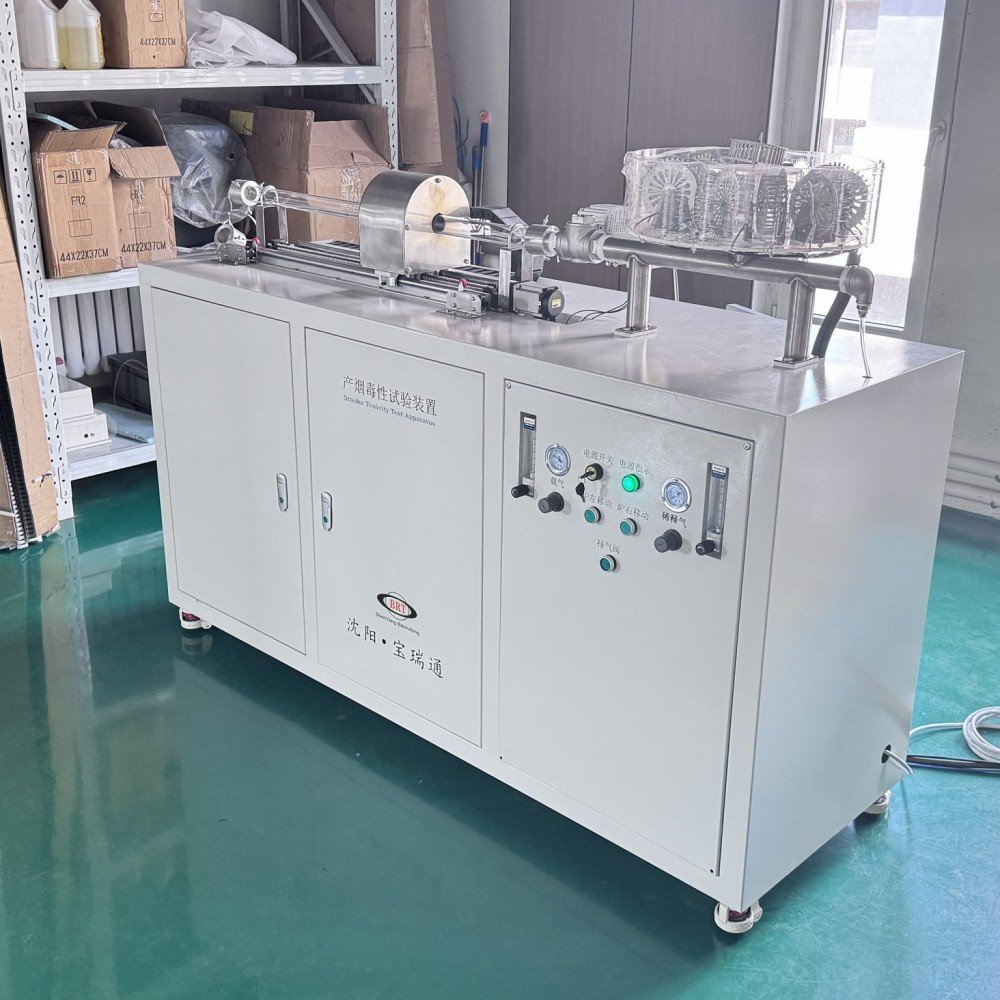
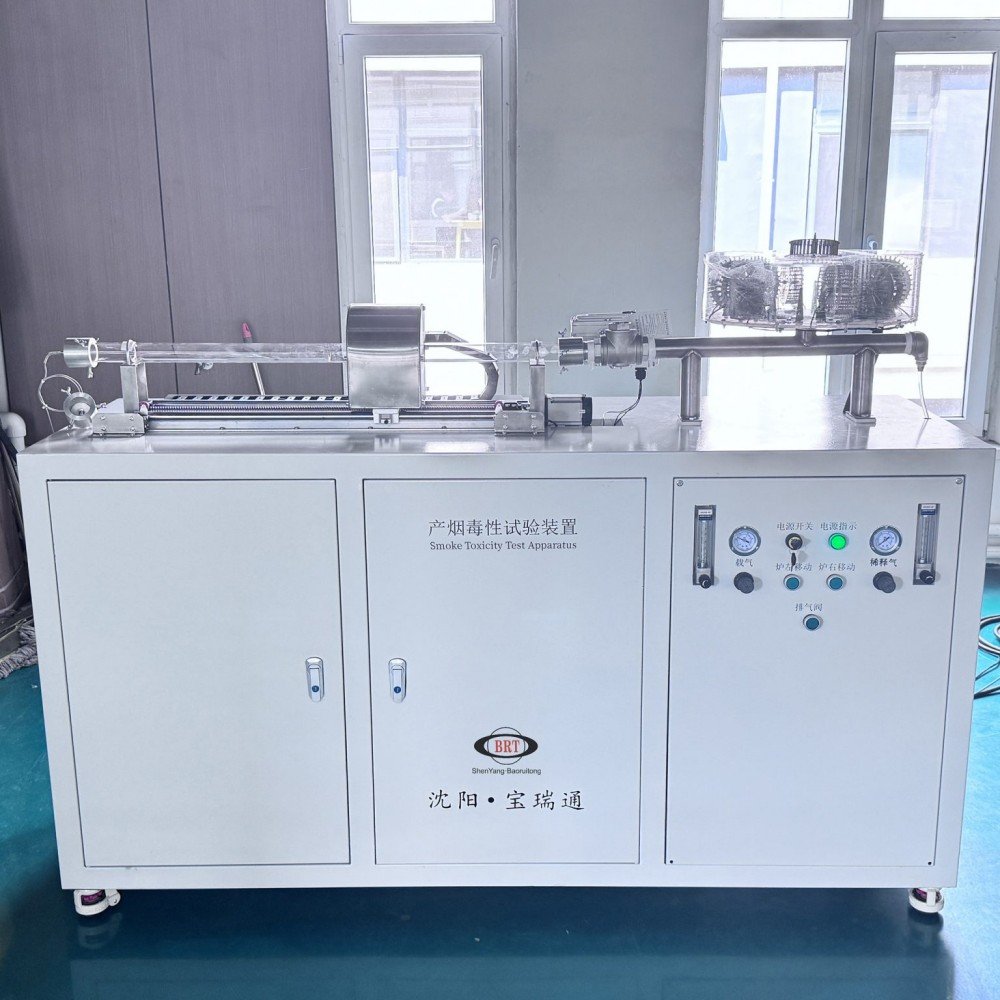
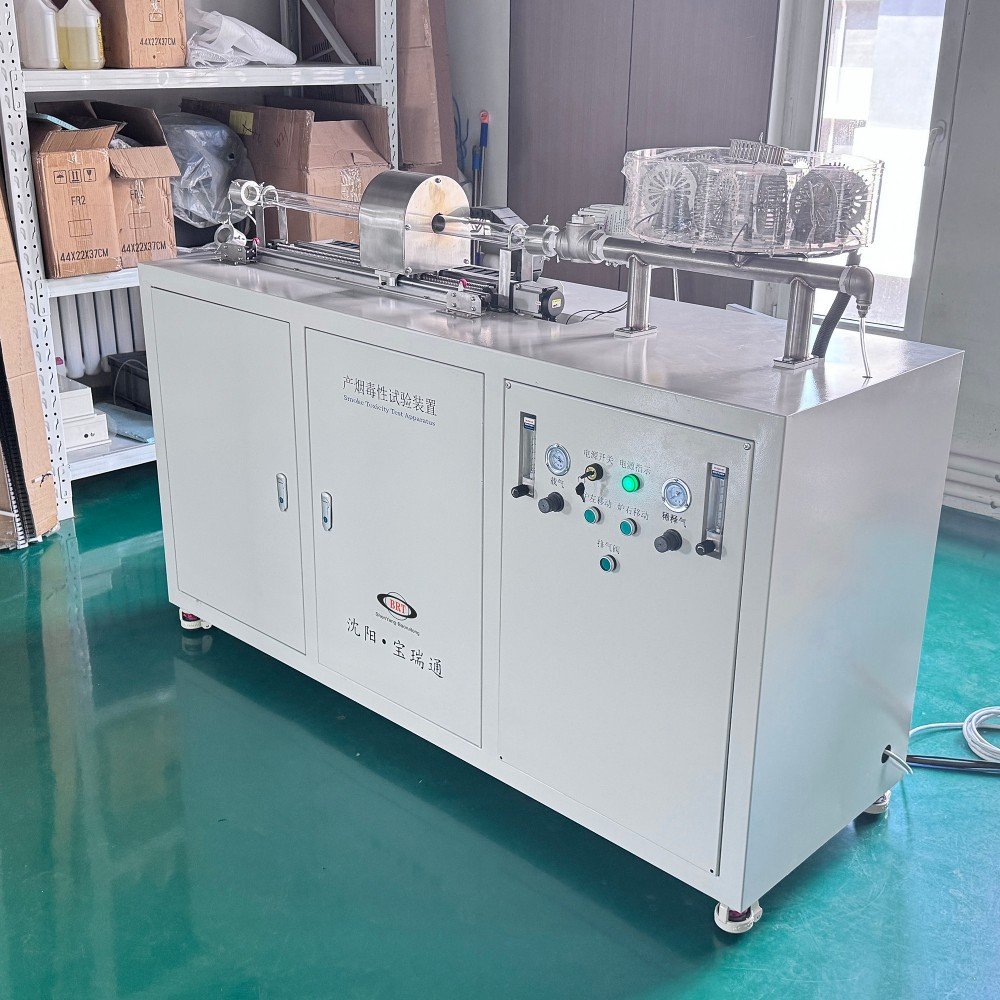
- Imported Swedish Kanthal Heating Element & Annular Furnace: Features an energy-saving all-fiber annular furnace tube (47±1mm ID) powered by Swedish Kanthal alloy heating coils. Offers up to 8× longer service life than standard domestic heating elements, maintaining uniform high-temperature performance under continuous testing.
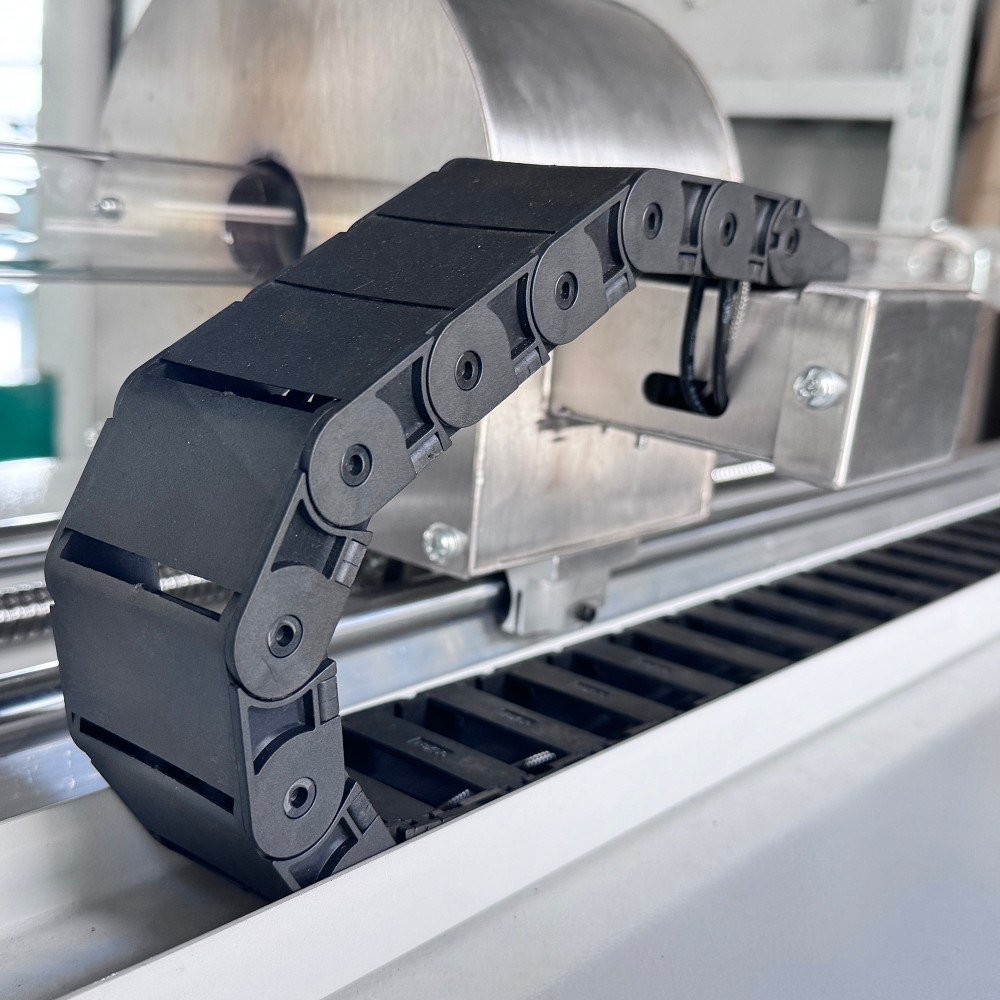
- Precision Stepper Motor Drive with Auto-Reset: Driven by a low-noise stepper motor with 0.1 mm/min precision. Supports a standard travel speed of 10±0.1 mm/min (adjustable from 5 to 50 mm/min) over a 600mm stroke, featuring fast auto-reset to accelerate batch test cycles.
- 10-Channel Synchronous Bio-Activity Monitoring System: Equipped with a transparent plexiglass exposure chamber housing 10 mold-stamped aluminum cages (60±10g each). High-sensitivity Hall-effect sensors capture 1/2 rotation movements in real time, automatically recording rodent activity curves and generating formal test reports.
- Zero-Leakage Quartz Pipeline & Direct Exhaust Integration: All high-purity quartz combustion tubes (36±1mm OD) and gas connections feature precision ground-glass sealing. The airtight system vents waste gases directly into laboratory exhaust ducts, eliminating the need for an external fume hood.
- Integrated Flue Gas Dilution & Airflow Control System: Includes 3-way cocks, dilution air distribution manifolds, precision flowmeters, and air compressors. Ensures precise carrier gas and dilution ratios to establish standardized toxic smoke concentrations as required by testing standards.
Technical Specifications of Material Smoke Hazard Tester
| Governing Test Standards |
GB/T 20285-2006, DIN 53436, BS EN 17084, ISO 19702, NF X 70-100, JIS A 1321, IMO FTP Code Part 2 |
| Annular Furnace Construction |
Stainless steel shell; all-fiber ceramic tube (ID 47±1 mm, length 95–110 mm); Kanthal alloy coils |
| Quartz Combustion Tube |
OD 36±1 mm, wall thickness 2±0.5 mm, length 1000–1300 mm; matching quartz boat |
| Furnace Displacement Drive |
Stepper motor; Standard speed: 10±0.1 mm/min; Range: 5–50 mm/min; Travel: >600 mm |
| Animal Exposure Unit |
Transparent plexiglass chamber; 10 aluminum cages (60±10 g each); 10-channel Hall activity sensors |
| Gas Supply & Dilution System |
Air compressor, precision pressure valves, glass rotameters, 36±1mm 3-way distribution manifold |
| Software & Control System |
10-module PC software; real-time activity curves, automated temperature logging & PDF report export |
| Power & Environmental Requirements |
AC 220V ±10%, 50 Hz; ambient temperature: 15–30 °C; direct exhaust connection |
System Architecture & Testing Workflow of Smoke Toxicity Apparatus
Standardized Testing Workflow:
- Load the solid material or composite sample into the quartz specimen boat and place it inside the quartz combustion tube.
- Place 10 test mice into the individual revolving aluminum cages within the transparent exposure chamber.
- Initialize the test program on the PC software to heat the Kanthal annular furnace to the target decomposition temperature.
- The stepper motor advances the moving furnace along the quartz tube at 10 mm/min, generating smoke that is diluted and routed to the exposure chamber.
- Hall-effect sensors synchronously record 10-channel bio-activity data, plotting motion attenuation curves to calculate the final smoke toxicity classification.
Target Customer Applications:
- Construction boards, plastics, insulation foams, and decorative material manufacturers.
- Rail transit, automotive, marine interior, and aircraft material testing bureaus.
- Third-party fire safety certification laboratories and environmental hazard inspection agencies.
- Flame-retardant additive R&D facilities and university fire science engineering departments.
CYD Smoke Toxicity Test Equipment FAQ
Q1: What material toxicity hazard grades can be determined using GB/T 20285?
A: GB/T 20285 classifies materials into three major smoke toxicity grades: Fully Safe (ZA Grade), Quasi-Safe (ZB Grade), and Toxic (ZC Grade), each further subdivided into levels 1, 2, and 3 based on rodent bio-activity and exposure duration.
Q2: Why is a stepper motor drive essential for furnace displacement?
A: Standard GB/T 20285 and DIN 53436 tests require the annular furnace to move at a constant, pulse-free speed of exactly 10±0.1 mm/min over the quartz tube. Stepper motor drives deliver smooth linear movement, ensuring steady, repeatable thermal decomposition and accurate smoke release rates.
Q3: Does the CYD apparatus require installation inside a dedicated fume hood?
A: No. The quartz pipeline assembly uses precision ground-glass joints to create a sealed gas path. Combustion effluents are fully contained and discharged through a rear exhaust port directly into the facility’s master exhaust ventilation system.

Reviews
There are no reviews yet.