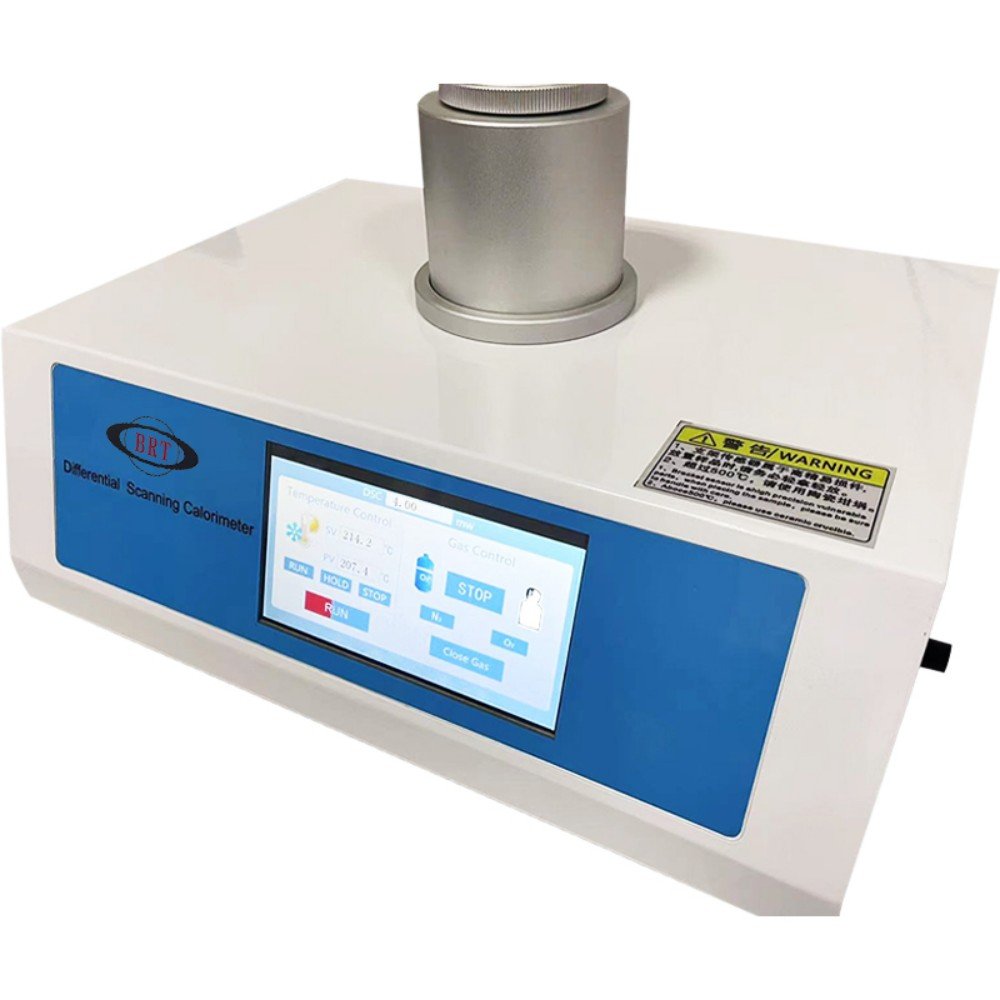
The BRT-500B Differential Scanning Calorimeter (DSC) is a high-precision laboratory thermal analysis system engineered strictly in accordance with ISO 11357, GB/T 19466, ASTM D3418, and ASTM E1356 standards. Designed for polymer chemistry, pharmaceutical R&D, rubber testing, and industrial quality control laboratories, it evaluates critical phase transitions, heat capacity changes, and thermal oxidation stability across thermoplastics, resins, composites, and organic compounds.
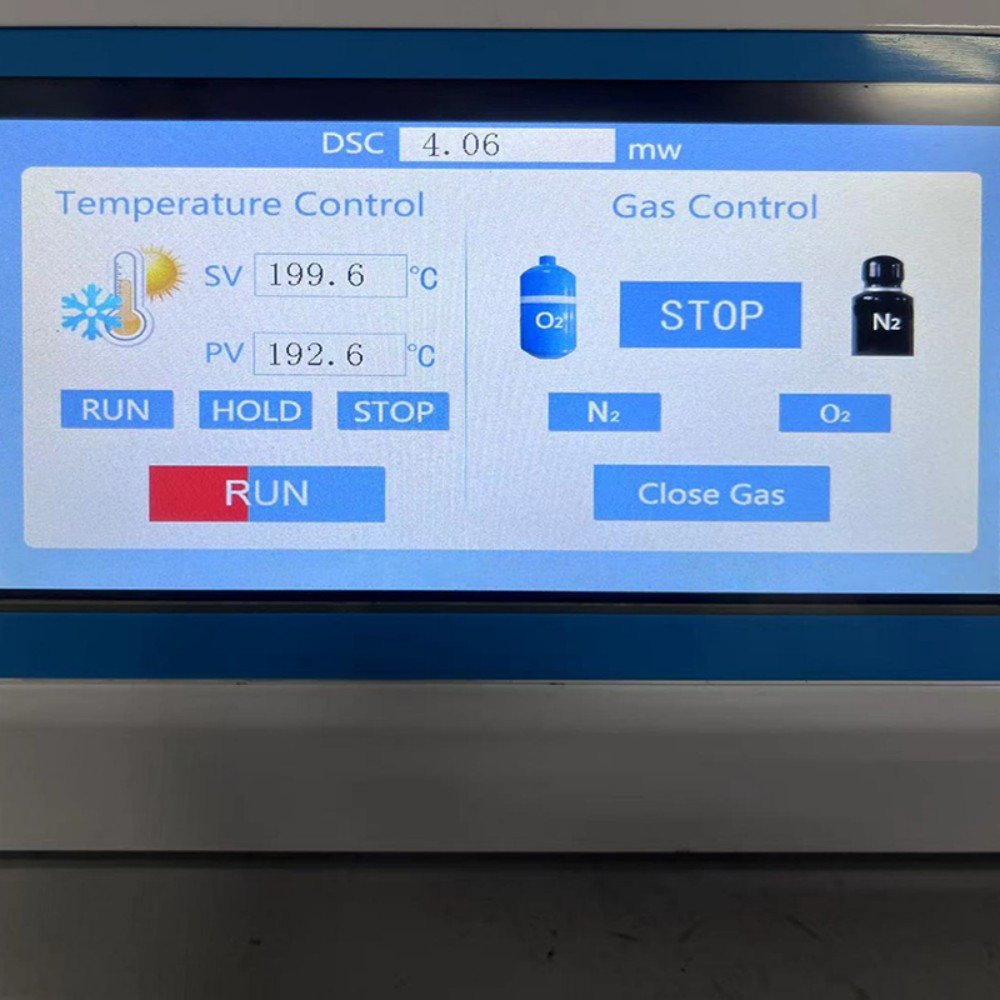
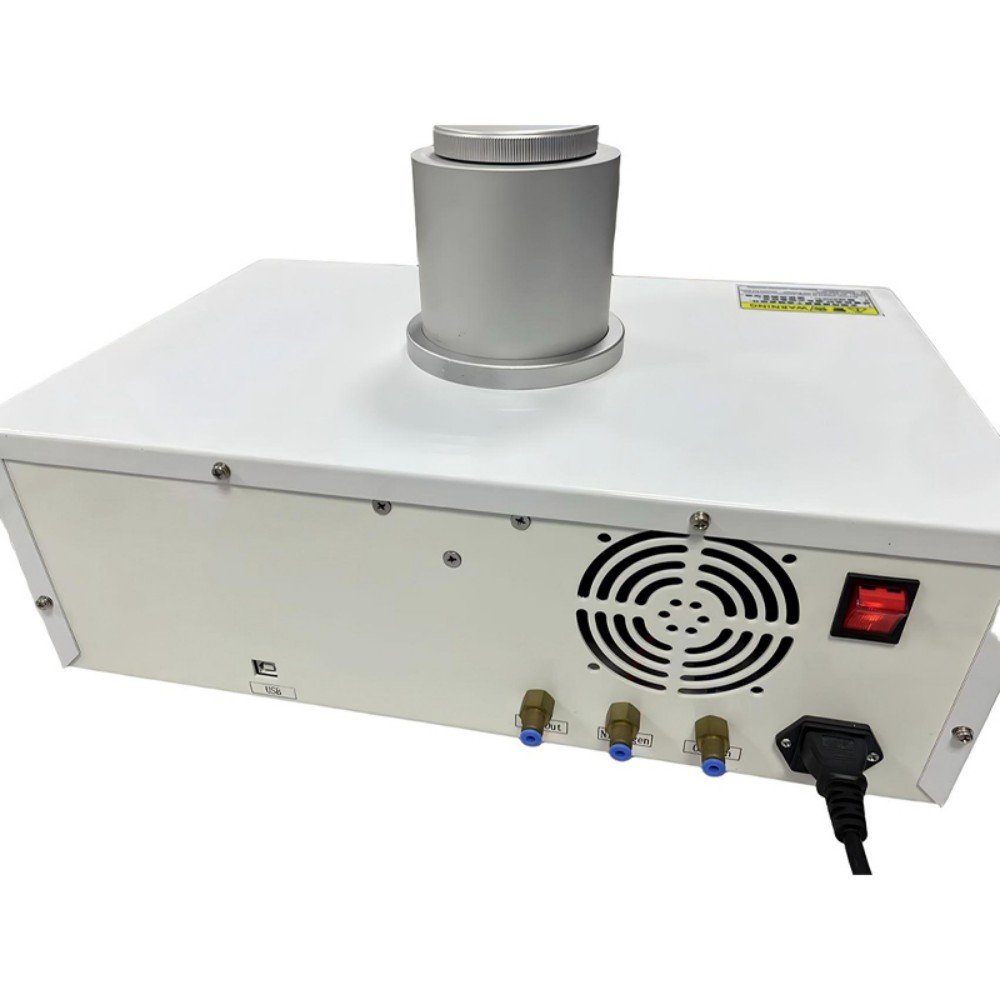
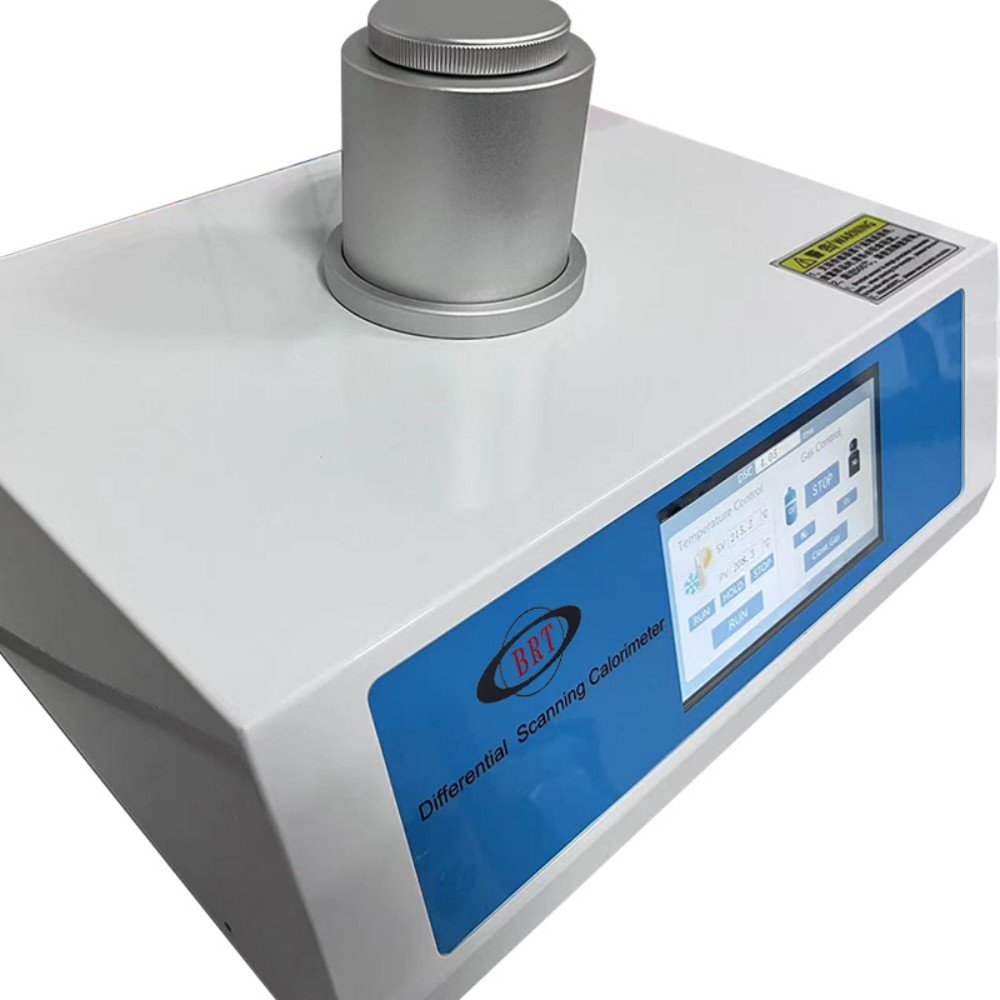
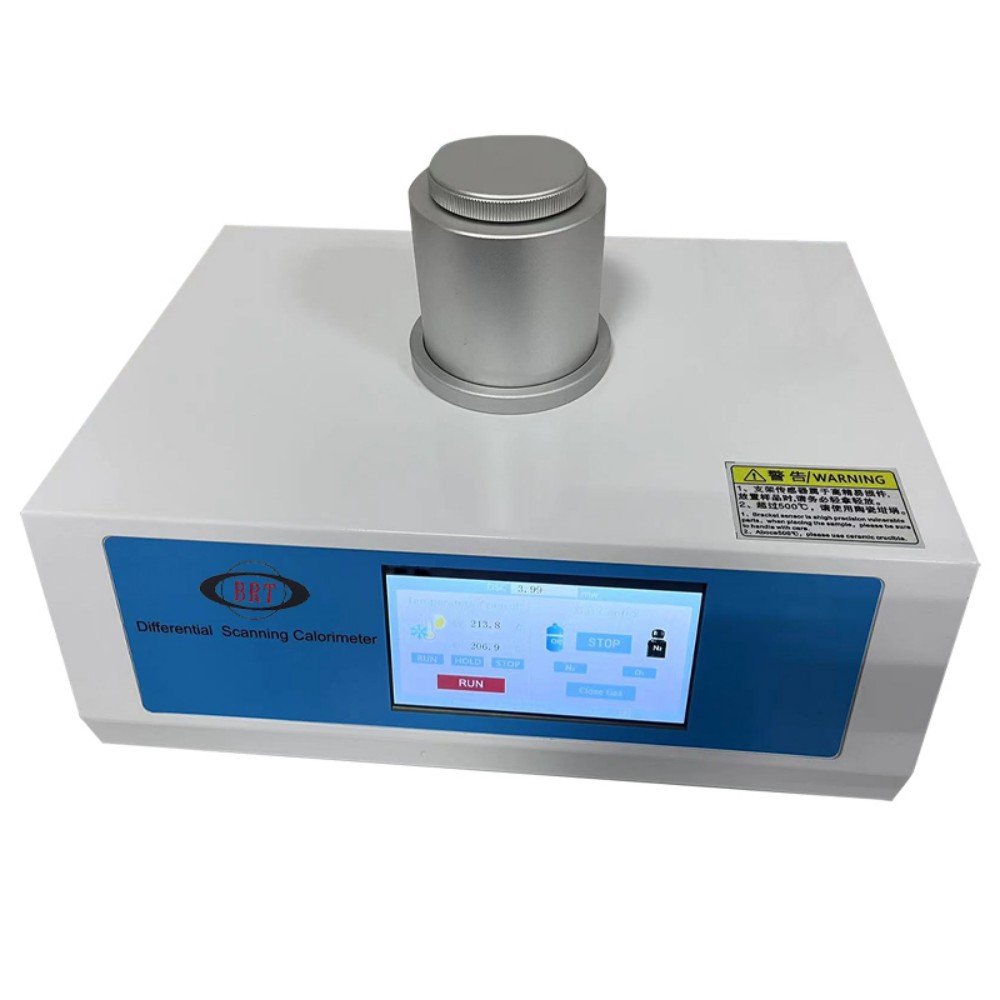
Equipped with an advanced dual temperature probe architecture and a dynamic DSC measuring range of 0 to ±500 mW (0.01 mW / 0.01 °C resolution), this Differential Scanning Calorimeter (DSC) measures glass transition temperature (Tg), melting point, cold crystallization, curing enthalpy, and Oxidation Induction Time (OIT). Featuring automated N2 and O2 dual-gas switching, an industrial 7-inch LCD touchscreen, and a fully enclosed mechanical furnace that eliminates interior adhesive contamination, the BRT-500B delivers certified analytical repeatability from room temperature to 500 °C.
Differential Scanning Calorimeter (DSC) Standards
This optical thermal analysis system enables certified laboratories to assess thermodynamic behavior in full compliance with global fire, polymer, and chemical testing standards:
| Standard Code |
Standard Title & Scope |
Primary Testing Application |
| ISO 11357 (Parts 1–6) |
Plastics — Differential scanning calorimetry (DSC) general principles, Tg, melting, Cp & OIT |
International core benchmark for comprehensive polymer thermal behavior analysis |
| GB/T 19466 (Parts 1–6) |
Plastics — Differential scanning calorimetry (DSC) standard methods |
Mandatory Chinese national standard for thermal analysis of plastics and resins |
| ASTM D3418 / ASTM E1356 |
Standard Test Method for Transition Temperatures and Enthalpies of Polymers by DSC |
North American standard for glass transition, melting, and crystallization testing |
Technological Features of BRT-500B Differential Scanning Calorimeter (DSC)
- Dual Temperature Probe System
Employs one independent probe dedicated to furnace PID heating control while a second high-precision thermocouple measures sample temperature directly. This arrangement eliminates thermal lag and records accurate Tg and reaction kinetics.
- Ultra-High Precision Resolution (0.01 °C / 0.01 mW)
Features a dynamic heat flow range of 0 to ±500 mW with 0.01 mW sensitivity alongside 0.01 °C temperature display resolution, ensuring clean baseline stability for subtle endothermic and exothermic events.
- Automated Dual-Gas Switching Mechanism (N2 / O2)
Integrates automatic nitrogen and oxygen gas switching with digital flow control (0–200 mL/min). Facilitates seamless transitions between inert purging and oxidative atmospheres required for standardized OIT evaluations.
- Fully Enclosed Contamination-Free Furnace Structure
Eliminates internal colloids and organic adhesives through pure mechanical fixing, preventing high-temperature outgassing contamination. The closed bracket design prevents debris from falling into the heating chamber.
- Self-Calibration Standard & Interactive Interface
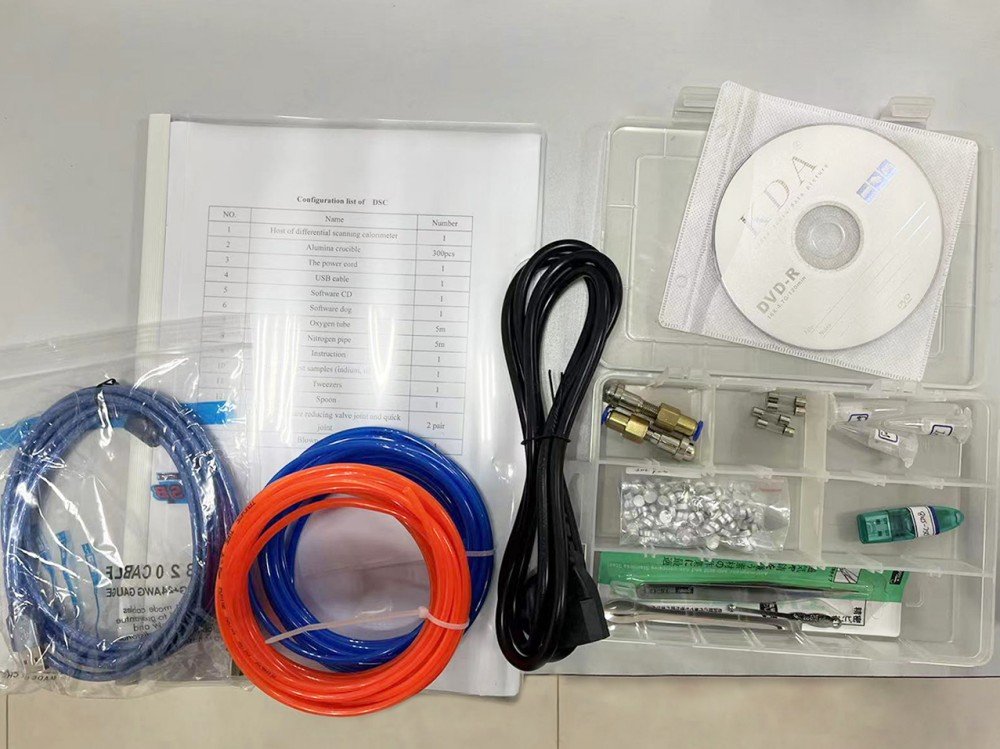
Supplied with certified Indium (In), Tin (Sn), and Zinc (Zn) pure reference materials for rapid multi-point temperature and enthalpy calibration via the 7-inch 24-bit color LCD touch screen.
Technical Specifications of Differential Scanning Calorimeter (DSC)
| Product Model |
BRT-500B Differential Scanning Calorimeter (DSC) |
| Temperature Range & Resolution |
Room Temperature to 500 °C; Temperature Resolution: 0.01 °C |
| Heating & Cooling Ramping Rates |
Heating Rate: 0.1 to 80 °C/min; Cooling Rate: 0.1 to 30 °C/min |
| DSC Measuring Range & Sensitivity |
Dynamic Range: 0 to ±500 mW; Resolution: 0.01 mW; Sensitivity: 0.1 mW |
| Atmosphere Gas Control |
Nitrogen (N2) & Oxygen (O2); Auto-switching; Pressure: 0.2 MPa; Flow: 0–200 mL/min |
| Sample Crucible Type |
Standard Uncovered Aluminum Crucible (Φ6.5 × 3 mm) |
| Calibration Reference Standards |
Pure Indium (In), Tin (Sn), and Zinc (Zn) included for temperature & enthalpy adjustment |
| Furnace & Power Requirements |
Fully enclosed mechanical bracket structure; AC 220V, 50 Hz (300W total power) |
System Architecture & Applications of Differential Scanning Calorimeter (DSC)
Standardized Testing Workflow:
- Weigh the test sample (typically 5–10 mg) into a standard aluminum crucible and place it onto the sample platform alongside the reference pan inside the heating chamber.
- Select the target thermal method (e.g., dynamic heating ramp, isothermal hold, or dynamic OIT method) on the touch screen or PC software interface.
- Set the purge gas parameters (N2 for thermal transitions, switching to O2 at specified isothermal temperatures for OIT evaluations).
- Initiate the scan; the dual temperature probes and heat flow sensors capture thermal transitions in real time, plotting precise differential power curves.
- Use the software toolset to calculate glass transition inflection points (Tg), peak melting/crystallization temperatures, area enthalpy integrals, and oxidation onset times.
Target Customer Applications:
- Thermoplastic resin compounding, masterbatch, and synthetic rubber manufacturing facilities.
- Polymer insulation, automotive composite parts, and packaging material quality control labs.
- Pharmaceutical solid-state analysis, chemical synthesis, and energetic material research centers.
- University material science departments, polymer engineering labs, and third-party testing institutes.
Differential Scanning Calorimeter (DSC) FAQ
Q1: How does the dual temperature probe system improve testing accuracy?
A: One probe regulates the furnace wall temperature via PID control, while the second probe rests directly beneath the sample pan. This dual configuration compensates for thermal lag and records the true real-time sample response, delivering highly accurate Tg and peak enthalpy data.
Q2: Can the BRT-500B measure Specific Heat Capacity (Cp) and Oxidation Induction Time (OIT)?
A: Yes. OIT testing (both isothermal and dynamic) is fully supported out of the box per ISO 11357-6. Specific Heat Capacity (Cp) testing per ISO 11357-4 is available via an optional software and hardware expansion module.
Q3: Why is the adhesive-free furnace structure important for high-temperature testing?
A: Traditional heating chambers assembled with organic glues can outgas or degrade when heated above 300 °C, generating baseline drift and false thermal peaks. The BRT-500B mechanical-fixation furnace eliminates glues entirely, preserving baseline stability across the entire 500 °C temperature range.

Reviews
There are no reviews yet.