
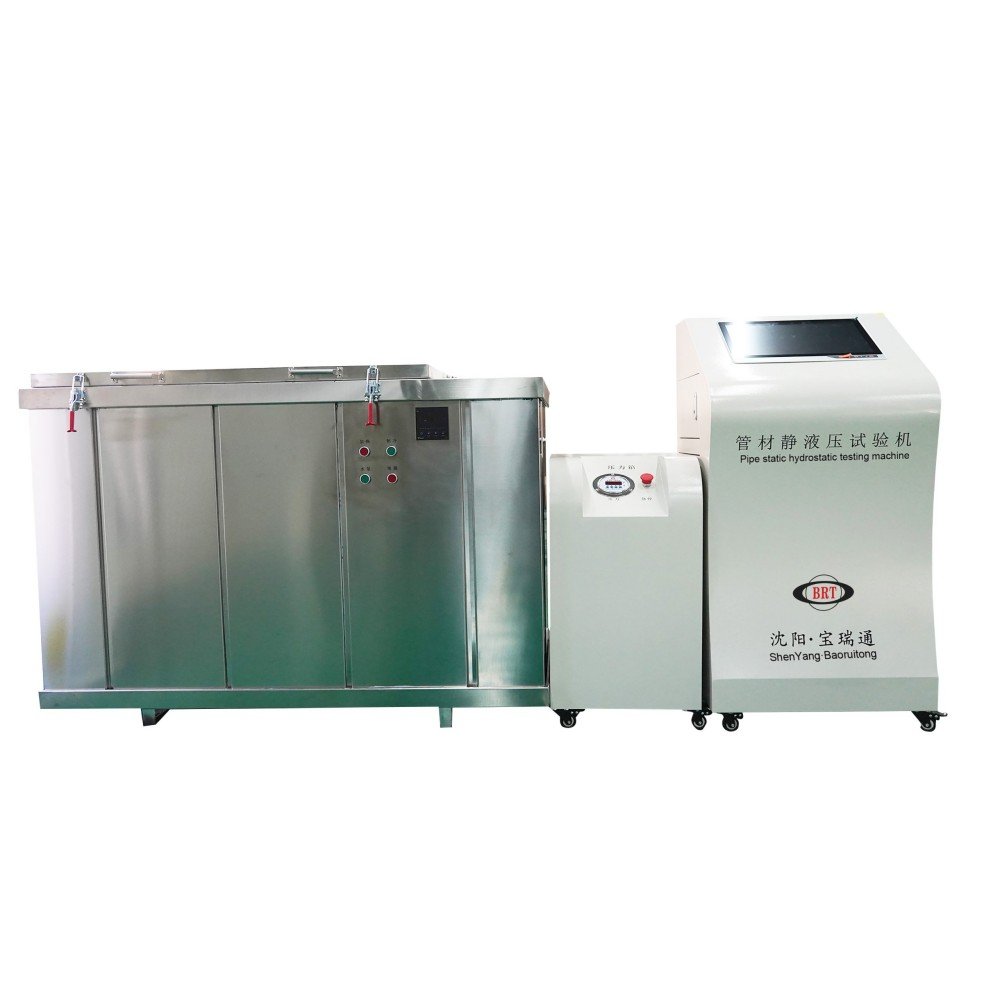
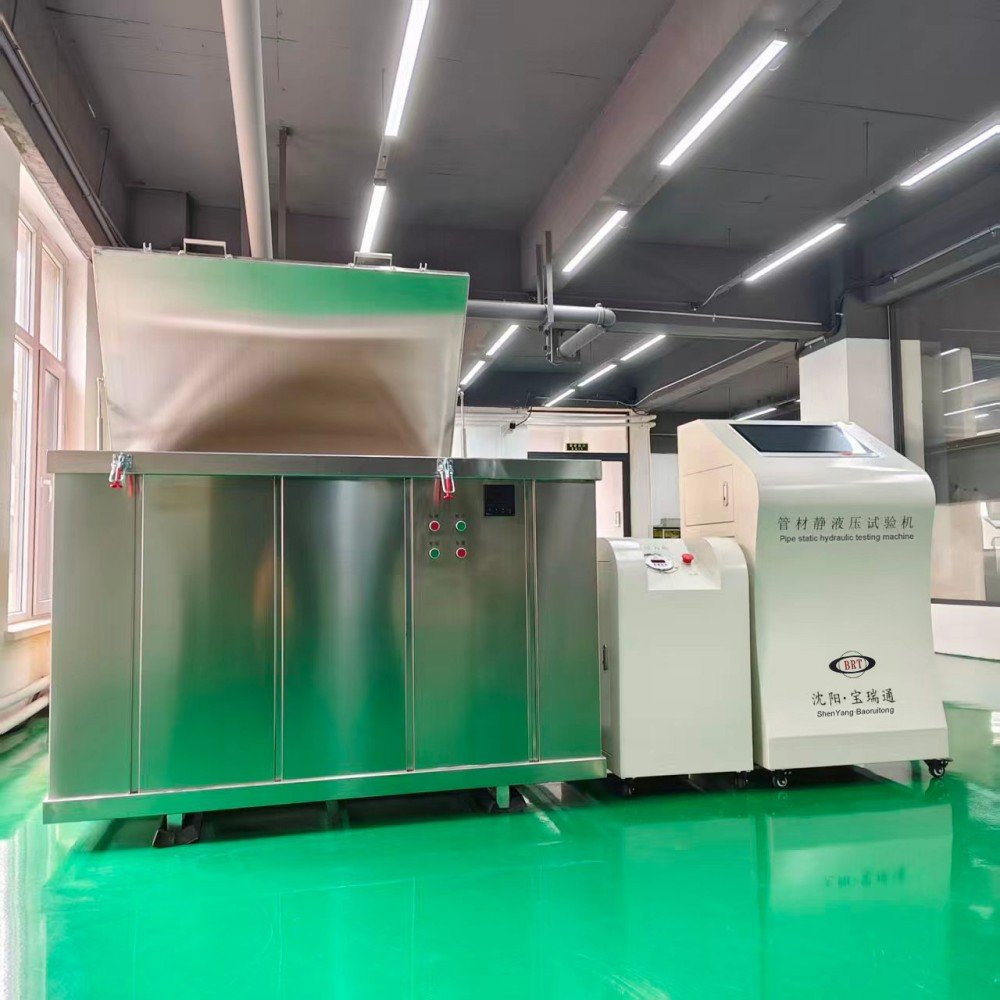
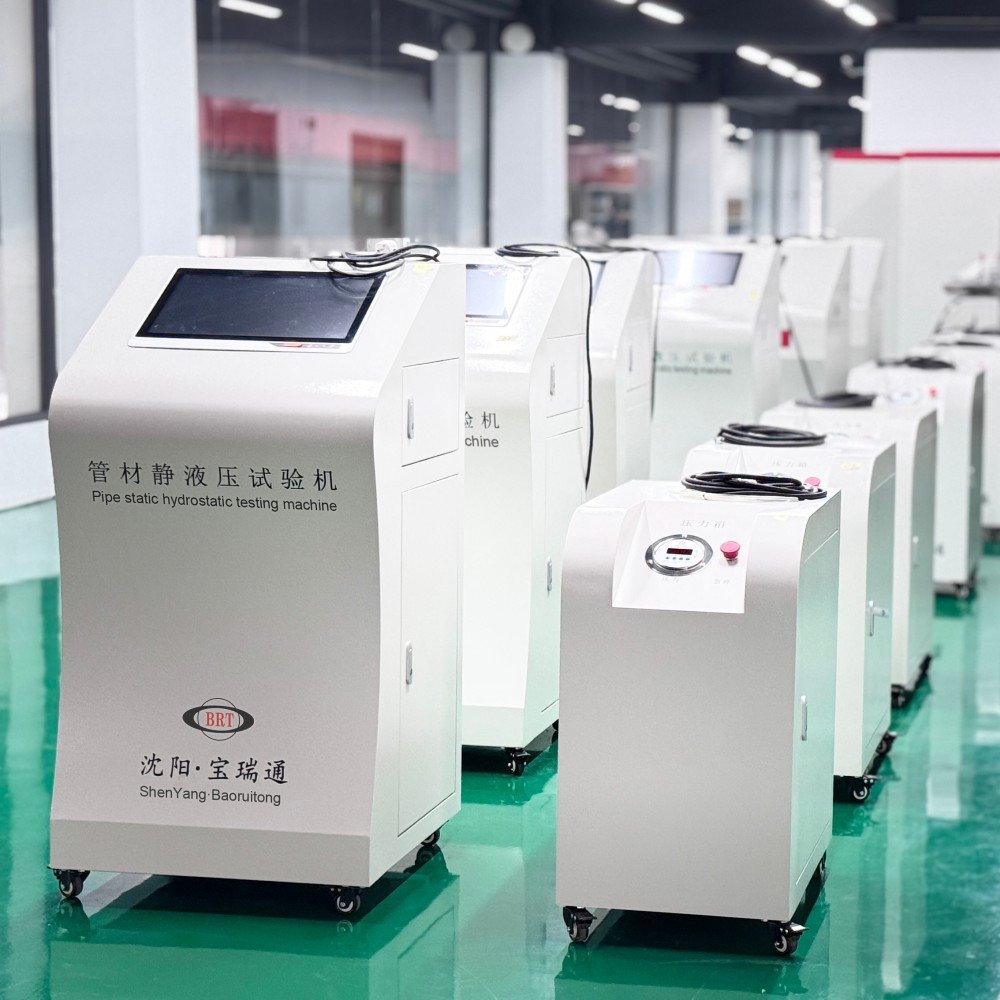
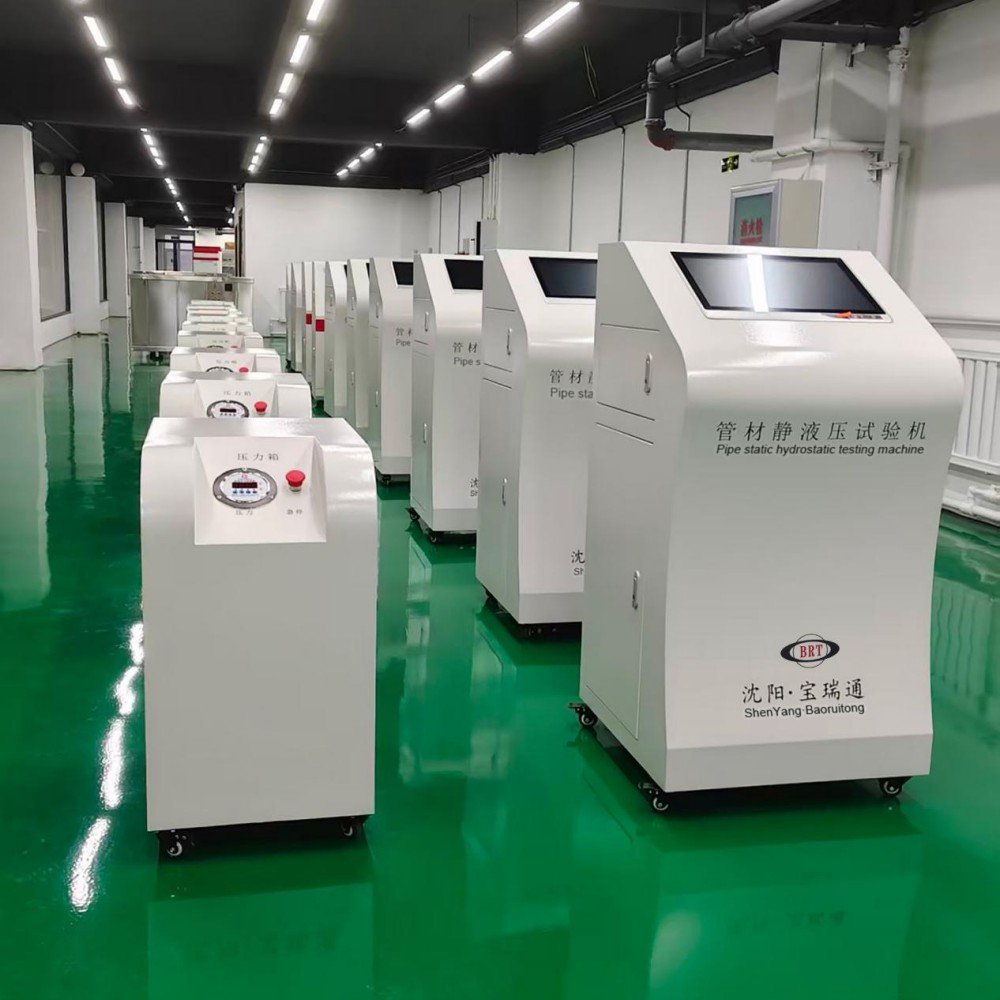
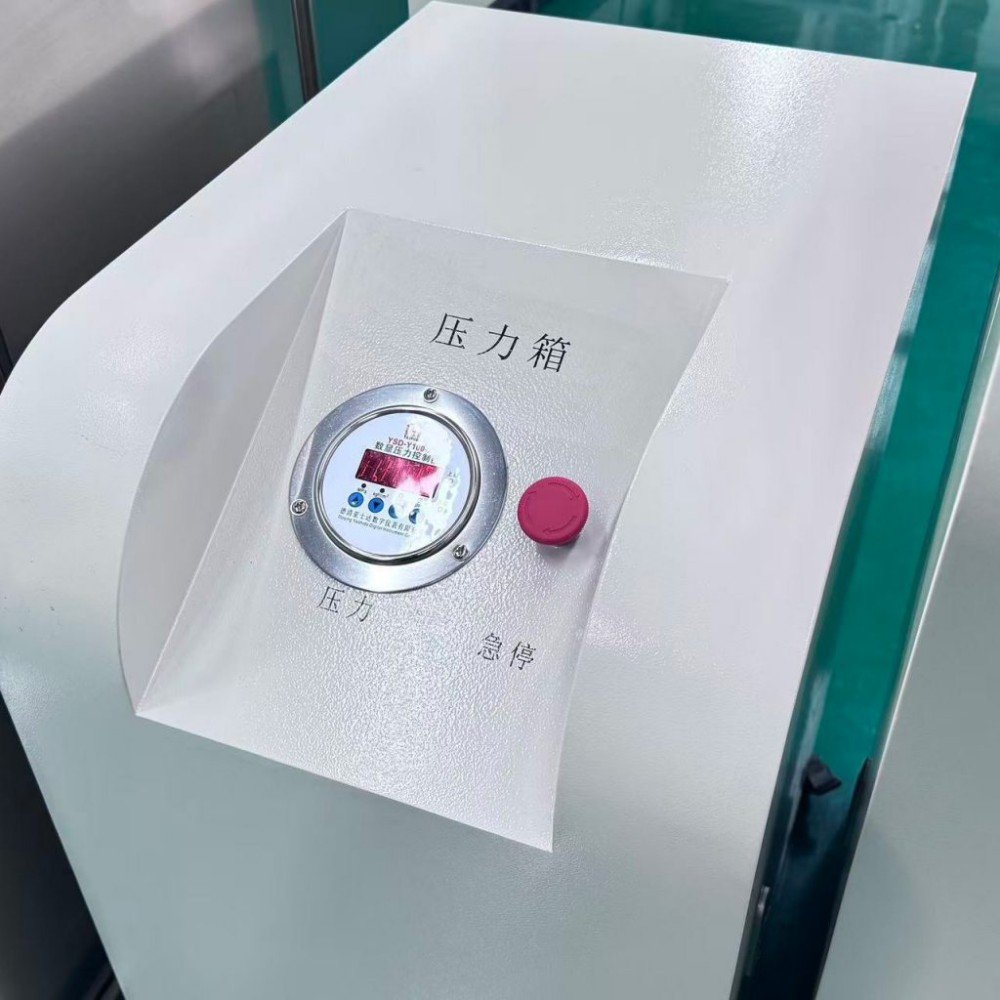
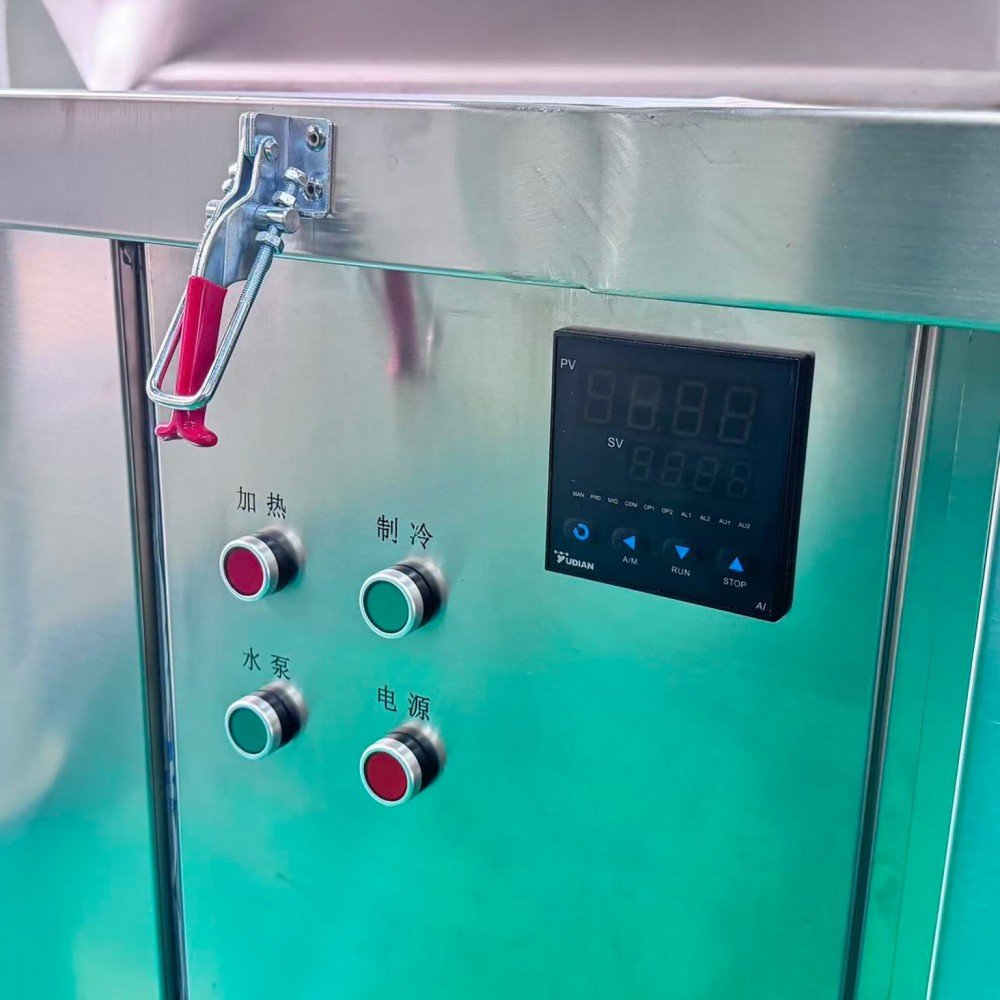
Pipe hydrostatic pressure tester engineered for long-term constant-pressure and instantaneous burst testing of thermoplastic pipes from DN16 to DN1600. The GJ16C pairs a 3-channel modular pressure control unit with a 304 stainless steel constant-temperature water tank and patented Type A radial-seal fixtures — delivering 0.4–16 MPa control, ±0.1% timing accuracy and full ISO 1167/ ISO 9080:2012 / ASTM D1598 / ASTM D1599 compliance. Every channel runs and stores data independently, so a failure on one station never interrupts the others.
The GJ16C Pipe Hydrostatic Pressure Tester is a state-of-the-art laboratory testing system engineered to answer the one question no short-term check can: how long will this pipe hold? By applying a precisely controlled, constant internal water pressure for up to 9,999 hours—or driving specimens to rupture in a hydraulic burst test—this advanced platform allows manufacturers and research institutes to rigorously quantify pressure resistance, creep behavior, and service life before a pipe ever leaves the plant.
The system is built around three fully independent test channels, each managed by its own dedicated microcomputer module reporting to a central embedded industrial PC. It features a pressure control range of 0.4–16 MPa (arbitrarily settable in MPa, PSI, or bar), an exceptional pressure display resolution of 0.001 MPa, and a timing accuracy of ±0.1%. Paired with a matched 304 stainless steel constant-temperature water bath (maintaining ±1 °C from 20 °C to 95 °C) and patented Type A radial-seal end fixtures covering pipe diameters from DN16 to DN1600, the GJ16C delivers uncompromising compliance and precision.
What the GJ16C Tests
- Long-Term Hydrostatic Pressure Test:
Maintains constant internal pressure for up to 9,999 hours and 59 minutes to determine the time-to-failure of thermoplastic and composite pipes (compliant with ISO 1167-1 and GB/T 6111-2018). - Instantaneous Hydraulic Burst Test:
Executes rapid pressurization to rupture, yielding maximum burst pressure and calculated hoop stress data (compliant with GB/T 15560 and ASTM D1599). - Thermal Stability Under Hydrostatic Conditions:
Performs long-duration elevated-temperature testing on thermoplastic pipe materials under strictly controlled thermal profiles. - Pipe Material Extrapolation Data:
Generates reliable baseline data to feed long-term static hydraulic strength evaluations via extrapolation (compliant with GB/T 18252 / ISO 9080).
Primary Target Users: Pipe manufacturers qualifying new formulations, third-party inspection bodies, quality supervision departments, and national research institutes requiring certified proof of declared hoop stress at 20 °C, 60 °C, or 95 °C.
Compliance with International & National Standards
The GJ16C is engineered to meet and exceed rigorous global testing standards across pressure performance, burst qualification, and long-term extrapolation:
| Standard Code | Testing Scope & Description |
|---|---|
| ISO 1167-1:2006 / ISO 1167 | General method for determining resistance to internal hydrostatic pressure of thermoplastics pipes, fittings, and assemblies (fully confirmed edition). |
| ISO 9080:2012 | Determination of long-term static hydraulic strength of thermoplastic pipe materials by extrapolation. |
| GB/T 6111-2018 | Chinese national standard for determining the resistance to internal pressure of thermoplastic piping systems for fluid conveyance. |
| GB/T 15560-1995 | Hydraulic instantaneous bursting and pressure resistance test methods for plastic pipes for fluid conveyance. |
| GB/T 18252-2000 | Method for evaluating long-term static hydraulic strength of thermoplastic pipes via extrapolation. |
| ASTM D1598-2004 | Standard test method for time-to-failure of plastic pipe under constant internal pressure. |
| ASTM D1599 | Resistance to short-time hydraulic pressure of plastic pipe, tubing, and fittings (burst test). |
| GB/T 18997.1 / .2 | Compliance requirements for metallic-plastic composite pipe structures and specialized fixtures. |
Why Fixture Type Matters: ISO 1167-1 distinguishes Type A end caps (rigidly connected, transmitting hydrostatic end thrust into the pipe wall) from Type B end caps. For long-term strength evaluations via extrapolation under ISO 9080, Type A end caps are strictly required. The GJ16C supplies Type A fixtures as standard, ensuring extrapolation-grade data right out of the box.
Key Performance Data of GJ16C Pipe Hydrostatic Pressure Tester
| Parameter | Technical Specification |
|---|---|
| Test Pipe Diameter Range | DN16 – DN1600 mm (via matched Type A end fixtures) |
| Test Channels (Standard) | 3 independent stations (expandable up to 30 modules) |
| Pressure Control Range & Units | 0.4 – 16 MPa (Settable in MPa, PSI, or bar) |
| Pressure Control Accuracy | −1% to +2% (adjustable) |
| Pressure Display Resolution | 0.001 MPa (high-granularity readout) |
| Timing Range & Accuracy | 0 to 9,999 h 59 min 59 s | Timing Accuracy: ±0.1% |
| Control Architecture | Embedded industrial PC central cluster control with microcomputer modules |
| Data Protection | Per-channel power-off data retention with automatic resume on power recovery |
Engineering Note: Two metrics on this table deserve special attention. The 0.001 MPa display resolution means the machine resolves pressure far more finely than the ±1% instrumentation tolerance requires—eliminating arguments over display granularity. Furthermore, the ±0.1% timing accuracy is critical because time-to-failure is the primary measured variable in long-term tests, directly safeguarding extrapolated strength calculations.
High-Efficiency Constant-Temperature Water Tank
The water bath is not an accessory; it is the other half of the test environment. Temperature drift directly alters the hoop stress a specimen can survive, making long-term bath stability non-negotiable.
| Tank Parameter | Specification Details |
|---|---|
| Temperature Control Range | 20 °C – 95 °C (optional refrigeration system available for sub-ambient cooling) |
| Temperature Control Accuracy | ±1 °C (PID regulation with upper/lower tolerance limits) |
| Liner Material & Construction | 304 Stainless Steel (2 mm inner plate), Insulation layer > 85 mm with thermal-bridge reduction |
| Heating Power & Circulation | 3 kW Heating Power; German Circulation Pump (135 L/min rated flow) |
| Lid Operation & Dimensions | Dual-cylinder pneumatic lift (openable at any angle); Internal Dimensions: 1800 × 900 × 1200 mm |
Thermal Performance Highlights: Independent testing confirms that with water running at 95 °C, the outer tank remains close to ambient room temperature, achieving a > 70% reduction in power consumption compared to conventionally insulated baths. Additionally, external heaters can be serviced or replaced without interrupting active tests.
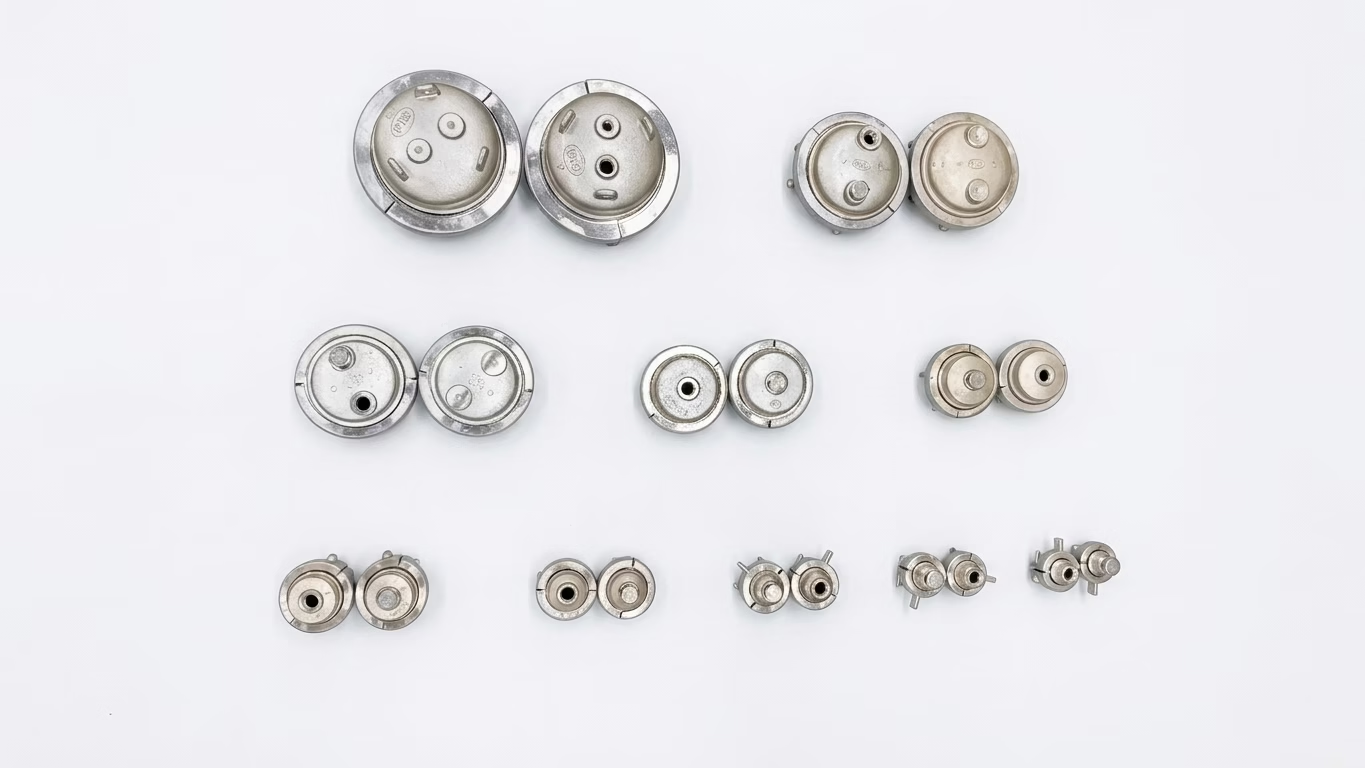
Patented Type A 304 Stainless Steel End Fixtures
Fixtures are often the most frustrating bottleneck in hydrostatic testing. The GJ16C ships with a patented Type A non-pull-rod radial-seal fixture range built for speed, safety, and absolute repeatability:
- Clamp Before Seal: Patented sequencing guarantees 100% leak-free clamping every time.
- Segmented Clamping Block: Provides automatic centering for secure gripping and robust structural stability.
- Ergonomic Safety: No dedicated clamping bracket required; safety lifting devices are fitted to components over 3 kg.
- Rapid Assembly: Under 30 minutes for $\Phi 200+$ large fixtures, and under 10 minutes for $\Phi 200$ and below.
- Full 304 Stainless Steel Build: Precision-cast, pickled, and passivated for exceptional corrosion resistance and service life.
- Four-Legged End Support: Keeps specimens stable in the bath throughout the entire duration of the test.
- Universal Material Compatibility: Supports PE, PE-X, PE-RT, PVC, PVC-U, PVC-C, PP-R, PP-B, PP-A, PB, PA, and steel-reinforced composite pipes.
Multi-Size 304 stainless steel end closure
Why Choose the GJ16C Hydrostatic Pressure Tester?
- Independent Channel Fault Isolation: Each station operates on its own self-contained module with a dedicated microcomputer and solenoid valve. A rupture or fault on one channel does not disturb running tests on others; simply close that station’s stop valve and keep the rest running.
- Fast & Stable Multi-Stage Accumulator Control: Advanced accumulator pressure control ensures rapid response times inside tolerance bands while reducing valve actuation stress to extend component service life.
- Globally Sourced Core Hardware: Built with premium components including German 16 MPa solenoid valves, UK Barnes pressure transmitters, a Taiwan plunger pump, and a 17.3-inch embedded industrial tablet PC.
- Comprehensive Unified Dashboard: The bilingual (Chinese/English) interface displays main-circuit pressure, branch pressure peaks, timing pressure, remaining time, tank temperature, and custom notes simultaneously across all active workstations.
- Triple-Layer Safety Protection: Integrated electrical, mechanical, and software safeguards protect against leakage, short circuits, static interference, low water levels, power outages, and operational errors.
- Power-Loss Data Survival: Per-channel memory retains test data through sudden blackouts and automatically resumes execution upon power restoration. Results are archived in text format for complete traceability.
- Modular Scalability: The platform supports up to 30 standard control modules, allowing your testing capacity to grow organically without replacing the main unit.
Core Component Configuration
| Component | Specification | Qty | Origin |
|---|---|---|---|
| Plunger Pump | 16 MPa | 1 | Taiwan |
| Main Road Accumulator | 4.0 L | 1 | Hebei, China |
| Shunt Accumulator | 0.4 L | 3 | Hebei, China |
| Control Module | Standard Micro-Module | 3 | Baoruitong |
| Solenoid Valve Set | 16 MPa | 6 | Germany |
| Pressure Transmitter | 16 MPa | 4 | Barnes, UK |
| Drive Motor | 550 W | 1 | Shenyang, China |
| Industrial Tablet PC | 17.3-inch (Embedded) | 1 | Guangzhou, China |
Available Optional Upgrades: High-power refrigeration compressor system (for sub-ambient cooling down to 20 °C), automatic water-replenishment module, expanded control modules/stations, custom pressure inlet port counts (e.g., 10 ports), and tailor-made water tank dimensions ($\Phi 900$ to $\Phi 1600$).
Frequently Asked Questions (FAQ)
Q1: What is a pipe hydrostatic pressure tester used for?
A: It determines how plastic or composite pipes behave under sustained internal water pressure. Standard modes include long-term hydrostatic testing (holding pressure until failure to find time-to-failure) and burst testing (rapid pressurization to rupture to evaluate hoop stress).
Q2: Which pipe materials and diameters are supported?
A: The GJ16C supports PE, PE-X, PE-RT, PVC, PVC-U, PVC-C, PP-R, PP-B, PP-A, PB, PA, and steel-reinforced composite pipes across diameter sizes from DN16 to DN1600 using matched Type A fixtures.
Q3: Can multiple stations run at different pressures simultaneously?
A: Yes. Each workstation’s pressure is independently adjustable anywhere within 0.4–16 MPa, and individual micro-control modules ensure that a failure on one station has zero impact on active tests running on others.
Q4: How does custom configuration work?
A: Systems are modularly configured based on your exact testing requirements. You select the pressure main unit, tank dimensions ($\Phi 900$ to $\Phi 1600$), fixture sizes, and station counts to match your laboratory compliance program.
| Pipe Test Standard | ASTM D1598, ASTM D1599, ISO 1167, ISO 9080 |
|---|
bravezoeyj@gmail.com –
vvvvvery good!