Interpretation des Standards

Fire Resistance Testing for Steel Structures: Key Requirements

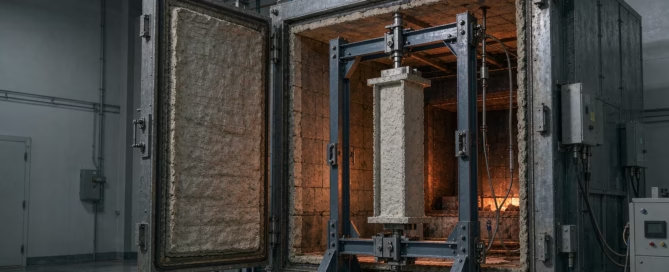
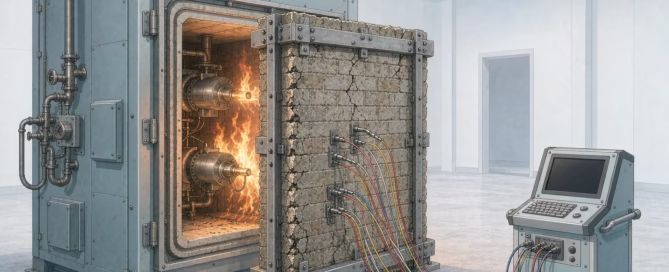
Fire resistance testing for steel structures produces a time rating for a protected member, not a property of the steel itself. That rating depends on the load ratio, the section factor, the protection type and the thickness applied, and it is extended to other sections by calculation in an assessment report. This guide sets out what an R 60 or R 90 rating actually describes, the three protection routes and the standard each one is assessed against, how a loaded furnace test is run, and the site changes that void a rating after it has been issued.

Von |2026-10-27T13:40:19+08:00Oktober 20, 2026|Interpretation des Standards|0 Kommentare

How to Test the Fire Performance of Building Insulation Materials

Testing the fire performance of building insulation is not a single test, and which test decides the result depends on the product. Mineral wool is settled by non-combustibility and calorific potential; EPS and PIR are settled by the SBI and the small-flame test; foil-faced boards are settled by their facings. This guide maps the four reaction-to-fire methods behind a Euroclass, the criteria that decide each class, and the three tests that sit outside the classification system, including ASTM E84 for North America and NFPA 285 for facade assemblies. It also covers pipe insulation's separate L classes, the specimen preparation errors that cause most retests, and the seven fields a test report must state before a class can be quoted in a tender.

Von |2026-10-27T13:40:04+08:00Oktober 20, 2026|Interpretation des Standards|0 Kommentare

Fire Resistance vs Flame Retardancy: What Is the Difference?

Fire resistance and flame retardancy are two different properties, measured by two different families of tests, and one never implies the other. Fire resistance is a time-based rating of a loaded assembly inside a furnace, classified under EN 13501-2. Flame retardancy describes how a material responds to a defined ignition source, classified under EN 13501-1 or screened with UL 94. This guide sets the two side by side: which standards govern each, what a report line actually proves, how a steel column and a fire-resistant cable end up carrying both kinds of evidence, where flame-retardant claims break down in service, and the four questions to answer before writing a fire requirement.

Von |2026-10-27T13:39:54+08:00Oktober 20, 2026|Interpretation des Standards|0 Kommentare

Fire Retardant Coating Testing: Methods and Equipment

Fire retardant coating testing is not one test. It is a family of methods that answer three different questions: whether a protected steel member still holds its fire resistance, how the coating itself behaves when it burns, and whether a formulation passes a fast screening check. This guide sets out the six methods that carry most commercial approvals, including EN 13381-8 for reactive protection to steel, ASTM E119 and ISO 834 furnace work, cone calorimeter and SBI reaction-to-fire routes, and the small-scale tests used before either. It also covers the equipment each route needs, how to read a test report, and the preparation errors that void otherwise good results.

Von |2026-10-27T13:39:40+08:00Oktober 19, 2026|Interpretation des Standards|0 Kommentare

Was ist ein Feuerwiderstandstest und warum ist er wichtig??

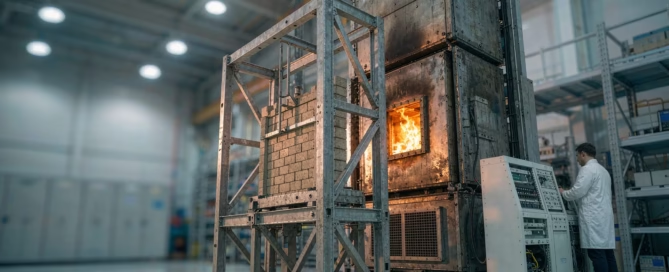
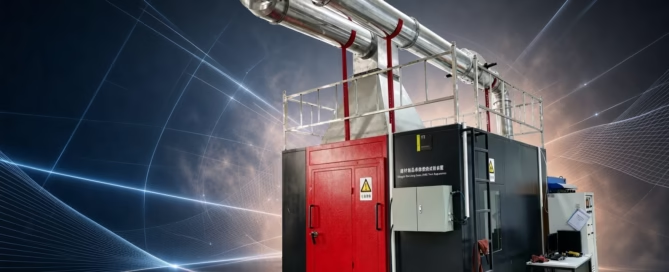
A fire resistance test measures how long a building element keeps doing its job while it is being burned. The element is mounted in a furnace, loaded where it is loadbearing, and heated along a standard time-temperature curve until it fails on loadbearing capacity (R), integrity (E) or insulation (I). The result is a time rating in minutes, not a pass or fail grade. This guide explains what the test measures, how the three criteria are judged, how fire resistance differs from reaction to fire, which standards cover walls, doors and cables, why ISO 834-1:2025 matters to anyone reading a datasheet, and how to choose a furnace configuration that matches the element you are about to test.

Von |2026-10-27T13:39:16+08:00Oktober 16, 2026|Interpretation des Standards|0 Kommentare

UL 94 Entflammbarkeitsprüfung: HB, V-0, V-1 und V-2 erklärt

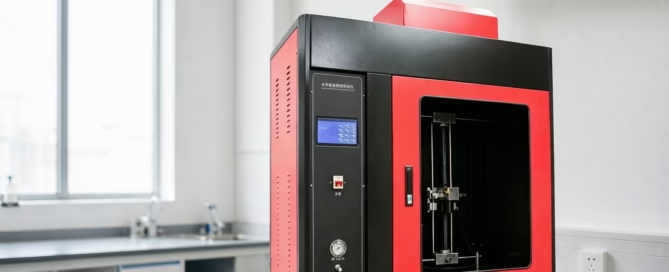
UL 94 flammability testing measures how a plastic behaves when a small flame is applied, and reports the result as one of twelve ratings. The two families most engineers meet are the horizontal HB rating and the vertical V-0, V-1 and V-2 ratings. They are produced by different specimen orientations, unterschiedliche Flammenanwendungen und unterschiedliche bestandene Kriterien, and the only difference between V-1 and V-2 is whether a falling drip ignites the cotton placed below the specimen. This guide sets out the published burn-time, afterglow and dripping criteria for each rating, explains how conditioning and thickness affect the result, and maps UL 94 to its IEC and ASTM equivalents.

Von |2026-10-27T13:39:25+08:00Oktober 16, 2026|Interpretation des Standards|0 Kommentare

Feuerwiderstandsprüfverfahren für Baustoffe

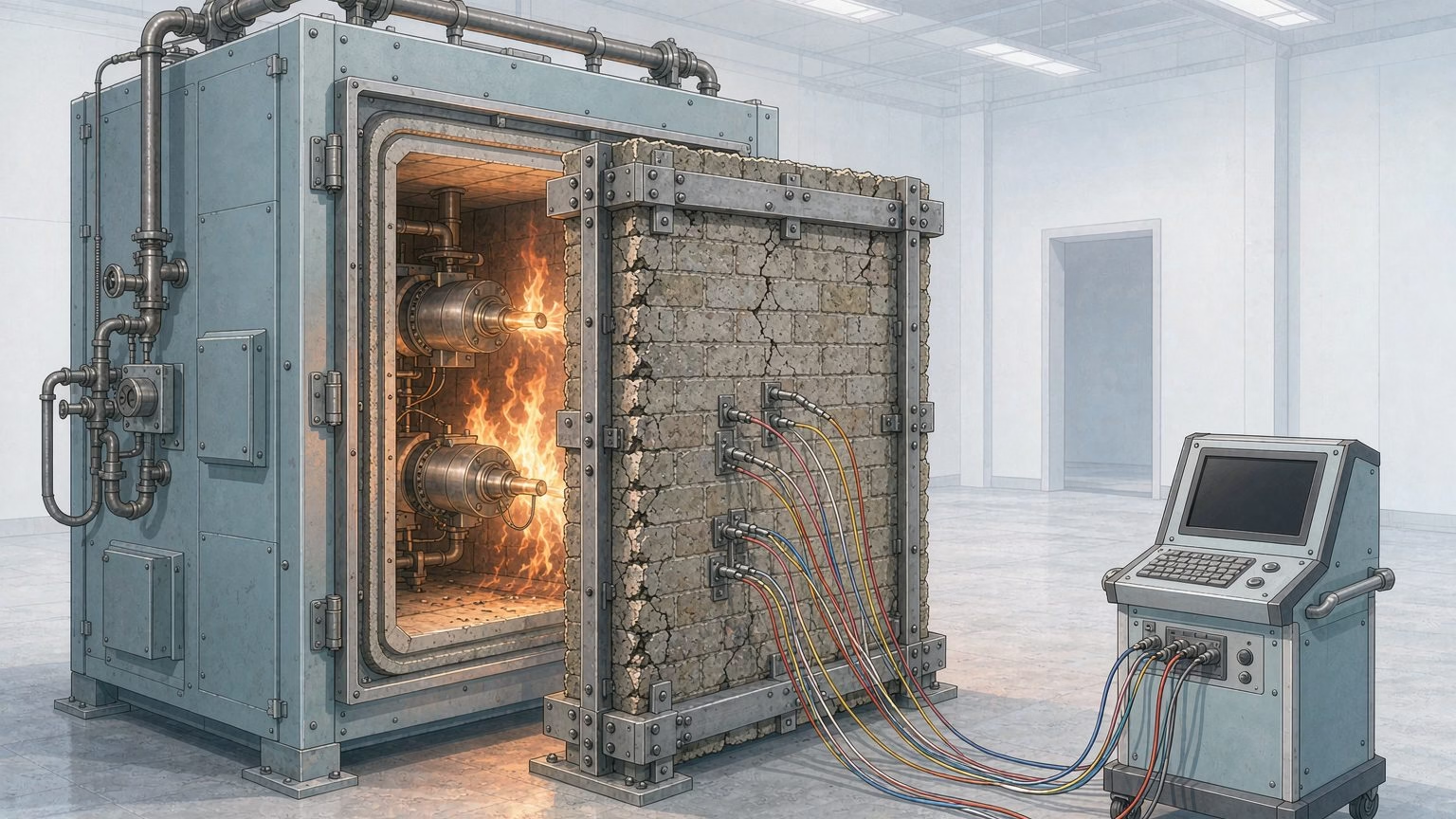
A fire resistance test procedure is a full-scale furnace test: an element of construction is built into a restraint frame, loaded if it is loadbearing, heated along a standard time-temperature curve, and monitored until it fails one of three criteria or survives the required exposure period. The three criteria are loadbearing capacity (R), integrity (E) and insulation (I). This guide walks the procedure through in the order a laboratory runs it - the standard fire curves, the specimen and conditioning stages, the instrumentation that decides the result, the exact pass and fail thresholds, the element-specific parts of EN 1364, IN 1365, IN 1634 und EN 13381, and the calibration and direct-application rules that decide how far a single test result can be used.

Von |2026-10-27T13:39:30+08:00Oktober 16, 2026|Interpretation des Standards|0 Kommentare

Nichtbrennbarkeitstest (ISO 1182): Kriterien und Geräte

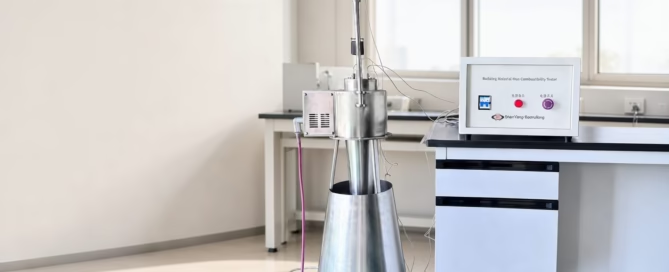
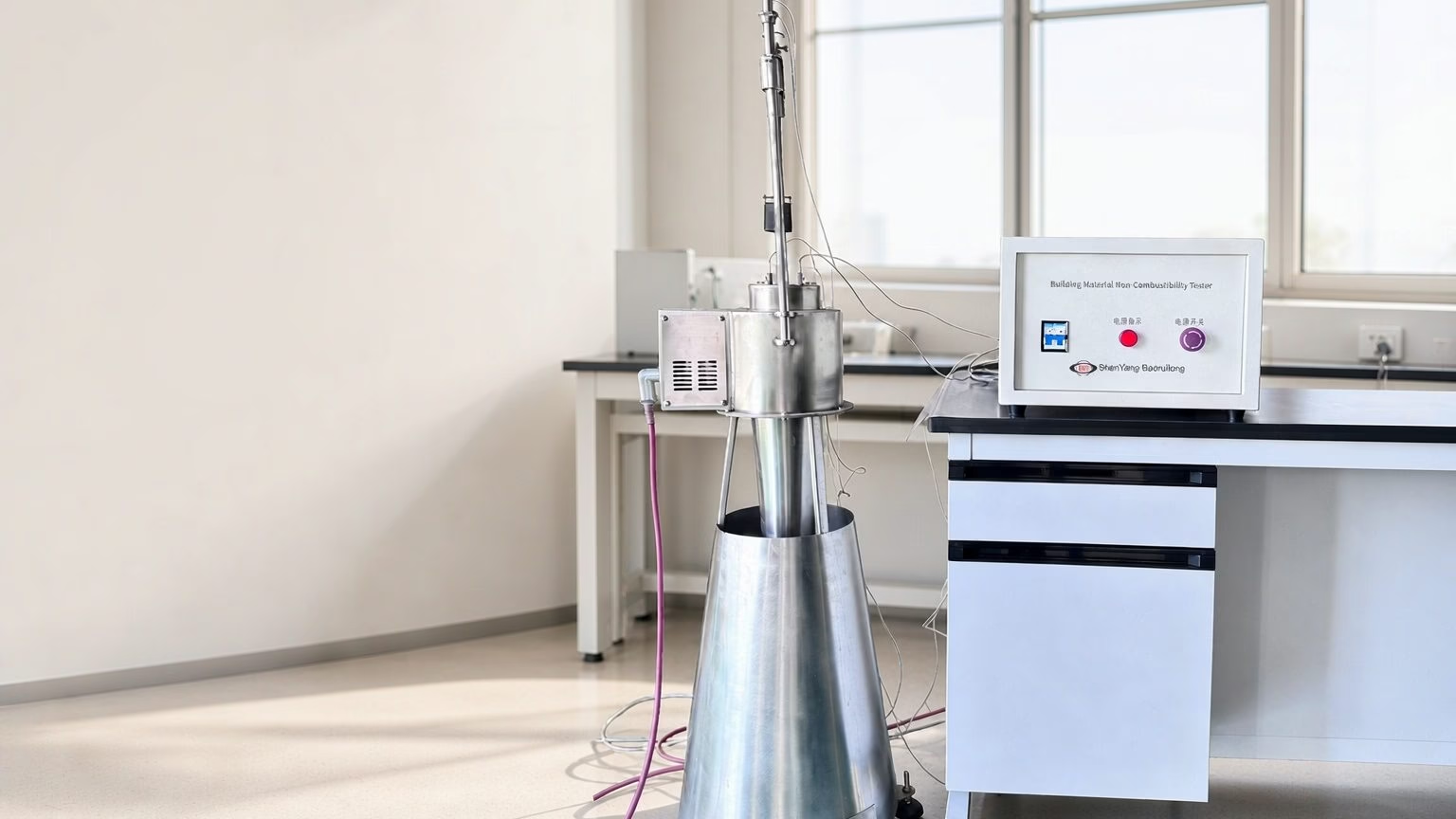
The non-combustibility test decides whether a material can be declared non-combustible at all. This guide covers the 750 C furnace procedure, the pass criteria used in Europe, North America, China and marine work, and how to specify an apparatus that still meets the editions now in force.

Von |2026-10-16T10:23:51+08:00Oktober 16, 2026|Interpretation des Standards|0 Kommentare

Prüfung des Brandverhaltens: Die vier Tests hinter EN 13501-1

Reaction to fire testing explained: the four EN 13501-1 tests, the class each route needs, and the BRT equipment for EN ISO 1182, 1716, 11925-2 und EN 13823.

Von |2026-10-15T08:21:34+08:00Oktober 14, 2026|Interpretation des Standards|0 Kommentare
Nach oben gehen