La réponse courte
A fire door is classified after testing, pas avant. The test produces observations; the classification turns them into a code such as NON 30 Sa (européen), FD60 (British) ou un 45-minute label (Amérique du Nord). The code records three separate things: when the door lost intégrité (E), when its unexposed face or insulation (je) limit was exceeded, and whether smoke (S) et fermeture automatique (C) requirements were met at the same time. In Europe the chain is fixed: test to DANS 1634-1, classify to DANS 13501-2 1. Understanding what each letter and number certifies — and what the supporting report must contain — is what lets a specifier compare doors from different markets without assuming that “60 minutes” always means the same thing.
What a Fire Door Rating Actually Certifies
Fire door classification is a statement about a doorset — leaf, frame, hardware, seals and glazing tested as an assembly — for a defined exposure. It is not a statement about the leaf alone, and it is not a measure of how much heat the door absorbed. The rating answers one question: for how many minutes did the doorset hold the performance criteria of the chosen class?
That question hides three sub-questions, and different systems weight them differently:
- Intégrité (E): how long the assembly stopped flames and hot gases passing through. Effondrement, sustained flaming on the unexposed face, or gaps that allow flaming end the E period.
- Isolation (je): how long the unexposed face stayed below the temperature rise limits — on average and at any single point — so that combustible material behind the door cannot ignite.
- Radiation (W): how long radiation at a distance stayed below a defined flux, allowing a reduced-hazard class between full insulation and integrity alone.
A door classified NON 30 satisfied integrity and insulation for 30 minutes. A door classified E 60 only satisfied integrity for 60 minutes; its unexposed face may have become hot enough to ignite paper long before the test ended. Confusing E and EI is the single most common misreading of a fire door classification [1].
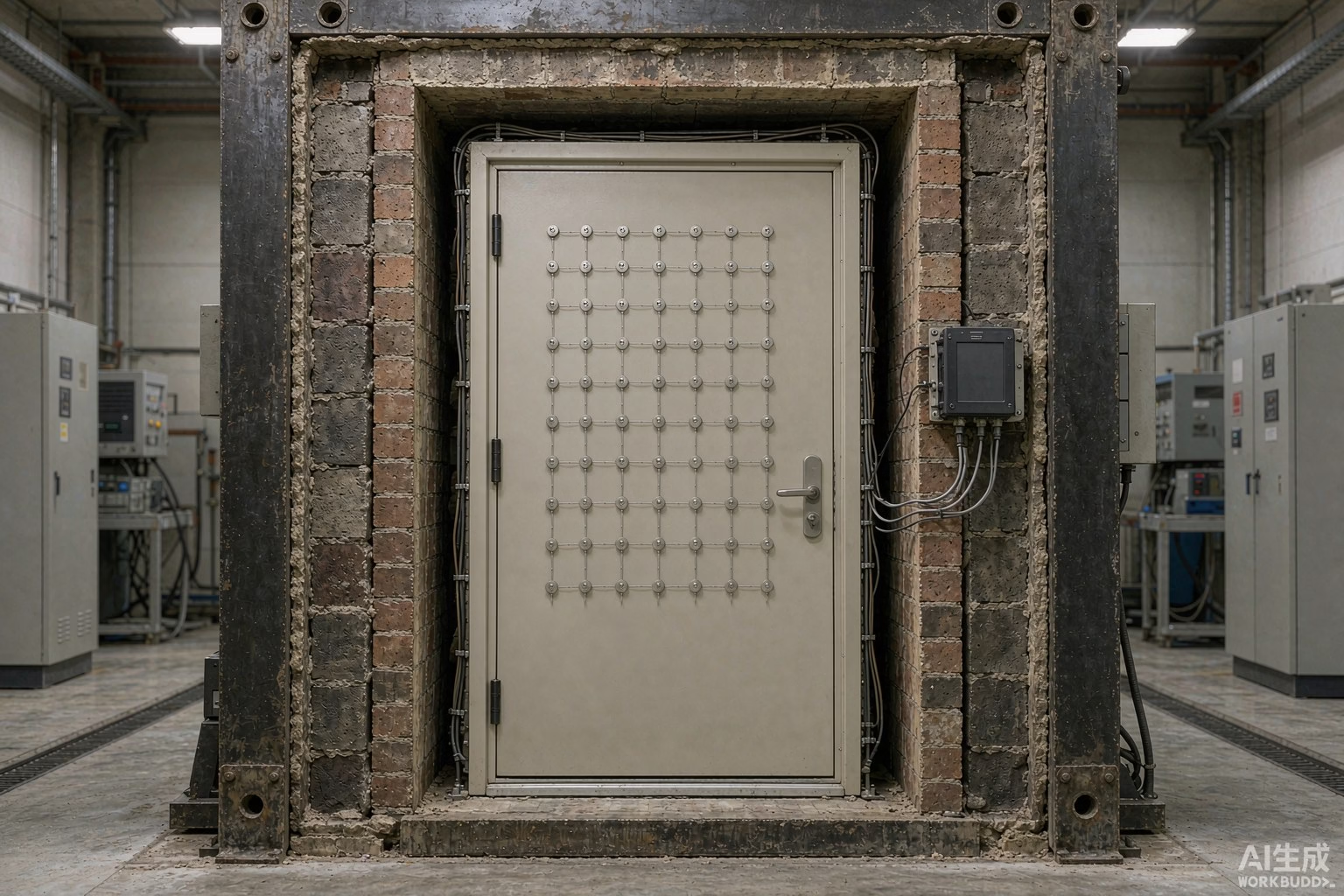
The picture the buyer sees on a datasheet is the compressed result. What follows is how each major system builds that result from test data.
The European System: Test, Then Classify
The test that feeds the classification: DANS 1634-1
European doorset ratings start with a furnace test to DANS 1634-1:2014+A1:2018 2, run under the general rules of DANS 1363-1 3. (The seven-step furnace procedure itself — specimen build, instrumentation, pressure control — is covered in our companion guide, how to test fire resistance of fire doors; this article picks up where that one ends.) The complete doorset — including hardware, intumescent and smoke seals, and glazing — is built into a supporting wall, exposed on one side to the standard heating curve, and instrumented on both faces. The standard’s current published state is the 2014 base with Amendment A1, ratified in September 2017 and mandatory across CEN members from July 2018 [2]; a revision (prEN 1634-1) is in development [2].
Because the doorset is exposed from one side, direction matters. A door rated only from one side carries that limitation in its field of application, and a door that may be approached from either side usually needs two tests or a justified extended application. The test also records performance data that does not appear in the classification itself: hardware behaviour, seal activation, and deflection — inputs that later feed the extended-application rules.
The classification code: DANS 13501-2
The test observations are converted into a classification under DANS 13501-2:2023, the current edition in force since 31 May 2023 [1]. For doorsets the classes read as follows:
| Classe | Signification | Test basis |
|---|---|---|
| E 15–E 180 | Integrity only; flames and hot gases held, unexposed face temperature unlimited | DANS 1634-1 [2] |
| EW 15–EW 60 | Integrity plus limited radiation through the doorset | DANS 1634-1 [2] |
| EI 15–EI 180 | Integrity plus insulation (average and single-point temperature limits on the unexposed face) | DANS 1634-1 [2] |
| EI1 / EI2 | Insulation variant distinguishing which zone must stay insulated (EI2 is the more demanding general case) | DANS 1634-1 [1] |
| Sa / S200 | Smoke leakage limited at ambient temperature (Sa) or at 200 °C (S200) | DANS 1634-1 smoke measurements [1] |
| C0–C5 | Reliability of self-closing over repeated cycles (C0 = no self-closing requirement) | DANS 13501-2 [1] |
A full European classification therefore looks like NON 30 Sa–C : integrity and insulation for 30 minutes, smoke control at ambient temperature, and a demonstrated self-closing capability. The duration suffix is always part of the class; “EI door” without a number is not a classification at all.
Two boundaries of the system matter when comparing products. D'abord, DANS 13501-2 is a resistance classification; the reaction-to-fire behaviour of the door’s core materials is classified separately under DANS 13501-1 and says nothing about the doorset’s E/I performance 4 — our explainer on what the A1 fire classification means covers that other half of the system. The furnace exposure behind the E and I timings follows the OIN 834 temperature-time curve, which EN 1363-1 adopts for the standard heating regime [3]. Deuxième, the classification belongs to the exact construction tested — changes to leaf thickness, lock type, hinges, glazing or seals sit outside the tested configuration until they are covered by an extended application (ci-dessous).
The product standard behind the marking: DANS 16034
For doors placed on the market in the EU, the classification feeds the harmonised product standard DANS 16034, which defines how the fire-resistance characteristics of pedestrian and industrial doorsets and openable windows are declared 5. This is the step that turns a laboratory classification into CE-marked product documentation, and it is why the classification report must be traceable to a specific doorset build.
The British FD Ratings
In the UK, ratings such as FD30, FD60, FD30S descend from tests to BS 476 Partie 22 (a separate tradition from the EN system; no UNI or CEN entry exists for it, and BS shop pages are not machine-accessible — edition status should be confirmed with BSI before citing a year — 待确认). The letters carry their own logic:
- FD + number = fire door with integrity for that many minutes (FD30 = 30 minutes integrity).
- Le S suffix = additional smoke control at ambient temperature, tested to the BS 476 smoke-leakage method.
An FD30S door is therefore roughly the counterpart of an E 30 Sa door — integrity plus ambient smoke control, without the insulation requirement. Treating “FD60” as equal to “EI 60” overstates what the British rating certifies; where an EI performance is required, the door must be tested and classified accordingly [1].
North American Ratings: UL 10B, UL 10C and Labels
North American fire doors are rated in time increments — typically 20, 45, 60 et 90 minutes — under UL 10B (Fire Tests of Door Assemblies) ou UL 10C (Positive Pressure Fire Tests of Door Assemblies). The practical difference is the pressure regime: UL 10B is run at neutral furnace pressure, UL 10C at positive pressure, which pushes the neutral plane into the specimen and is generally considered the more severe exposure for door edges and seals. Modern building codes in the United States generally call for positive-pressure-tested doorsets (UL 10C); older ratings based on UL 10B may still appear on legacy products. Air-leakage (fumée) performance is assessed separately under UL 1784, not folded into the hourly rating. Third-party labelling — a metal tag on the door edge identifying the certifier, rating and manufacturer — is what makes the rating verifiable on site.
UL shop pages are not machine-accessible, so this section is stated without a citation URL — the rating structure itself is industry-standard practice (待确认 for any specific clause text).
Reading a Classification Against a Specification
When a specification says “60-minute fire door”, the buyer must translate it into the market’s own code before comparing products:
| Spec wording | European equivalent to require | What to check in the report |
|---|---|---|
| “60 min integrity door” | E 60 | No insulation claim — is that intended? [1] |
| “60 min insulated door” | NON 60 (or EI2 60) | Both average and single-point temperature criteria met [1] |
| “smoke control door” | NON 30 Sa (or E 30 Sa) | Sa at ambient or S200 at 200 °C? [1] |
| “self-closing fire door” | …–C suffix | C class plus closer hardware within field of application [1] |
| “FD60S door” | E 60 Sa-like (not EI) | Confirm the intended market and basis standard |
| “positive pressure rated” | UL 10C lineage | Label from an accredited certifier, 45/60/90 min |
The reverse translation matters just as much: a European NON 60 result does not automatically become a “2-heure” ou “90-minute” American rating, because the furnace curves, pressure regimes and criteria differ between systems.
What the Classification Report Must Contain
A usable fire door classification is more than a code. The report behind it should let a reader reconstruct the tested assembly:
- the basis standards (test standard and classification standard, with editions) [1][2];
- a complete description of the doorset: leaf, frame, hardware schedule, seals, vitrage, and the supporting construction;
- the exposure direction(s) et, for EN tests, the furnace pressure regime;
- le field of application — the envelope of variants (door sizes, hardware options) the result is allowed to cover;
- for extended results, a reference to the extended application (EXAP) assessment, in Europe performed under the EN 15269 series for doorsets, which governs how far one test result may be extrapolated.
That last point is where procurement goes wrong most often. A classification is valid for the door as tested. Swapping a closer, changing the glazing bead, or upsizing beyond the tested dimension range takes the door outside its field of application unless the change is covered by the EXAP assessment or a new test [1].
When a Rating Changes or Does Not Transfer
Three situations deserve explicit attention in a purchasing file:
- Hardware substitution after installation. The tested hinge and lock set is part of the classification. Substituting hardware of a different make or geometry voids the rating unless the substitute is within the documented field of application.
- Moving a result between markets. A door tested to EN 1634-1 and classified to EN 13501-2 [1] has no automatic UL or BS rating, and vice versa. Dual-market products need tests in each system.
- Edition drift. Classification editions change: DANS 13501-2 moved to the 2023 edition in force since 31 May 2023 [1], and the doorset test standard itself was amended in 2018 [2]. A report citing a superseded edition should be re-checked before it is used in a current approval file.
Equipment Behind the Classification
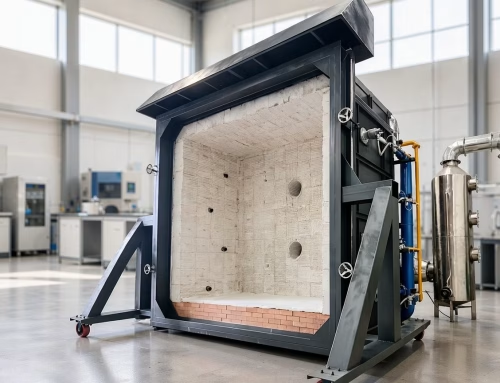
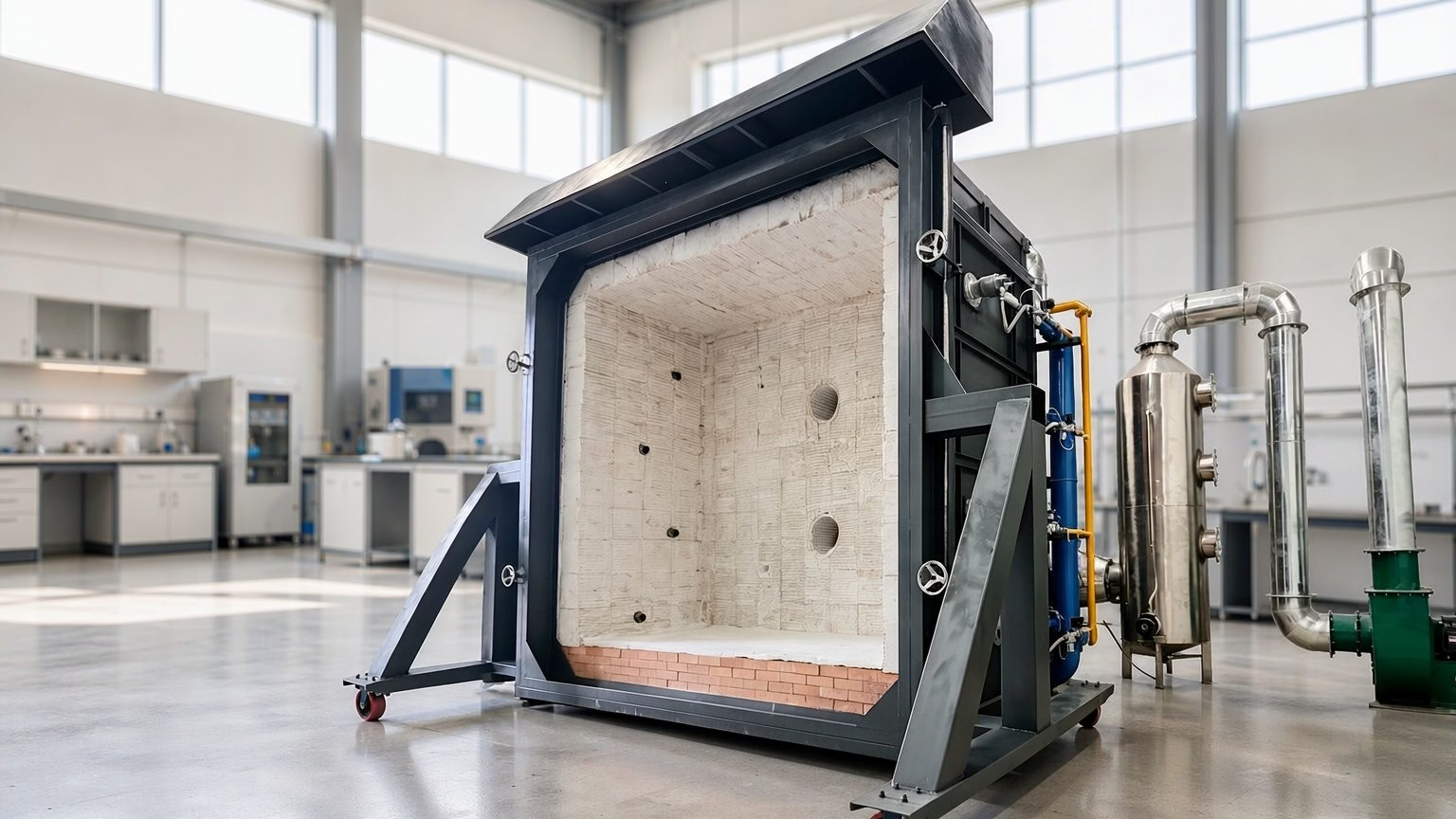
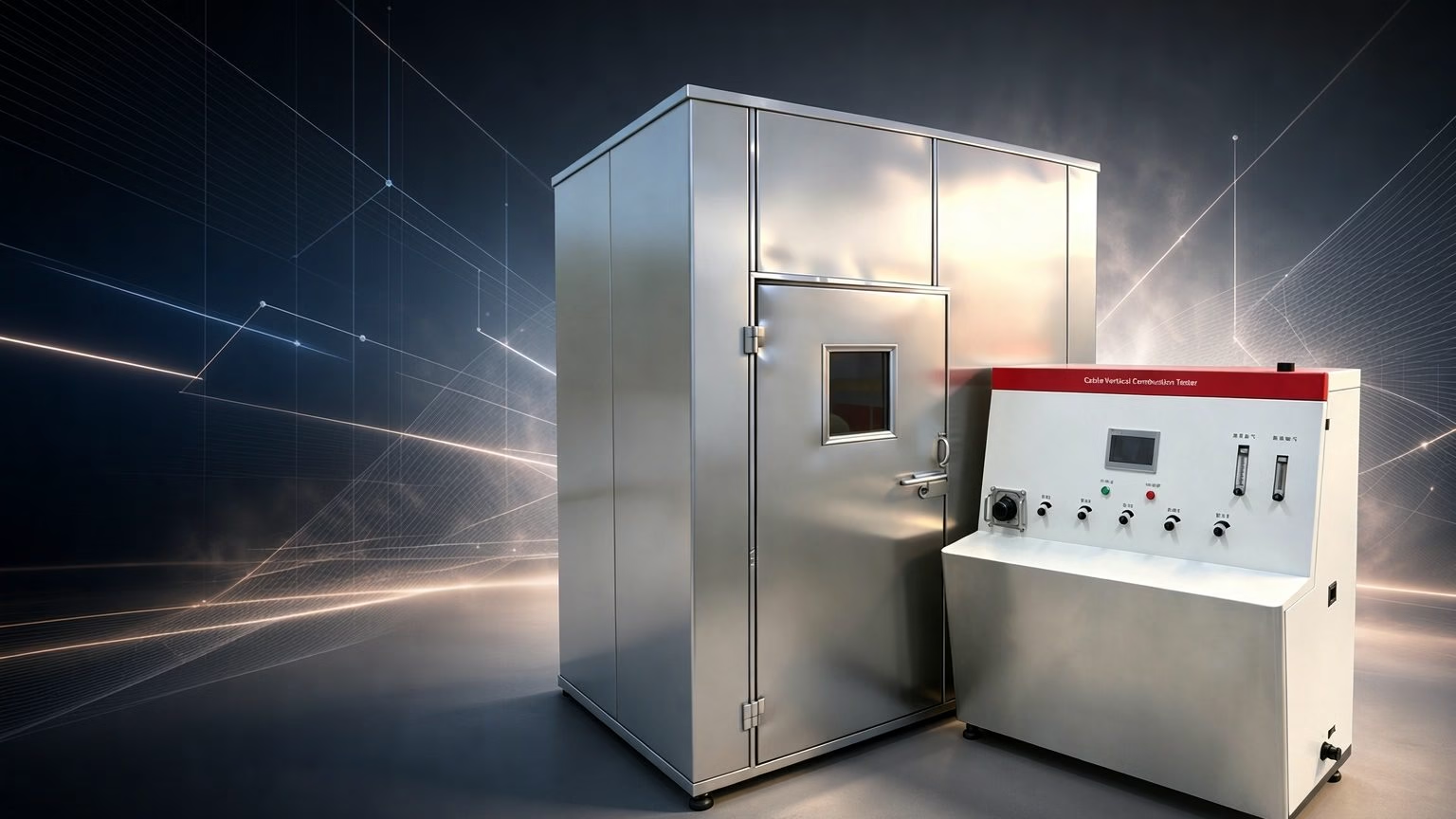
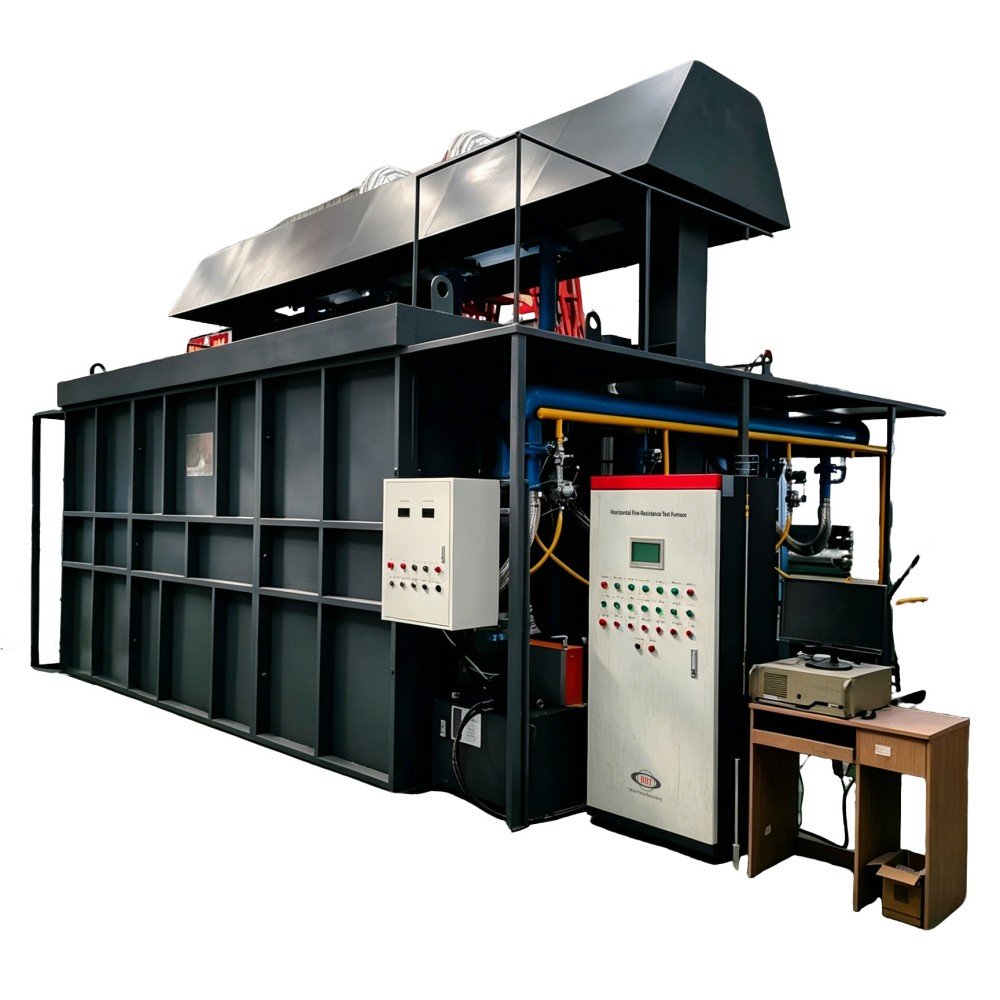
Doorset classifications come out of a vertical furnace with the doorset mounted in a wall frame, instrumented with thermocouples on both faces and equipped with pressure control. Laboratories running this work need a vertical fire resistance test furnace sized for full-height doorsets, and for horizontal special constructions such as floor doors, un four d'essai horizontal de résistance au feu.
Reaction-to-fire data for the door’s lining materials, where a specification also requires a Euroclass, comes from the Appareil de test SBI sous FR 13823 — see how SBI testing shapes Euroclass fire classifications for that chain. BRT Testing manufactures all three lines and supports customers from specimen build through report review — see the product pages for furnace capacities and instrumentation.
Foire aux questions
What does EI 30 mean on a fire door?
NON 30 is a European classification under EN 13501-2 meaning the doorset held both integrity (E) et isolation (je) pour 30 minutes of standard fire exposure: no flaming or gaps through the door, and the unexposed face stayed below the average and single-point temperature rise limits for the full 30 minutes. It always implies a test to EN 1634-1 on the complete doorset.
Is FD60 the same as EI 60?
Non. FD60 comes from BS 476 Partie 22 and primarily certifies integrity for 60 minutes, with smoke control only if the S suffix is present. NON 60 additionally certifies that the unexposed face stayed below the insulation temperature limits for 60 minutes. An FD60 rating does not demonstrate the insulation performance that EI 60 requires, so the two should not be interchanged in specifications without checking the underlying test.
What is the difference between E and EW classification?
E is integrity only: the doorset held back flames and hot gases, but the unexposed face can reach any temperature. EW adds a radiation limit measured at a defined distance, giving a mid-level class between integrity and full insulation. EW is used where combustible material is kept away from the door, while EI is required when something flammable sits directly behind it.
What does the S in EI 30 Sa mean?
The S suffix records smoke leakage performance measured during the same EN 1634-1 test. Sa means smoke leakage was limited at ambient (unheated) température; S200 means it was limited at 200 °C, the harder condition because seals and gaps behave differently when hot. A class of EI 30 Sa therefore covers insulation, integrity and ambient smoke control together.
Can a fire door rating be extended to other sizes or hardware?
Only through a documented extended application assessment. In Europe the EN 15269 series governs how far one doorset test result may cover variations in size, hardware and construction. A change outside that documented field of application — or a hardware swap after installation — is not covered by the original classification and requires either an EXAP assessment or a new test.
Why does one door have two different ratings?
Doorsets are often tested from each side, and the two directions can produce different classifications because the leaf construction is not symmetrical. Products sold into multiple markets may also carry both a European class and an hourly North American rating from separate tests. Always read which direction and which standard each rating refers to before comparing them.
Does the rating apply to the door leaf alone?
Non. Fire door classifications apply to the complete doorset — leaf, frame, seals, glazing and hardware — as tested. A leaf exchanged into a different frame, or fitted with different hinges or a different closer, is a different doorset in classification terms. This is why labels and reports name the whole assembly and why field-of-application documents exist.
Conclusion: A Decision Order
Reading a fire door classification is a five-step exercise:
- Identify the basis system (DANS, BS, UL) and the edition behind the report [1][2].
- Expand the code: which criteria — E, EW or EI — and for how many minutes.
- Read the suffixes: fumée (Sur/S200) et fermeture automatique (C) requirements.
- Check the field of application against the door as actually built and installed.
- Only then compare durations between products.
If you are equipping a laboratory that performs doorset fire resistance testing, the furnaces and instrumentation that produce these classifications are on the vertical fire resistance test furnace et four d'essai horizontal de résistance au feu product pages. For the reaction-to-fire side of door materials, voir le Appareil de test SBI, and contact BRT Testing to discuss furnace capacity and instrumentation options.
About the Author
Tests BRT (Shenyang Baoruitong Automation Equipment) manufactures fire testing equipment — furnaces, calorimètres à cône, SBI rigs and small-flame apparatus — used by laboratories testing construction products, doorsets and materials. The BRT Testing content team writes for laboratory buyers and test engineers, translating test-method standards into practical equipment and reporting decisions. For fire resistance and smoke control testing of door assemblies, the relevant test standard is EN 1634-1 and the classification standard is EN 13501-2; the equipment pages above list furnace configurations for both vertical and horizontal doorset programmes.
Sources
- UNI—FR 13501-2:2023 (Status CURRENT, 31 May 2023) — https://webstore.uni.com/en/en-13501-2-2023
- CEN — EN 1634-1:2014+A1:2018 page du projet (Status Published, DOR 2017-09-25) — https://standards.cencenelec.eu/ords/f?cs=1F12CC7E489D9840D87B07C08F6748C5A&p=CEN:110:::::FSP_PROJECT:65652
- UNI—FR 1363-1:2020 (Status CURRENT, 19 Feb 2020) — https://webstore.uni.com/en/en-1363-1-2020
- UNI—FR 13501-1:2018 (Status CURRENT, 19 Dec 2018) — https://webstore.uni.com/en/en-13501-1-2018
- UNI—FR 16034:2014 (Status CURRENT, 01 Oct 2014) — https://webstore.uni.com/en/en-16034-2014