The Short Answer
An A1 fire classification means the product has been shown, by test, to make no measurable contribution to a fire — it cannot sustain flaming and it carries almost no calorific load. In the EN system that claim rests on two tests: ISO 1182, where a specimen in a 750 °C furnace must show a temperature rise of no more than 30 °C, a mass loss of no more than 50 % and no sustained flaming 2; and ISO 1716, where the gross heat of combustion must not exceed 2.0 MJ/kg 3. Both have to pass. The result is written as A1 under EN 13501-1 1, and it is the only class in the system that requires both routes. A2 exists for products that pass one route but not both, and adds a third test — the SBI to EN 13823 — with its own limits 4.
What an A1 Fire Classification Actually Says
The label is short and the sentence behind it is long. A1 states that under the conditions of the two reference tests, the product did not ignite in a way that sustained combustion, did not release enough heat per unit mass to feed a fire, and did not lose so much mass that it was being consumed.
That is a statement about reaction to fire — what the material contributes to a fire that is already burning. It is not a statement about fire resistance, which is what an assembly does when it is holding back a fire, and the two are classified under different documents.
The three quantities that carry the class
Everything in the A1 route reduces to three measurements from the furnace test plus one from the calorimeter: temperature rise, mass loss and the duration of sustained flaming from ISO 1182, and the gross calorific value PCS from ISO 1716. Failing any one of them removes A1 regardless of how well the others perform, which is why a mineral product with a stable furnace record can still land in A2 when its organic binder pushes PCS over the line.
What A1 does not mean
A1 does not mean the product is safe in every fire, and it does not mean the assembly it sits in is fire resistant. It also does not mean the product produces no smoke — smoke production is a separate sub-class, written s1, s2 or s3 beside the main class, and a few A1 products are poor on that axis for reasons that have nothing to do with combustibility.
Nor does it say anything about durability, dimensional stability at temperature or suitability for a given substrate.
The Two Tests Behind an A1 Fire Classification
The two routes are chemically different questions, which is why the class needs both.
ISO 1182: the furnace route
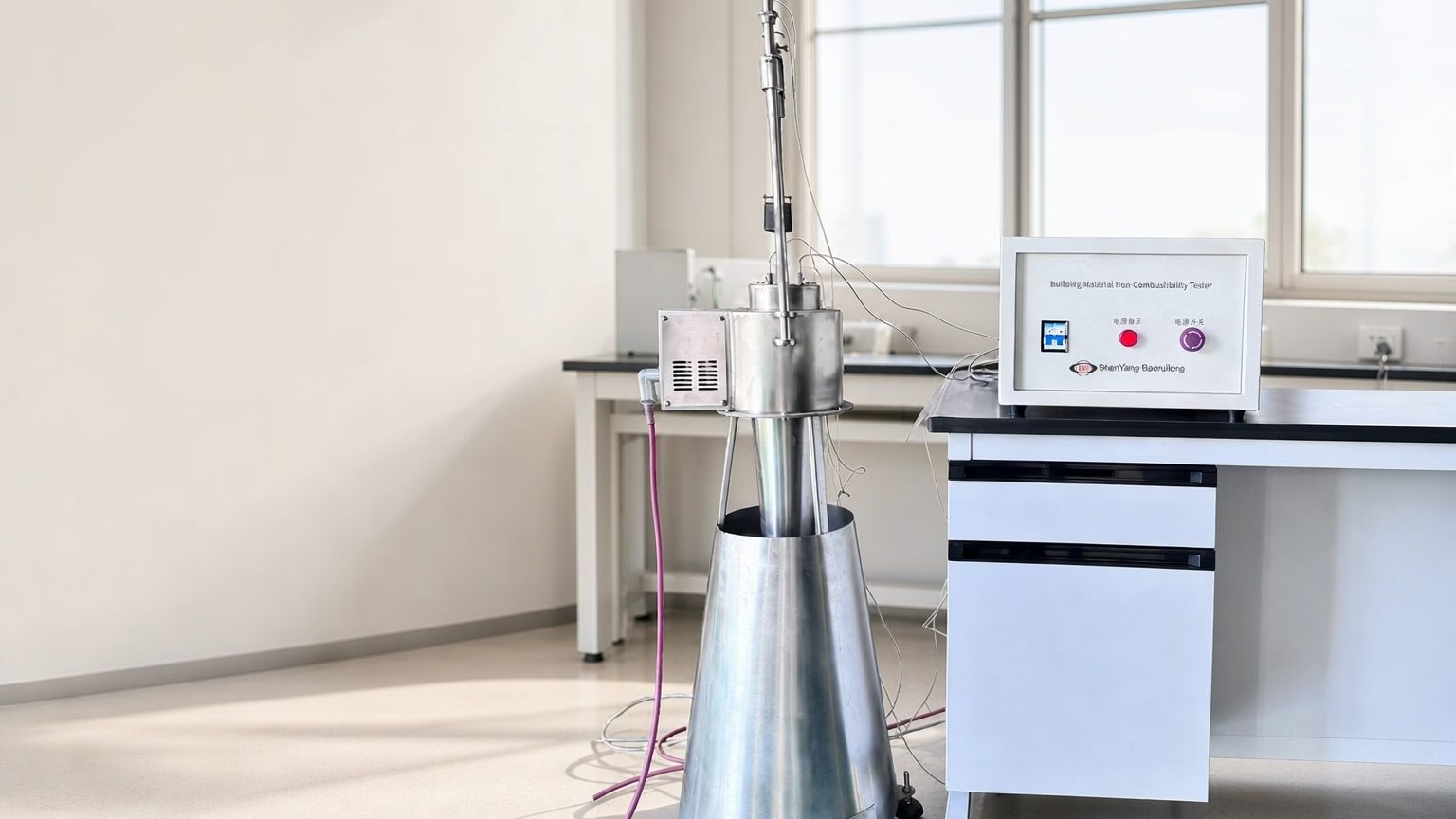
ISO 1182 places a cylindrical specimen in a pre-heated tube furnace held at 750 °C and records what happens over a defined period [2]. Furnace temperature, specimen surface and centre temperatures, mass and any flaming are all logged. The test ends at a point defined in the standard, once the temperature record has clearly passed its peak.
Three outputs decide the result: the maximum temperature rise, the mass loss and the duration of sustained flaming. A product that flames for a few seconds and then goes out has not automatically failed — the criterion is sustained flaming, and the standard defines what that means. This is one of the most frequently misread parts of a non-combustibility report, and the measurement chain behind it is set out in our guide to non-combustibility testing.
ISO 1716: the bomb calorimeter route
ISO 1716 burns a small sample in an oxygen bomb and measures the total heat released, reported as the gross calorific value in MJ/kg, or in MJ/m² where the product is assessed by area [3]. It is a chemical measurement rather than a fire test, and it is deliberately harsh: it assumes complete combustion of everything in the sample.
That is what makes it a good filter. A product with 3 % organic content by mass can look inert in a furnace and still fail A1 on PCS, because the calorimeter does not care where the carbon sits in the formulation.
The limits, side by side
| Criterion | A1 limit | A2 limit | Where it comes from |
|---|---|---|---|
| Temperature rise, ΔT | ≤ 30 °C | ≤ 50 °C | ISO 1182 |
| Mass loss, Δm | ≤ 50 % | ≤ 50 % | ISO 1182 |
| Duration of sustained flaming, tf | 0 s (no sustained flaming) | ≤ 20 s | ISO 1182 |
| Gross calorific value, PCS | ≤ 2.0 MJ/kg | ≤ 3.0 MJ/kg | ISO 1716 |
| FIGRA | Not applicable | ≤ 120 W/s | EN 13823 |
| Lateral flame spread, LFS | Not applicable | Must not reach the edge | EN 13823 |
| Total heat release, THR600s | Not applicable | ≤ 7.5 MJ | EN 13823 |
The A1 column has no SBI entries because an A1 product never gets that far in the flow — the two chemical routes already settle the question. Where a product is non-homogeneous, the standard also sets separate PCS limits for external and internal constituents, which is where multi-layer boards and composite panels get complicated.
Why A2 Exists: The Class for Products That Almost Pass
A2 is not a softer A1. It is a different question: the product may carry some combustible content, but its behaviour in a real fire scenario is still tightly bounded.
The two routes into A2
A product can reach the A2 discussion by passing the furnace test (with wider temperature and flaming limits) or by passing the calorimeter test at 3.0 MJ/kg. It does not have to pass both. That single change is what opens the class to mineral boards with organic binders, to some gypsum products and to composite panels that would fail one route outright.
Once in, the product must then pass the SBI test to EN 13823 [4]. There is no way around that step: the class is a combination of a chemical screening result and a real fire performance result.
The SBI limits that decide A2
The SBI burns a corner specimen of two wings under a 30 kW sandbox burner and measures heat release, smoke and lateral flame spread. For A2 the three limits are a FIGRA of no more than 120 W/s, no lateral flame spread to the edge of the specimen, and a total heat release over the first 600 seconds of no more than 7.5 MJ.
FIGRA is the one that catches people out. It is a ratio — heat release rate divided by time — so a product with a modest peak but an early peak can score worse than a product with a larger but later peak. Reading a single THR figure and assuming the class is decided is a common error.
A1 Fire Classification Inside the Full Designation
A class letter on its own is incomplete, and specifications that quote only “A1” leave three judgements unspecified.
The family prefixes
EN 13501-1 does not use one scale for all products. Construction products, floors and linear products each carry their own prefix, and an A1 claim in one family does not transfer to another.
| Product family | Prefix | Example designation | Note |
|---|---|---|---|
| Construction products (walls, ceilings, boards) | A1 | A1-s1,d0 | The default family for most building products |
| Floorings | A1fl | A1fl-s1 | Tested in the horizontal orientation used for floors |
| Linear products (pipes, cables, conduits) | A1L | A1L-s1,d0,a1 | Cables use the separate EN 13501-6 route |
The sub-classes still apply
Smoke, burning droplets and — for linear products — acidity are appended to the main class. A product designated A1-s1,d0 has been assessed on three axes, and a specifier who writes “A1” without the suffixes has left the smoke question open.
This matters most in escape routes and in compartments containing sensitive equipment, where s1 is often a project requirement independent of the main class. The full ladder above and below A1, and how the SBI feeds it, is covered in our EN 13501-1 Euroclass guide.
A1 Fire Classification in GB 8624 and Other National Systems
Export projects rarely stay inside one system, and the Chinese classification is the one most often confused with the European one because the letters match.
China: GB 8624
GB 8624-2012 is the current Chinese standard for the classification of burning behaviour of building materials and products 5. It is mandatory, was issued on 31 December 2012 and took effect on 1 October 2013, and it uses the same A1, A2, B, C, D, E, F ladder with the same three quantities behind the top two classes.
The Chinese route runs through GB/T 5464 for non-combustibility, GB/T 14402 for calorific value and GB/T 20284 for the SBI equivalent. A product certified to GB 8624 A1 and a product certified to EN 13501-1 A1 have answered the same question with the same numerical limits, but the reports are not interchangeable documents, and a European reviewer will still want the EN route for a CE-marked project.
GB 8624 also carries its own sub-classes for smoke, burning droplets and smoke toxicity, written in the same style as the European suffixes. A side-by-side view of the European, North American and Chinese systems is in our building material fire classification guide.
North America: there is no A1
This is the single most common misreading in the category. North American codes do not use the A1 to F ladder for reaction to fire. ASTM E84 Class A is a surface burning characteristic — flame spread index and smoke developed index for a specimen in a horizontal tunnel — and it says nothing about calorific value or non-combustibility 7.
ASTM E136 is the genuine non-combustibility test, using a vertical tube furnace at 750 °C, and it is the closest analogue to ISO 1182 6. But E136 produces a pass or fail for a material, not a class, and it is applied to materials rather than to products in the way the Euroclass system applies.
| System | Nearest equivalent to A1 | Test basis | What it is not |
|---|---|---|---|
| EN 13501-1 | A1 | ISO 1182 + ISO 1716 | — |
| GB 8624-2012 | A1 | GB/T 5464 + GB/T 14402 | Not an EN report; separate certification |
| North America | No equivalent class | ASTM E136 (material), ASTM E84 Class A (surface) | Class A is not non-combustibility |
Reading an A1 Certificate: Five Checks
A certificate is a short document and the useful information sits in a few places. These five checks catch most of the problems.
| Check | What to look for | Why it matters |
|---|---|---|
| Test standard and edition | ISO 1182 with an edition year, not just “ISO 1182” | Older editions had different furnace control requirements |
| Result values, not just pass/fail | ΔT, Δm, tf and PCS with units | A pass without numbers cannot be checked or compared |
| Product description | Density, thickness, formulation, facing | A class belongs to the tested configuration, not the product family |
| Which family prefix | A1, A1fl or A1L | A flooring result cannot be used for a wall |
| Sub-classes | s1/s2/s3, d0/d1/d2 | Leaving them off leaves the smoke question unanswered |
The product description field is the one that fails audits. A certificate for a 100 mm board at a stated density does not cover a 60 mm board of the same chemistry, and the difference is often enough to change the furnace result.
Where A1 Claims Go Wrong
Most incorrect A1 claims are not dishonest; they are the result of a chain of small assumptions. These are the four that recur.
| Claim seen in the market | The problem | What to do instead |
|---|---|---|
| “Non-combustible, therefore A1” | Non-combustibility is one of the two routes; PCS can still fail | Ask for the ISO 1716 result as well |
| “A1 tested” with no report number | No way to verify the configuration or the laboratory | Request the classification report, not the test summary |
| “A1” applied to a system or assembly | The class belongs to the product, not to the build-up | Check whether the assembly has its own test evidence |
| “Class A” presented as A1 | ASTM E84 Class A is a surface burning result | Ask which standard produced the figure |
When A1 Is the Wrong Specification
A1 is sometimes specified where A2 would do the job better and more cheaply, and the cost is real: fillers and binders that push a product to A1 often cost mechanical performance, and heavily filled boards can be brittle and hard to fix.
A2 is the sensible target where the product needs some organic content for flexibility, adhesion or water resistance, and where the fire scenario is already controlled by the assembly — a mineral board behind a protected lining, for example. The specification question should be “what does the compartment need”, not “what is the highest class available”.
A1 is also not sufficient on its own: an A1 product can still miss a project smoke requirement, and it says nothing about whether the assembly holds integrity for an hour.
Equipment Behind an A1 Fire Classification
The A1 route needs two instruments, and the A2 route needs a third.
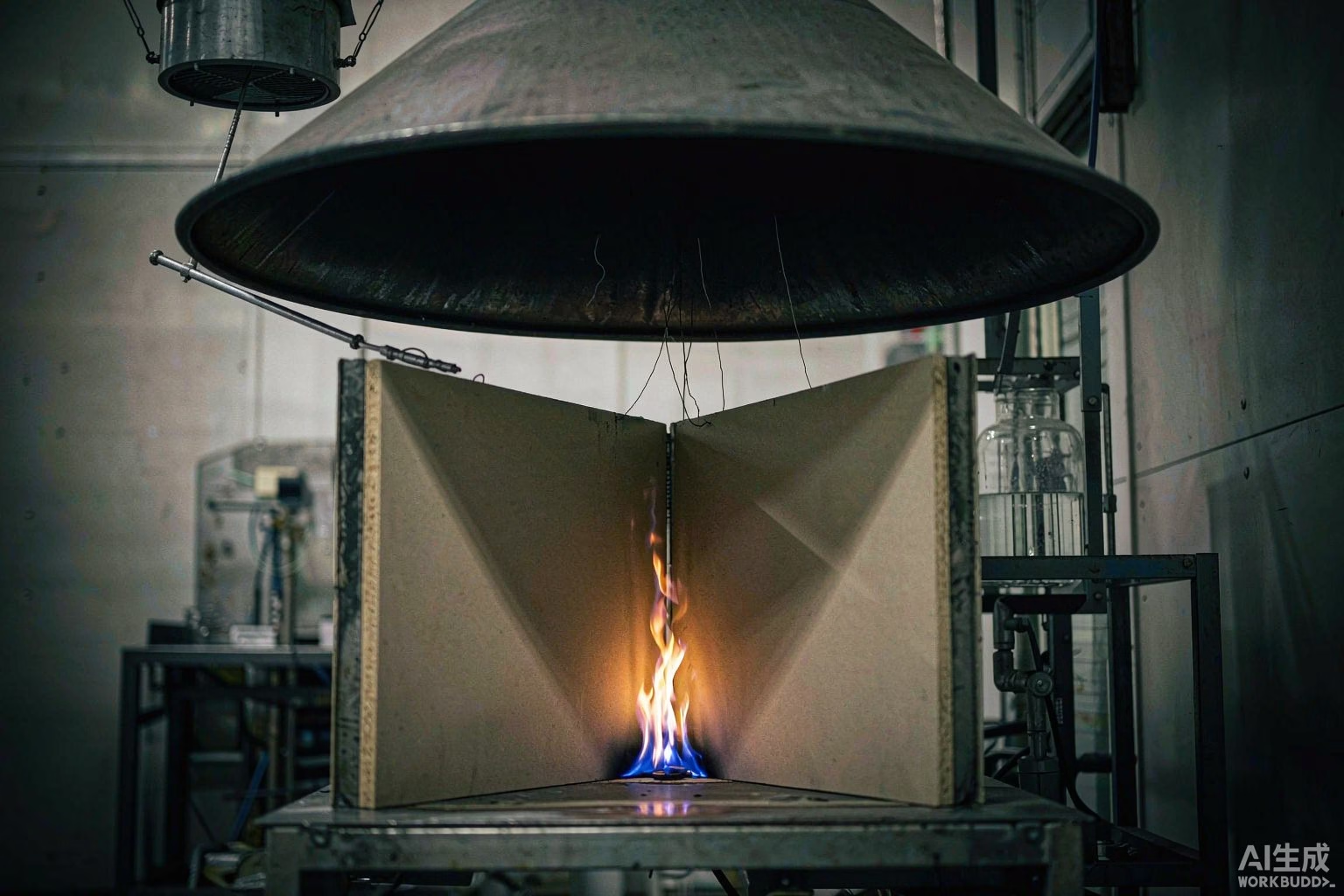
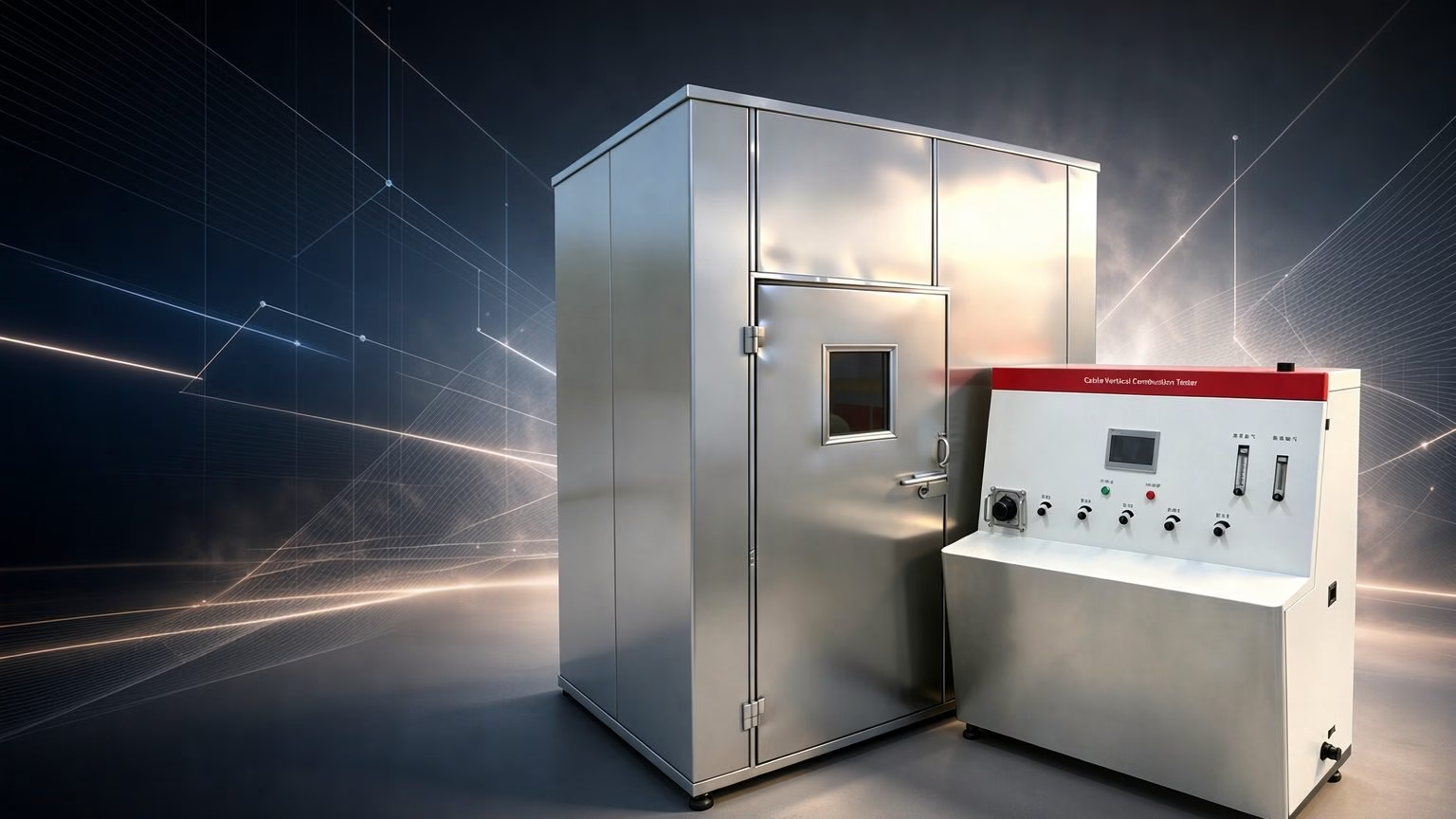
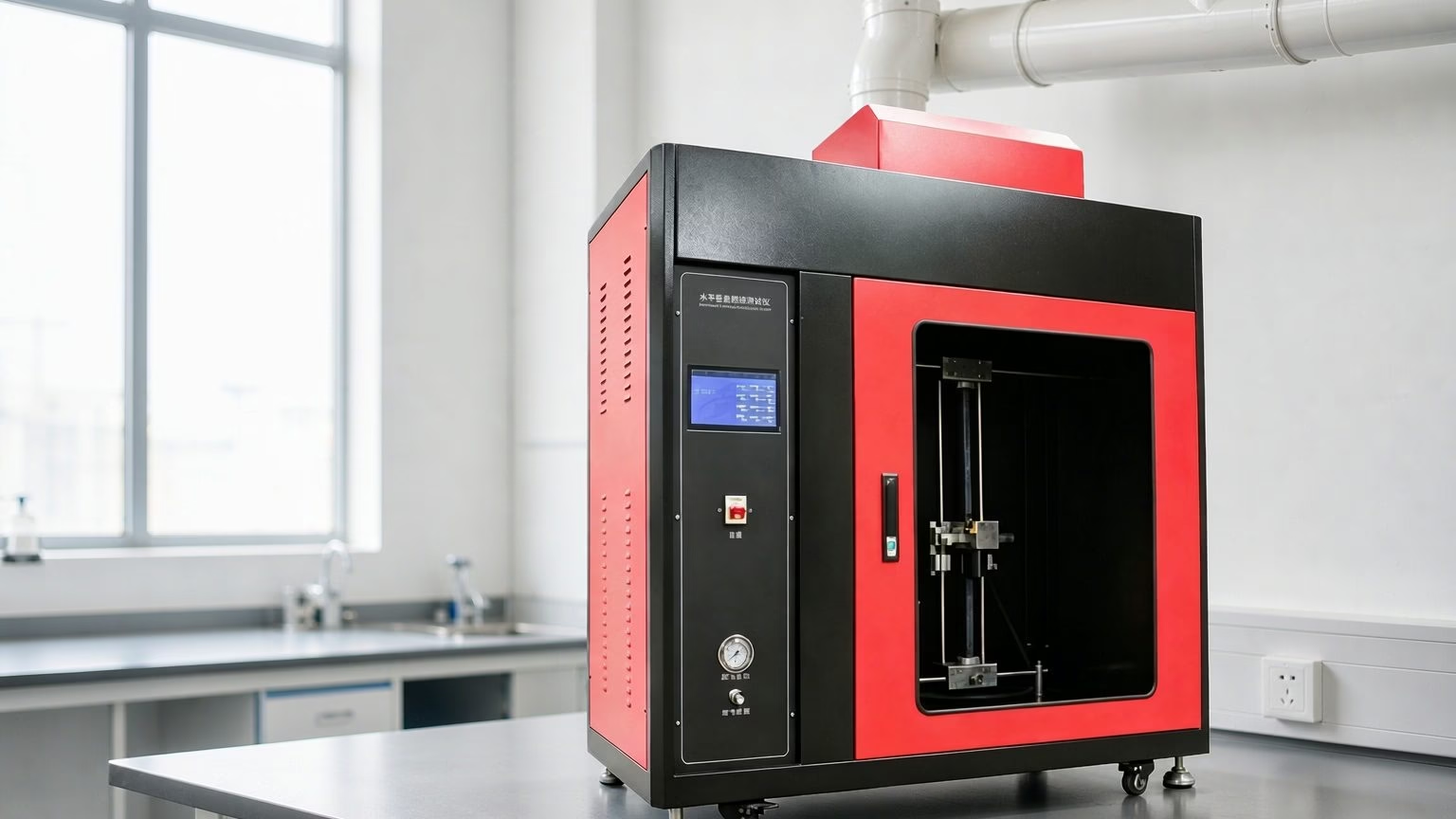
BRT Testing supplies the non-combustibility apparatus for the ISO 1182 furnace route, the gross heat of combustion tester for the ISO 1716 calorimeter route, and the single burning item test apparatus for the EN 13823 step that A2 requires. The fire and flame testing equipment category lists the full range, and the building material combustibility test apparatus covers the single-flame methods used below the A classes.
Frequently Asked Questions
What does A1 fire classification mean in simple terms?
It means the product was tested and shown not to contribute to a fire: it does not sustain flaming in a 750 °C furnace and its total calorific value is at or below 2.0 MJ/kg. Both results are needed. A1 is the top of the EN 13501-1 and GB 8624 ladder, and it is a statement about the material’s contribution, not about how long an assembly survives a fire.
Is A2 worse than A1?
A2 is a lower class, but it is not a failure. It allows limited combustible content and then proves, through the SBI test, that heat release and flame spread stay inside tight limits. Many mineral boards with organic binders sit in A2 by design, and specifying A1 where A2 was intended can cost mechanical performance for no fire-safety gain.
Why does A1 need two tests when A2 needs one?
Because A1 is an absolute claim: no sustained flaming and almost no fuel value. A2 accepts that a product may carry fuel, then bounds how that fuel behaves in a real fire. The furnace test and the calorimeter answer different questions — behaviour at temperature and total chemical energy — so an absolute claim has to satisfy both.
Is Euroclass A1 the same as North American Class A?
No, and the confusion is common. ASTM E84 Class A is a surface burning result from a horizontal tunnel test, based on flame spread and smoke indices. It does not measure calorific value and does not establish non-combustibility. ASTM E136 is the closer analogue to the furnace route, but it produces a material pass or fail rather than a class.
What is the difference between A1 and A1fl?
The fl suffix marks the flooring family. Flooring products are tested in a horizontal orientation and classified on a separate scale, so an A1fl result applies to a floor and cannot be used for a wall or ceiling product. Linear products such as pipes and cables use the L suffix and, for cables, the separate EN 13501-6 route.
Does an A1 product also need smoke sub-classes?
Yes. The main class and the sub-classes are separate judgements, and a designation such as A1-s1,d0 records three results. A project that needs low smoke in an escape route should specify the s1 suffix explicitly, because A1 on its own says nothing about smoke production.
How long does an A1 classification stay valid?
The classification belongs to the tested configuration, not to a marketing name. It remains usable while the product, its formulation and the referenced standard editions are unchanged. A reformulation, a density change or a new facing material normally requires a new test, and a change of standard edition can require the report to be reviewed.
Conclusion: A Decision Order
- Decide whether the requirement is reaction to fire or fire resistance — A1 only answers the first.
- Establish whether the project is being assessed under EN 13501-1, GB 8624 or a North American route, and collect evidence in that system.
- If the target is A1, request the furnace and calorimeter results with values and units, not a pass mark.
- If the product carries organic content, price out A2 with its SBI requirement before committing to an A1 formulation.
- Check the configuration on the certificate against the product you intend to ship, including thickness and density.
Talk to BRT Testing about the non-combustibility apparatus and gross heat of combustion tester behind an A1 fire classification, or get in touch with the class you are targeting and the product family you are working in.
About the Author
Written by the BRT Testing application engineering team in Shenyang, China. BRT Testing builds non-combustibility, calorimetric and single burning item equipment for construction material laboratories, and supports manufacturers preparing EN 13501-1 and GB 8624 submissions. Standard editions and status were checked against the UNI store, the ASTM store and the national standards platform on 2 November 2026.
Sources
- UNI — EN 13501-1:2018, Fire classification of construction products and building elements, Part 1 — https://webstore.uni.com/en/en-13501-1-2018
- UNI — ISO 1182:2020, Non-combustibility test — https://webstore.uni.com/en/iso-1182-2020
- UNI — ISO 1716:2018, Determination of the heat of combustion — https://webstore.uni.com/en/iso-1716-2018
- UNI — EN 13823:2020+A1:2022, Single burning item test — https://webstore.uni.com/en/en-13823-2020-a1-2022
- 全国标准信息公共服务平台 — GB 8624-2012, 建筑材料及制品燃烧性能分级(现行) — https://std.samr.gov.cn/gb/search/gbDetailed?id=71F772D7E840D3A7E05397BE0A0AB82A
- ASTM — E136, Assessing Combustibility of Materials Using a Vertical Tube Furnace at 750 °C — https://store.astm.org/e136.html
- ASTM — E84, Surface Burning Characteristics of Building Materials — https://store.astm.org/e84.html
- UNI — EN ISO 11925-2:2026, Ignitability of products subjected to direct impingement of flame — https://webstore.uni.com/en/en-iso-11925-2-2026