A resposta curta
Fire testing standards for interior building materials split by product category before they split by country. Wall and ceiling linings, floorings, and linear products such as cables and pipes each have their own test programme, and a standard written for one category generally excludes the others explicitly. In Europe the route runs through EN 13501-1 1, built on the Single Burning Item test EN 13823:2020+A1:2022 3, small-flame ignitability EN ISO 11925-2:2026 4, and for floorings the radiant panel method EN ISO 9239-1:2025 5. In North America, interior wall and ceiling finishes go through the tunnel test ASTM E84 8 and floor coverings through ASTM E648 9.
The rule that overrides all of it: the result belongs to the product as mounted, including substrate, adhesive and fixing. If you only remember one thing from this page, remember that. For the underlying classification concepts, start with our building material fire classification guide.
What Counts as an Interior Building Material in Fire Testing
Wall and ceiling linings
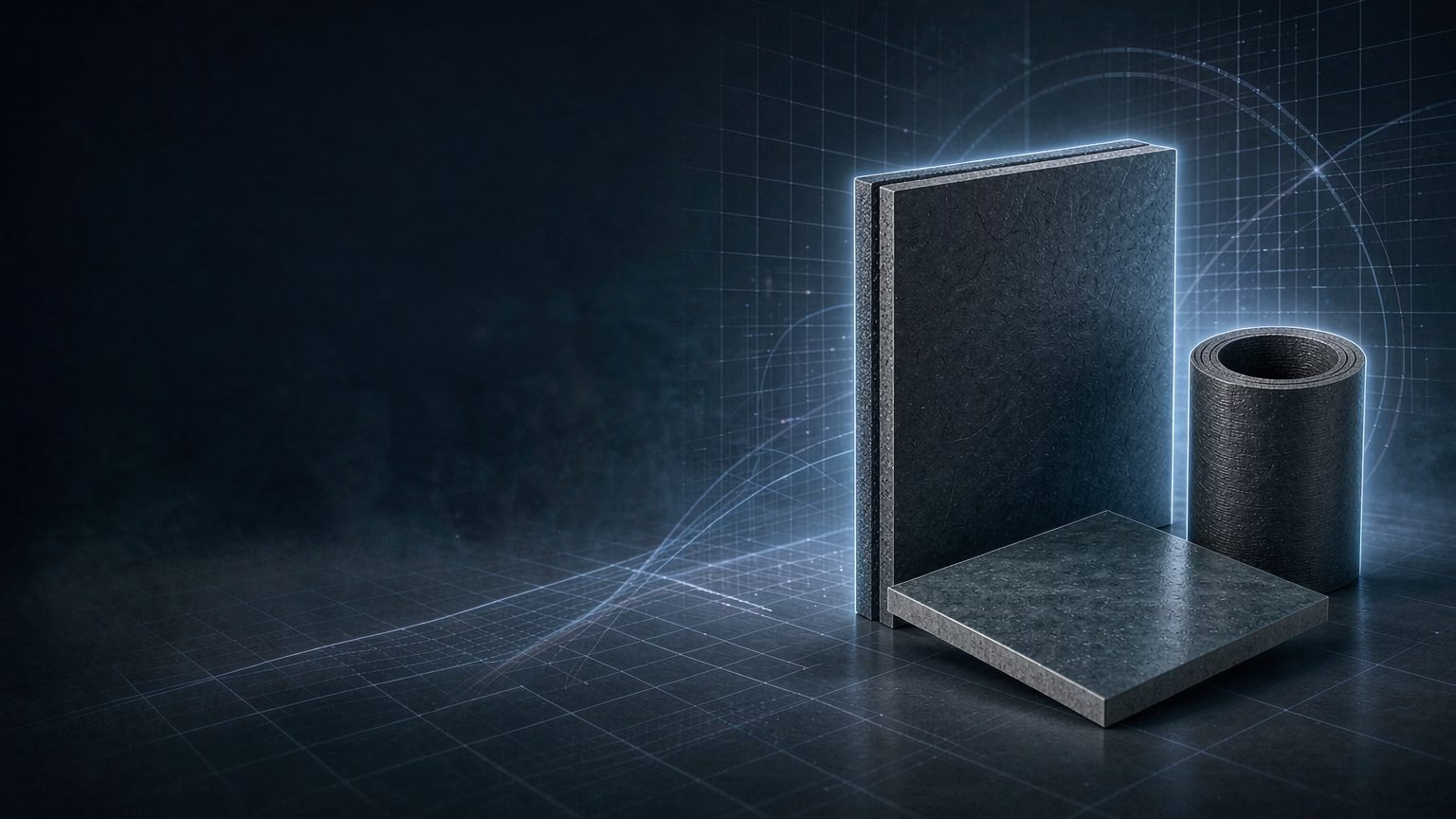
This is the largest group and the one most regulations are written around: boards, panels, decorative laminates, insulation faced with a lining, coatings applied in situ, and the membranes and textiles hung as ceilings. They are regulated hard because they present a large continuous surface to a room and because they are the first material a small fire sees.
Floorings
Floor coverings are tested differently, and the reason is geometry: a fire travelling across a floor is driven by radiant flux arriving from the hot upper layer of the room, not by a flame front climbing a vertical surface, so the ignition source, the specimen orientation and the reported quantity all change. A floor covering is tested horizontally, exposed to a graded radiant flux, ignited by pilot flames, and reported as the flux level at which flame propagation ceases. In Europe that means EN ISO 9239-1:2025 [5]; in North America, ASTM E648 [9].
Note also what the North American method calls its specimen: a floor-covering system. Underlayment and simulated structural floor are part of the test piece by design, not by interpretation.
Why interior finish is regulated separately from structure
Interior finish and structure answer different questions. Structural fire resistance asks whether a wall, floor or door assembly keeps loadbearing capacity, integrity and insulation in a furnace test. Interior finish asks how much the surface itself contributes to a fire starting and growing. A plasterboard lining can have an excellent surface classification and a steel column can have poor fire resistance, and neither fact says anything about the other. Conflating the two is the most common reason a submission is rejected.
The European Route: EM 13501-1 and Its Test Programme
The tests behind each class
| 目标等级 | 主要试验 | 判定要点 |
|---|---|---|
| A1 | ISO 1182 不燃性 6 与 ISO 1716 总燃烧热 7 | 不燃且热值受限 |
| A2 | ISO 1182 或 ISO 1716,加 EN 13823 [3] | 接近不燃并控制热释放 |
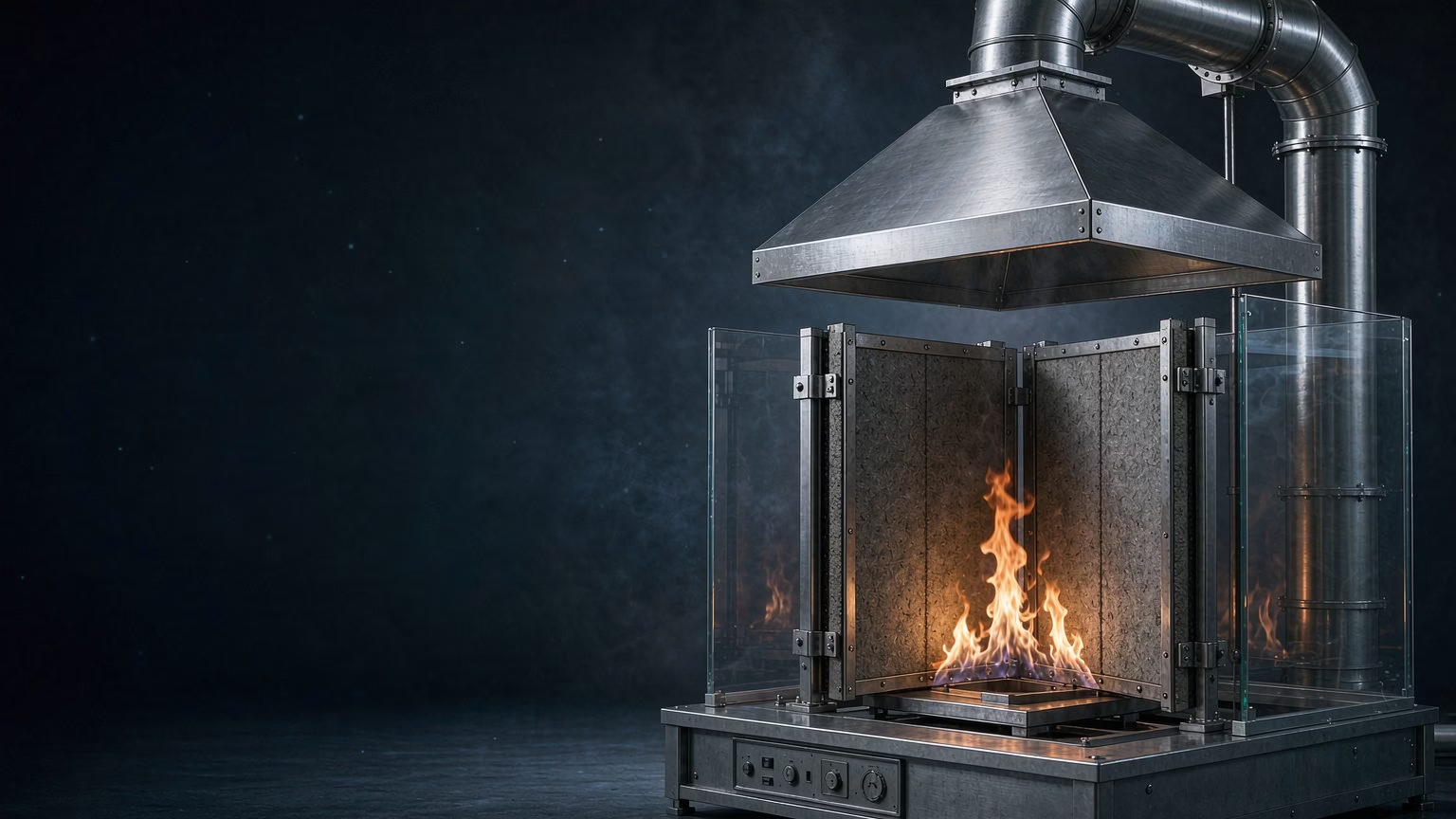
| B / C / D | EM 13823 单体燃烧 [3],EM ISO 11925-2 补充 [4] | FIGURA、THR600s、LFS 与产烟/滴落 |
| E | EM ISO 11925-2 [4] | 小火焰短时暴露下的表现 |
| F | 未分级 / 未通过 E | 无性能要求或未能满足 E |
The current edition of the classification standard is EN 13501-1:2018 [1]2. Two version points catch people out. Primeiro, EM 13823:2020 was withdrawn in July 2022 in favour of the consolidated EN 13823:2020+A1:2022 [3]; a report naming only the 2020 edition is methodologically fine but documentarily stale. Segundo, EM ISO 11925-2:2020 was withdrawn in January 2026 and replaced by the 2026 edição [4], so any ignitability report written against the 2020 edition should be reviewed before it is used in a new submission.
Floorings have their own route
Floorings carry a class with an fl suffix — A1fl through Ffl — and the route is built on EN ISO 9239-1:2025 [5], which measures the burning behaviour and spread of flame of horizontally mounted floorings under a radiant heat flux gradient with pilot flames, with smoke development covered in an annex. EM ISO 11925-2 [4] applies as the ignitability supplement here too. This is the part of the European system most often missed by manufacturers whose product family spans both walls and floors: you cannot carry a wall classification onto a flooring, even if the material is nominally identical.
The North American Route: Surface Burning Characteristics
The tunnel test and interior finish provisions
ASTM E84 evaluates surface burning characteristics with the specimen mounted in the ceiling position, exposed face down to the ignition source, over a ten-minute test [8]. Interior finish requirements in model codes are then written against the results of that method, which is why an interior product destined for North America is almost always tested here first.
A second method sits alongside it in materials development and in transport work: ASTM E162, which measures surface flammability using a radiant heat energy source 10. Its scope states plainly that it is not intended as a basis for ratings for building code purposes, so it should be used for screening and development, never offered as a code substitute. Interior finish requirements themselves are then set out in the life safety code rather than in the test method, with NFPA 101 being the reference most specifications point to 11.
There is an important ceiling on what this method can tell you. It is a comparative surface burning method on a small specimen; it does not address how a finished assembly behaves when the whole room is involved. Where a specification asks about room fire growth, the requirement moves to a room-scale method such as NFPA 286 12, and the tunnel result alone will not answer it.
Floor coverings: critical radiant flux
ASTM E648 measures the critical radiant flux of floor-covering systems at flame-out, using a graded radiant heat energy environment in a test chamber, with the specimen mounted over underlayment, over a simulated concrete structural floor, bonded to it, or otherwise installed in a representative way [9]. Note the phrase “floor-covering systems” — the substrate and underlayment are part of the specimen by design, which is the same end-use principle the European system applies by rule.
Other National Systems
China: GB 8624
China’s classification system for building materials and products is published as GB 8624 13, and it is the reference point for domestic projects and for many export submissions into Chinese specification chains. Manufacturers selling into both China and Europe normally need two test programmes, because the routes, the specimens and the reported quantities differ even where the underlying physical question is the same.
Linear and ancillary products inside interiors
Cables, pipes, ducts and their insulation live inside interior assemblies but are not tested as interior linings. They have their own routes, their own specimen geometries and their own classification suffixes, precisely because a linear product behaves differently from a flat one: it can carry flame along its length, and its mounting — in a tray, behind a board, inside a cavity — dominates the result. The practical consequence for a submission is that a wall classification does not cover the services running behind the wall, and those have to be specified and evidenced separately.
Legacy British and other national routes
Older British methods have not disappeared from specifications. Surface spread of flame methods such as BS 476-7 still appear in inherited project documentation, particularly in refurbishment work and in markets that adopted British practice. Where a specification names a legacy method, the practical advice is to confirm with the authority having jurisdiction whether a current European classification is accepted in its place before commissioning an obsolete test.
Standard Map by Region
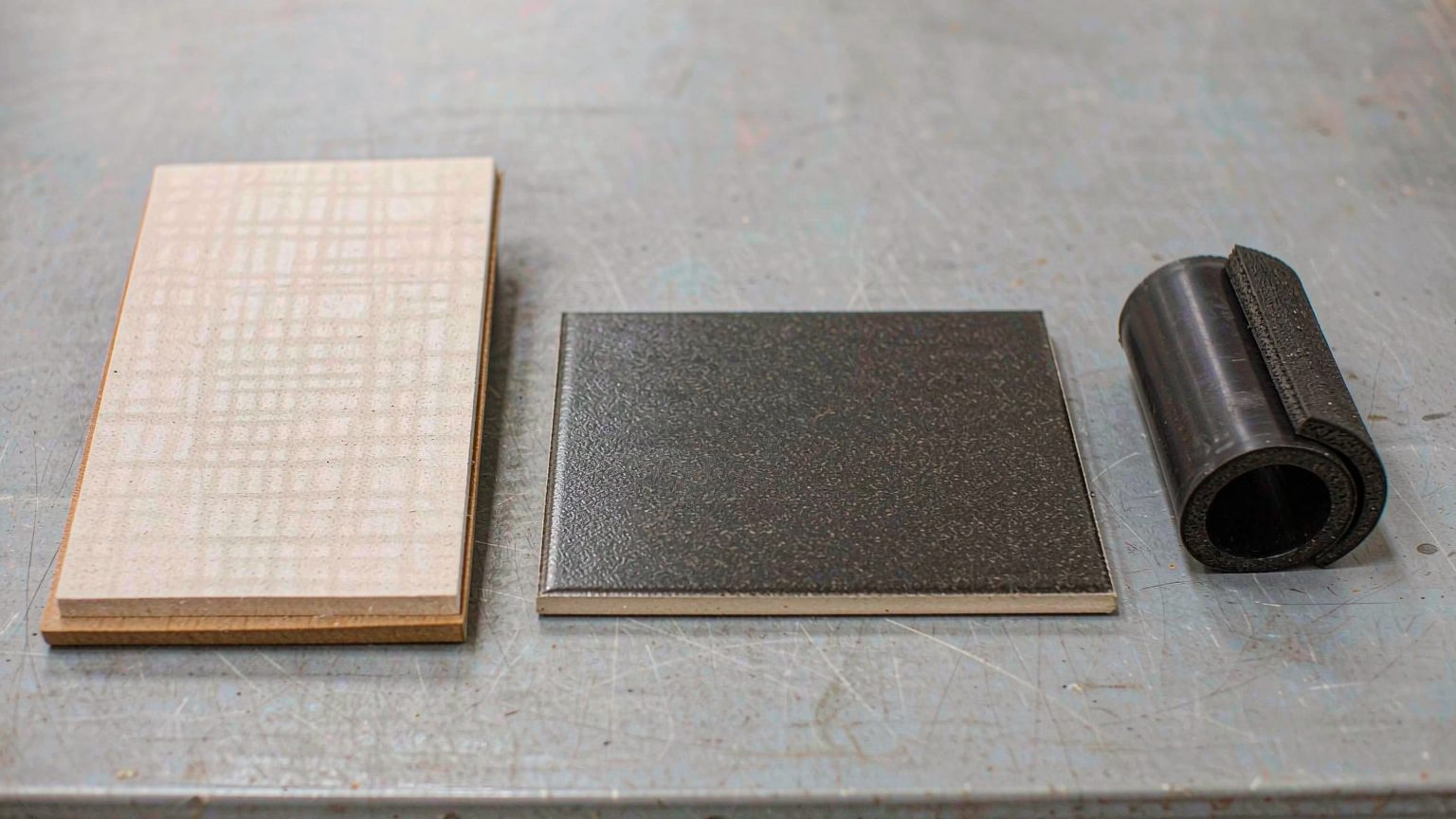
| 制品类别 | 欧盟 / 英国 | 北美 | 中国 |
|---|---|---|---|
| 墙面与吊顶 lining | EM 13823 + EM ISO 11925-2 → EN 13501-1 [1][3][4] | ASTM E84 [8] | GB 8624 体系 [13] |
| 铺地材料 | EM ISO 9239-1 + EM ISO 11925-2 → EN 13501-1(fl 级)[5][4] | ASTM E648 [9] | GB 8624 体系 [13] |
| 不燃 / 接近不燃 | ISO 1182 [6] 与 ISO 1716 [7] | 视规范 | GB 8624 体系 [13] |
| 房间尺度验证 | 视框架 | NFPA 286 [12] | 视规范 |
| 产烟 | 同上述试验的产烟测量 | 同隧道试验的产烟测量 | 视分级 |
Substrate, Mounting and End-Use: The Rule That Overrides Everything
| 变量 | 为什么决定结果 | 实务做法 |
|---|---|---|
| 基材 | 基材参与燃烧、传热与熔滴 | 按最终使用基材测试,不测裸样 |
| 粘结剂 | 有机胶本身是可燃物 | 一并纳入试样 |
| 空腔与背衬 | 改变散热与火焰传播路径 | 按实际构造保留 |
| 安装方位 | 水平、垂直、吊顶位不可互换 | 严格按方法规定 |
| 表面处理 | 涂层、贴面决定暴露面行为 | 测实际暴露面 |
| 接缝与边 | 边缘是优先传播路径 | 按方法封边或按构造保留 |
What Fire Testing Standards for Interior Building Materials Do Not Cover
Every standard on this page is a reaction-to-fire method, and that phrase carries a boundary. None of them tells you how long a partition will hold back a fire, whether a door will stay in its frame, or whether a floor will carry load while the compartment below burns — those are fire resistance questions answered in furnace tests under a different set of standards. None of them tells you what the smoke will do to occupants: smoke toxicity is assessed separately. And none of them is a fire risk assessment, a point each method states in its own scope.
The second boundary is scale. A bench-scale result is a material property obtained under one thermal insult. It will not predict the behaviour of a full room, which is why room-scale methods exist and why a specification may legitimately ask for both. Treating a Euroclass or a tunnel index as a complete description of how a building will behave in a fire is the error that standards writers keep warning about, and it is worth repeating here.
Building a Test Programme
The sequence below looks obvious written down, and is skipped surprisingly often in practice — usually because a customer asks for “a fire test” without naming the market, and the wrong method gets commissioned before anyone checks.
| 步骤 | 要决定什么 | 产出证据 |
|---|---|---|
| 1. 定市场 | 目标国家与适用法规 | 明确的标准清单 |
| 2. 定类别 | 墙面 / 吊顶 / 铺地 / 线型制品 | 对应试验路线 |
| 3. 核版次 | 标准现行版本 | 引用的标准号与年号 |
| 4. 定构造 | 基材、粘结、安装方式 | 试样构造声明 |
| 5. 出数据 | 试验报告 | 实测值 |
| 6. 取分级 | 由授权机构按分级标准发布 | 分级文件 |
Common Gaps in a Submission
| 缺口 | 后果 |
|---|---|
| 报告引用已作废标准版次 | 评估机构退回 |
| 只测裸材料,未声明基材 | 结果与实际使用不符 |
| 用墙体路线的数据报铺地材料 | 判定无效 |
| 用耐火试验数据代替内装修数据 | 机理不同,不可互换 |
| 未确认方法是否排除本产品类别 | 例如用排除铺地材料的方法测地板 |
| 缺少产烟或滴落物补充试验 | 分级下标无法判定 |
| 把系列内最优样品送检 | 覆盖整个系列的分级不成立 |
| 未保留试样构造声明 | 结果无法迁移到实际工程 |
Equipment Behind These Standards
| 设备 | 对应标准 | 适用制品 |
|---|---|---|
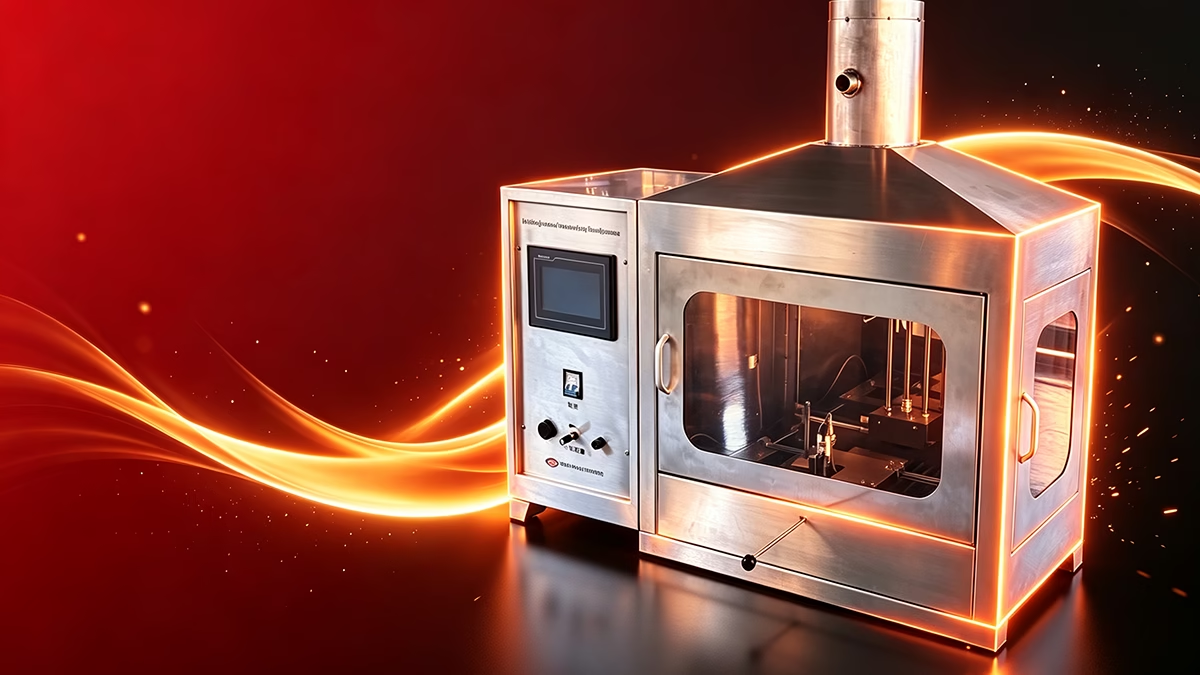
| SBI 试验装置 | EM 13823 [3] | 墙面与吊顶制品 |
| 建筑材料可燃性试验装置 | EM ISO 11925-2 [4] | 小火焰点燃性 |
| 建筑材料不燃性试验装置 | ISO 1182 [6] | A1 / A2 路线 |
| 建材燃烧热值试验仪 | ISO 1716 [7] | A1 / A2 路线 |
| 建材烟密度试验机 | 产烟测量 | 分级下标 |
| 辐射热通量试验仪 | 辐射热通量标定 | 铺地材料方法配套 |
| 建材硬质可燃性试验机 | 建材硬质可燃性 | 硬质内饰板材 |
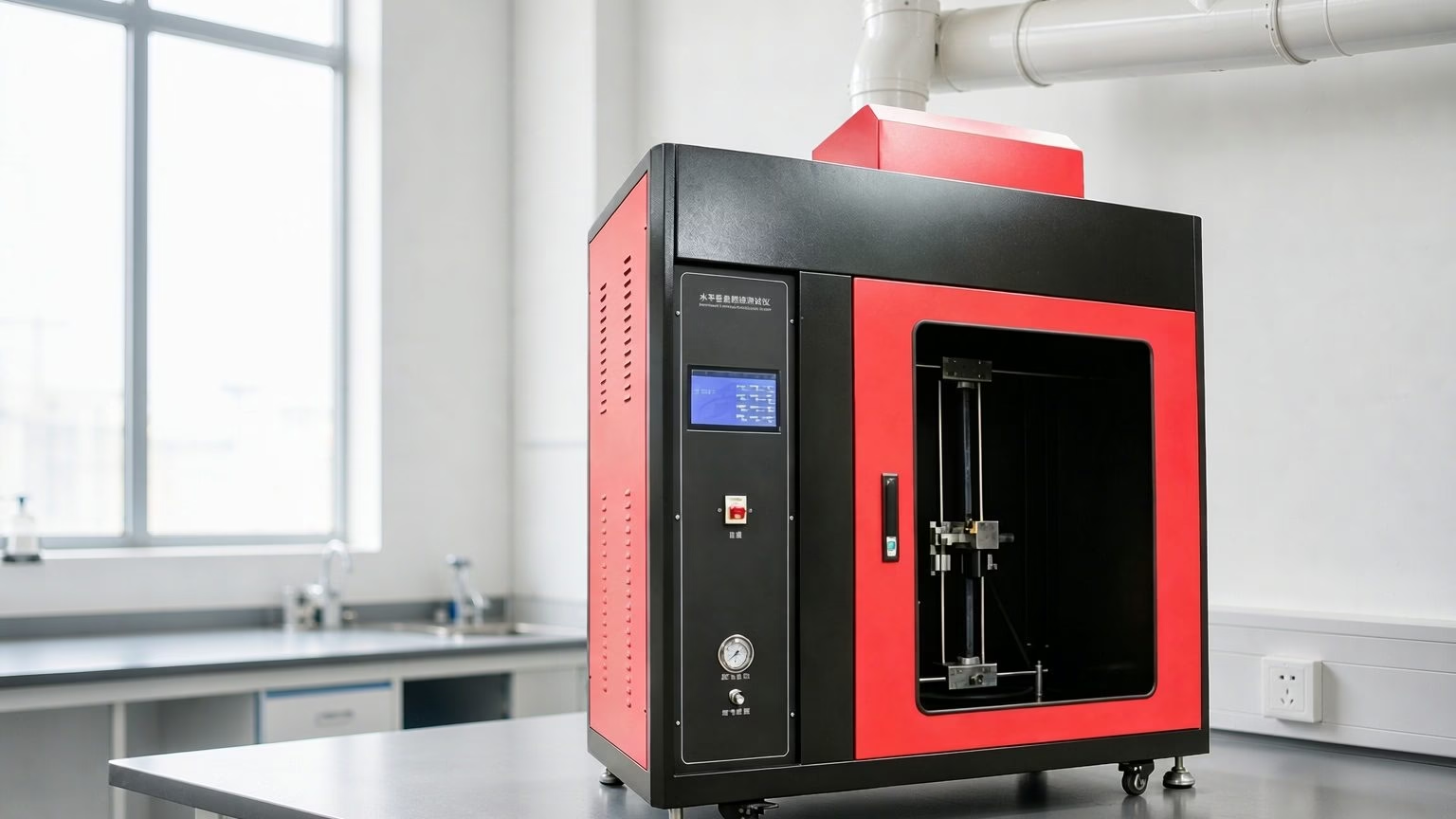
Our EM 13501-1 Euroclass guide walks through the class thresholds in detail, o single flame source test guide covers the ignitability method step by step, e o fire testing equipment range lists the full catalogue.
Perguntas frequentes
Which fire testing standards apply to interior wall and ceiling linings?
In Europe, linings are assessed with the Single Burning Item test EN 13823, supplemented by small-flame ignitability EN ISO 11925-2, and classified under EN 13501-1. In North America the equivalent starting point is the tunnel test, ASTM E84. In China the reference is the GB 8624 classification system.
Do floorings use the same fire test as wall linings?
Não. Floorings are exposed to radiant flux from above rather than to upward flame spread, so they are tested with a radiant panel method — EN ISO 9239-1 in Europe and ASTM E648 in North America — and classified with a flooring-specific class. A wall classification cannot be transferred to a flooring.
Does the substrate affect the fire classification?
Sim. The test result belongs to the product as mounted, including substrate, adesivo, underlayment and fixing. Changing any of those can move a product between classes, which is why the end-use construction has to be declared before testing and reproduced exactly on the rig.
Are current standard editions different from the ones on my old report?
Often. EM 13823:2020 was withdrawn in July 2022 and replaced by EN 13823:2020+A1:2022, and EN ISO 11925-2:2020 was withdrawn in January 2026 in favour of the 2026 edição. The test method is unchanged, but reports should cite the current edition.
Can a fire resistance test result be used for an interior lining?
Não. Fire resistance tests ask whether an assembly maintains loadbearing capacity, integrity and insulation in a furnace; interior finish tests ask how much the surface contributes to fire growth. They are different questions and the results are not interchangeable.
What is the difference between a test report and a classification?
A laboratory produces measured values. A classification is a formal conclusion drawn from those values against the thresholds of a classification standard, issued by the body authorised to do so under the relevant regulation. Buying the apparatus gives you the first, not the second.
Do I need to test every product variant?
Test the worst case within a defined product family, and document why it is the worst case. Because substrate, grossura, coating and fixing all affect the result, the justification has to be written down, and the authority having jurisdiction may ask for it.
Conclusão: A Sequence for Specifying Interior Fire Testing
- Classify your product first — wall lining, ceiling lining, flooring, or linear.
- Choose the market, then read the current edition of the standards that market points to.
- Write down the end-use construction before you cut a single specimen.
- Confirm whether room-scale verification is required in addition to the bench method.
- Run the bench tests, obtain the report, then take the classification step separately.
- Keep the construction declaration with the report; it is what makes the result transferable.
Fire testing standards for interior building materials are, in the end, a way of making one question answerable in writing: how much does this surface contribute to a fire? Everything on this page — the category split, the regional map, the substrate rule — exists to make that answer comparable between laboratories and defensible to an authority that has never seen your factory.
BRT Testing supplies the apparatus behind every standard on this page, with commissioning, calibration and operator training for laboratories working to EN, ISO, ASTM and GB routes. Send us your product category, target market and construction, and we will map it to a test programme and the equipment list that supports it.
Shenyang Baoruitong Automation Equipment Co., Ltda.
BRT Testing designs and manufactures fire testing and spectroscopic instruments in Shenyang, China, including Single Burning Item apparatus, small-flame ignitability rigs, non-combustibility furnaces, gross heat of combustion testers, smoke density testers and cone calorimeters. Our technical team supports method selection, installation, calibration and documentation for manufacturers and third-party laboratories.
Sources
- UNI Ente Italiano di Normazione — EN 13501-1:2018
- Genorma — EN 13501-1:2018
- Genorma — EN 13823:2020+A1:2022
- Genorma — EN ISO 11925-2:2026
- UNI Ente Italiano di Normazione — EN ISO 9239-1:2025
- UNI Ente Italiano di Normazione — ISO 1182:2020
- UNI Ente Italiano di Normazione — EN ISO 1716:2018
- ASTM International — E84-24 Standard Test Method for Surface Burning Characteristics of Building Materials
- ASTM International — E648-19a Standard Test Method for Critical Radiant Flux of Floor-Covering Systems Using a Radiant Heat Energy Source
- ASTM International — E162-22 Standard Test Method for Surface Flammability of Materials Using a Radiant Heat Energy Source
- NFPA — NFPA 101
- NFPA — NFPA 286
- SAMR (China) — National standards full-text platform, GB 8624 search