A resposta curta
A UV-Vis spectrophotometer for environmental testing turns a colour reaction or a native absorbance into a concentration, but the number is only defensible if the method, the wavelength setting, the calibration and the quality-control record are all in order. In regulated water and wastewater work the instrument is the last link in a chain that begins with sampling and preservation, passes through an approved colorimetric or UV method, and ends with a report that a reviewer can reconstruct. Using a UV-Vis spectrophotometer for environmental testing is therefore less about reading absorbance than about controlling four things: the analyte-to-method match, the accuracy of the wavelength, the validity of the calibration, and the completeness of the QC record. Get those right and a modest instrument produces data that holds up; get them wrong and a costly one produces numbers nobody can rely on.
Etapa 1 — Match the Analyte to a Method
Environmental UV-Vis work divides into two families: methods where the analyte forms a coloured complex measured in the visible range, and methods where the analyte absorbs in the ultraviolet directly. The first step is always to identify the approved method for the matrix and the analyte, because the method fixes the wavelength, the reagents, the path length and the reporting basis.
| Analyte group | Typical UV-Vis approach | Reference framework | Observação |
|---|---|---|---|
| Phenolics | Colorimetric reaction measured in the visible | EPA colorimetric methods approved under 40 CFR 136 1 2 | Method defines the reagent and wavelength |
| Nutrients (phosphorus, nitrato, amônia) | Colorimetric reaction, or UV screening for nitrate | EPA-approved methods [1][2]; ISO methods where specified | Matrix interferences govern the choice |
| Colour and apparent colour | Direct absorbance / spectral measurement | ISO 7887 5 | Defines the measurement wavelength and filtration |
| Metals with colorimetric complexes | Derivatisation then visible measurement | Approved method specific to the metal and matrix | Often an alternative to atomic absorption |
| Surfactants and other organics | Reactive colour formation | Matrix-specific approved method | Reagent stability is critical |
Why the method comes before the instrument
In regulated environmental testing the analytical method is not a suggestion. Under frameworks such as 40 Parte CFR 136, the discharge and water programmes specify the analytical procedures that must be used, and the approved-method list is maintained by the regulator [1][2]. A laboratory that chooses a wavelength or a reagent from memory rather than from the method is producing a result that may be scientifically reasonable but is not compliant. The practical sequence is therefore: analyte, matrix, approved method, then instrument configuration.
Sampling and preservation are part of the measurement
A defensible result begins before the sample reaches the instrument. Holding times, container type, preservation and storage temperature are specified for environmental analytes, and a violation of those conditions invalidates the result regardless of how well the spectrophotometer performs. Sampling guidance under the ISO 5667 series covers the preservation and handling of water samples 6. A laboratory that accepts a sample without a documented chain of custody has already lost the argument before the first reading.
Etapa 2 — Verify the Wavelength and the Light Path
Two instrument parameters quietly determine whether an absorbance reading is correct: the accuracy of the wavelength setting and the level of stray light. Environmental methods often specify a narrow wavelength and expect the reading at that point to be reliable, so both parameters belong in a routine verification programme.
Precisão do comprimento de onda
Wavelength accuracy can be checked against a material with known absorption features. O SRM do NIST 2034 wavelength standard, a holmium oxide solution certified over the 240 para 650 nm range, is a widely used reference 7. Its certificate documents how the observed peak positions shift with spectral bandwidth — a useful reminder that the reported wavelength depends on the instrument’s slit setting as well as on the monochromator. A laboratory should verify wavelength across the range it actually uses, not at a single point.
Luz difusa
Stray light is light reaching the detector at wavelengths outside the selected band. At high absorbance it becomes the dominant error source, because the true transmitted signal falls toward zero while the stray signal does not. A stray-light check is therefore a necessary part of confirming that an instrument is fit for methods that read at high absorbance. The same verification discipline that pharmaceutical laboratories apply to UV-Vis systems 3 is directly transferable to environmental work.
The Beer-Lambert relationship and its limits
UV-Vis quantification rests on the Beer-Lambert relationship between absorbance, path length and concentration. That relationship holds within a working range; outside it, chemical and instrumental effects introduce curvature. A calibration curve that is linear only over a limited range must be reported with that range stated, and samples outside it must be diluted and re-read rather than extrapolated. This is one of the most common review findings in environmental UV-Vis data.
| Parâmetro | Por que isso importa | Routine control |
|---|---|---|
| Precisão do comprimento de onda | Methods specify the read wavelength | Verify with a traceable standard such as NIST SRM 2034 [7] |
| Luz difusa | Dominates error at high absorbance | Check at the method’s critical wavelength |
| Precisão fotométrica | Governs the absorbance scale | Verify with traceable absorbance standards |
| Baseline and blank | Sets the zero point | Run a method blank with every batch |
| Largura de banda espectral | Shifts observed peaks | Record the setting used for verification |
Etapa 3 — Build the Calibration and QC Record
A calibration curve is evidence, not a formality. In a defensible environmental result it is accompanied by a quality-control record that shows the measurement system was in control when the samples were read.
Calibration design
The calibration should bracket the expected sample concentrations and use standards prepared in a matrix comparable to the samples, or be verified for matrix effects. The number and spacing of calibration points should follow the method, and the acceptance criterion for the correlation or fit should be defined in advance rather than chosen after seeing the data. Where a method requires daily calibration, a curve carried over from a previous day is not acceptable even if it looks sound.
The QC batch
A run is normally accompanied by a method blank, a laboratory control sample, a duplicate or replicate, and a matrix spike where the method requires one. Continuing calibration verification checks that the instrument has not drifted during the run. Each of these elements answers a specific question: contamination, precisão, precision and matrix interference respectively. A batch that omits them may still produce numbers, but those numbers cannot be shown to be in control.
documentation the reviewer wants
A reviewer reconstructing a result wants to see the sample identity and custody, the method and edition, the reagent preparation, the calibration curve and its acceptance, the QC results, the instrument and its verification status, and the raw absorbance values. This is the evidence chain that ISO/IEC 17025 4 formalises for competent laboratories. A result without it is an assertion, not a measurement.
Etapa 4 — Choose the Instrument Configuration
The configuration follows from the methods the laboratory runs. A laboratory running a small set of fixed-wavelength colorimetric methods needs a reliable single-wavelength or scanning instrument with good photometric stability and a suitable cuvette format. A laboratory that also performs spectral scanning, method development or wavelength verification needs a scanning instrument with a defined spectral bandwidth and the software to store and audit raw spectra.
Single-beam, split-beam and double-beam
Single-beam instruments are compact and cost-effective but require a blank measurement before the sample. Double-beam designs correct for source drift in real time, which matters for longer measurements and unstable sources. Split-beam instruments offer part of that correction at lower cost. For regulated environmental work the deciding factor is not the optical topology by itself but whether the instrument can meet the method’s wavelength, photometric and stray-light requirements and produce an auditable record.
Sampling accessories
Colorimetric methods commonly use 10 mm cuvettes, but environmental methods may specify long-path cells for low concentrations or flow cells for online monitoring. The sample holder must match the method, and the path length used in the calculation must match the cell actually used. A mismatch here produces a systematic error that no calibration will correct.
Data integrity
Modern instruments store methods, curves and raw data, and that storage is part of compliance. A defensible system preserves an audit trail of changes to methods and results, and exports data in a form that can be reviewed independently. Where a laboratory operates under a quality system, the instrument’s software controls should be validated alongside the hardware.
Etapa 5 — Read the Method’s Reporting Requirements
The final step is to report the result in the form the method and the regulator require. Environmental reports commonly specify the reporting limit, the units, the sample basis and any qualifyers arising from QC. Dilution factors, recovery limits and holding-time exceedances must be disclosed. A result reported to more significant figures than the method supports is a common and avoidable error.
When UV-Vis is the right tool — and when it is not
UV-Vis is excellent for colorimetric determinations and for screening parameters with native UV absorbance, and it is widely specified in approved environmental methods. It is not a universal solution: trace metals at very low levels, speciation questions and analytes without a suitable chromophore often require atomic absorption, ICP or chromatographic methods. A defensible laboratory knows the boundary of UV-Vis and routes the analyte accordingly rather than forcing every parameter onto one instrument.
Perguntas frequentes
Can a UV-Vis spectrophotometer be used for environmental testing?
Sim. UV-Vis spectrophotometers are widely used in water and wastewater analysis for colorimetric methods and for analytes with native UV absorbance, such as nitrate screening and colour measurement. The key requirement is that the method is an approved one for the matrix and analyte, and that wavelength accuracy, calibration and quality control are documented.
What environmental parameters can UV-Vis measure?
Common applications include phenolics, nutrients such as phosphorus and ammonia, nitrate by UV screening, colour under ISO 7887, and metals that form colored complexes after derivatisation. The exact list depends on the approved methods in force for the programme. Parameters without a suitable chromophore are better routed to atomic or chromatographic techniques.
Why is wavelength accuracy important in environmental UV-Vis?
Because colorimetric methods specify a reading wavelength, and absorbance varies with wavelength. If the instrument’s wavelength is off, the reading is wrong even if the chemistry is perfect. Wavelength accuracy is commonly verified with a traceable standard such as NIST SRM 2034, a holmium oxide reference covering 240 para 650 nm.
What quality-control samples does a UV-Vis environmental batch need?
A typical batch includes a method blank, a laboratory control sample, a duplicate or replicate, and a matrix spike where the method calls for one, together with continuing calibration verification to detect drift. Each control addresses a specific failure mode: contamination, precisão, precision and matrix interference.
What is the role of 40 Parte CFR 136 in US environmental testing?
Papel 136 identifies the approved analytical test procedures for water and wastewater programmes under the US Clean Water Act [1]. A laboratory reporting results for those programmes must use an approved method or an approved alternative, which fixes the reagent, wavelength, calibration and reporting basis. The regulator maintains the approved-method list [2].
How do I know if a UV-Vis result is defensible?
A defensible result can be reconstructed by a reviewer: sample identity and custody, method and edition, reagent preparation, calibration curve and acceptance, QC results, instrument verification status, and raw absorbance values. This is the evidence chain formalised by ISO/IEC 17025 [4]. A number without that chain is an assertion rather than a measurement.
What is the difference between single-beam and double-beam instruments here?
A single-beam instrument measures the blank and then the sample, while a double-beam instrument corrects for source drift in real time. For regulated environmental work the more important question is whether the instrument meets the method’s wavelength, photometric and stray-light requirements and produces an auditable data record.
When should I use a method other than UV-Vis?
Use another technique when the analyte has no suitable chromophore, when trace-level sensitivity is beyond UV-Vis, or when speciation is required. Trace metals commonly require atomic absorption or ICP, and many organic contaminants require chromatography. A UV-Vis method should be chosen because the approved method specifies it, not by default.
Conclusão: Build the Chain, Then Read the Absorbance
A UV-Vis spectrophotometer for environmental testing produces reliable data only as the final step of a controlled process. Match the analyte to an approved method [1][2], preserve the sample correctly [6], verify wavelength and stray light [7][3], build a calibration that brackets the samples, run the batch-level QC, and keep a record that a reviewer can reconstruct [4]. The instrument configuration follows from those decisions, não o contrário.
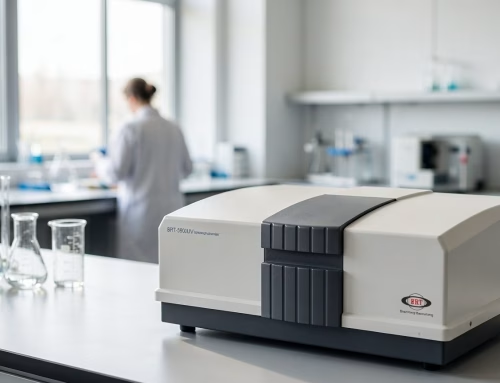
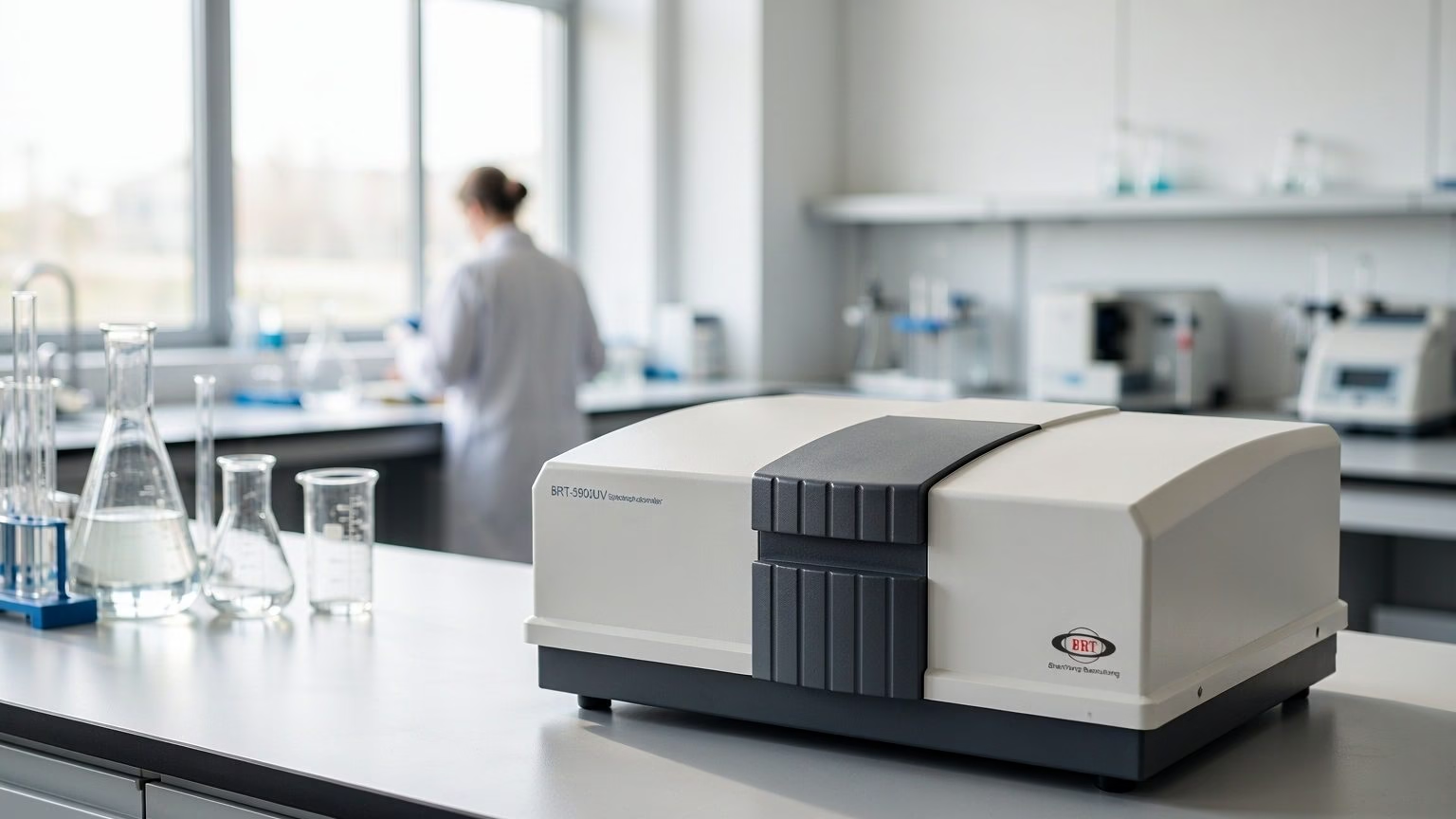
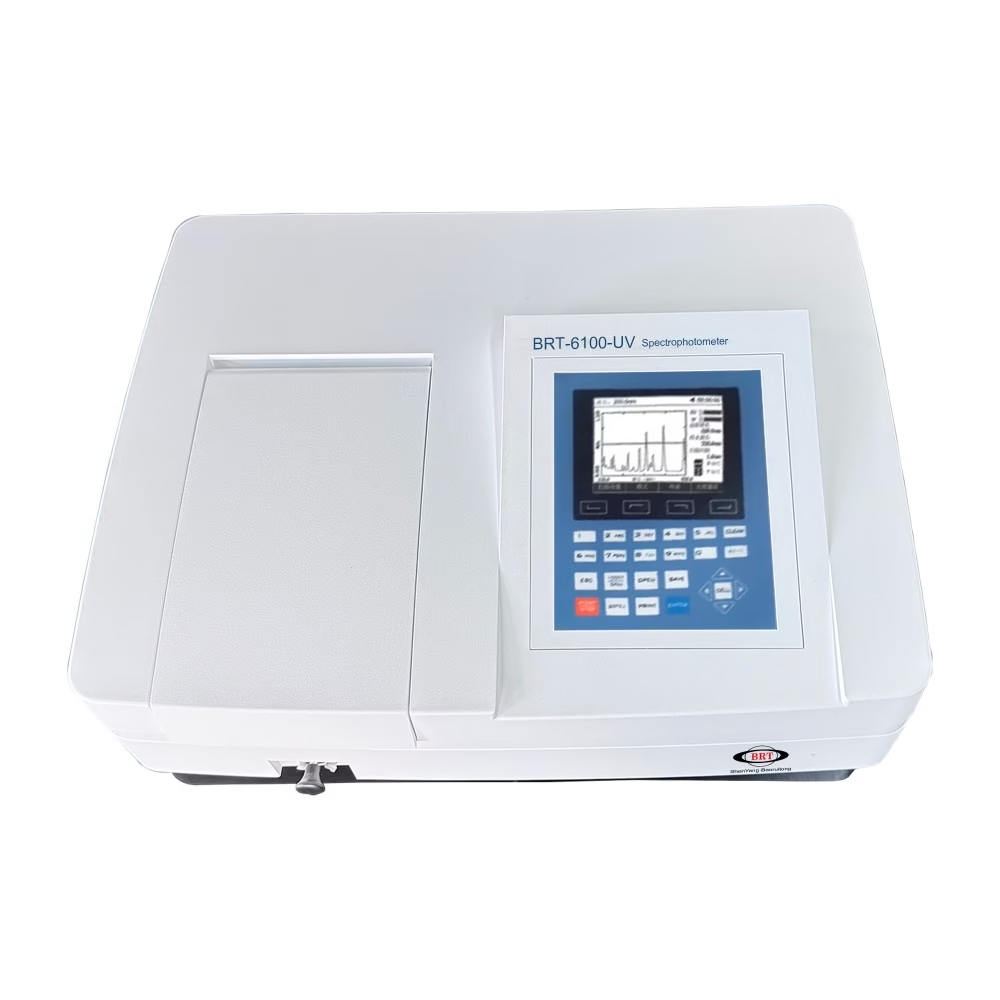
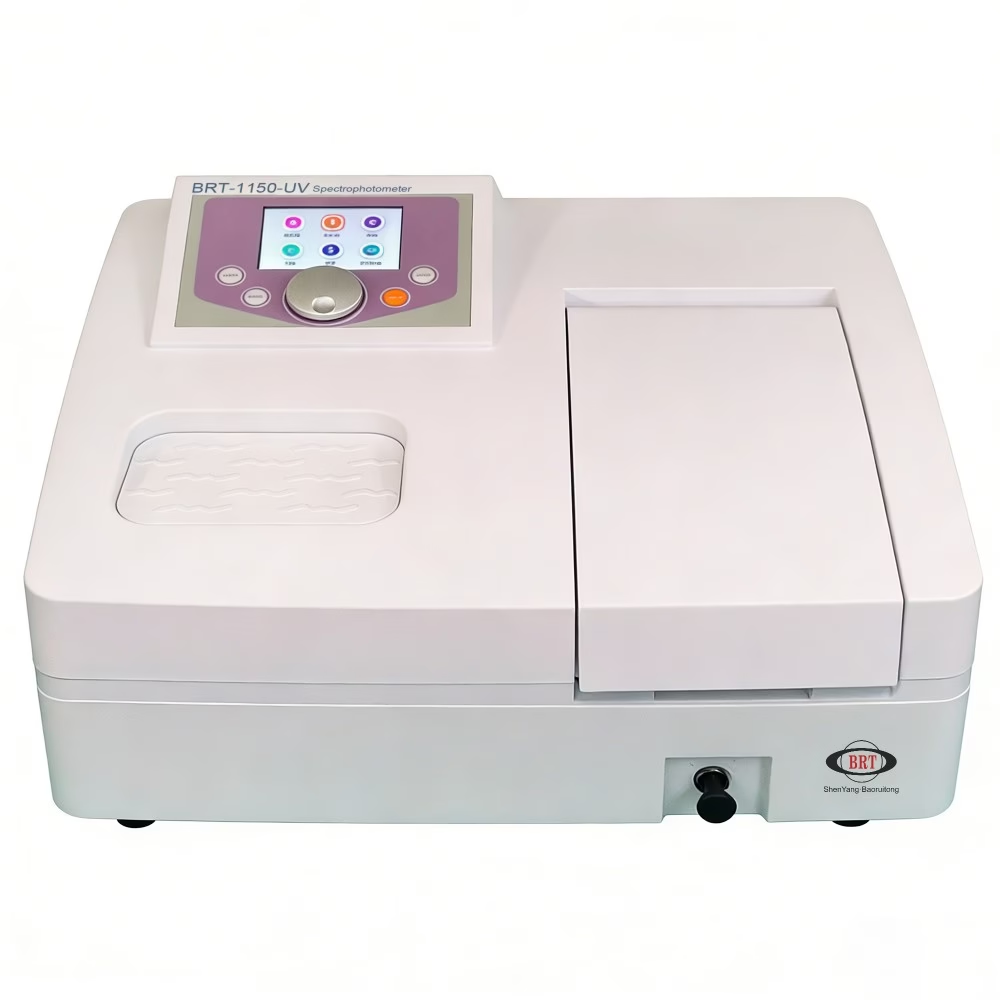
For laboratories equipping for this work, BRT supplies the Espectrofotômetro UV-Vis BRT-6100UV for scanning methods and verification work, o Espectrofotômetro UV-Vis BRT-1150UV for routine colorimetric analysis, e o BRT-5000UV high-precision UV/Vis spectrophotometer for work demanding tighter photometric performance. Tell us the methods you run and the matrix you test, and we will map the configuration and the verification route behind it.
Sobre o autor
Escrito pela equipe de conteúdo do BRT Testing — Shenyang Baoruitong Automation Equipment Co., Ltda., a manufacturer of UV-Vis and FTIR spectrometers, equipamento de teste de fogo e chama, and materials analysis instruments. This article is written for environmental laboratory managers, water analysts and procurement specialists who need defensible UV-Vis data.
Fontes
- Cornell LII — 40 Parte CFR 136, Guidelines Establishing Test Procedures for the Analysis of Pollutants. https://www.law.cornell.edu/cfr/text/40/part-136
- EPA dos EUA — Métodos de teste químicos aprovados pela CWA. https://www.epa.gov/cwa-methods/approved-cwa-chemical-test-methods
- UNI — ISO/IEC 17025:2017, General requirements for the competence of testing and calibration laboratories. https://webstore.uni.com/en/iso-iec-17025-2017
- UNI — ISO/IEC 17025:2017 (quality-system evidence chain). https://webstore.uni.com/en/iso-iec-17025-2017
- SONO - GRANDE 7887:1985, Water quality — Examination and determination of colour. https://webstore.uni.com/en/iso-7887-1985
- SONO - GRANDE 5667-3:2018, Water quality — Sampling — Part 3: Preservation and handling of water samples. https://webstore.uni.com/en/iso-5667-3-2018
- NIST-SRM 2034, Holmium Oxide Solution Wavelength Standard certificate. https://tsapps.nist.gov/srmext/certificates/2034.pdf