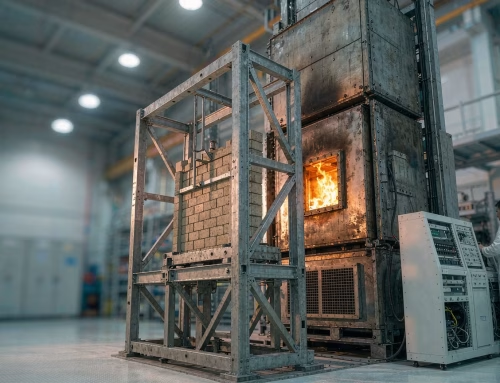
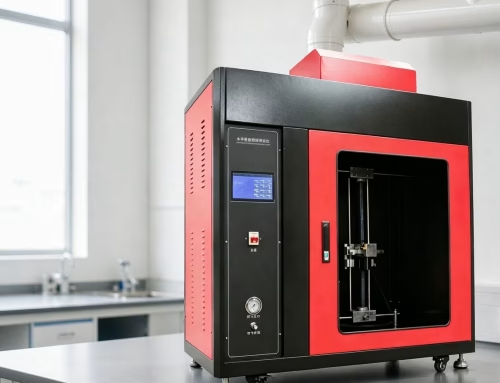
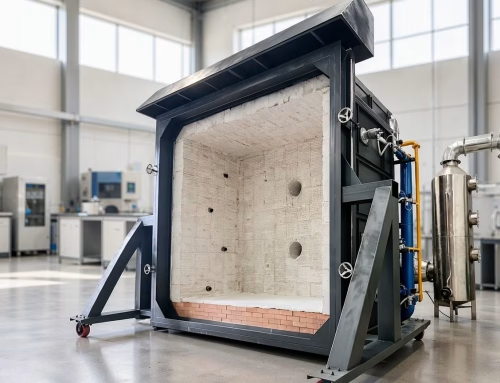
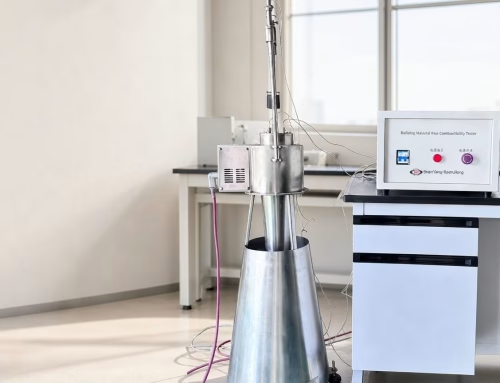
Executive Summary: Global building codes enforce strict fire safety standards to evaluate how construction products perform under real-world fire conditions. This comprehensive guide breaks down the core regulatory frameworks across Europe, North America, the Middle East, and Australasia, highlighting key test metrics (heat release, flame spread, smoke production) and recommending fully accredited testing equipment for manufacturers, laboratories, and regulatory agencies.
1. Global Regulatory Frameworks for Construction Fire Safety
Fire compliance for building materials is regulated regionally to minimize fire hazards, structural collapse, and toxic smoke exposure in residential and commercial buildings. Manufacturers exporting products globally must comply with specific testing frameworks based on the target market.
Europe & United Kingdom (EN & BS Standards)
The European Union mandates the Euroclass system (EN 13501-1) for rating reaction to fire. Materials are classified from A1 (non-combustible) to F (easily flammable), supplemented by smoke production (s1, s2, s3) and flaming droplets/particles (d0, d1, d2). The UK maintains a hybrid approach, accepting Euroclass classifications while retaining legacy BS 476 methods for specific building elements.
North America (ASTM, UL, & NFPA Codes)
In the United States and Canada, the International Building Code (IBC) and National Fire Protection Association (NFPA) enforce testing governed primarily by ASTM International and Underwriters Laboratories (UL). Classification focuses heavily on the Flame Spread Index (FSI) and Smoke Developed Index (SDI) via tunnel testing methods.
Middle East & GCC Region (Civil Defense Codes)
Gulf Cooperation Council (GCC) nations—such as the UAE, Saudi Arabia, and Qatar—operate under regional Civil Defense authorities. These bodies accept a dual compliance framework, requiring test reports matching either European (EN) or American (ASTM/UL) standards, alongside full-scale cladding safety tests like NFPA 285 or BS 8414.
Australasia (AS / AS/NZS Standards)
Australia and New Zealand operate under the National Construction Code (NCC). Fire compliance utilizes AS/NZS standards (frequently harmonized with ISO methods), evaluating internal wall and ceiling linings through a Group Number system (Group 1 to Group 4) determined by heat release rate measurements.
2. Key Fire Testing Metrics Explained
To achieve compliance, testing instruments simulate fire scenarios to measure distinct physical and chemical material properties:
- Heat Release Rate (HRR) & Total Heat Release (THR): Expressed in kW/m² or MJ/m², HRR measures the energy released during combustion. It is the primary indicator of a material’s potential contribution to fire growth and room flashover.
- Flame Spread & Surface Flammability: Measures how fast flame travels across a horizontal, vertical, or inclined material surface when exposed to a calibrated thermal heat flux gradient.
- Smoke Production Rate (SPR) & Optical Density: Smoke causes suffocation and disorientation during building evacuation. Optical sensors measure light attenuation to quantify smoke density.
- Flaming Droplets & Particles: Evaluates whether burning debris drips from ceiling or wall linings, which can spread fire to lower levels.
- Critical Radiant Flux (CHF): Expressed in kW/m², this measures the minimum radiant heat flux necessary for a flame to sustain propagation along flooring materials (e.g., carpets, hardwood, vinyl).
3. Regional Fire Testing Standards & BRT Equipment Selection Matrix
Selecting the proper accredited laboratory instrument is vital for obtaining valid compliance test reports. The matrix below links regional test methods, material categories, and recommended BRT (Baoruitong) testing solutions.
| Region | Material Category | Applicable Test Standard | Key Measured Parameters | Recommended BRT Equipment |
|---|---|---|---|---|
| Europe (EU) | Wall & Ceiling Linings | EN 13823 (SBI) | Heat release (FIGRA), Smoke (SMOGRA), Droplets | JCDT Single Burning Item Tester |
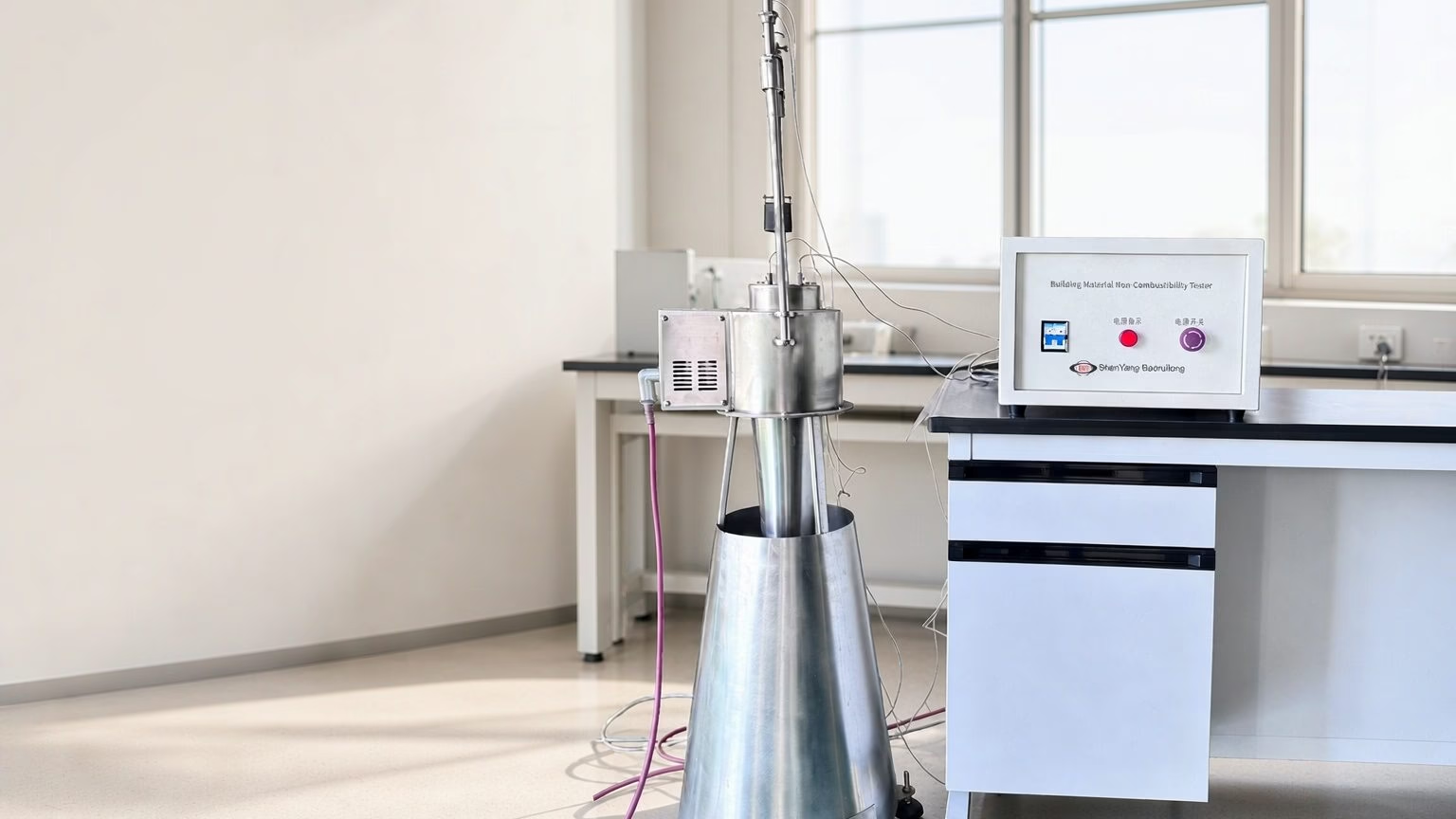
| Europe (EU) | Inorganic Insulation | EN ISO 1182 / EN ISO 1716 | Non-combustibility, Gross calorific value | JBR20 Furnace & JRZ10 Calorimeter |
| North America | Wall / Ceiling Surface | ASTM E84 / UL 723 | Flame Spread Index (FSI), Smoke Developed (SDI) | |
| North America | Polymers & Composites | ASTM E1354 | Heat release rate (HRR), Mass loss, Ignition time | ZXLR Cone Calorimeter System |
| Global / ISO | Flooring Materials | ISO 9239-1 / ASTM E648 | Critical Radiant Flux (CHF), Light attenuation | PDCL-01 Flooring Radiant Heat Flux Tester |
| Australasia | Interior Linings | AS/NZS 3837 / ISO 5660-1 | Group Numbers (1–4), Peak Heat Release Rate | |
| Global / ISO | Cable & Wire Fire Safety | IEC 60332 / EN 50399 | Vertical flame spread, Heat and smoke release | CS380 Cable Burning Test Rig |
4. Deep-Dive Compliance & Equipment Links
For specialized testing protocols and technical specifications, explore our detailed instrument guides:
- EN 13823 Single Burning Item (SBI) Testing Guide – In-depth analysis of Euroclass B & C compliance, calibration procedures, and automated gas analysis systems.
- Cone Calorimeter Testing (ISO 5660-1 / ASTM E1354) – Understanding oxygen consumption calorimetry for polymers, insulation, and timber.
- ISO 9239-1 Flooring Radiant Panel Testing – Critical heat flux evaluation for carpets, hardwood, and resilient floor coverings.
- ASTM E84 vs. EN 13501-1 Comparison – Structural and procedural differences between North American Steiner Tunnel testing and European SBI methods.
- Middle East Civil Defense Facade Compliance – Fire safety specifications for ACP/ACM cladding panels and exterior insulation finishing systems (EIFS).
5. Frequently Asked Questions (FAQ)
What is the main difference between reaction to fire and fire resistance?
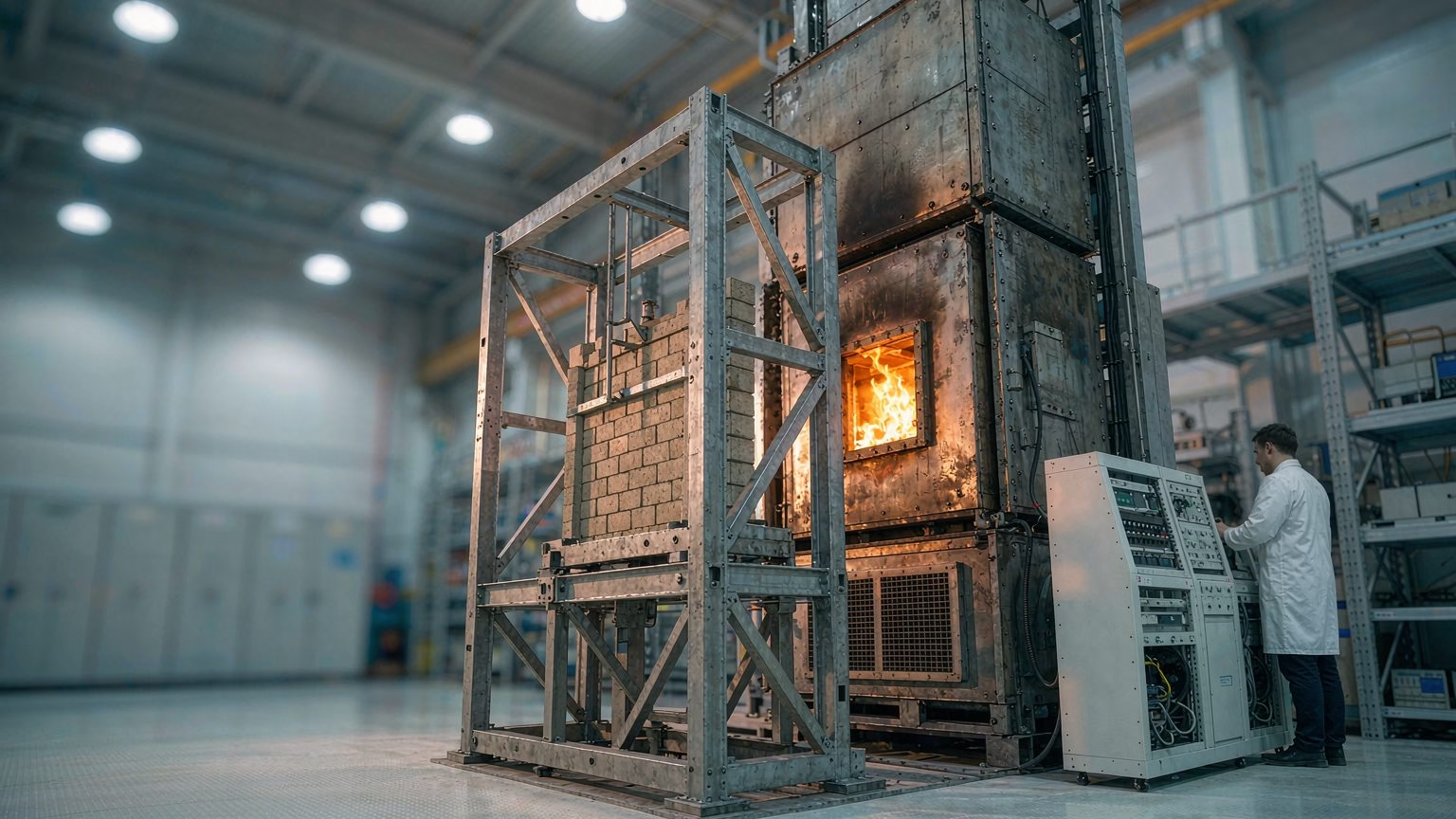
Reaction to fire evaluates how a material burns, contributes to fire growth, and produces smoke/droplets when exposed to heat (e.g., wall panels, insulation). Fire resistance measures how long an entire structural assembly (e.g., load-bearing wall, fire door, floor slab) can maintain its structural integrity, insulation, and containment during a fully developed fire.
Which standard is required for testing building cladding in the Middle East?
GCC Civil Defense authorities generally require facade panels (like Aluminum Composite Panels) to achieve EN 13501-1 Class B-s1, d0 or ASTM E84 Class A, alongside full-scale system testing under NFPA 285 or BS 8414.
Can one testing machine cover multiple international standards?
Yes. Many BRT instruments are engineered with modular components. For example, the BRT Cone Calorimeter can perform testing compliant with ISO 5660-1, ASTM E1354, ASTM E1740, and AS/NZS 3837 by swapping software modules and specimen holders.
“`