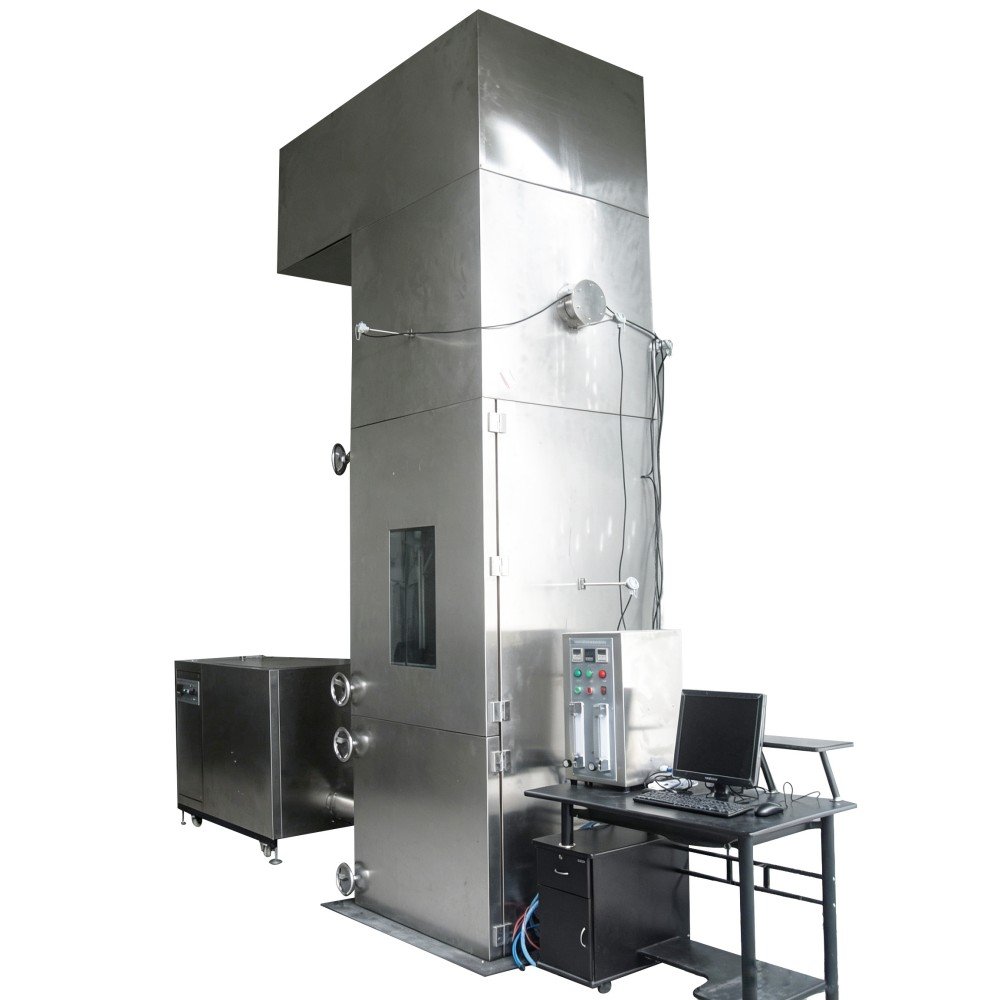
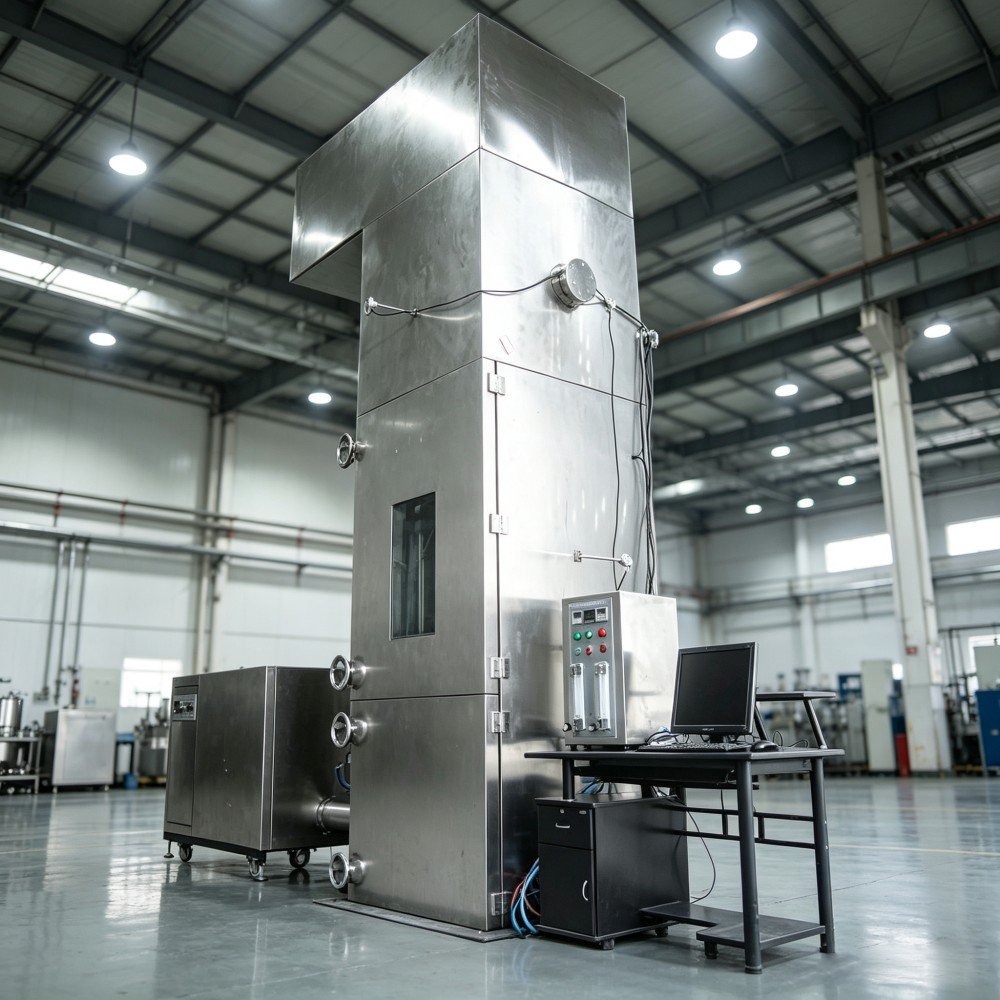
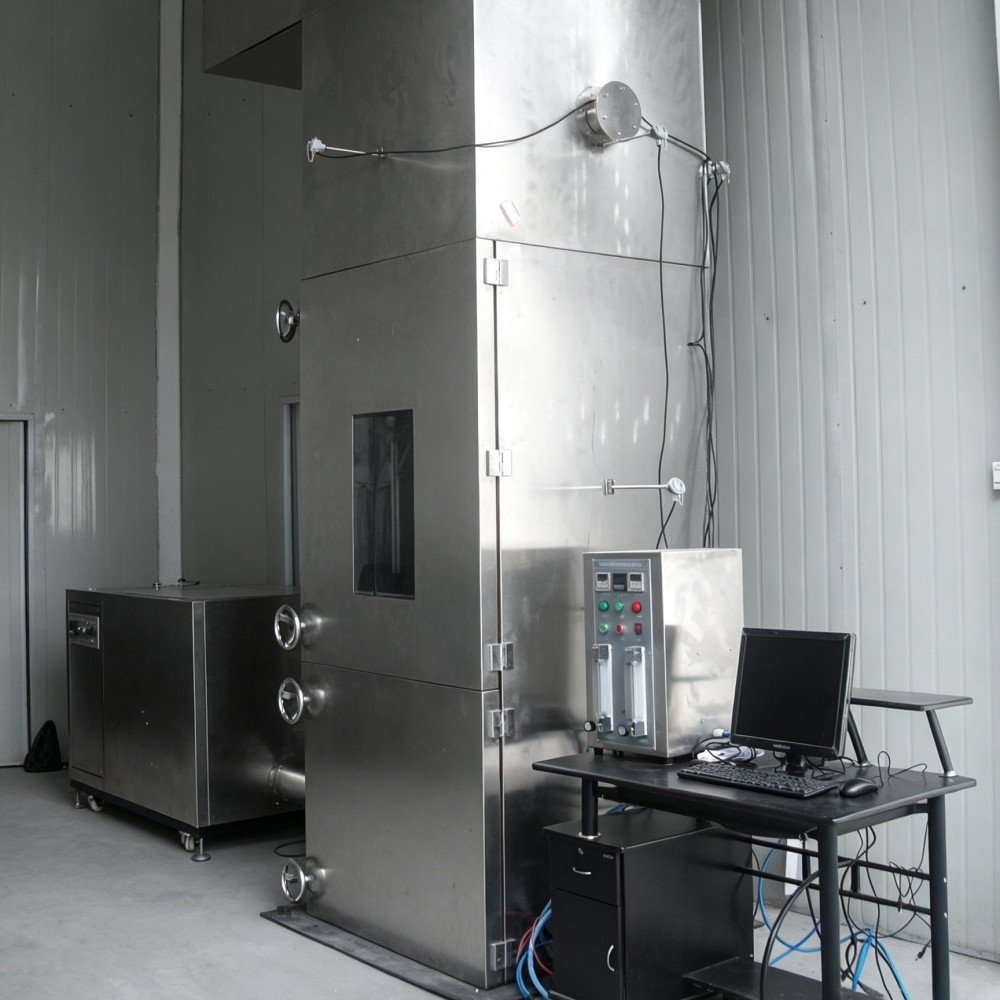
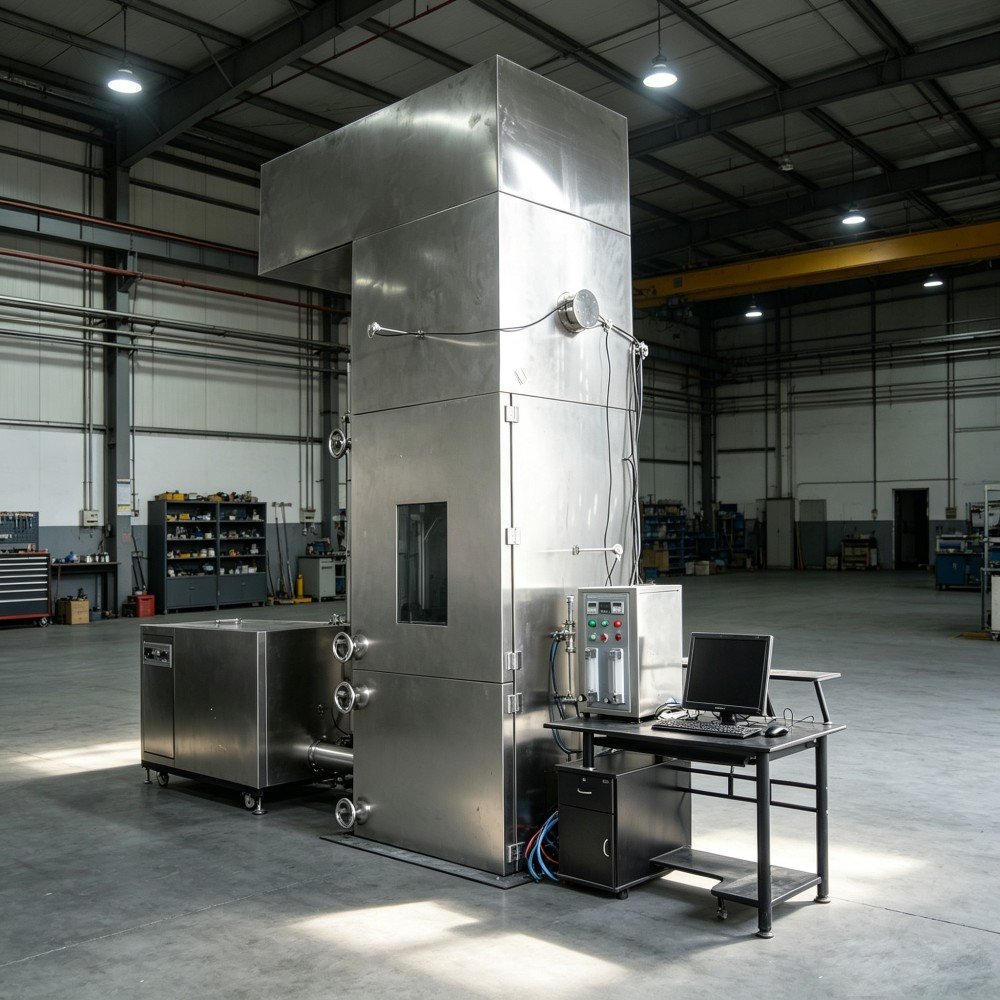
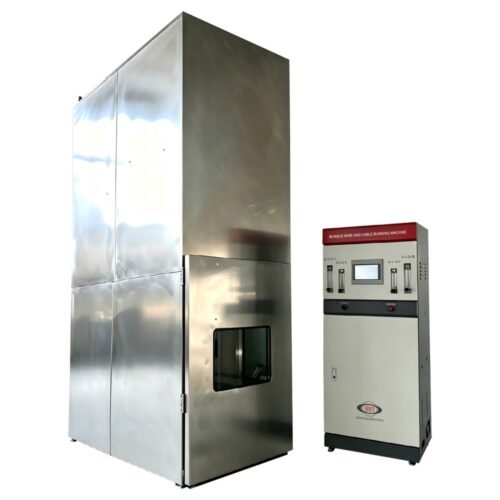
The JCNR-60 Building Material Hard-Combustibility Tester is a high-precision, computerized laboratory testing system designed to evaluate the flame spread, flue gas temperature, and hard-combustibility (fire retardancy) of building materials. Engineeered strictly according to DIN 4102-15/16 (Brandschacht Test) and the latest national standard GB/T 8625-2026, this system determines whether materials satisfy难燃 (B1 class) fire safety requirements.
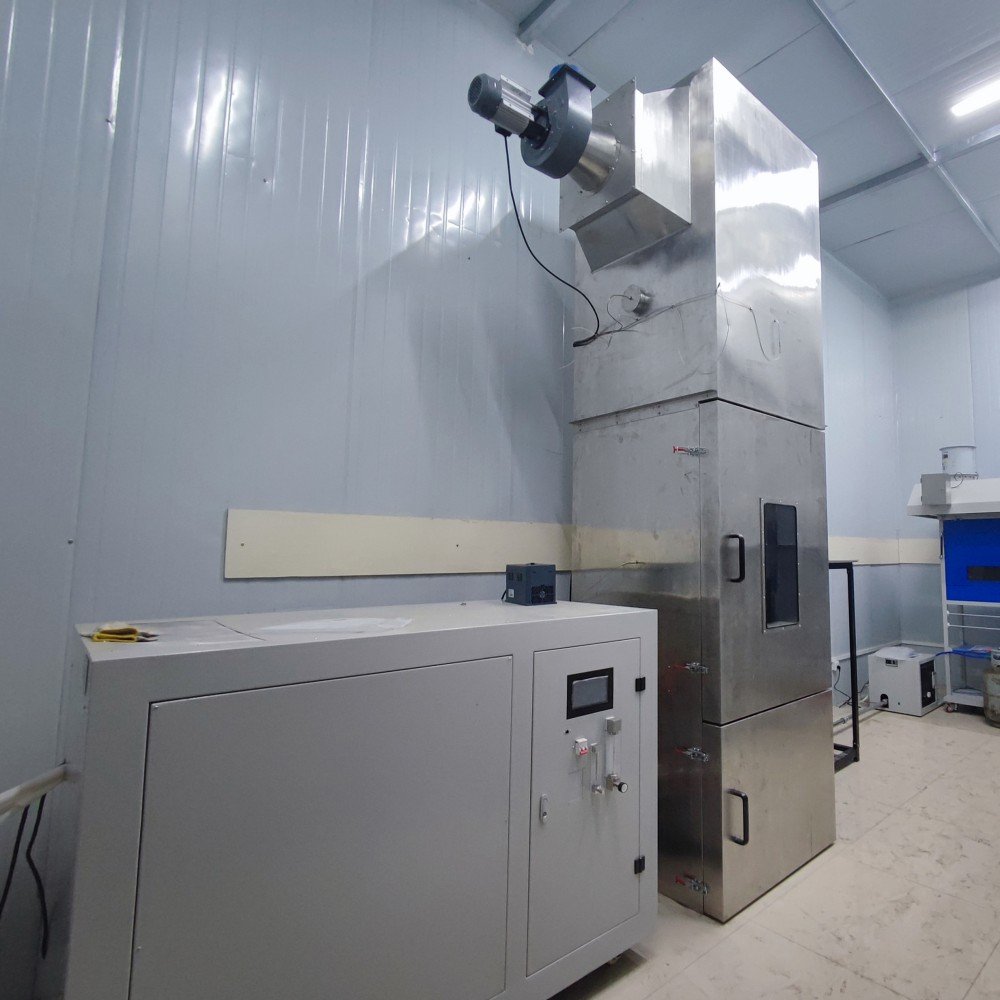
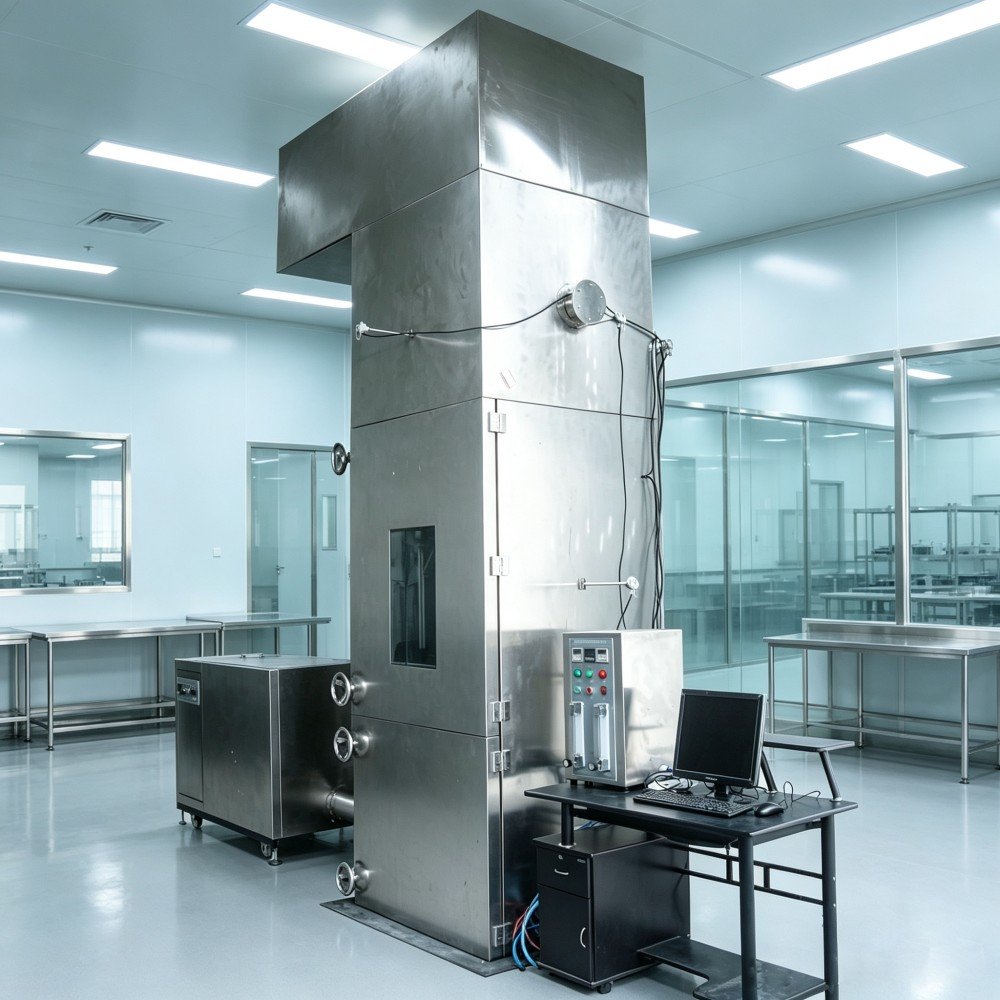
Featuring a 3.93-meter vertical shaft furnace, an automated constant-temperature and constant-flow air supply system (20°C ± 3°C), a high-purity methane burner, and dynamic flue gas temperature tracking, this advanced Building Material Fire Reaction Testing Apparatus provides authoritative compliance data for building material manufacturers, third-party fire testing agencies, and quality inspection authorities.
Building Material Hard-Combustibility Tester Compliance & Standards
This vertical shaft furnace test system enables certified labs to conduct formal reaction-to-fire and hard-combustibility assessments across international and national standards:
| Standard Code |
Standard Title & Scope |
Primary Testing Application |
| DIN 4102-15 |
Fire behaviour of building materials and building components — Part 15: Brandschacht apparatus |
German benchmark specification for vertical shaft furnace apparatus construction and calibration |
| DIN 4102-16 & DIN 4102-1 |
Brandschacht tests & Fire behaviour class B1 (Schwerentflammbare Baustoffe) |
European classification testing for hard-combustible/fire-retardant building materials (Class B1) |
| GB/T 8625-2026 |
Test method for hard-combustibility of building materials |
Mandatory Chinese national standard for evaluating fire retardancy and flue gas temperature limits |
Technological Features of JCNR-60 Hard-Combustibility Shaft Furnace
- Precision Vertical Shaft Furnace Construction: Standardized 1020 mm × 1020 mm × 3930 mm vertical shaft chamber layout accommodating 1000 mm × 190 mm (thickness ≤ 80 mm) specimens for authentic vertical flame spread simulation.
- Constant Temperature & Flow Air Control: Integrated air pre-conditioning system maintains incoming airflow strictly at 20°C ± 3°C, eliminating ambient environmental variations during critical test runs.
- High-Purity Methane Burner System: Uses ≥99.5% purity methane fuel delivering a stable average heat load specimen temperature of 540°C ± 15°C for a precise 10-minute flame application period.
- Automatic Flue Gas Tracking & Test Termination: Computer-controlled sensors continuously record flue gas temperature curves and automatically terminate the test once the average flue gas temperature reaches 200°C.
- High-Precision Flowmeter Options: Equipped with spherical/conical flowmeters for accurate gas/air monitoring, with optional ultra-precision upgrades available for stringent lab acceptance audits.
Technical Specifications of JCNR-60 Building Material Fire Tester
| Governing Test Standards |
DIN 4102-15, DIN 4102-16, DIN 4102-1 (Class B1), GB/T 8625-2026 |
| Equipment Dimensions |
1020 mm (L) × 1020 mm (W) × 3930 mm (H) |
| Specimen Dimensions |
1000 mm (L) × 190 mm (W), Thickness ≤ 80 mm |
| Burner & Combustible Gas |
Methane purity ≥ 99.5%; 10-minute automated flame application |
| Constant Air Temperature & Flow |
20°C ± 3°C constant temperature airflow supply |
| Heat Load Specimen Temperature |
540°C ± 15°C average heat exposure |
| Flue Gas Cut-off Criteria |
Automatic test stop when average flue gas temperature reaches 200°C |
| Power & Operating Environment |
220V ± 10%, 50 Hz, 4000 W; Ambient Temp: 0–32°C; RH ≤ 85% |
System Architecture & Testing Workflow of JCNR-60 Brandschacht Tester
Standardized Testing Workflow:
- Mount four 1000 mm × 190 mm specimens vertically inside the shaft furnace frame.
- Activate the constant temperature/flow device to stabilize internal airflow at 20°C ± 3°C.
- Initiate the automated computer control system and ignite the methane burner (99.5% purity).
- Apply flame exposure for 10 minutes, maintaining average specimen thermal exposure at 540°C ± 15°C.
- The system continuously logs flue gas temperatures; once average flue gas temperature hits 200°C or timer elapses, the burner shuts off and test data is saved.
Target Customer Applications:
- Rigid and flexible insulation board manufacturers (XPS, EPS, Rockwool, PU panels).
- Fire-retardant decorative wall panels, acoustic boards, and composite sheet factories.
- Third-party building material testing laboratories and fire protection certification authorities.
JCNR-60 Building Material Hard-Combustibility Tester FAQ
Q1: What is the relation between GB/T 8625 and the German DIN 4102 Brandschacht test?
A: GB/T 8625 was originally modeled directly after the German DIN 4102-15 “Brandschacht” apparatus. Both standards use identical specimen dimensions (1000x190mm) and vertical shaft furnace geometries to measure hard-combustibility (Class B1).
Q2: Why is the constant air temperature control (20°C ± 3°C) critical for this test?
A: The temperature of the incoming air directly affects flue gas measurement accuracy. Maintaining a constant 20°C ± 3°C prevents external ambient room fluctuations from distorting flue gas temperature rise readings and burning length calculations.
Q3: What specimen thickness can be evaluated on the JCNR-60?
A: The specimen mounting rack supports flat building materials and composite panels up to 80 mm in thickness.

Reviews
There are no reviews yet.