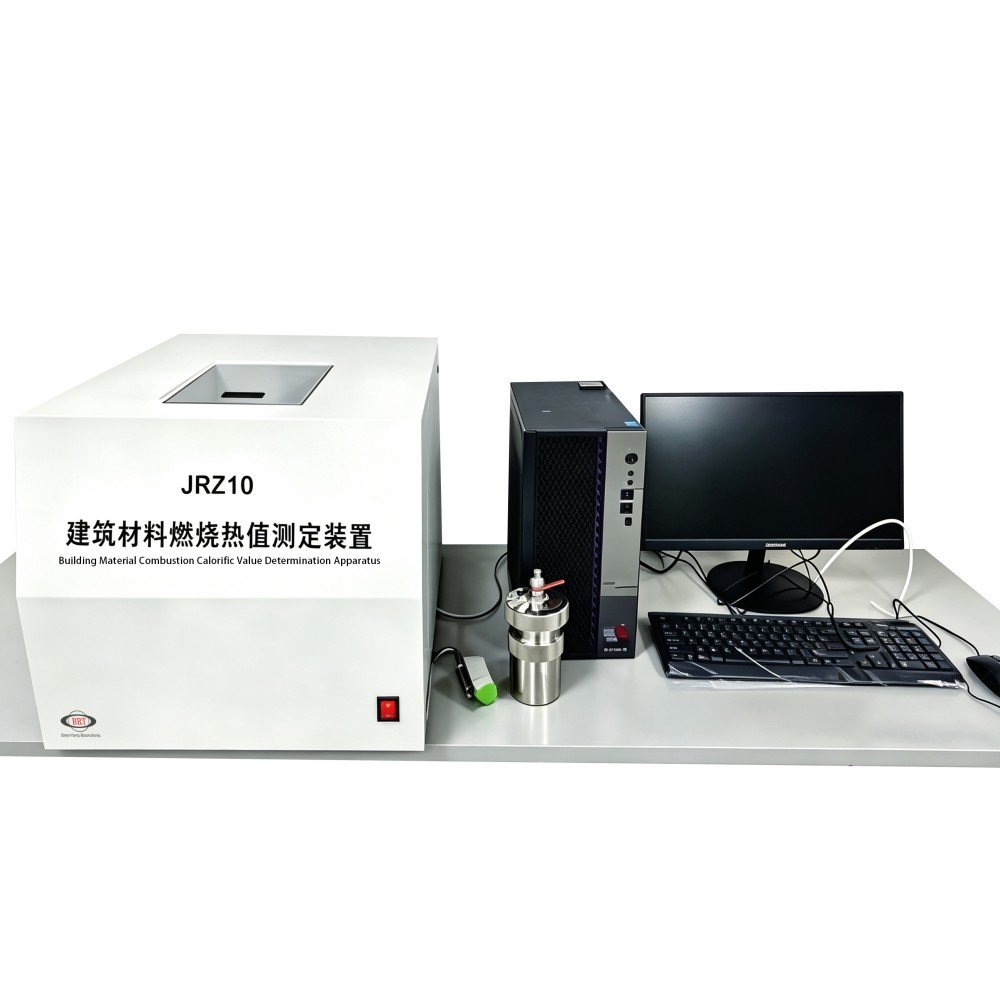
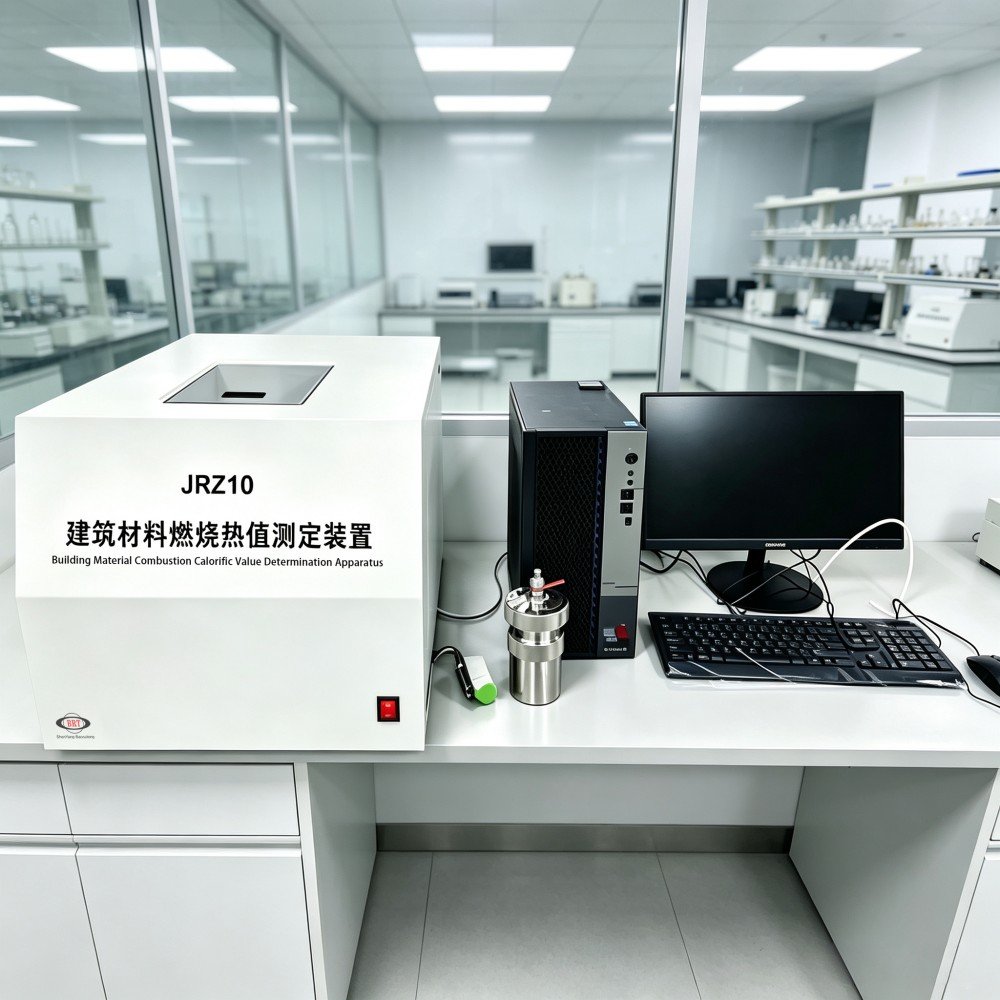
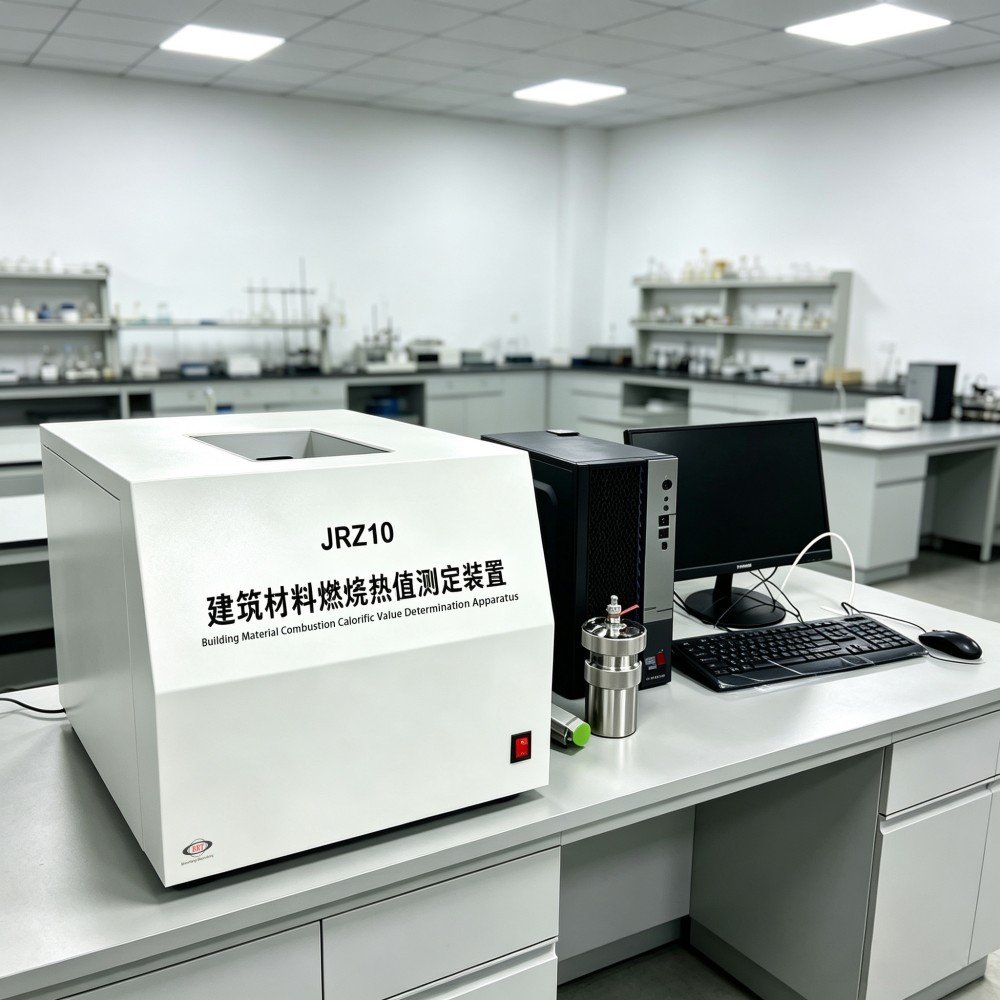
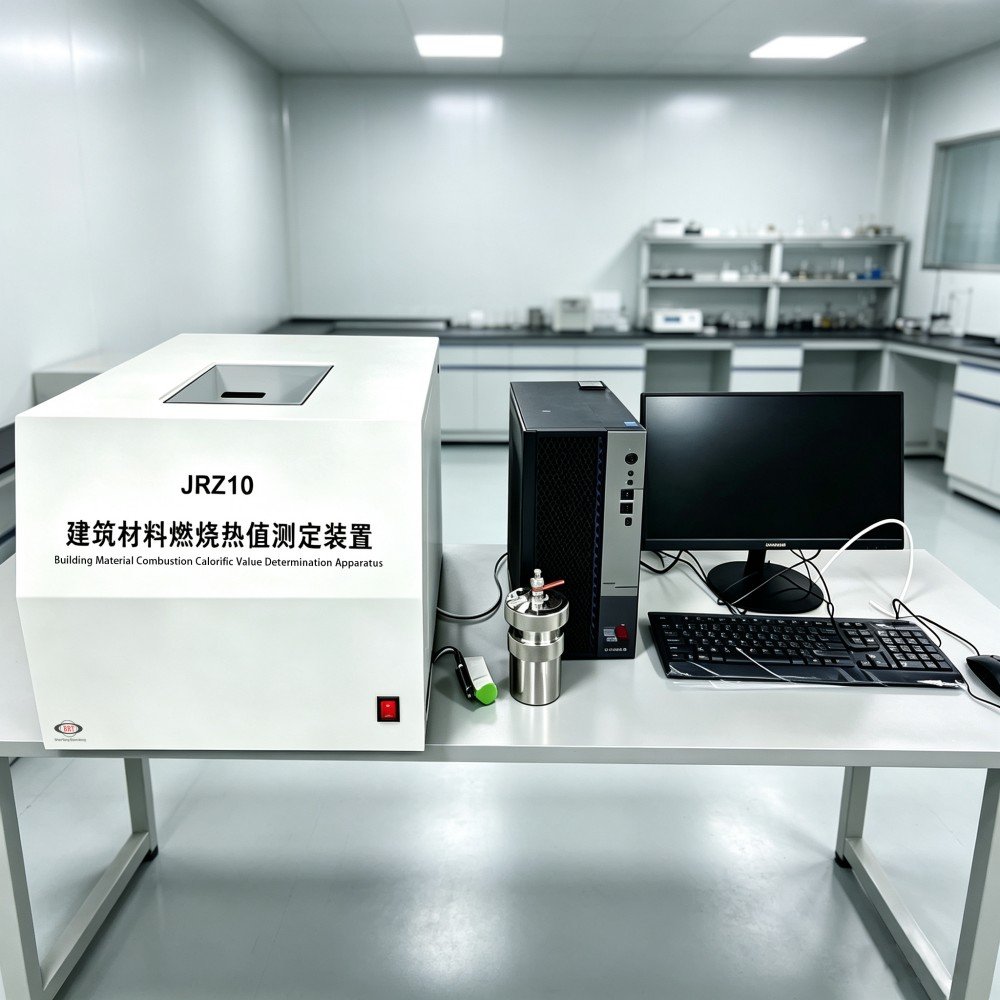
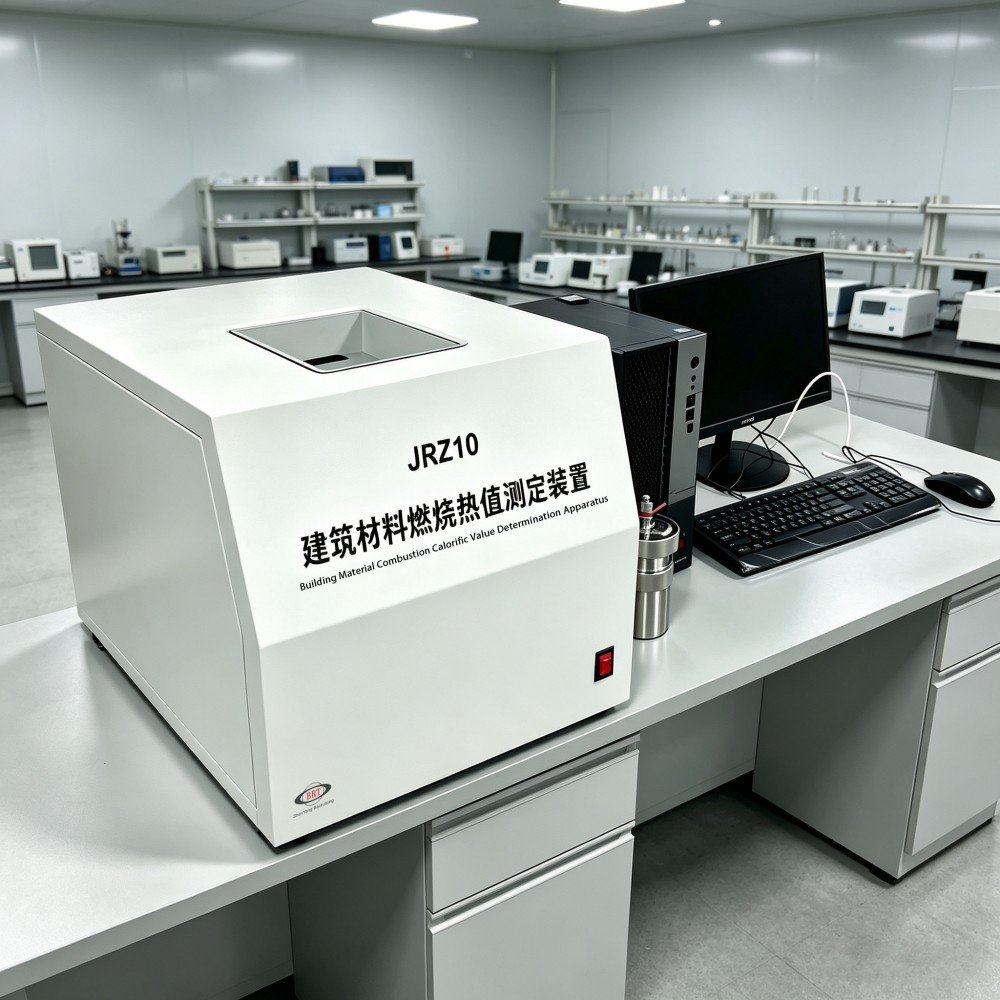
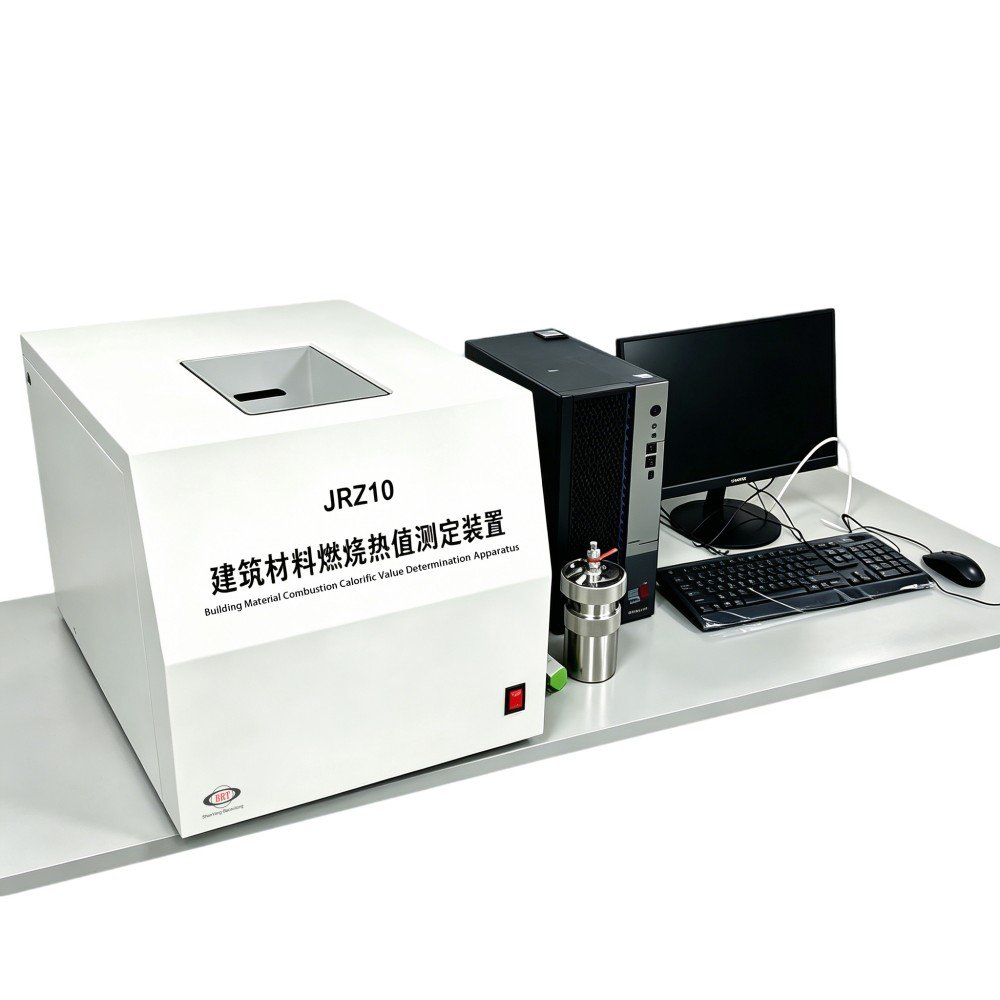
The JRZ10 Gross Heat of Combustion Tester for Building Materials (ISO 1716 Bomb Calorimeter) is a fully automated constant-temperature oxygen bomb calorimeter engineered strictly in accordance with ISO 1716:2018, EN 13501-1 (Euroclass A1/A2), GB/T 14402-2026, ASTM D5865, and ASTM D240 standards. It is designed to evaluate the gross calorific potential (PCS / Gross Heat of Combustion) of building products, flame-retardant polymers, railway interior materials, fuels, and chemical substances.
Featuring an ultra-fine temperature resolution of 0.0001°C, an automated double-layer water jacket system with precision volume balancing (<0.5g error), an imported high-speed circulation stirrer, and dedicated Windows microcomputer testing software, this advanced ISO 1716 Bomb Calorimeter delivers rapid, highly repeatable calorific determinations for third-party fire certification labs, building material manufacturers, railway safety institutes, and energy inspection centers.
Gross Heat of Combustion Tester Compliance & International Standards
This ISO 1716 bomb calorimeter enables certified testing facilities to conduct formal calorific value evaluations across global reaction-to-fire classification frameworks:
| Standard Code |
Standard Title & Scope |
Primary Testing Application |
| ISO 1716:2018 / BS EN ISO 1716 |
Reaction to fire tests for building products — Determination of the gross heat of combustion (calorific value) |
International benchmark method for European Euroclass A1/A2 non-combustible classification |
| EN 13501-1 |
Fire classification of construction products and building elements — Reaction to fire classification |
Mandatory European classification for A1 and A2 non-combustible building materials |
| EN 45545-2 / IMO FTP Code |
Railway applications & International Maritime Organization Fire Test Procedures for non-combustibility |
Fire safety compliance for railway vehicle interiors, marine deck divisions, and insulation panels |
| GB/T 14402-2026 |
Reaction to fire tests for building products — Determination of the gross heat of combustion |
Mandatory Chinese national standard for building product fire safety evaluation |
| ASTM D5865 / ASTM D240 |
Standard Test Methods for Gross Calorific Value of Coal, Coke, and Liquid Hydrocarbon Fuels |
Calorific capacity testing for solid fuels, biomass, petroleum products, and energetic chemicals |
| GB/T 213-2008 |
Standard test method for calorific value of solid fuels |
Calorific capacity testing for coal, biomass, and solid combustible fuels |
Technological Features of JRZ10 ISO 1716 Bomb Calorimeter
- Ultra-High 0.0001°C Temperature Resolution: Driven by high-precision PT100 temperature sensors and advanced signal acquisition circuitry, capable of detecting minute thermal fluctuations down to 0.0001°C for extreme testing accuracy.
- Dual-Layer Double Vessel Water Jacket Design: Features an independent 35L outer tank and a 2.3L inner vessel setup that eliminates external thermal interference, prevents water spillover, and guarantees constant-temperature stability throughout combustion.
- Precision Water Level Balancing System (<0.5g Repeatability): Includes an integrated water volume balancing module with a repeatability error under 0.5g per cycle. Maintains identical water thermal capacity across test batches to drastically reduce data variance.
- Imported High-Speed Circulation Stirrer: Equipped with an imported uniform mixing motor that facilitates rapid heat exchange throughout the inner vessel, ensuring fast temperature stabilization and accurate peak reading detection.
- Automated Unattended Workflow with Windows Control Software: Simply prepare the sample, pressurize the oxygen bomb, and insert it into the vessel. The PC software automatically controls stirring, ignition, temperature curve logging, calorific calculations, and PDF report generation.
Technical Specifications of Gross Heat of Combustion Tester
| Governing Test Standards |
ISO 1716:2018, BS EN ISO 1716, EN 13501-1, EN 45545-2, ASTM D5865, ASTM D240, GB/T 14402-2026, GB/T 213-2008 |
| Temperature Measuring Range |
0 °C to 40 °C (Single test fluctuation ≤ 1.0 °C) |
| Temperature Resolution |
0.0001 °C |
| Standard Test Cycle Duration |
18 to 20 minutes (6 min pre-balance + 12 min post-ignition tracking) |
| Water Tank Capacities |
Outer Tank: 35 L; Inner Vessel: 2.3 L; Balancing error: < 0.5 g |
| Ignition Mechanism |
24V automatic high-voltage electronic ignition system |
| Control System & Interface |
Dedicated Windows microcomputer testing software; real-time curve plotting & USB report export |
| Dimensions & Power Supply |
400 mm (W) × 575 mm (D) × 456 mm (H); AC 220V ±10V, 50 Hz (<500W) |
System Architecture & Testing Workflow of ISO 1716 Bomb Calorimeter
Standardized Testing Workflow:
- Weigh a representative sample (solid, powder, or liquid) into the combustion crucible and attach the nickel-chromium ignition wire.
- Place the crucible into the oxygen bomb, seal the bomb, and pressurize with high-purity oxygen (3.0 MPa).
- Submerge the oxygen bomb into the inner vessel; start the automatic test program on the Windows PC interface.
- The system balances water temperature, triggers 24V ignition, records temperature rise at 0.0001°C resolution, and calculates gross calorific value (MJ/kg or MJ/m²).
- Export or print the final test report detailing temperature curves, water heat capacity, and certified PCS values.
Target Customer Applications:
- Building material, insulation panel, coating, and floor covering manufacturing factories.
- Third-party fire safety certification laboratories and material inspection bureaus.
- Coal, petroleum, biomass, and solid waste fuel quality inspection centers.
- University fire safety, energetic materials, and chemical engineering research departments.
ISO 1716 Bomb Calorimeter FAQ
Q1: Why is the Gross Heat of Combustion (PCS) critical for Euroclass A1 and A2 building materials?
A: Under EN 13501-1 and ISO 1716, non-combustible material classifications (Euroclass A1 and A2) require strict limits on the total heat release potential (PCS value). Passing this test confirms that a building product will not contribute thermal energy to a fire.
Q2: How does the 0.0001°C temperature resolution benefit low-calorific sample testing?
A: Non-combustible or inorganic building materials (like gypsum, mineral wool, or flame-retardant concrete) release very little heat when burned. Ultra-fine 0.0001°C resolution ensures precise detection of faint temperature rises, preventing measurement errors on low-calorific samples.
Q3: What maintenance is required for the oxygen bomb assembly?
A: The stainless steel oxygen bomb should be rinsed with distilled water after each burn test, dried, and inspected for sealing O-ring wear. Hydrostatic pressure testing of the bomb should be performed periodically per safety regulations.

Reviews
There are no reviews yet.