
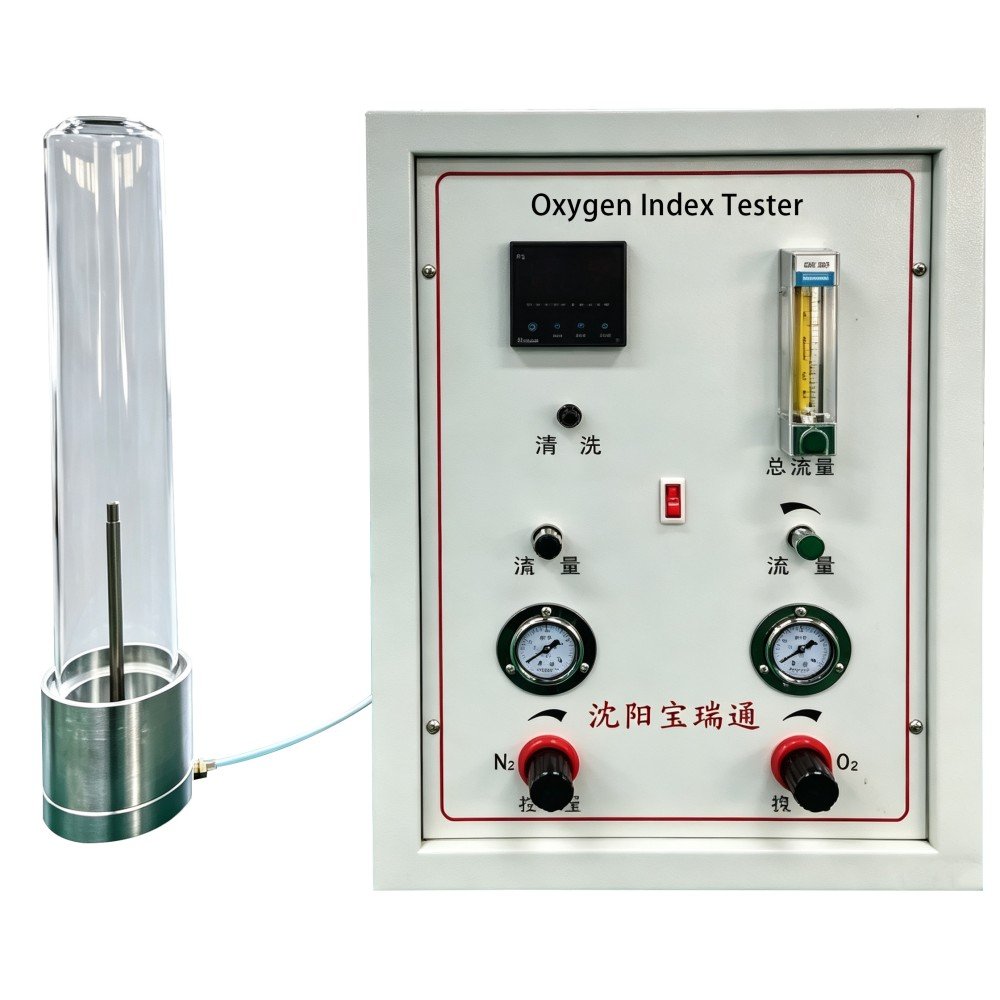
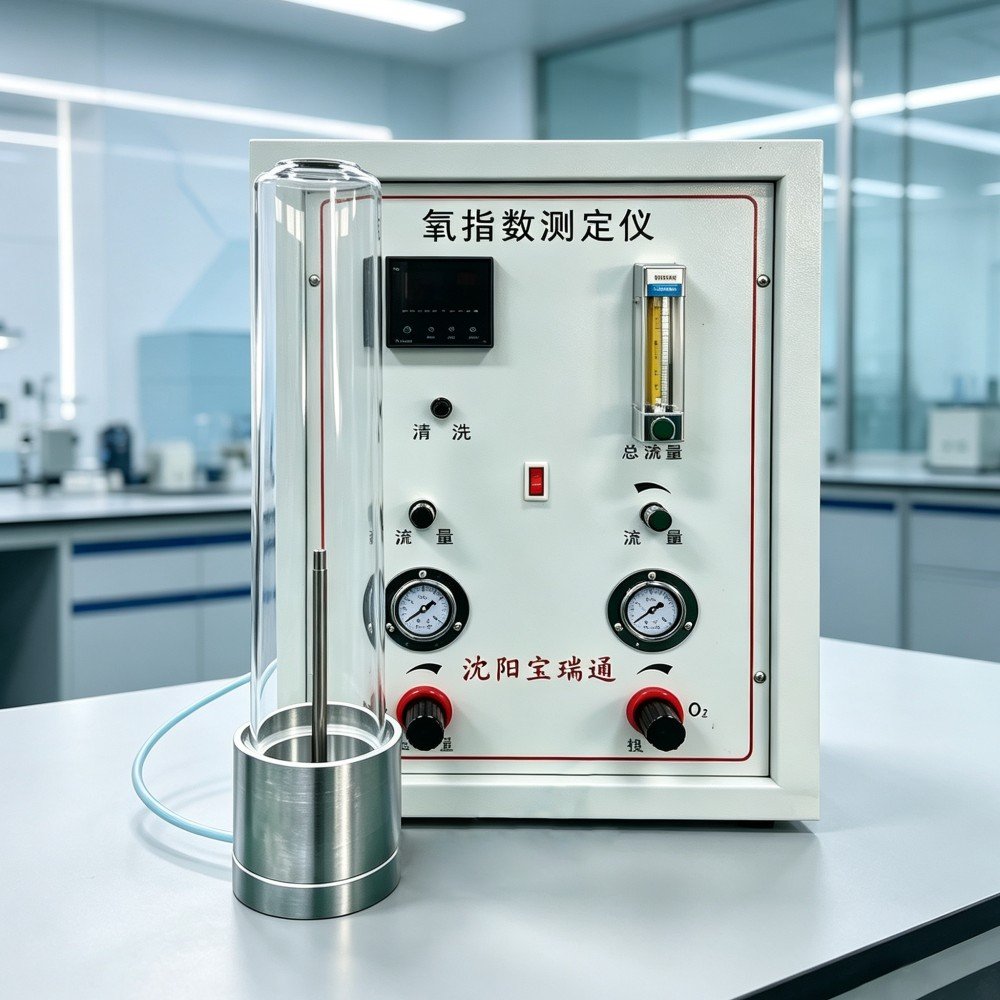
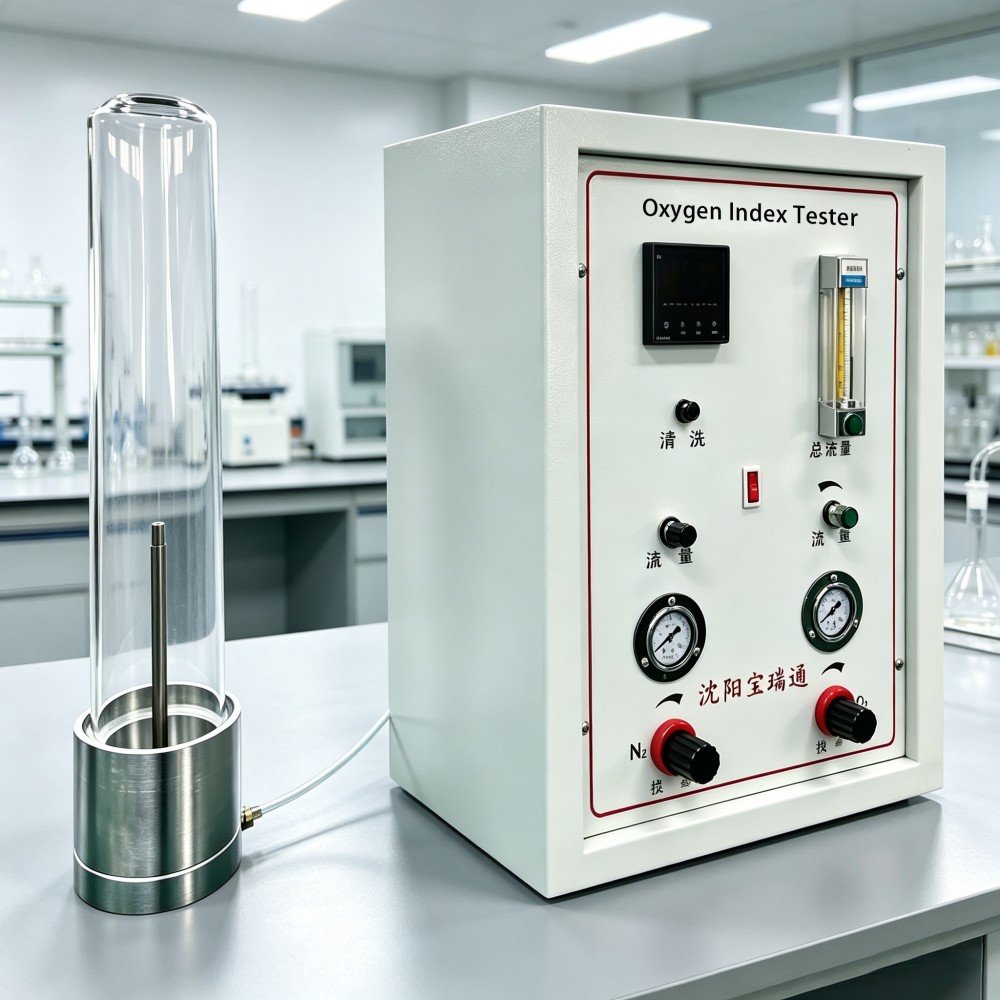
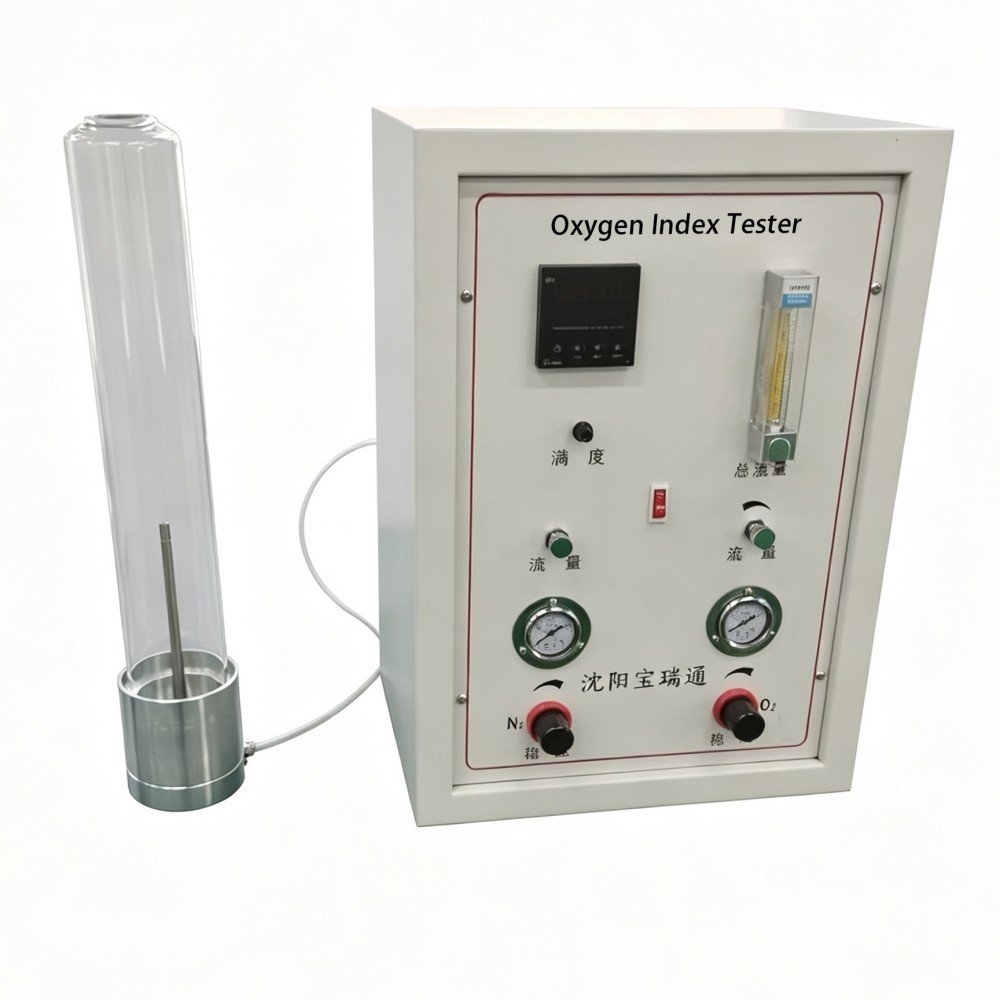
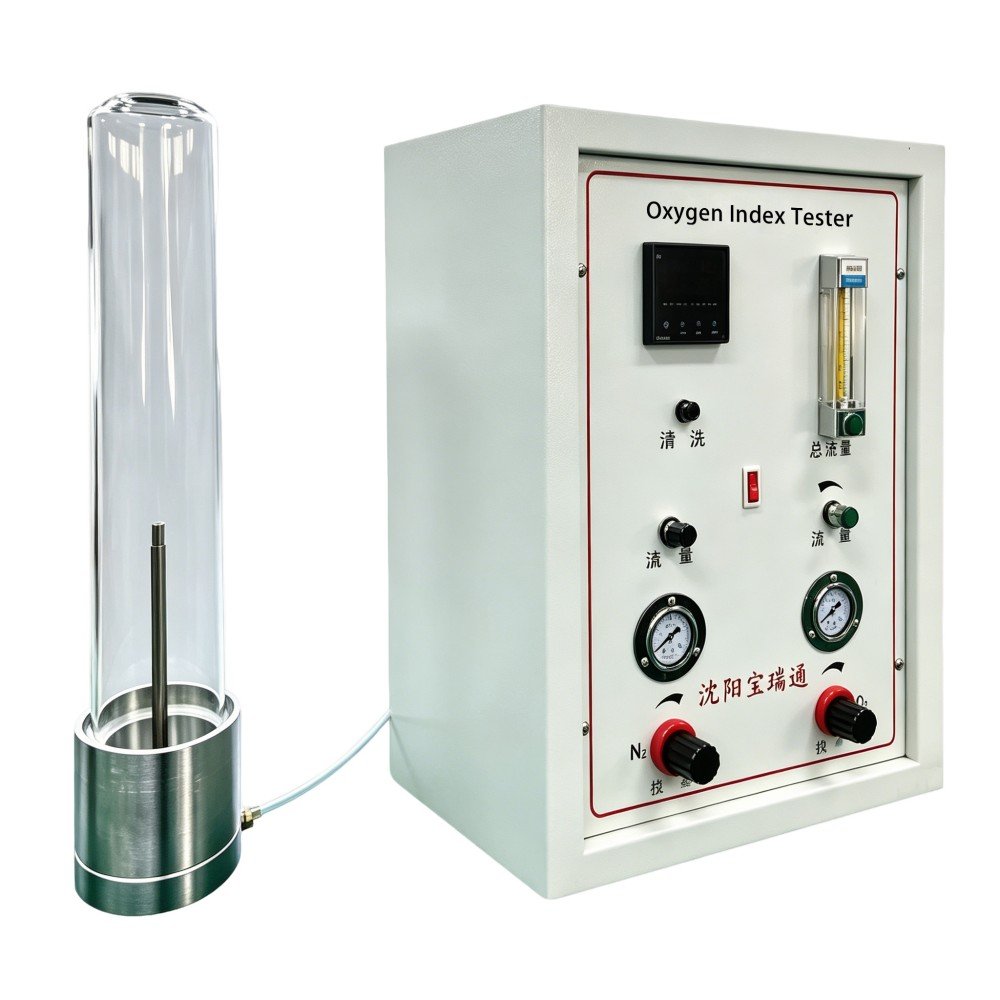
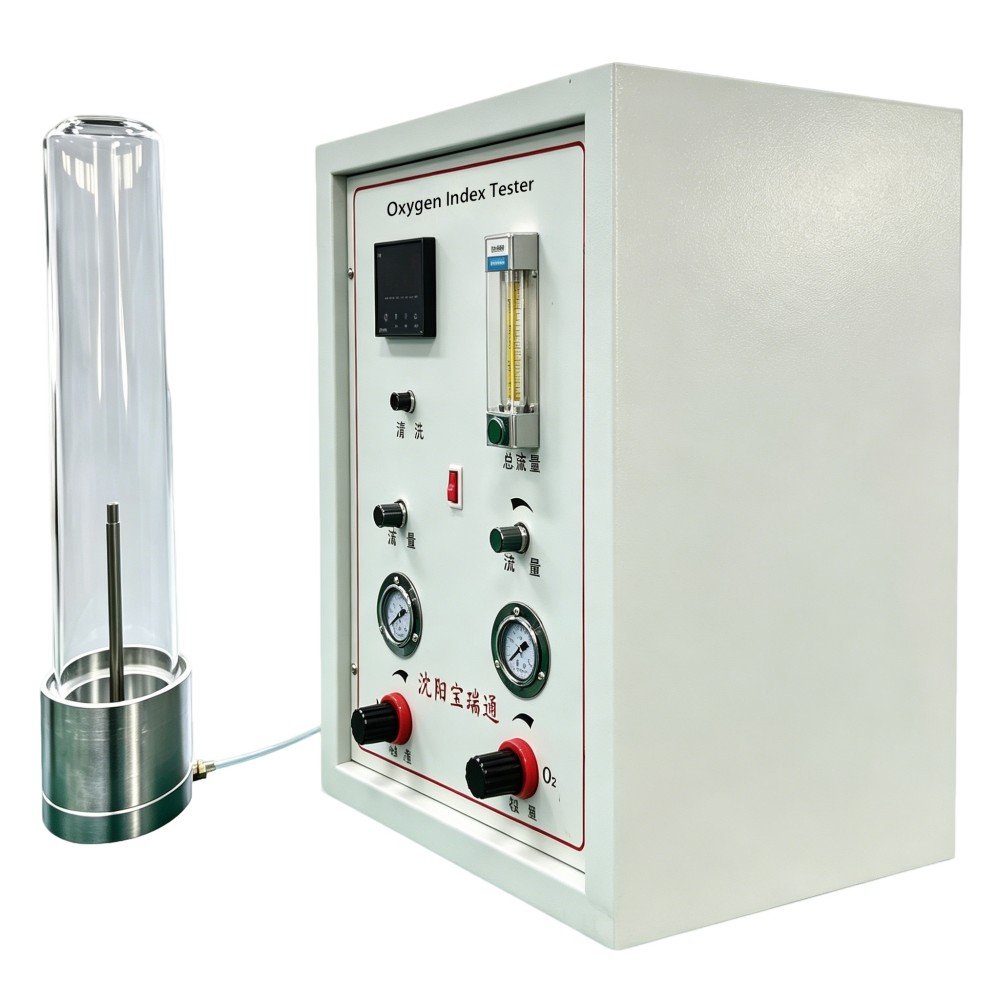
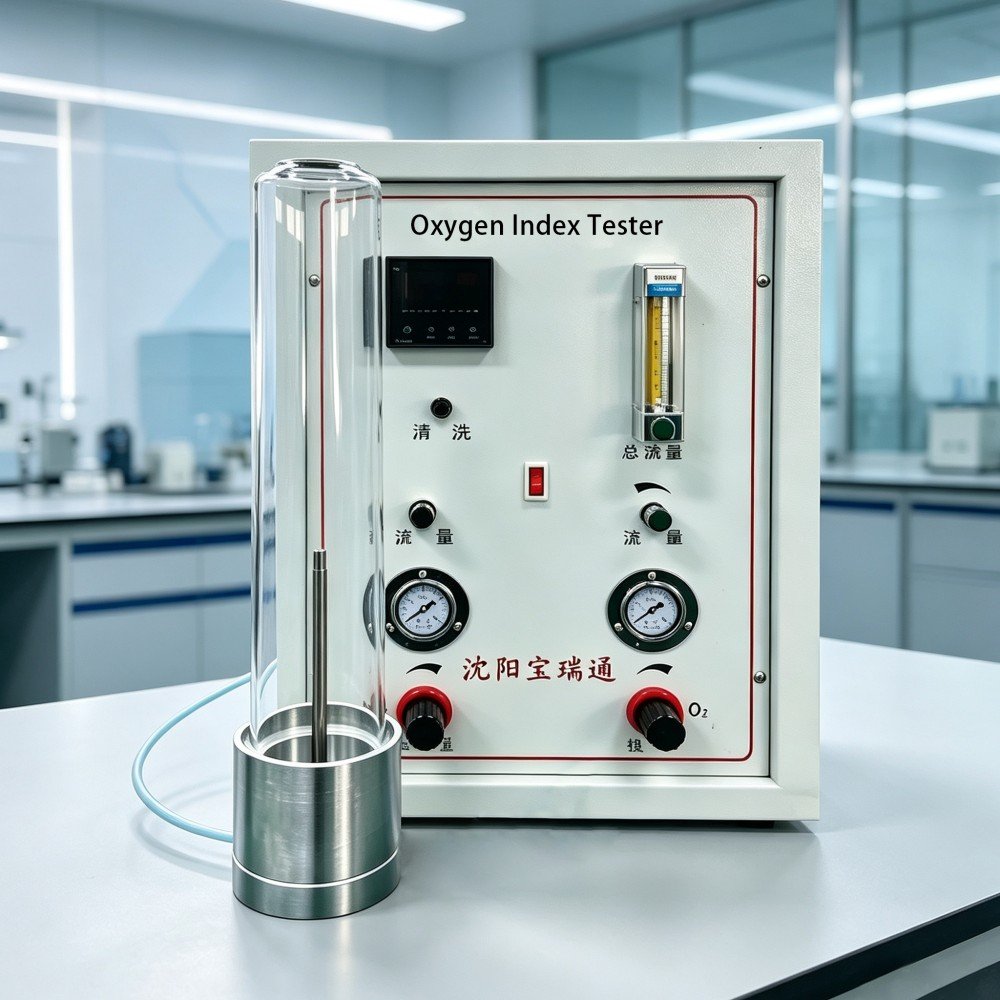
JYZS-10 Oxygen Index Tester meets ISO 4589-1/2, GB/T 2406.2, ASTM D2863, BS 2782-1 (Method 141), JIS K 7201-2, and NES 715 standards. Features ±0.1% high-precision digital oxygen analyzer, <5s sensor response, dual gas pressure & flow regulation, 75mm clear glass chimney with 40±2 mm/s constant airflow, and compact 50W desktop design for plastic, cable, foam, and textile LOI flame retardancy testing.
The JYZS-10 Oxygen Index Tester (Plastic LOI Limiting Oxygen Index Test Apparatus) is a precise desktop laboratory instrument engineered strictly to ISO 4589-1/2, GB/T 2406.2, ASTM D2863, BS 2782-1 (Method 141), JIS K 7201-2, and NES 715 standards. It is designed to evaluate the minimum oxygen concentration required to support vertical flaming combustion of plastics, rubber, cables, foams, textiles, and composite materials in a blended oxygen-nitrogen airflow environment.
Featuring a high-accuracy digital oxygen analyzer with ±0.1% precision, an ultra-fast sensor response time (<5s), an independent dual gas regulation panel, and a standardized 75mm clear glass combustion chimney with a constant 40±2 mm/s upward airflow, this essential Oxygen Index Tester delivers reliable, highly repeatable flame retardancy assessment for raw material quality control, third-party fire certification (including EN 45545-2 railway compliance), and advanced polymer R&D.
Plastic LOI Limiting Oxygen Index Test Apparatus Compliance & Standards
This limiting oxygen index testing apparatus allows certified laboratories to perform formal material flammability evaluations across global fire testing frameworks:
| Standard Code | Standard Title & Scope | Primary Testing Application |
|---|---|---|
| ISO 4589-1 / ISO 4589-2 | Plastics — Determination of burning behaviour by oxygen index — Part 1: Guidance / Part 2: Ambient-temperature test | International benchmark for ambient-temperature plastic & polymer LOI determination |
| ASTM D2863 | Standard Test Method for Measuring the Minimum Oxygen Concentration to Support Candle-Like Combustion of Plastics | North American standard for candle-like vertical combustion oxygen index testing |
| BS 2782-1 (Method 141) / NES 715 | Methods of testing plastics (Thermal properties) & Naval Engineering Standard for flammability index | British national and naval defense standards for plastic and composite flammability evaluation |
| JIS K 7201-2 | Plastics — Determination of burning behaviour by oxygen index — Part 2: Ambient-temperature test | Japanese Industrial Standard (JIS) benchmark for polymer oxygen index testing |
| EN 45545-2 (R22/R23 Requirement) | Railway applications — Fire protection on railway vehicles — Part 2: Requirements for fire behaviour of materials | European mandatory fire safety screening for interior railway components and seals |
| GB/T 2406.2 / GB/T 5454 / GB/T 8924 | Plastics, Textiles, and Fiber Reinforced Plastics (FRP) — Determination of burning behaviour by oxygen index | Chinese national standards for plastics, technical textiles, and composite materials flammability |
| GB 8624-2025 | Classification for Burning Behaviour of Building Materials and Products | Fire safety classification metric for construction materials, insulation foams & decorative boards |
Technological Features of JYZS-10 Oxygen Index Tester
- High-Precision Digital Oxygen Detection (±0.1% Accuracy): Equipped with a long-life, high-sensitivity oxygen sensor delivering a fast response time under 5 seconds. Includes digital LED oxygen readout with manual zero and full-scale calibration functions to maintain long-term measurement accuracy.
- Independent Dual Gas Pressure & Fine Flow Regulation: Features separate dual pressure gauges (0–0.4 MPa) and fine-tuning control valves for O₂ and N₂ gas lines. The total flow rotameter enables fast, accurate gas mixing to reach target LOI concentration levels efficiently.
- Standardized Transparent Glass Combustion Chimney: Consists of a 75 mm inner diameter by 480 mm height heat-resistant clear glass chimney, providing an unobstructed view of sample burning, dripping, and self-extinguishing behavior while isolating the airflow environment.
- Constant Internal Airflow Velocity (40 ± 2 mm/s): Engineered internal diffuser structure maintains a uniform upward gas stream of 40 ± 2 mm/s within the chimney, eliminating turbulence and ensuring consistent test conditions across consecutive sample batches.
- Broad Sample Compatibility & Compact Benchtop Design: Supports vertical rigid blocks, laminated sheets, flexible films, foam materials (density >100 kg/m³), textiles, wire/cable sheaths, and wood products with thickness ≤10.5 mm. Consumes only 50W with a minimal footprint.
Technical Specifications of Plastic LOI Limiting Oxygen Index Test Apparatus
| Governing Test Standards | ISO 4589-1/2, ASTM D2863, BS 2782-1, NES 715, JIS K 7201-2, EN 45545-2, GB/T 2406.1/2, GB/T 5454, GB/T 8924, GB 8624-2025 |
| Oxygen Concentration Range | 0% to 100% (Digital readout with zero & span calibration) |
| Measurement Precision & Response | Accuracy: ±0.1%; Sensor Response Time: < 5 seconds |
| Working Pressure & Flow Range | Pressure: 0.05–0.15 MPa (0–0.4 MPa gauges, Class 2.5); Flow: 0–15 L/min rotameter |
| Combustion Chimney Dimensions | Internal Diameter: 75 mm; Height: 480 mm (Clear heat-resistant glass) |
| Internal Airflow Velocity | Standardized constant speed: 40 ± 2 mm/s |
| Specimen Dimensions & Types | Vertical strips/blocks (Thickness ≤ 10.5 mm); rigid/flexible plastics, foams, films, cables, textiles |
| Required Test Gases | Commercial Oxygen & Nitrogen (Purity ≥ 98%); Supply Pressure: 0.1–0.3 MPa |
| Power Supply & Rated Power | AC 220V ±5%, 50 Hz; Rated Power: 50 W |
System Architecture & Testing Workflow of LOI Oxygen Index Tester
Standardized Testing Workflow:
- Mount the vertical specimen securely into the sample holder inside the glass combustion chimney.
- Connect oxygen and nitrogen gas lines; adjust the dual pressure regulators and flowmeters to set an initial oxygen concentration.
- Allow gas mixture to purge the chimney for at least 30 seconds at the standardized 40±2 mm/s flow speed.
- Ignite the top of the specimen using a small propane gas igniter and observe candle-like vertical burning duration and charring length.
- Systematically adjust oxygen concentration levels up or down according to ISO 4589-2 step rules until the precise limiting oxygen index (LOI %) value is determined.
Target Customer Applications:
- Plastic resin, rubber compound, masterbatch, and polymer additive manufacturers.
- Wire and cable insulation, jacket material, and fiber optic cable production plants.
- Building insulation foam (XPS/EPS), polyurethane, waterproofing sheet, and composite board factories.
- Textile, protective fabric, transportation interior, and third-party fire testing laboratories.
Plastic LOI Limiting Oxygen Index Test Apparatus FAQ
Q1: What does a higher Limiting Oxygen Index (LOI) value signify?
A: Since ambient air contains approximately 21% oxygen by volume, materials with an LOI lower than 21% burn easily in normal air. An LOI greater than 21% indicates self-extinguishing properties, while materials with an LOI above 28% are classified as high-performance flame-retardant materials.
Q2: What gas supply equipment is required to operate the JYZS-10 apparatus?
A: The testing laboratory needs to provide compressed Oxygen and Nitrogen gas cylinders (purity ≥98%), along with two pressure reducing valves capable of delivering stable outlet pressure between 0.1 and 0.3 MPa.
Q3: How often should the oxygen sensor be calibrated?
A: The digital oxygen analyzer features easy zero and full-scale calibration knobs. It is recommended to perform a quick two-point calibration using pure nitrogen (0% O₂) and pure oxygen/ambient air before each major testing batch to maintain ±0.1% accuracy.
| Test Parameter | Ignitability |
|---|---|
| Standard | ASTM D2863, GB 8624-2025, GB/T 2406.2-2009, ISO 4589-2:2017 |
Reviews
There are no reviews yet.