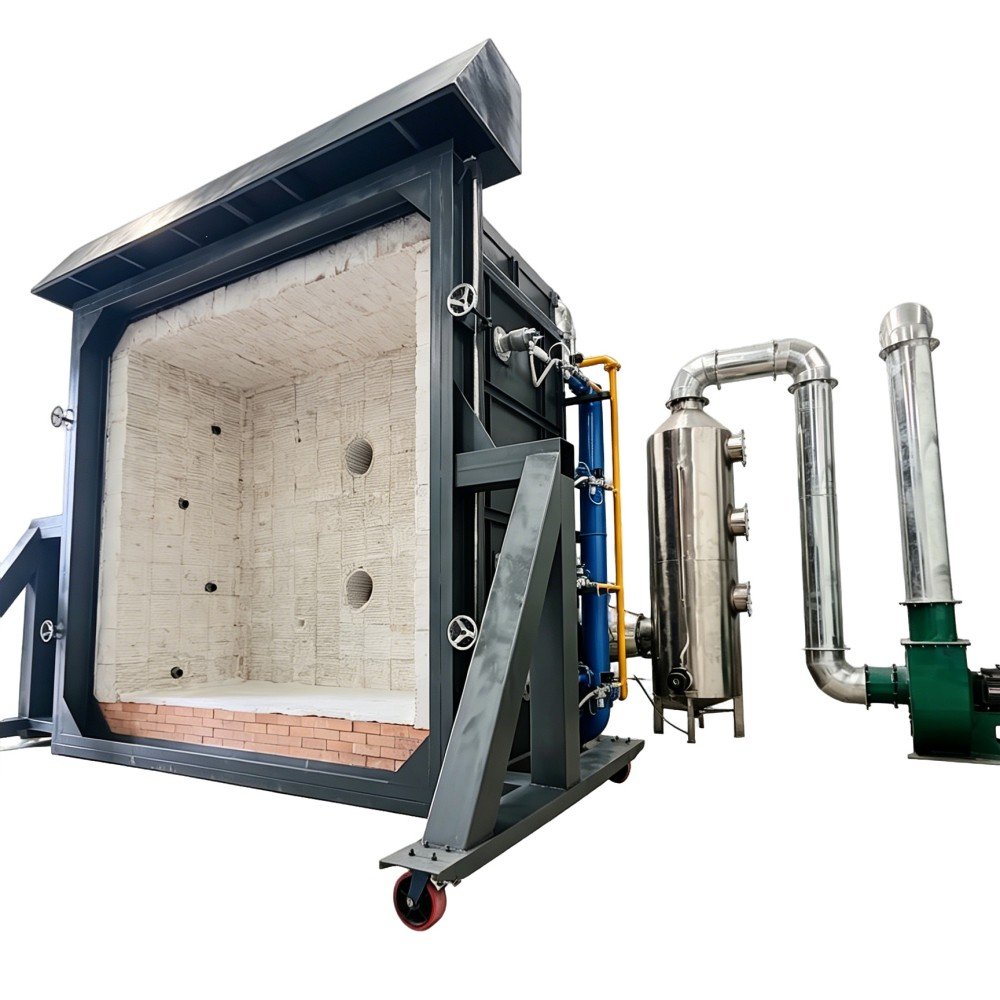
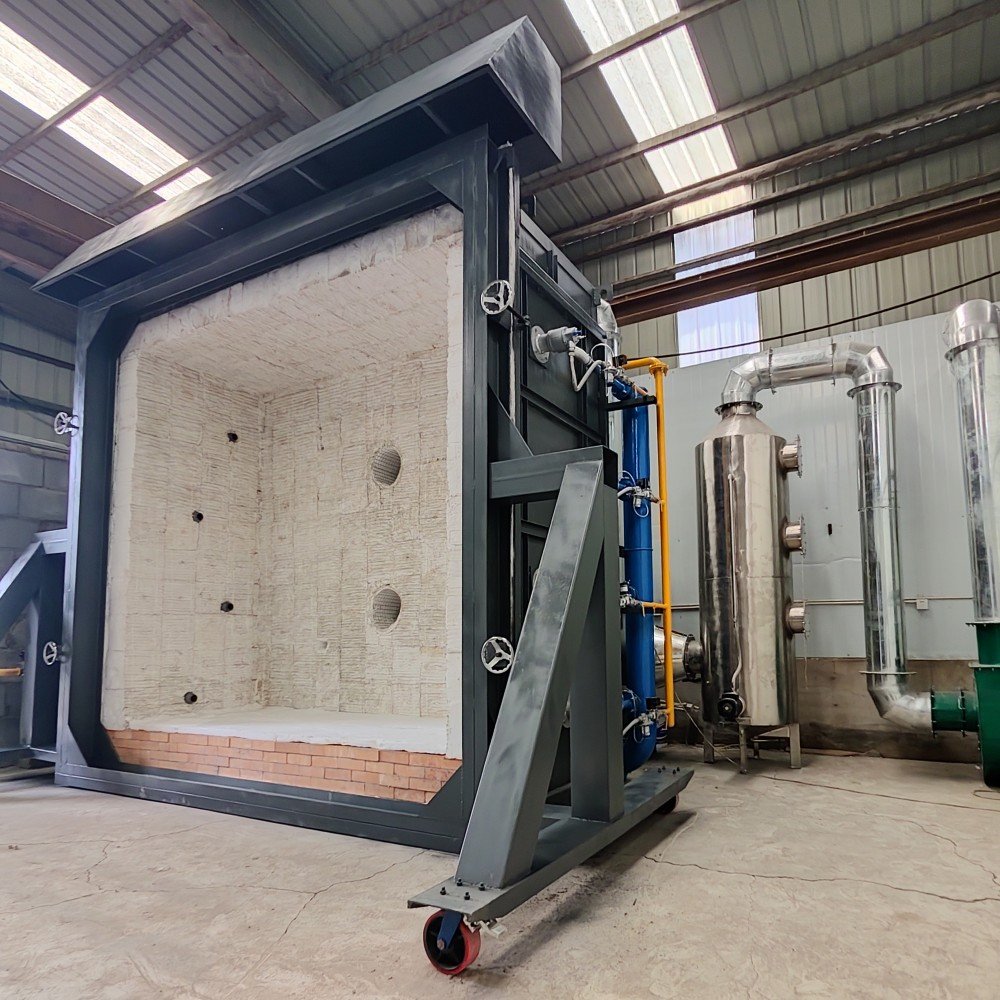
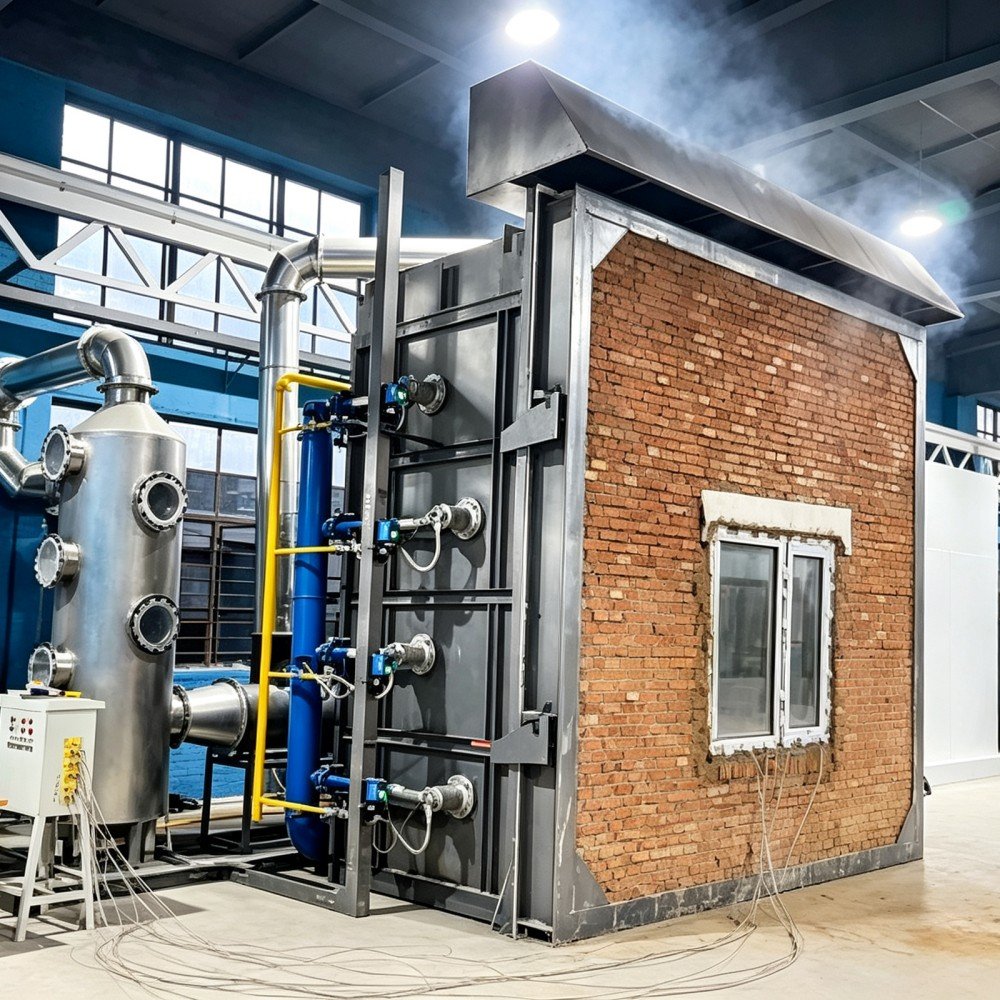
The NH-XL Vertical Integrated Fire Resistance Test Furnace (Vertical Comprehensive Fire-Resistance Test Furnace) is a full-scale, automated laboratory testing system engineered to evaluate the fire-resistance limit, thermal insulation performance, and structural integrity of vertical fire-partition walls, doors, windows, glass, roller shutters, and check valves/non-return valves. It strictly complies with ISO 834-1/4/8, EN 1363-1, EN 1634-1, BS 476 (Parts 20/22), ASTM E119, UL 263, and mandatory national standards GB/T 9978 and GB 12955-2024.
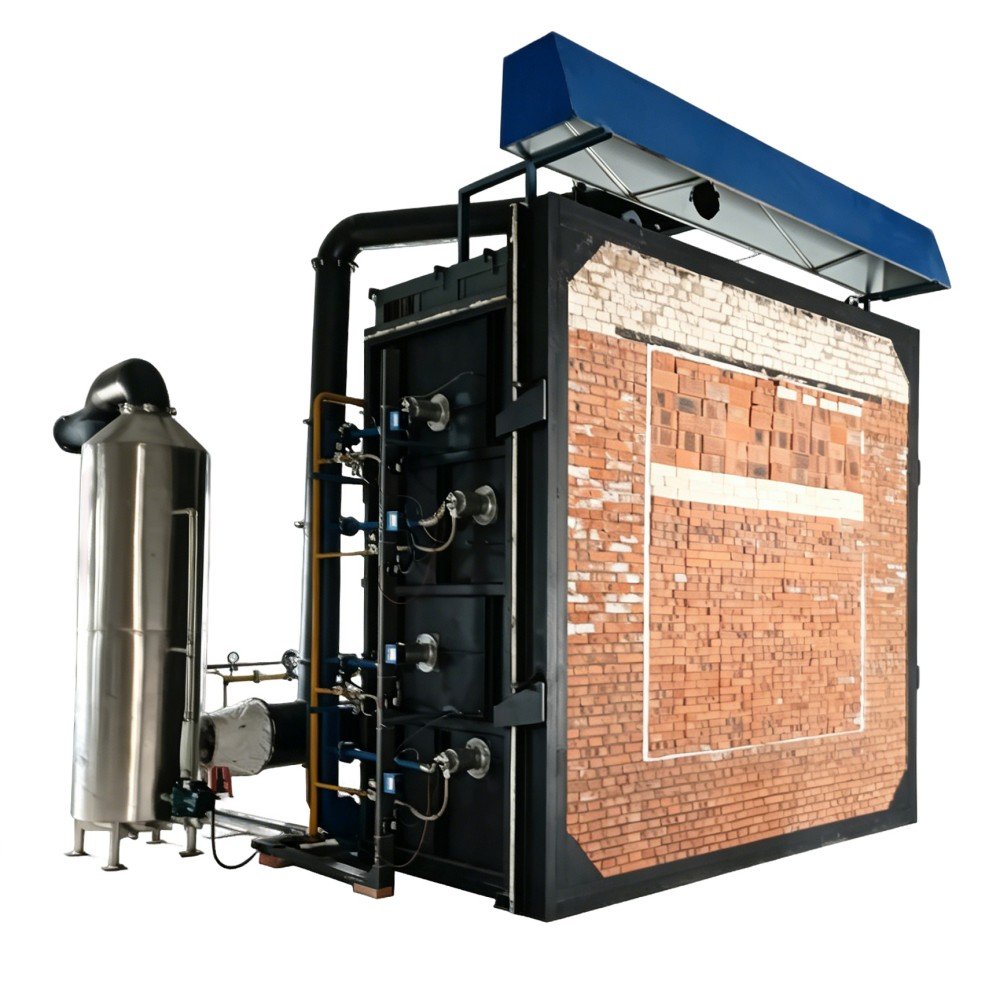
Built with a robust enamel-coated steel outer shell, lightweight high-alumina fiber suspended furnace body, zirconium-fiber block insulation capable of withstanding up to 1300°C, an 8-burner proportional gas combustion array, and automatic closed-loop pressure/temperature control, this heavy-duty Fire Resistance Testing Furnace provides authoritative compliance data for building material manufacturers, third-party fire testing laboratories, marine classification societies, and construction quality inspection bureaus.
Vertical Comprehensive Fire-Resistance Test Furnace Compliance & Standards
This vertical fire resistance testing furnace allows certified laboratories to perform formal fire limit assessments across global building, marine, and door/window safety standards:
| Standard Code |
Standard Title & Scope |
Primary Testing Application |
| ISO 834-1 / 4 / 8 & BS 476-20/22 |
Fire-resistance tests for elements of building construction — General requirements & vertical separating elements |
International benchmark for standard time-temperature fire curve compliance and vertical partition testing |
| EN 1363-1 & EN 1634-1/3 |
Fire resistance tests — General requirements & Fire resistance test for door, shutter assemblies and openable windows |
European CE/CPR qualification testing for fire doors, shutters, window assemblies, and non-return valves |
| ASTM E119 & UL 263 |
Standard Test Methods for Fire Tests of Building Construction and Materials |
North American vertical partition wall and structural element fire endurance testing |
| GB/T 9978.1~4 & GB 12955-2024 |
Fire-resistance tests for building construction elements & Fire doors mandatory specification |
Mandatory Chinese national standard for fire doors, shutters, partition panels, and check/non-return valves |
| IMO FTP Code Part 3 |
International Code for Application of Fire Test Procedures — Test for “A”, “B” and “F” Class Divisions |
Marine fire safety compliance for shipboard vertical bulkheads, fire doors, and exhaust dampers |
Technological Features of H-XL Fire Resistance Test Furnace
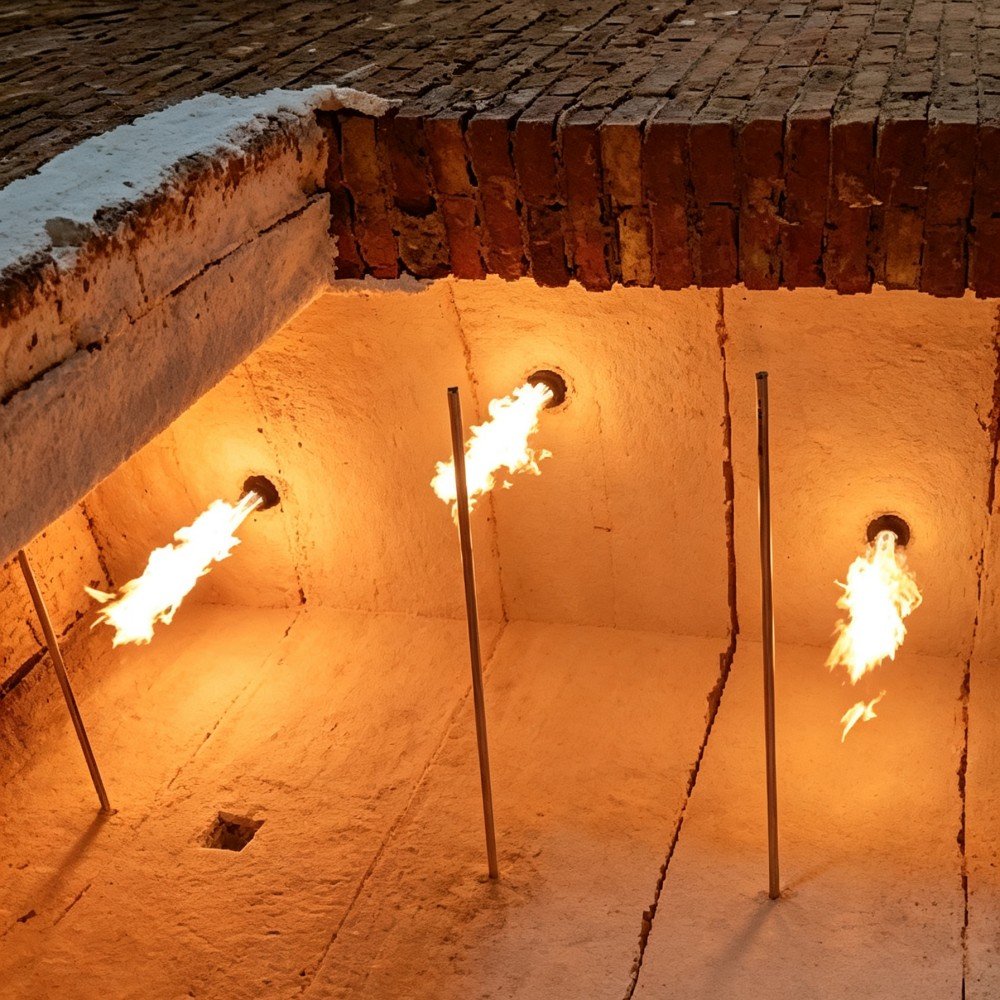
- Advanced Thermal Lining & High-Temperature Resistance: Constructed with a baked-enamel steel outer casing and a lightweight high-alumina fiber suspended roof lined with zirconium-fiber wool block modules, ensuring minimal heat loss up to a maximum operating temperature of 1300°C.
- 8-Burner Proportional Gas Combustion System: Fueled by Natural Gas or LPG, the 8-burner array delivers uniform open-flame heating controlled via programmed temperature-rise software according to the standard curve: $T – T_0 = 345 \lg (8t + 1)$.
- Automated Closed-Loop Furnace Pressure Control: Precision pressure sensors located 100mm from the specimen surface dynamically adjust exhaust dampers to maintain constant furnace pressure (15 ± 5 Pa at 5 min, 17 ± 3 Pa at 10 min).
- Computer-Aided Management & Multi-Channel Thermal Monitoring: Fully automated program-driven operation logs real-time unexposed face temperature rises (monitoring mean 140°C and single-point 180°C insulation limits) and structural integrity loss.
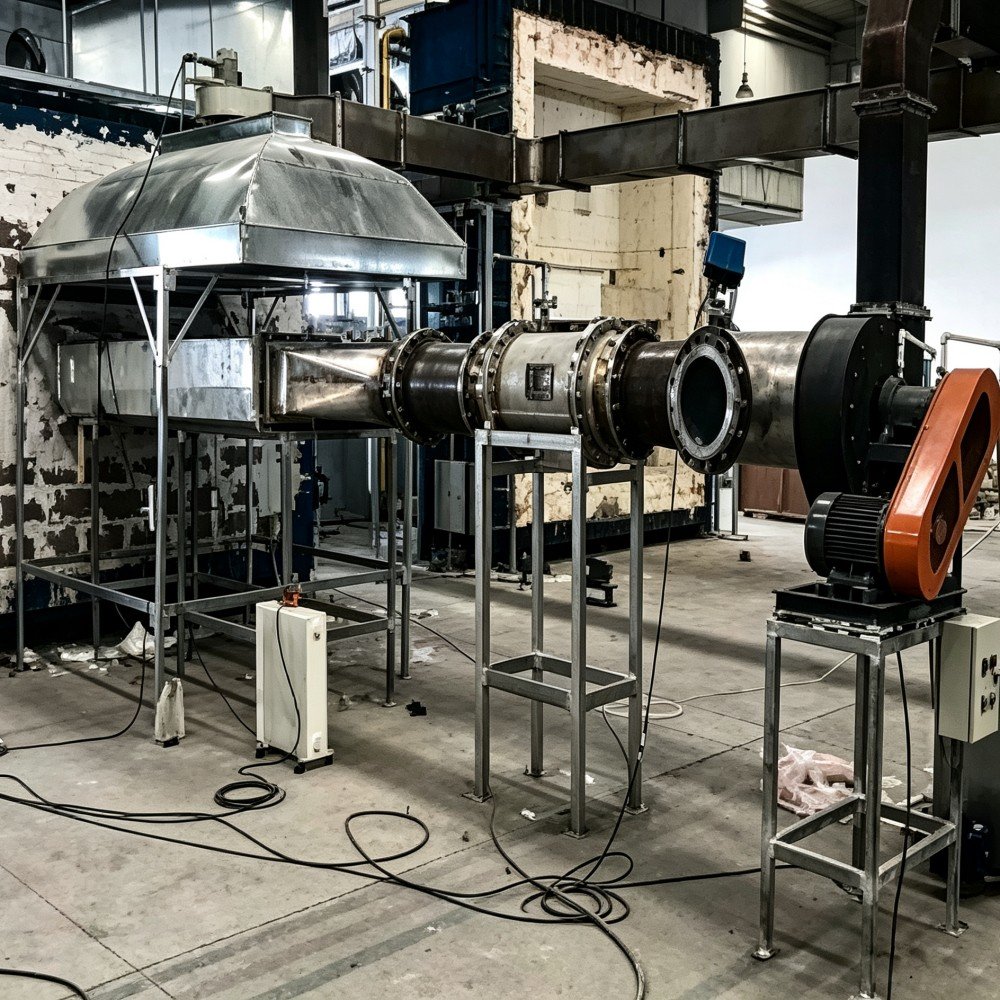
- External Specimen Mounting & Rear Exhaust Integration: External specimen fixing layout facilitates rapid loading and unloading of 3m × 3m test frames. The rear mechanical smoke exhaust connects directly to facility dust-removal and scrub systems.
Technical Specifications of Vertical Comprehensive Fire-Resistance Test Furnace
| Governing Test Standards |
ISO 834-1/4/8, EN 1363-1, EN 1634-1/3, BS 476-20/22, ASTM E119, UL 263, IMO FTP Part 3, GB/T 9978, GB 12955-2024 |
| Internal Furnace Chamber Dimensions |
3.0 m (W) × 3.0 m (H) × 1.2 m (D) |
| Overall Equipment Dimensions |
8,000 mm (L) × 6,000 mm (W) × 7,000 mm (H) (Net height: 5,500 mm) |
| Fuel & Burner System |
Natural Gas or Liquefied Petroleum Gas (LPG); 8 proportional burners |
| Maximum Operating Temperature |
1300°C |
| Furnace Pressure Control |
5 min: 15 Pa ± 5 Pa; 10 min: 17 Pa ± 3 Pa (Measured 100 mm from specimen) |
| Thermal Insulation Criteria |
Mean unexposed surface temp rise > 140°C, or single-point temp rise > 180°C |
| Structural Insulation Material |
High-alumina fiber suspended roof & zirconium-fiber wool block-module lining |
| Combustion & Exhaust Control |
Automatic curve tracking, proportional gas regulation, computer management, rear mechanical exhaust |
System Architecture & Testing Workflow of H-XL Fire Resistance Test Furnace
Standardized Testing Workflow:
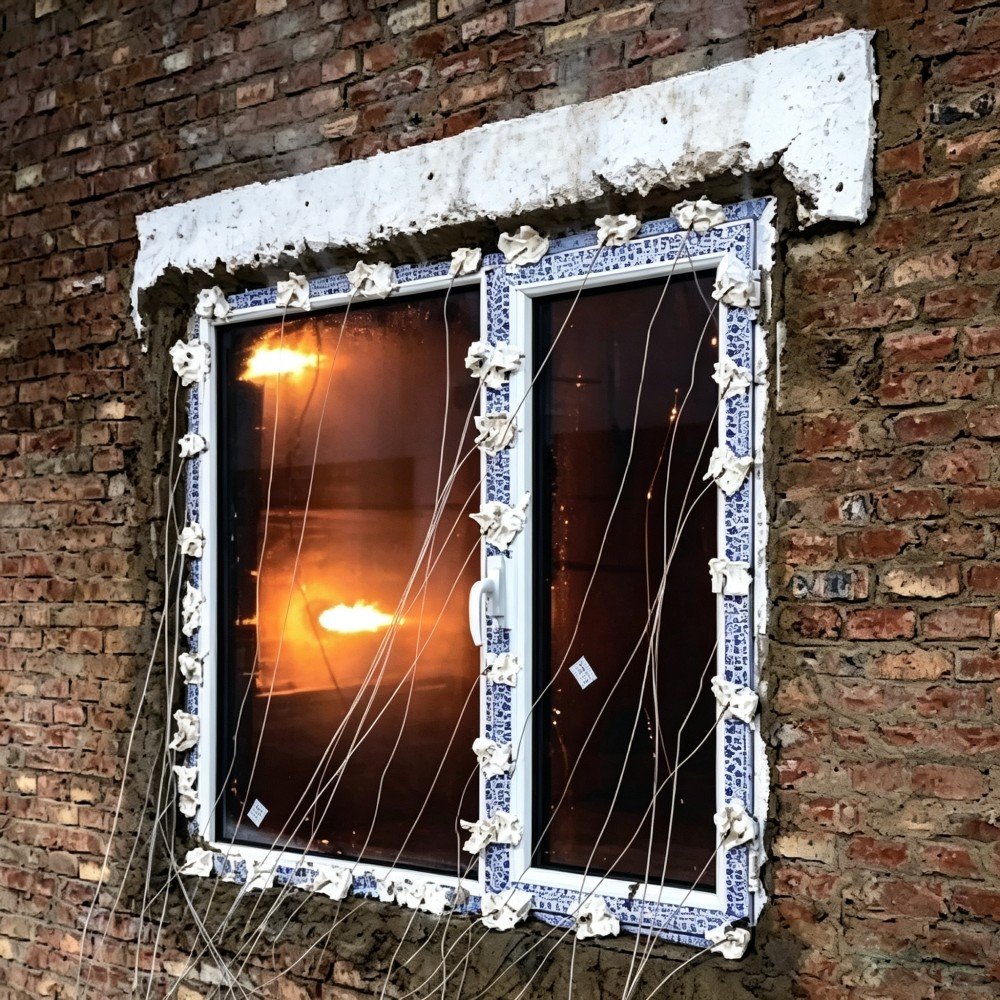
- Mount the vertical specimen (fire door, window, glass partition, roller shutter, or non-return valve) onto the 3m × 3m test frame and position it at the furnace front.
- Attach unexposed face thermocouples to record surface temperature rise and integrity monitoring instruments.
- Initialize the automated program on the PC interface and trigger the 8 gas burners.
- The proportional control system adjusts fuel and air supply to track the standard time-temperature curve $T – T_0 = 345 \lg (8t + 1)$ while maintaining furnace pressure at 15–17 Pa.
- Monitor specimen integrity and insulation failure; upon test termination, automatically extinguish burners, archive test data, and activate rear mechanical smoke exhaust.
Target Customer Applications:
- Fire doors, fire windows, glass curtains, and roller shutter manufacturers.
- HVAC check valves, oil-fume exhaust non-return valves, and fire damper production lines.
- Third-party fire protection product inspection bureaus and international certification bodies.
- Civil engineering, architectural safety, and fire research institutes.
H-XL Vertical Comprehensive Fire-Resistance Test Furnace FAQ
Q1: What types of specimens can be evaluated using this vertical test furnace?
A: The H-XL furnace evaluates non-loadbearing and loadbearing vertical separating elements, including fire doors, fire windows, fireproof glass partitions, roller shutters, hollow wall panels, and ventilation/oil-fume exhaust check (non-return) valves.
Q2: How does the furnace control pressure according to GB/T 9978 and EN 1363?
A: Pressure sensors continuously measure furnace pressure at a 3m height, 100mm from the specimen. The automated PLC system dynamically adjusts the rear mechanical exhaust damper to maintain 15 ± 5 Pa at 5 minutes and 17 ± 3 Pa at 10 minutes.
Q3: What indicates a loss of thermal insulation during testing?
A: Loss of thermal insulation is recorded when either the average temperature rise on the unexposed face of the specimen exceeds 140°C above the initial temperature, or the temperature rise at any single measurement point exceeds 180°C above its initial value.

Reviews
There are no reviews yet.