- الجواب القصير
- Component Tests for Fire Testing Methods for Building Facade Materials
- System Tests: Firing the Whole Wall
- The Regulatory Context Is Changing
- What a System Test Actually Requires From the Build-Up
- Putting a Facade Test Programme Together
- الأسئلة المتداولة
- What is the difference between a component test and a system test for facade materials?
- Which BS 8414 part applies to my facade?
- What does BR 135 add to a BS 8414 امتحان?
- Is NFPA 285 the same as a BS 8414 امتحان?
- What are ISO 13785-1 و ايزو 13785-2 used for?
- How much of the facade has to be included in the test specimen?
- Is a national fire class still acceptable for a facade in the UK?
- خاتمة: A Decision Order
- About the Author
- مصادر
الجواب القصير
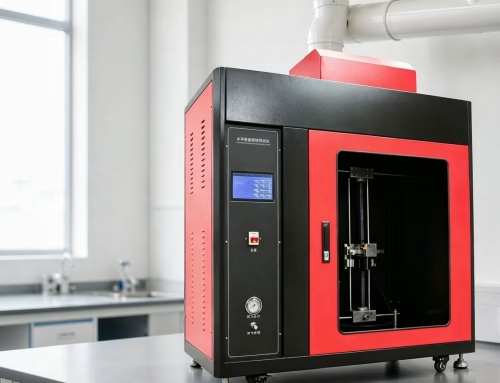
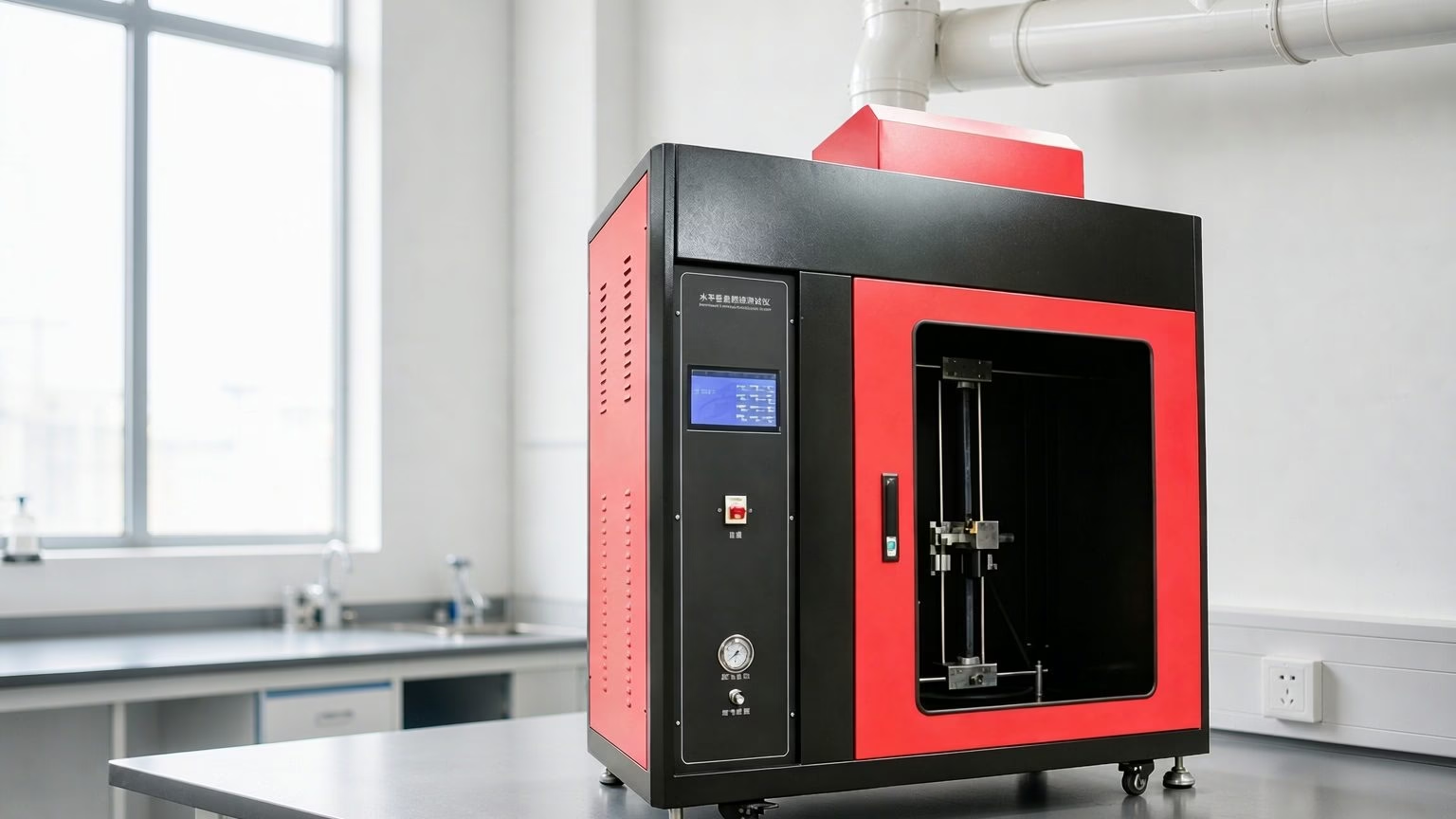
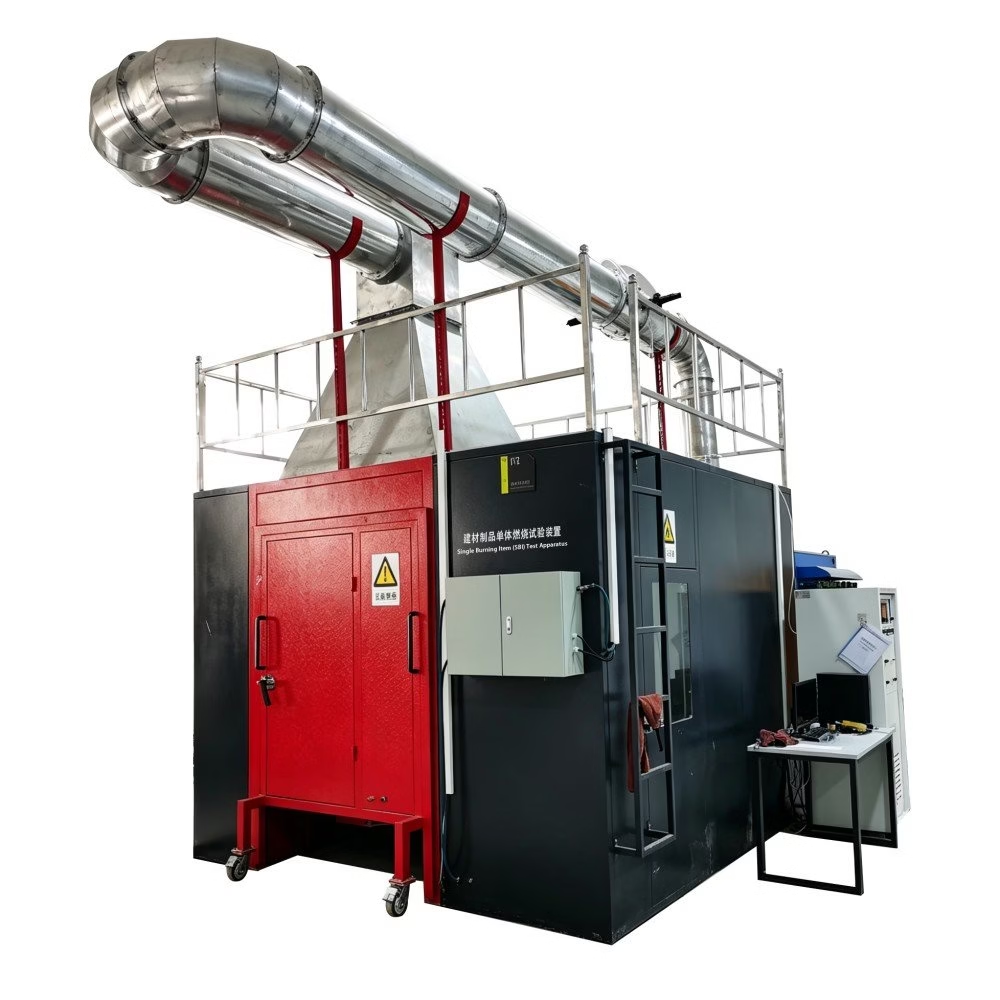
Fire testing methods for building facade materials come in two families, and a facade project usually needs both. ال عنصر family classifies the cladding product itself — في 13501-1 classifies construction products and building elements using data from reaction to fire tests, and it is the current edition, in force since 19 December 2018 1; the workhorse behind it is the single burning item test, في 13823, which is where BRT’s SBI apparatus operates. ال system family fires a complete installed assembly at near full scale: BS 8414-1:2020 covers external cladding systems fixed to and supported by a masonry substrate, BS 8414-2:2020 covers systems fixed to and supported by a structural steel frame 2 3, and the pass/fail criteria come from BR 135, the third edition of Fire performance of external thermal insulation for walls of multistorey buildings 4. Outside Europe, NFPA 285 is the comparable US test for exterior wall assemblies and panels used as components of curtain wall assemblies that are constructed using combustible materials or incorporate combustible components 5, بينما ايزو 13785-1:2002 (intermediate-scale) و ايزو 13785-2:2002 (large-scale) provide the façade-specific reaction-to-fire route 6 7. The commercial mistake is treating a component classification as if it were a system approval — they answer different questions.
Component Tests for Fire Testing Methods for Building Facade Materials
What EN 13501-1 Actually Classifies
في 13501-1:2018 is titled Fire classification of construction products and building elements — Part 1: Classification using data from reaction to fire tests [1]. The wording of the title is the rule that governs everything downstream: the classification is derived from reaction to fire بيانات, meaning how the product behaves when exposed to a heat source in a defined apparatus — not how a complete wall behaves when a room fire spreads onto it.
The Single Burning Item Test
The SBI test, في 13823, exposes a mounted specimen to a controlled flame from a burner in a controlled chamber, and it produces the inputs that drive the classification: heat release rate, smoke production, flame spread and the behaviour of flaming particles. ال single burning item testing for facade materials article on this site covers the mounting of cladding products in the rig, the product families that drive the result, and how to read a facade Euroclass; ال what is the SBI fire test used for article explains the test itself and the equipment behind it.
What a Component Test Cannot Tell You
| Question a project asks | Can a component test answer it? |
|---|---|
| What Euroclass does the cladding product carry? | Yes — that is exactly what it is for |
| Does the insulation contribute to fire spread? | Only if it is part of the tested specimen |
| Does the fixing system hold the panel in place? | Only if the tested specimen includes the real fixing |
| Does the cavity barrier work as designed? | No — not unless the system test includes it |
| Will flame spread around the edge of the panel? | No — joint and edge behaviour is a system question |
| Does the assembled wall meet the building regulation? | No — that is what the system test is for |
The last two rows are where facade disputes originate. A panel with an excellent product classification, installed with a cavity that has no barrier, produces a wall that behaves very differently from the panel that was tested.
System Tests: Firing the Whole Wall
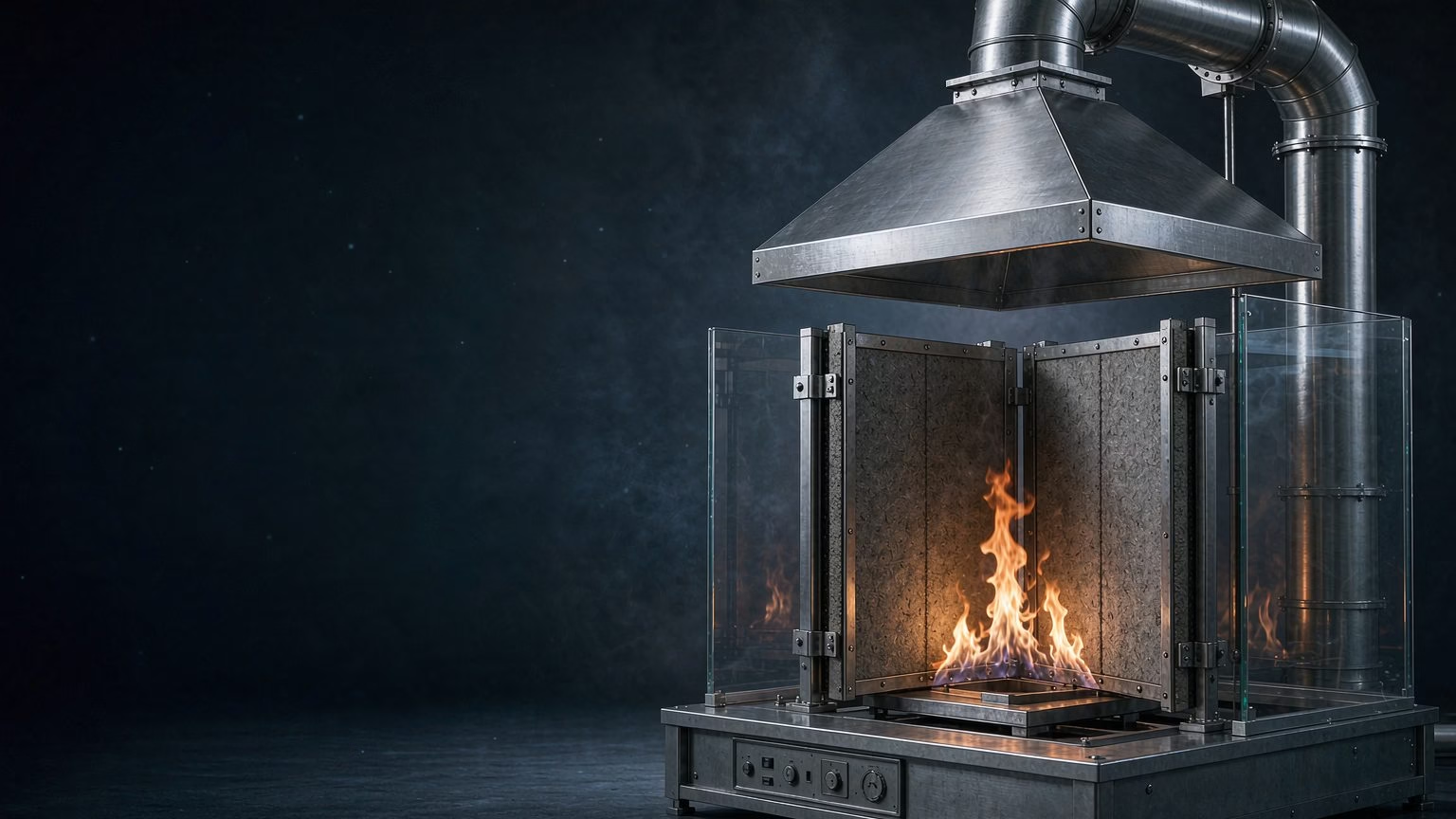
BS 8414-1 and BS 8414-2: Two Substrates, Two Tests
The British standard pair is organised by what supports the cladding, and this distinction decides which part applies to a given building.
| جزء | Cladding support | ما يغطيه |
|---|---|---|
| BS 8414-1:2020 | Masonry substrate | External cladding systems fixed to and supported by a masonry substrate [2] |
| BS 8414-2:2020 | Structural steel frame | External cladding systems fixed to and supported by a structural steel frame [3] |
Both entries are listed in the British Standards Institution knowledge base under those titles and dates [2][3]. The practical consequence is direct: a cladding system on a concrete or masonry core wall is tested under Part 1, while the same cladding on a steel frame requires Part 2, because the frame itself heats, deflects and behaves differently in fire.
BR 135: The Criteria Layer
The test method produces data; BR 135 produces the judgement. Its third edition is titled Fire performance of external thermal insulation for walls of multistorey buildings, and it sets out the principles and design methodologies related to the fire spread performance characteristics of non-loadbearing external wall systems [4]. In other words, BR 135 is the document that converts measured flame spread, heat and damage into a pass or fail against the criteria that the building regulations expect.
ايزو 13785-1 و ايزو 13785-2
The ISO route is organised by scale rather than by substrate. ايزو 13785-1:2002 يكون Reaction-to-fire tests for façades — Part 1: Intermediate-scale test و ايزو 13785-2:2002 يكون جزء 2: Large-scale test, both listed in force since 6 December 2002 [6][7]. The intermediate-scale test sits between a component test and a full wall: large enough to show cavity behaviour and joint performance, small enough to run many configurations.
NFPA 285 in the United States
NFPA 285 addresses exterior wall assemblies and panels used as components of curtain wall assemblies that are constructed using combustible materials or that incorporate combustible components [5]. Its scope wording is precise and worth quoting into a US specification, because it defines both the assembly types covered and the combustible-content boundary of the test.
The System Test Family for Fire Testing Methods for Building Facade Materials
| طريقة | حجم | What it decides | Where it is used |
|---|---|---|---|
| في 13501-1 via SBI [1] | عنصر | Euroclass of the product from reaction to fire data | Product declaration across Europe |
| BS 8414-1:2020 + BR 135 [2][4] | Full scale, masonry support | Whether the installed system on masonry meets the fire spread criteria | UK building regulations route |
| BS 8414-2:2020 + BR 135 [3][4] | Full scale, steel frame support | Whether the installed system on a steel frame meets the criteria | UK building regulations route |
| ايزو 13785-1:2002 [6] | Intermediate scale | Façade reaction to fire at intermediate scale | International comparison and supporting evidence |
| ايزو 13785-2:2002 [7] | Large scale | Façade reaction to fire at large scale | International large-scale evidence |
| NFPA 285 [5] | Medium-to-large scale | Flame spread characteristics of exterior wall assemblies with combustible content | US codes and specifications |
The Regulatory Context Is Changing
UK guidance has moved in a way that affects how projects are specified. ال Approved Document B (السلامة من الحرائق) statutory guidance page records updates for 2025, 2026 و 2029, and states that these updates make provision for sprinklers in all new care homes and withdraw national classes (BS 476 fire tests) 8. The practical consequence for a facade project is that the national-class route is being retired, and the reaction-to-fire classification and system-test route carries more of the weight. That makes it worth stating the classification and system-test basis explicitly in a specification rather than accepting a national class label.
What a System Test Actually Requires From the Build-Up
A full-scale system test is only as meaningful as the specimen. This is where most facade projects lose their time, because the laboratory needs the system, not the panel.
| Element the specimen must represent | Why it changes the result |
|---|---|
| Supporting wall or frame | Heats, deflects and loads the cladding differently |
| Insulation type and thickness | Determines whether the cavity can hold flame |
| Cladding panel, its thickness and its coating | The tested surface and its reaction to flame |
| Fixing system and spacing | Holds or releases the panel under heat |
| Joint profile, including open and closed joints | Governs how flame travels around the panel |
| Cavity barriers and their positions | The designed route for stopping flame inside the cavity |
| Rain screen or cavity spacing | Airflow inside the cavity drives flame spread behaviour |
Fire testing methods for building facade materials are only as good as the specimen behind them. A common failure mode is a specimen built from the panel plus a generic insulation and a simplified fixing arrangement, because it is faster. The test then produces a number that does not correspond to the building, and the report has to be qualified — or the panel has to be retested.
What the Component Route Still Has to Prove
A component classification is necessary and it is not sufficient, and the gap between those two statements is where facade projects get stuck. The product data answers the question “how does this material behave when flame is applied to it directly”. A wall answers a different question: “how does this assembly behave when flame attacks it from a window opening, travels up the cavity, reaches the edges of the panels and loads the fixings”.
The practical implication is that a technical file for a facade system normally has to hold three separate layers of evidence, and each layer answers a different part of the compliance question:
| Evidence layer | ما يؤسس | Why it cannot be replaced by the layer below |
|---|---|---|
| Material reaction-to-fire data | How the product itself reacts to flame and heat | Says nothing about joints, fixings or cavities |
| Component classification under EN 13501-1 [1] | The Euroclass that the market expects to see on the declaration | A class label is not a system approval |
| System test under BS 8414 / NFPA 285 / ايزو 13785 with BR 135 [2][3][4][5][6][7] | That the installed build-up meets the fire spread criteria for the building | Cannot be extrapolated from a coupon or a single panel |
For a manufacturer selling across markets, the layers multiply rather than substitute. The same panel may need an EN 13501-1 classification for Europe, a BS 8414 system test with BR 135 for a UK project, and an NFPA 285 test for a US project [1][4][5]. That is why the sequence below matters: it establishes which layers a given project actually consumes before a single specimen is built.
Why Cone Calorimetry Feeds the Programme
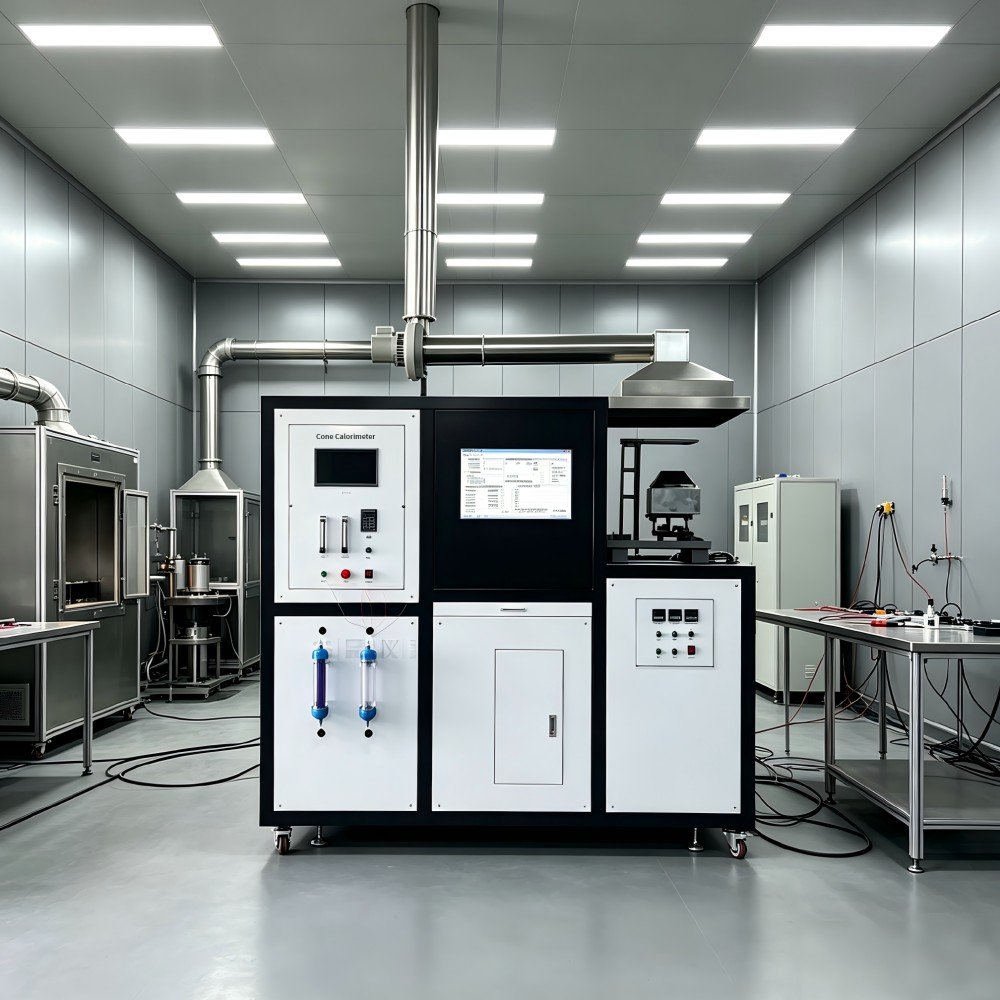
The full-scale test measures the assembled behaviour; the calorimeter measures the material behaviour that drives it. معدل إطلاق الحرارة, mass loss and effective heat of combustion per unit mass are the inputs that feed component classification and that explain how a cladding product behaves once flame is present. For a supplier assembling a technical file, running a cone calorimeter test alongside the classification and system tests is what makes the file coherent rather than a stack of unrelated certificates. ال cone calorimeter testing article on this site explains what those outputs mean, و ايزو 5660 heat release rate article covers the method itself.
Putting a Facade Test Programme Together
The Sequence That Saves Time
- Fix the classification route first. Identify which product-level reaction-to-fire data the project needs and under which standard — EN 13501-1 في أوروبا [1], with the SBI test as the usual engine.
- Fix the system route second. BS 8414-1 أو -2 depending on the supporting structure, judged against BR 135 [2][3][4]; NFPA 285 for the US route [5]; ايزو 13785-1 أو -2 for the international route [6][7].
- Assemble the specimen from the real build-up. Every element in the table above, from the actual production batch of panels.
- Supplement with calorimetric data. Cone calorimeter results explain and support the reaction-to-fire data.
- Check the regulatory text at the time of the order, not at the time the design was drawn — the Approved Document B amendments are moving [8].
Choosing the Right Equipment
| Programme need | Equipment | BRT product |
|---|---|---|
| Component classification of cladding products | SBI test apparatus | Single burning item SBI test apparatus |
| Heat release rate of cladding materials | المسعر المخروطي | المسعر المخروطي |
| Supporting evidence for system assessments | Smoke and toxicity instrumentation | Smoke toxicity test equipment |
| Combustion behaviour of the insulation itself | Combustion testing | Building materials smoke density tester |
The related reading on this site rounds out the picture: reaction to fire testing explains the four tests behind the EN 13501-1 classes, كيفية اختبار انتشار اللهب على مواد البناء covers the flame spread methods, و fire testing requirements for composite building materials handles the multi-material case that facades often present.
الأسئلة المتداولة
What is the difference between a component test and a system test for facade materials?
A component test classifies the cladding product on its own, from reaction to fire data — the SBI test under EN 13823 feeding the EN 13501-1 يوروكلاس. A system test fires a complete installed assembly at full scale and assesses the behaviour of the whole build-up: الركيزة, insulation, panel, المثبتات, joints and cavity barriers. A component classification never certifies the installed wall.
Which BS 8414 part applies to my facade?
It depends on what supports the cladding. BS 8414-1:2020 covers external cladding systems fixed to and supported by a masonry substrate, and BS 8414-2:2020 covers systems fixed to and supported by a structural steel frame. The same cladding product therefore needs different system evidence depending on the supporting structure of the building.
What does BR 135 add to a BS 8414 امتحان?
The data layer and the judgement layer. BS 8414 supplies the test method and the measured behaviour; BR 135, in its third edition on the fire performance of external thermal insulation for walls of multistorey buildings, sets out the principles and design methodologies related to fire spread performance and is what the result is assessed against.
Is NFPA 285 the same as a BS 8414 امتحان?
لا, though both address the same problem. NFPA 285 covers exterior wall assemblies and panels used as components of curtain wall assemblies constructed using combustible materials or incorporating combustible components, and it is the route referenced in US codes. BS 8414 is the British route, with BR 135 providing the criteria. A project selling into both markets needs both routes.
What are ISO 13785-1 و ايزو 13785-2 used for?
They are the ISO façade reaction-to-fire tests, split by scale: ايزو 13785-1:2002 is the intermediate-scale test and ISO 13785-2:2002 is the large-scale test, both in force since 6 December 2002. The intermediate scale sits between a component test and a full wall, which makes it useful for screening system variants before committing to a full-scale campaign.
How much of the facade has to be included in the test specimen?
Enough of the build-up that the behaviour is representative: the supporting wall or frame, the insulation type and thickness, the cladding panel with its coating, the fixing system and spacing, the joint profile including open and closed joints, the cavity barriers and their positions, and the screen or cavity spacing. Simplified fixing arrangements or generic insulation produce a result that does not describe the building and usually need qualifying.
Is a national fire class still acceptable for a facade in the UK?
The direction of travel is away from it. The Approved Document B statutory guidance records that the 2025, 2026 و 2029 updates make provision for sprinklers in all new care homes and withdraw the national classes, meaning the BS 476 fire tests. Projects should therefore state the reaction-to-fire classification and the system-test basis explicitly rather than relying on a national class label.
خاتمة: A Decision Order
- Separate the two questions in writing: what does the product classify as, and does the installed system pass.
- Route the product question through EN 13501-1 and its SBI test [1]; route the system question through BS 8414-1 أو -2 with BR 135 [2][3][4], NFPA 285 [5], أو ISO 13785-1/-2 [6][7].
- Build the specimen from the real production build-up, not from a simplified version.
- Add the calorimetric data that supports the reaction-to-fire case.
- Re-check the regulatory text at the moment of the order, because the UK route is actively changing [8].
Run this order once per facade project and fire testing methods for building facade materials stop being a menu of test names and become a compliance map: product classification, system approval, specimen realism and the evidence that ties them together. The related reading is single burning item testing for facade materials for the component route and reaction to fire testing for the four tests behind the Euroclasses. For equipment, انظر جهاز اختبار SBI لعنصر محترق واحد و المسعر المخروطي الصفحات; send BRT your substrate type, cladding build-up and target market and we will map the test programme and the equipment package.
About the Author
اختبار النقل السريع للحافلات (Shenyang Baoruitong Automation Equipment) manufactures reaction-to-fire and fire resistance test equipment — single burning item apparatus, cone calorimeters, smoke density and toxicity instrumentation, and non-combustibility and combustibility equipment. The content team writes for facade manufacturers, cladding suppliers and certification engineers, with the standard editions cited above verified against the BSI knowledge base, the UNI catalogue and the NFPA standard development pages in November 2026.
مصادر
- UNI—EN 13501-1:2018, Fire classification of construction products and building elements — Part 1: Classification using data from reaction to fire tests (in force 19 December 2018). https://webstore.uni.com/en/en-13501-1-2018
- BSI — BS 8414-1:2020, Fire performance of external cladding systems — Test method for non-loadbearing external cladding systems fixed to and supported by a masonry substrate (BSI Knowledge, 30 April 2020). https://shop.bsigroup.com/ProductDetail?pid=000000000030394646
- BSI — BS 8414-2:2020, Fire performance of external cladding systems — Test method for non-loadbearing external cladding systems fixed to and supported by a structural steel frame (BSI Knowledge, 30 April 2020). https://shop.bsigroup.com/ProductDetail?pid=000000000030394648
- BRE — BR 135, Fire performance of external thermal insulation for walls of multistorey buildings, الطبعة الثالثة. https://www.brebookshop.com/details.jsp?id=327140
- NFPA - NFPA 285, Standard Test Method for Evaluating the Flame Spread Characteristics of Exterior Wall Assemblies (scope as published on the NFPA standard development page). https://nfpa.org/codes-and-standards/nfpa-285-standard-development/285
- النوم - كبير 13785-1:2002, Reaction-to-fire tests for façades — Part 1: Intermediate-scale test (in force 06 December 2002). https://webstore.uni.com/en/iso-13785-1-2002
- النوم - كبير 13785-2:2002, Reaction-to-fire tests for façades — Part 2: Large-scale test (in force 06 December 2002). https://webstore.uni.com/en/iso-13785-2-2002
- UK Government — Fire safety: Approved Document B, statutory guidance for building regulations in England (2019 edition with 2020, 2022 و 2025 amendments; 2025, 2026 و 2029 updates withdraw national classes). https://www.gov.uk/government/publications/fire-safety-approved-document-b