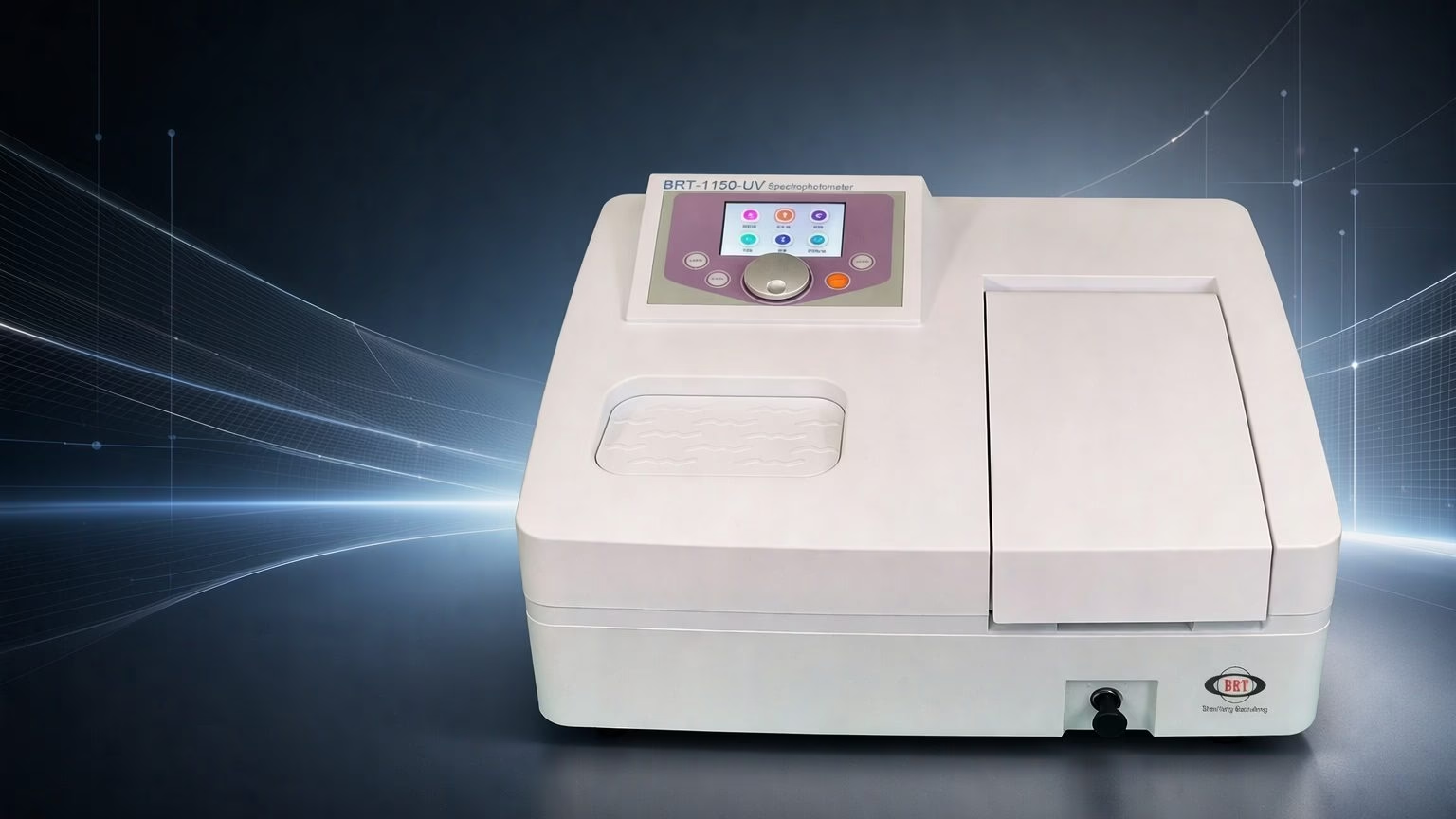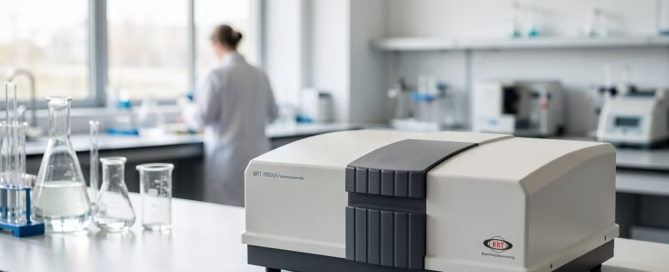
UV-Vis-Spektrophotometer: Funktionsprinzip und Hauptanwendungen
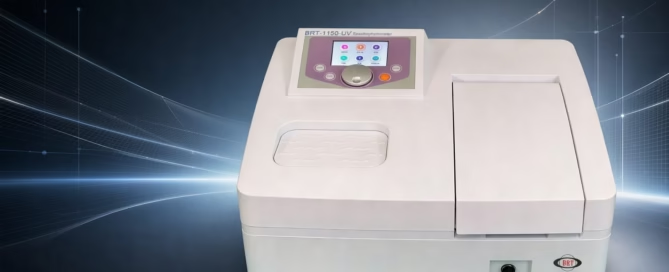
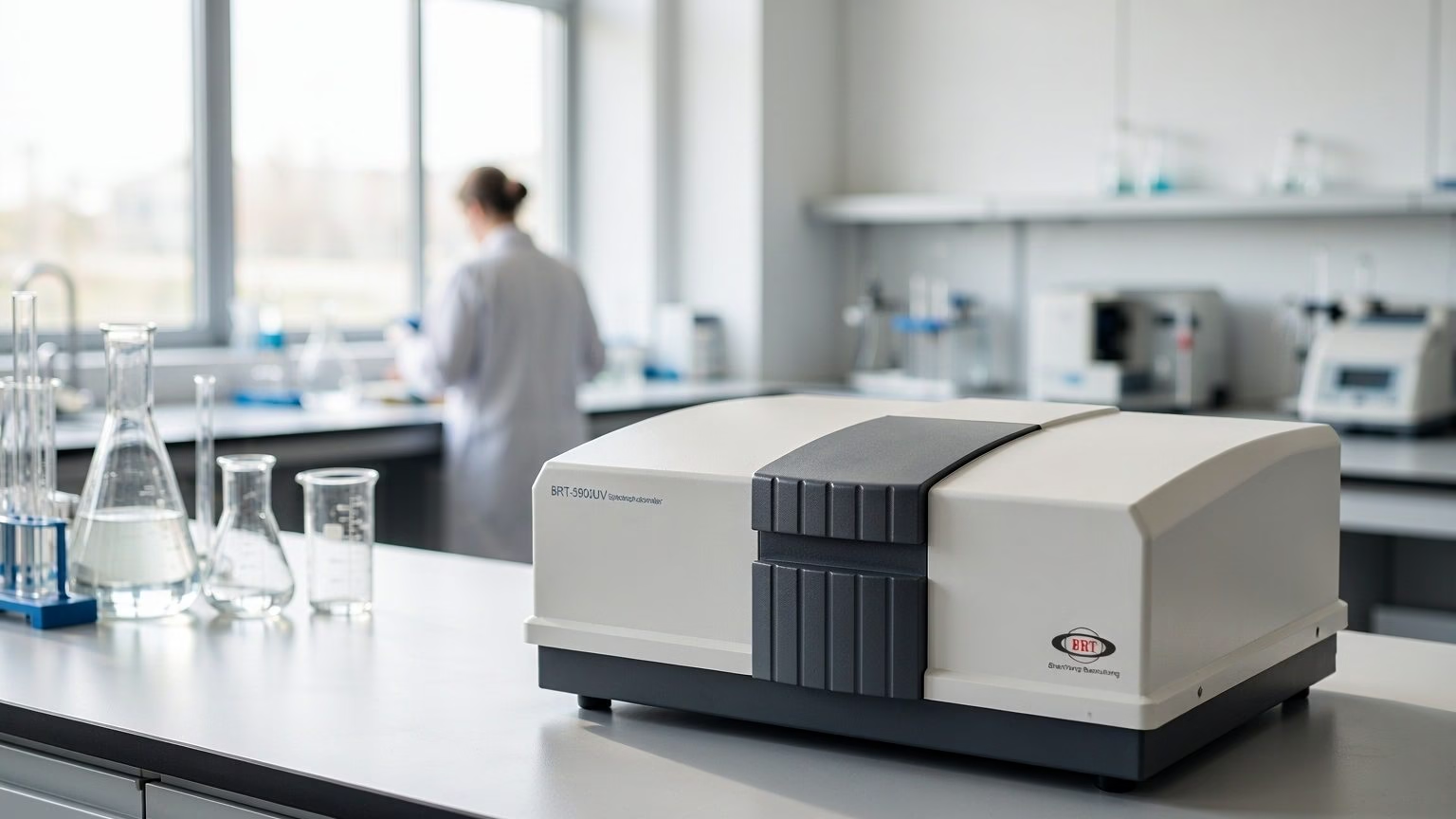
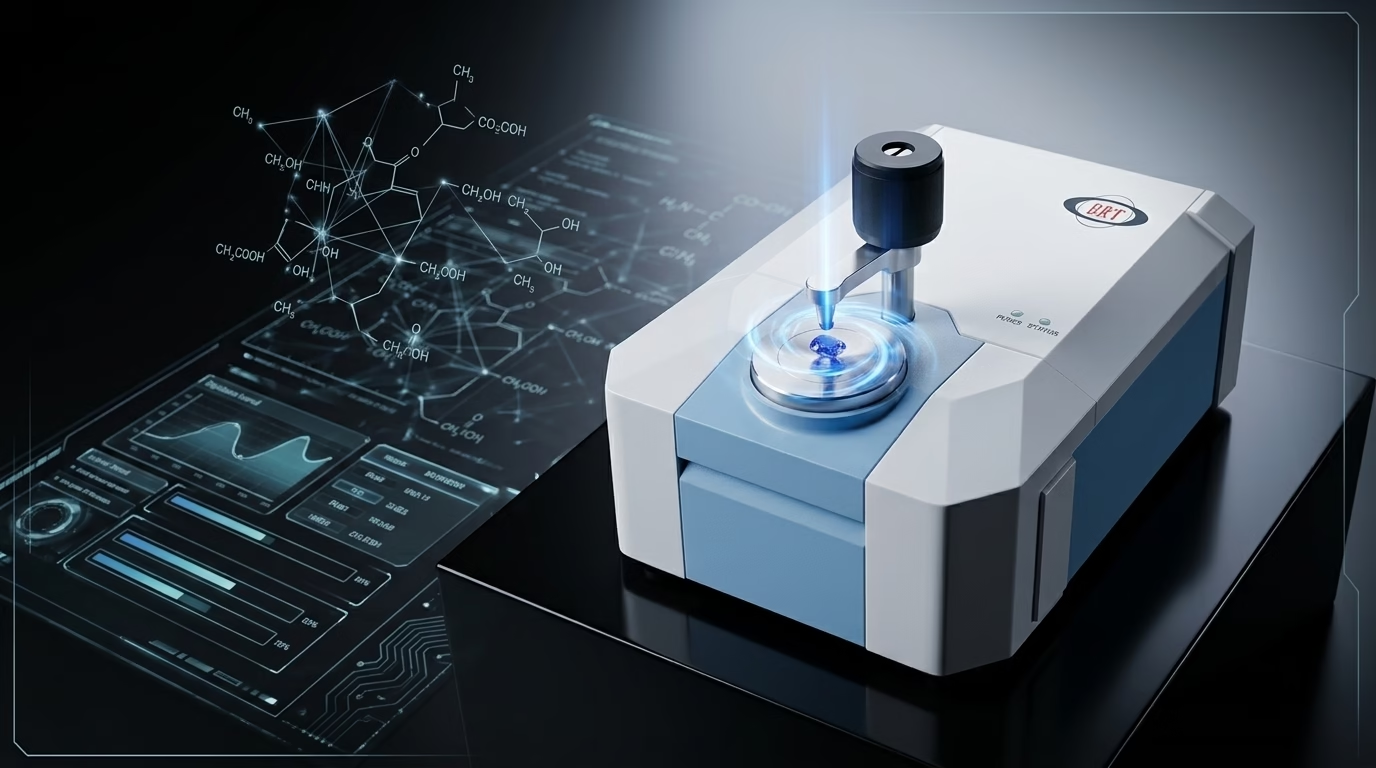
A UV-Vis spectrophotometer measures how much ultraviolet and visible light a sample absorbs, and at which wavelengths. Light from a deuterium or tungsten lamp passes through a monochromator, through the sample, and onto a detector, where the transmitted intensity is converted into absorbance and then into concentration through the Beer-Lambert law. This guide walks the optical path stage by stage, explains what the UV and visible regions can tell you, maps the main application areas across pharmaceutical, Umwelt, food and industrial laboratories, sets out the five specifications that decide real work, and shows how the available configurations differ from routine colorimetric benches to research-grade double-beam systems.