La risposta breve
No single test covers a cable’s fire behaviour — a specification that names “the cable fire test” is underspecified. The fire testing standards for electrical cables split into four questions: does flame spread along the cable (CEI 60332), does the circuit keep working in the fire (CEI 60331), what gases does the compound emit (CEI 60754), how much smoke does it produce (CEI 61034 e il ISO 5659 chamber) 1 2. In Europe the consumer-facing answer is the IN 50575 class route, which bundles those measurements into IN 13501-6 classes such as B2ca s1b,d1,a1 — and each letter earns its place in a different test. This map shows which standard answers which question, what the current editions are, and how to route a specification through them without paying for tests that do not apply. For anyone searching the fire testing standards for electrical cables, the useful outcome is not a list of codes but the routing: which performance the project is actually buying, which standard measures it, and which edition of that standard is live today.
The Six Families and the Question Each Answers
| Family | Governing standards | Question answered | Livello |
|---|---|---|---|
| Flame spread | CEI 60332-1, -2 (single cable), CEI 60332-3 (bunched) [1][2] | How far does fire travel along the cable? | Cable / installation |
| Circuit integrity | CEI 60331 series | Does the circuit still work during and after the fire? | Installed system |
| Gas emission | CEI 60754 series | Which acid gases does the compound emit, and how much? | Compound |
| Smoke opacity | CEI 61034 series; ISO 5659 chamber | How much light does the smoke obscure? | Compound / cable |
| European classes | IN 50575 + IN 13501-6 4 5 | What class does the cable carry on the CE label? | Prodotto |
| North American route | UL listing tests | Does the cable pass the listing fire tests? | Prodotto |
The three middle families feed the class route; the two test families at the top are the physical tests a laboratory actually runs. The companion deep-dives cover the two biggest ones in detail — see CEI 60332 cable flame testing explained for the spread-of-flame routes, E fire testing for cable insulation materials for the compound-level measurements behind them.
What Each Family Measures in the Laboratory
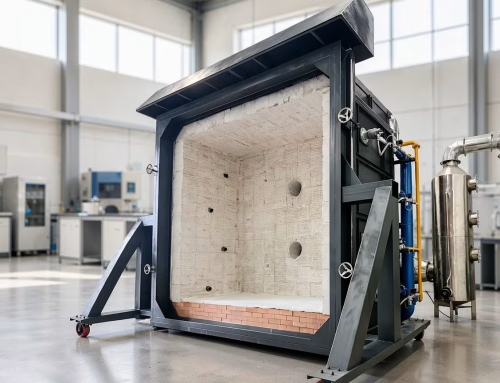
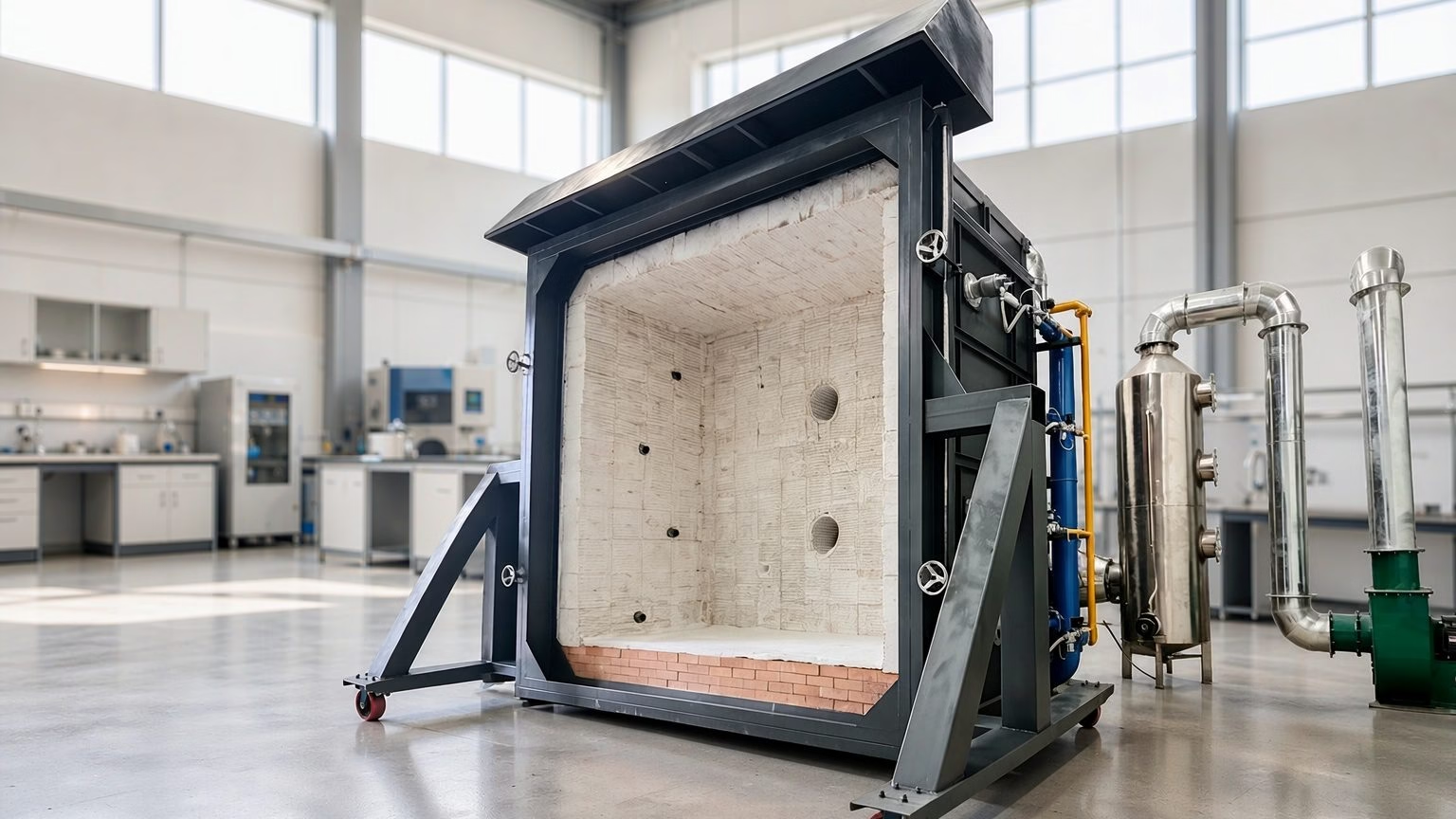
Reading the map is easier once each family is anchored to the apparatus that produces its numbers, because that is where the cost and the planning live:
- CEI 60332-1/-2 — a vertical burner applies a defined flame to a single fixed cable; observers track burning extent and any dripping. Quick, low fuel, no ladder.
- CEI 60332-3 — the same question at installation scale: cables bunched on a ladder inside an enclosure, air intake controlled, burner fuelled to the category’s fuel load for the category’s duration [2]3.
- CEI 60331 — the cable is energised while it burns, and the electrical record is the result. Some parts add mechanical shock during the burn, because a cable that survives the flame but fails when the tray shakes has not done its job.
- CEI 60754 — compound specimens are heated and the evolved gases are captured and quantified, separately for the amount of hydrogen halide and for its acidity.
- CEI 61034 / ISO 5659 — smoke accumulates in a chamber while a photometer records attenuation; the compound-level numbers feed the smoke sub-classes.
Every family uses different specimens, conditioning and pass criteria, which is why laboratories assemble them into programmes rather than running “a cable test”. A laboratory that plans the fixture sets once — single-cable clamps, a bunched-ladder enclosure, an energised furnace line, gas and smoke chambers — can serve the whole map; one that buys apparatus family by family pays twice.
CEI 60332: Flame Spread, in Two Geometries and Four Categories
IL 60332 family splits by specimen geometry. Parte 1 tests a single cable; Parte 2 tests small cables with a gentler diffusion flame where the Part 1 burner would overwhelm the specimen. Parte 3 is the installation reality: cables bunched in a ladder, with fuel loads and durations set by category — UN (7 l/m, 40 min), B (3.5 l/m, 40 min), C (1.5 l/m, 20 min) and D (0.5 l/m, 20 min, small-diameter cables only) [2][3]. The current single-cable method is CEI 60332-1-2:2025, the second edition published in June 2025 [1]; the bunched-cable procedure documents are the 2018 editions [2].
The category choice is the commercial decision inside the test. A cable certified in category C has passed a much lighter fuel load than category A, and the bunched-cable result never carries backward to a single-cable claim — the deep-dive article explains the failure cases. What a standards map adds: categories are not a quality ladder, they are an installation-quantity ladder, and the specification must match the category to how much cable the real route will carry.
A second practical point is specimen state. Flame-spread results depend on the cable as delivered — jacket material, diameter, construction and the number of cores — and conditioning before the test is fixed by the procedure documents. A supplier quoting “passes IEC 60332” without stating the part, the category and the specimen description is quoting a number that cannot be traced to an installation condition. The report for every 60332 run should therefore carry: the part and edition, the category (for Part 3), the full specimen construction, and the observed extent of damage relative to the method’s limits [1][2].
CEI 60331: The Fire Resistance Question Flame Tests Cannot Answer
A cable can refuse to spread flame and still fail its function: a fire-alarm loop that melts at 400 °C keeps the fire contained but drops the alarm. CEI 60331 subjects energised cables to direct flame — some parts with mechanical shock added — and judges whether the circuit maintains electrical continuity for the rated duration. This is the family behind “fire-resistant cable” claims, and it is the one most often confused with 60332: spread-of-flame and circuit integrity are different performances, bought separately, tested separately, and certified separately.
CEI 60754 e CEI 61034: What the Compound Emits
Two families work at compound level and feed the sub-classes of the European system. CEI 60754 measures hydrogen halide acid gas emission — the difference between a PVC compound and a halogen-free (LSZH) compound lives here, in both the amount of gas and its acidity. CEI 61034 measures smoke opacity of the compound in a chamber. Neither says anything about flame spread; a halogen-free compound with excellent gas results can still fail a bunched-cable spread test, which is why the European class route assembles all of them (the insulation deep-dive explains the sub-class logic [3]).
The European Class Route: IN 50575 e EN 13501-6
For cables placed on the EU market, IN 50575 is the harmonised product standard and IN 13501-6 the classification system: seven classes from Aca (essentially non-combustible) down to Fca, each carrying smoke (S), flaming-droplet (d) and acidity (a) sub-classes [4][5]. The class a buyer sees on the declaration of performance compresses all six test families above into one string — which is exactly why a “B2ca s1b,d1,a1” requirement cannot be verified with one test.
Two edition notes for specification writers. The current classification is IN 13501-6:2018+A1:2022: IL 2018 base edition was withdrawn in December 2022 when the amendment took effect [4] — files citing bare “IN 13501-6:2018” should be refreshed. And the test methods inside EN 50575 reference the IEC editions listed above, so a class claim is only as current as the edition of 60332-1-2 (2025) e il 60332-3 documents behind it [1][2].
The class string is also the point where buyers most often over-read the certificate. UN “B2ca” cable is not “twice as good as” anything — the letters order products on a scale defined by the classification standard, and the sub-classes (fumo, droplets, acidity) are independent dimensions that do not follow the main class. A procurement file that compares cables on the main class alone can accept a B2ca s2,d2,a2 cable where the project actually needed the s1b,d1,a1 behaviour — three different performances hiding behind one letter pair.
North American and Other Routes
North America runs a listing route rather than a class route: cables carry UL markings earned from the listing tests for their cable type, with vertical-tray and vertical-wire tests measuring flame spread at installation scale. UL shop pages are not machine-accessible, so this section stays at route level — confirm the exact listing test with the certifier before comparing a UL result against an IEC category (待确认). China’s GB route similarly runs parallel flame-spread and smoke-density tests on cable products. The routing principle holds everywhere: match the test to the installation question, not to whichever certificate the supplier already holds.
Why One Cable Can Pass in the Lab and Fail on Site
The map above assumes a laboratory produces the same answer twice. It does not always, and the gap between the bench and the site is where most specification disputes are born. Four causes account for nearly all of them:
| Cause | What changes | Which family is affected |
|---|---|---|
| Mounting density | Same cable, more of it per metre of route | 60332-3 category [2][3] |
| Construction substitution | Different jacket, filler or armour from the tested build | Every family |
| Route environment | Bundling with other cables, insulation, or building materials in the void | 60332-3, 60331 |
| Ageing and installation | Heat, UV or mechanical damage before the cable is used | 60331 performance |
Each cause is a change to the specimen, and each family reads the specimen differently. Bunched-cable testing reads the fuel load and the air supply at the ladder — the same cable mounted at a different density burns differently, which is why a category D result says nothing about a category A installation [2][3]. Circuit-integrity testing reads the conductor, the insulation and the termination; a cable whose insulation was softened by a hot run-up is not the cable that passed 60331 in the laboratory. And the compound-level families read the material itself, so a jacket reformulated for price after certification invalidates them even when nothing about the geometry changed.
The practical rule that falls out of the map: a cable certificate is valid for a construction, a density and a route. When the fire testing standards for electrical cables appear on a procurement document, the buyer’s question is never “is this cable certified” but “certified for what” — and the answers are on the specimen description pages of the reports, not on the class line of the datasheet. Asking for the specimen description up front is the cheapest way to avoid a procurement file that cannot be answered.
Routing a Specification: Un ordine decisionale
| If the spec asks… | The test family that answers it | Watch out for |
|---|---|---|
| “Flame spread per category” | CEI 60332-3 (bunched) [2][3] | Category must match cable quantity on the route |
| “Single-cable flame test” | CEI 60332-1-2:2025 [1] | A single-cable pass ≠ bunched-cable performance |
| “Fire-resistant / maintain function” | CEI 60331 series | Separate performance; never inferred from 60332 |
| “Halogen-free / low acid gas” | CEI 60754 series | Gas amount and acidity are separate results |
| “Low smoke” | CEI 61034 / ISO 5659 chamber | Optical density ≠ toxicity |
| “B2ca s1b,d1,a1” | All of the above via EN 50575 [4][5] | Check editions behind the class |
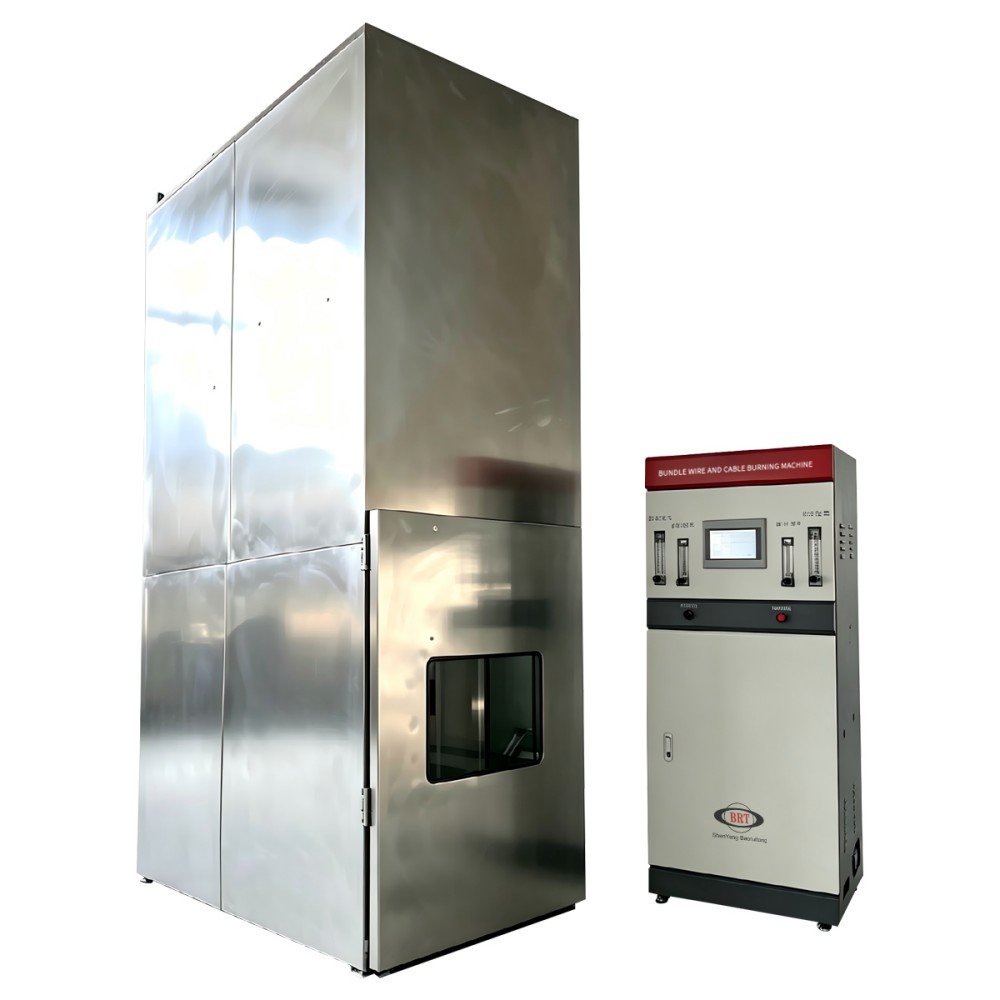
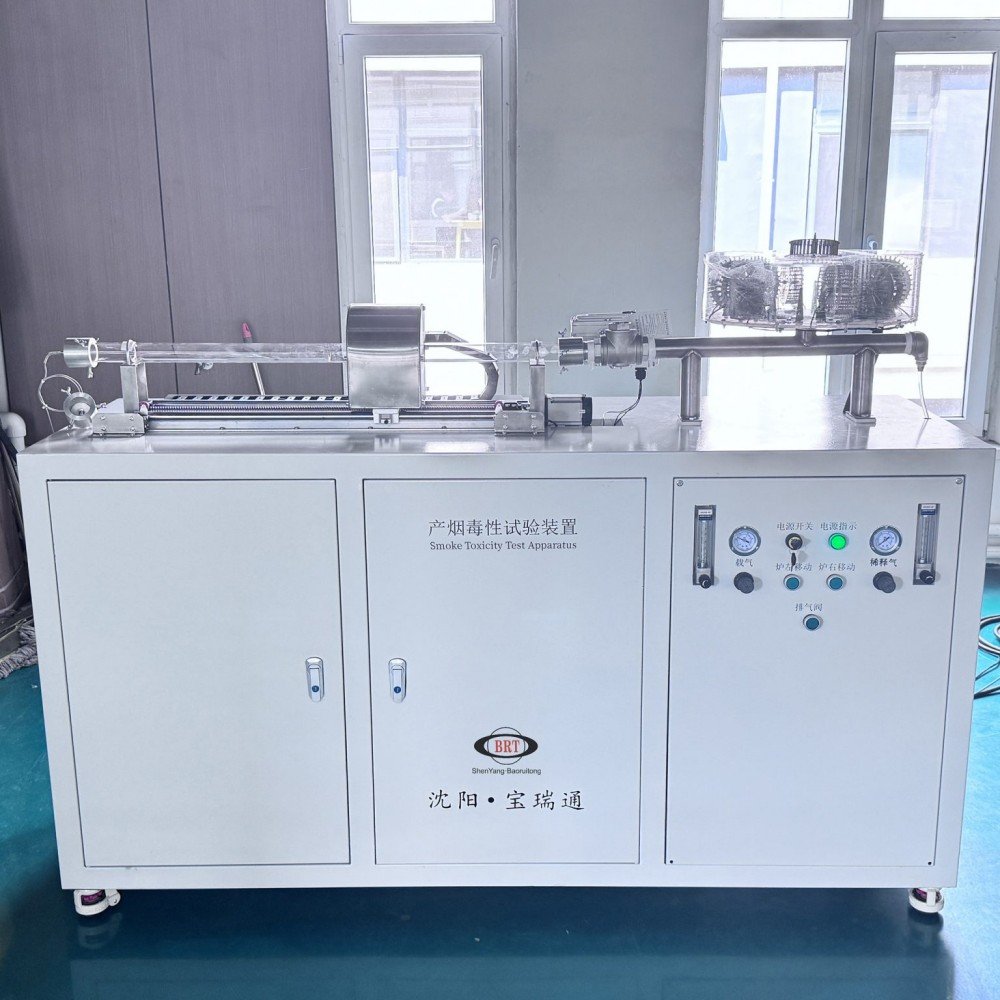
Laboratories equipping for the full map need three hardware groups: a bundled-cable vertical flame test line for 60332-3 categories, a cable fire resistance tester for 60331 programmes, and compound-level instrumentation — oxygen index, acid-gas and smoke chambers. BRT Testing supplies all three groups; the smoke side is on the smoke toxicity test equipment page.
Building One Cable Fire Testing Programme
Most laboratories and cable makers do not face the standards one at a time; they face a product launch that touches several of them at once. Building the programme in the right order prevents the expensive pattern of testing into a dead end:
| Programme step | What to decide | What it protects |
|---|---|---|
| Market and route | EU class route, UL listing route, or both | Avoids testing against a market that will not accept it |
| Cable construction freeze | Jacket, cores, diameter, compound | Results belong to the tested construction |
| Family selection | Which of the six families the target class needs | No orphan tests that certify nothing |
| Categoria / duration choice | Matched to the installation quantity | Avoids a fail caused by over-mounting the ladder |
| Fixtures and apparatus | Single-cable clamps, ladder enclosure, energised line, gas/smoke chambers | One capital plan instead of three |
| Report format | Editions, specimen records, observations | Survives the approval review |
The last row is the one laboratories skip: a test run without a report format that names editions and specimens produces data, but not the evidence an assessor can consume. Building the reporting discipline into the programme from the start costs nothing and saves the second round of testing.
Domande frequenti
What are the main fire testing standards for electrical cables?
The core IEC families are IEC 60332 for flame spread along single and bunched cables, CEI 60331 for circuit integrity under direct flame, CEI 60754 for acid gas emission from the compound, e CEI 61034 for smoke opacity. In Europe these feed the EN 50575 product standard and the EN 13501-6 classes (Aca to Fca with s, d and a sub-classes). Each family answers a different question, so a cable specification normally needs results from more than one family.
Is IEC 60332 the same as a fire resistance test?
NO. CEI 60332 measures whether flame spreads along the cable; CEI 60331 measures whether the energised circuit keeps working in the fire. A cable can pass 60332 and fail 60331 because the insulation melts while the fire stays contained. Fire-resistant cable claims must be verified under 60331 (with mechanical shock in some parts), never inferred from a flame-spread pass.
What is the current edition of IEC 60332-1-2?
The current edition is IEC 60332-1-2:2025, the second edition published in June 2025. It replaced the 2004 edition with its 2015 amendment for the single-cable vertical flame spread test. Bunched-cable testing remains with the IEC 60332-3 series in its 2018 editions, split by category A through D according to the fuel load installed on the ladder.
What is the difference between category A, B, C and D in IEC 60332-3?
The categories set the fuel load: how many litres of combustible material per metre are mounted on the test ladder, together with the test duration — A is 7 l/m for 40 minuti, B is 3.5 l/m for 40 minuti, C is 1.5 l/m for 20 minutes and D is 0.5 l/m for 20 minutes with a small-diameter limit. The category should reflect the amount of cable on the real installation route, not a quality ranking.
Which standard covers halogen-free cable claims?
Halogen-free behaviour is assessed at compound level under IEC 60754, which measures hydrogen halide emissions and acidity, and then expressed in the acidity sub-class of the EN 13501-6 class string. UN “halogen-free” marketing claim should therefore trace to 60754 data or an a-sub-class declaration — the phrase itself is not a test result and varies between manufacturers.
Why does one cable carry so many test results?
Because the class on the label compresses several independent performances. Flame spread, circuit integrity, gas emission and smoke opacity are measured in different apparatus on different specimens, and the EN 13501-6 sub-classes report them separately. A single “fire certificate” that does not name the standard, edition and class for each performance is not verifiable — buyers should ask for the test report per family.
How do I choose between the category routes for my project?
Start from the installation: the quantity of cable carried per metre of route selects the 60332-3 category, the function of the circuit decides whether 60331 applies, and the market decides whether the EN class route, a UL listing route or both are needed. Matching the test to the installation question first usually saves a second round of testing, because the most expensive failures are tests run against the wrong category or the wrong market.
Conclusione: Un ordine decisionale
- Split the specification into its four questions: spread, integrità, gases, fumo.
- Route each question to its family: 60332 [1][2][3], 60331, 60754, 61034.
- If the market is the EU, assemble the results into the EN 50575 / IN 13501-6 class and check editions [4][5].
- Buy the hardware once: a bundled-cable flame line, a fire resistance line, compound-level instruments.
Run this order once per product and the fire testing standards for electrical cables stop being a tangle of codes and become a checklist — each performance, its standard and edition, and the apparatus that produces the evidence. The map is worth more than the individual codes, because the codes are where a project gets stuck and the map is where it gets moving: every performance has exactly one family that measures it, every family has an edition to quote, and every family has apparatus behind it. For the flame-spread hardware, start at the bundled cable vertical flame test equipment page; for circuit integrity, IL cable fire resistance tester page; contact BRT Testing with your route profile and we will map the fixture set.
Informazioni sull'autore
Test BRT (Shenyang Baoruitong Automation Equipment) manufactures cable fire test equipment — bundled-cable vertical flame lines, cable fire resistance testers and compound-level smoke and gas instrumentation. The content team writes for cable makers and laboratory buyers, with the IEC editions cited above verified against the IEC webstore in November 2026.
Fonti
- IEC — IEC 60332-1-2:2025, Tests on electric and optical fibre cables — Flame spread test — Part 1-2: Single cable test, 2nd edition (published 2025-06-10). https://webstore.iec.ch/en/publication/80873
- IEC — IEC 60332-3-10:2018, Flame spread test — Part 3-10: Bunched cable test, Category A. https://webstore.iec.ch/en/publication/33848
- IEC — IEC 60332-3-22:2018 (Category A) e CEI 60332-3-25:2018 (Category D), Bunched cable flame spread categories. https://webstore.iec.ch/en/publication/31166
- UNI—EN 13501-6, Fire classification of construction products and building elements — Part 6: Classification using data from reaction to fire tests; IL 2018 base edition was withdrawn on 2022-12-21 and the current state is 2018+A1:2022. https://webstore.uni.com/en/en-13501-6-2018
- SONNO: NON GRANDE 11925-2:2026, Reaction to fire tests — Part 2: Flame spread products (single burning item method), current edition effective 2026-01-28. https://webstore.uni.com/en/en-iso-11925-2-2026