- La risposta breve
- What “Flame Retardant” Means Before Any Test Runs
- The Core Vertical Tests: ISO 6940 e ISO 6941
- The Protective Clothing Chain
- Apparel and Drapery: the US Methods
- Comparing Flame Retardant Textile Testing Methods at a Glance
- Screening Before Certification: the Oxygen Index
- Building a Flame Retardant Textile Testing Plan
- Equipping a Textile Flammability Bench
- Domande frequenti
- What is flame retardant textile testing in one sentence?
- What is the difference between ISO 6940 e ISO 6941?
- Why did ISO 6940 e ISO 6941 change in 2026?
- Which test applies to fire-resistant workwear?
- Does washing affect flame retardant textile testing?
- Is ASTM D6413 the same as ISO 6941?
- What is LOI testing used for in textiles?
- Which standard covers curtains in public buildings?
- Conclusione: Un ordine decisionale
- Informazioni sull'autore
- Fonti
La risposta breve
Flame retardant textile testing starts with two questions: what will the fabric be used for, and which market regulates it. Vertical ignition and flame-spread testing to ISO 6940 E ISO 6941 answers “does it ignite, and how fast does flame climb” 12; protective-clothing fabrics then move into the performance chain of ISO 15025, NELL'ISO 14116 E NELL'ISO 11612 345; apparel and drapery in the US use ASTM D6413, ASTM D1230, IL 16 CFR 1610 apparel rule and NFPA 701 67. Everything else — limiting oxygen index, heat transmission — is screening or supporting data, not a substitute for the spread-of-flame test your specification names.
Che cosa “Flame Retardant” Means Before Any Test Runs
Two fabrics can both be called flame retardant and behave completely differently in a test. A fabric woven from inherently FR fibres (aramid, modacrylic, FR-modified cellulose) carries its protection in the polymer; a fabric finished with a durable or non-durable FR treatment carries it in a coating that laundering can reduce. Testing method cannot tell them apart — which is exactly why standards define conditioning (number of washes or cleaning cycles before the test) as part of the procedure. A test report that does not state how many cleaning cycles preceded the burn does not answer the buyer’s real question.
The other variable is construction. ISO 6940 E 6941 apply to single- and multi-component fabrics — coated, quilted, multilayer and sandwich constructions — so composite curtain or upholstery systems can be tested as built [1][2]. But a result belongs to the tested construction; relining a curtain or changing the interlayer takes it outside the report.
A third variable is the direction of exposure. Many fabrics are not symmetric: a coated blackout fabric faces the flame with its coating side or its backing side, and the two states can differ by a wide margin. Standards handle this by defining which face is exposed; procurement documents should do the same, because “tested to ISO 6941” without the exposed face stated leaves the most common dispute in textile fire testing unresolved. Where a specification is silent, laboratories test the face that would face the fire hazard in service, and record that choice in the report.
Finally, thickness and areal density drive behaviour more than fibre labels do. Two fabrics of the same fibre blend but different weights perform differently under the same small flame, so specification tables that compare fabrics by brand name alone, without areal density, invite false equivalences.
The Core Vertical Tests: ISO 6940 e ISO 6941
Ignition versus flame spread
The pair splits one question into two. ISO 6940 measures ease of ignition: a vertically oriented fabric faces a small defined flame, and the result is the time to ignition (O “no ignition” at the standard exposure) [1]. ISO 6941 measures flame spread: the time for the flame front to reach reference marks on the vertical specimen, reported as spread times from which a flame-spread index is derived [2]. A fabric can pass one and not the other — a heavy upholstery weave may resist ignition but, once alight, spread steadily.
IL 2026 editions just replaced two decades-old versions
Both documents were reissued in 2026: IL 2004 edition of ISO 6940 e il 2003 edition of ISO 6941 were withdrawn on 13 May 2026, the same day the 2026 editions entered force [1][2]89. The current scope language covers the same vertically oriented single- or multi-component fabrics under a small defined flame [1][2]. Two practical consequences follow: laboratories should update their scope statements and report templates to the 2026 designations, and any supplier datasheet still citing ISO 6940:2004 O 6941:2003 is quoting withdrawn documents. (This site tracks such renumbering — see our note on NELL'ISO 11925-2, the small-flame test for building products, which went through its own edition change in 2026.)
What each of the pair fixes, in broad terms:
| Aspect | ISO 6940:2026 | ISO 6941:2026 |
|---|---|---|
| Question answered | Does the fabric ignite under the defined flame? | How far and fast does flame spread once burning? |
| Specimen orientation | Vertical [1] | Vertical [2] |
| Fabric types covered | Single- and multi-component: coated, quilted, multilayer, sandwich [1] | Same families [2] |
| Headline result | Time to ignition (or no ignition) [1] | Flame spread times to reference marks [2] |
| Typical role in a spec | Ignition-resistance requirement | Spread-resistance requirement |
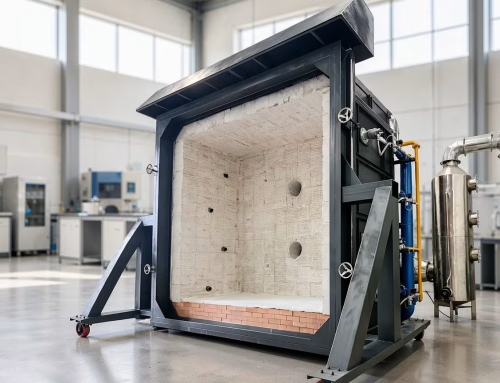
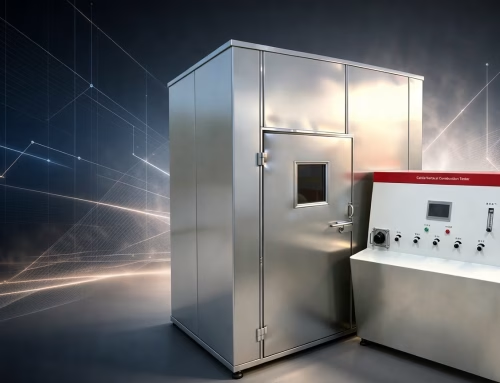
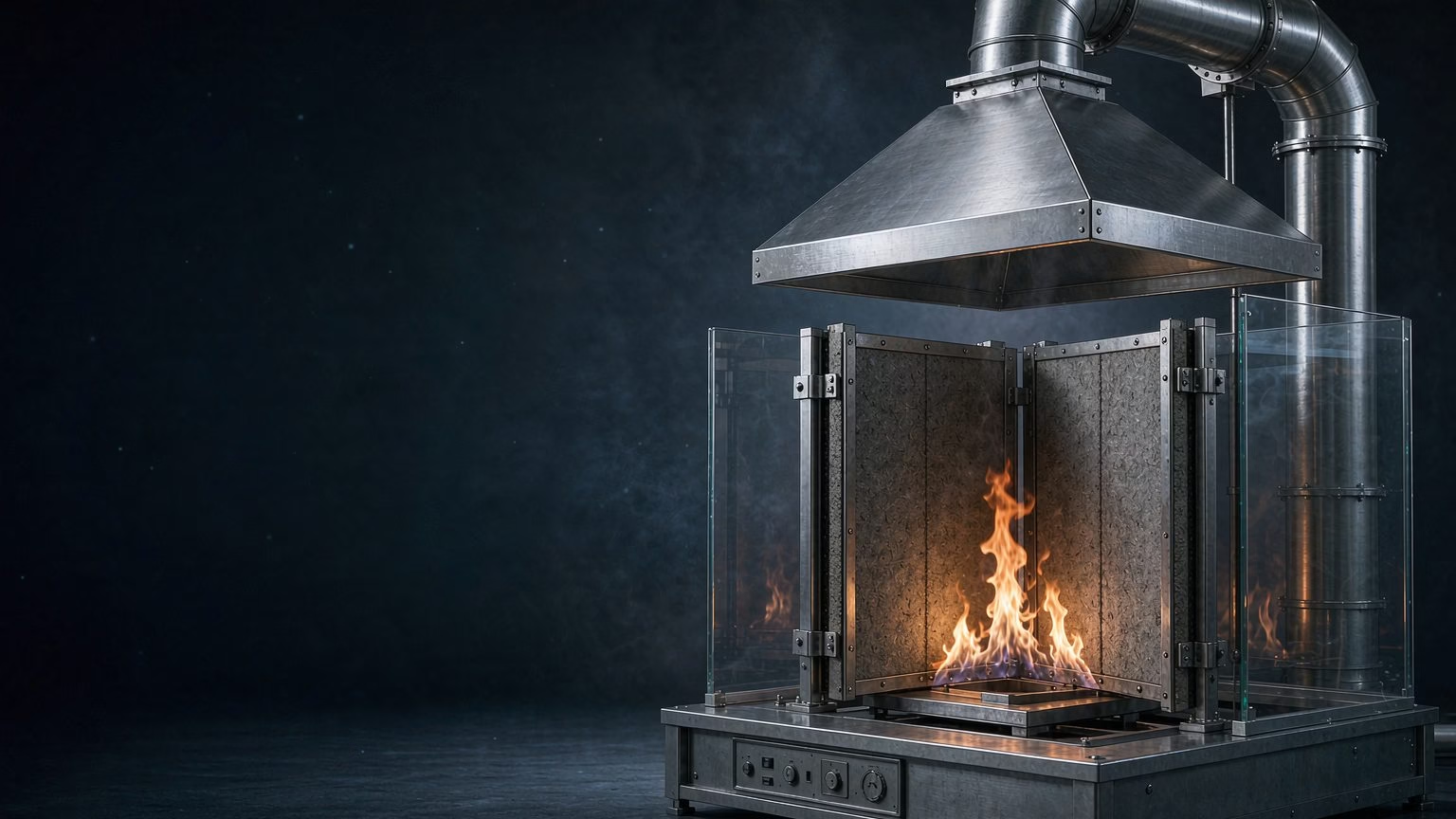
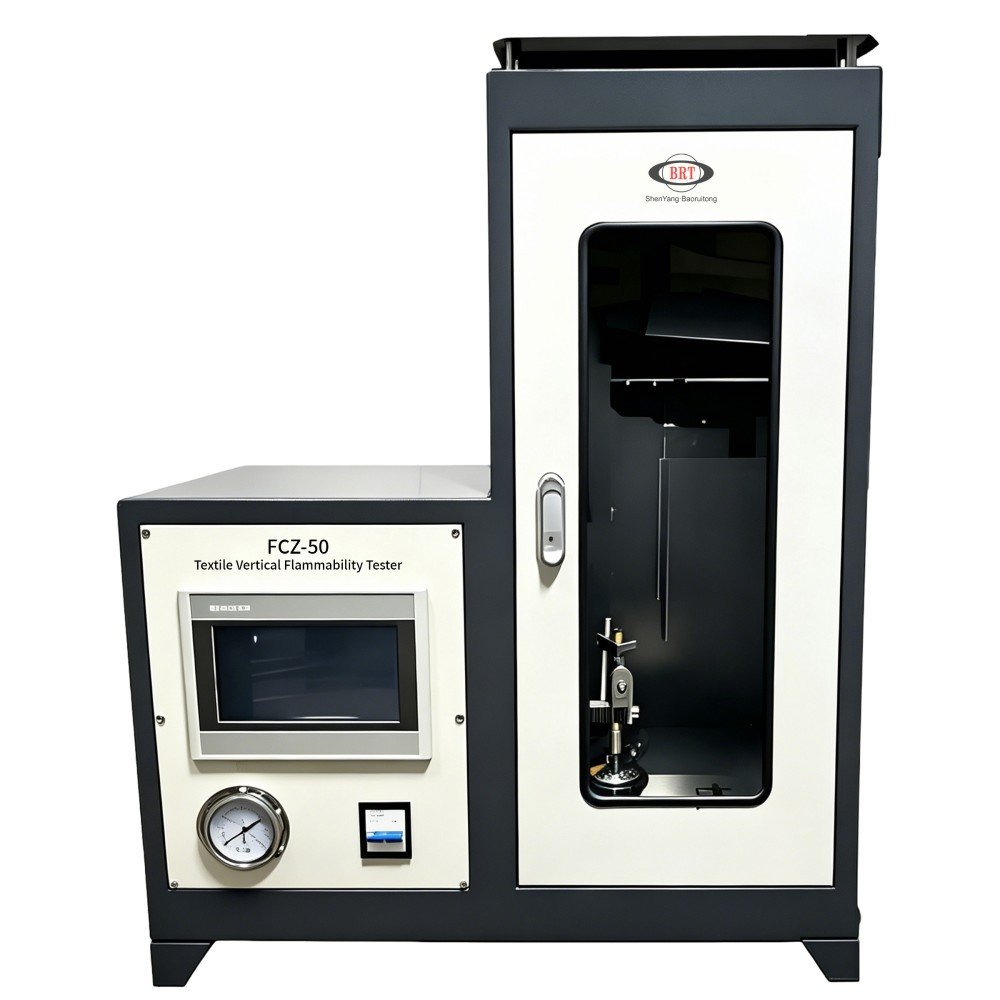
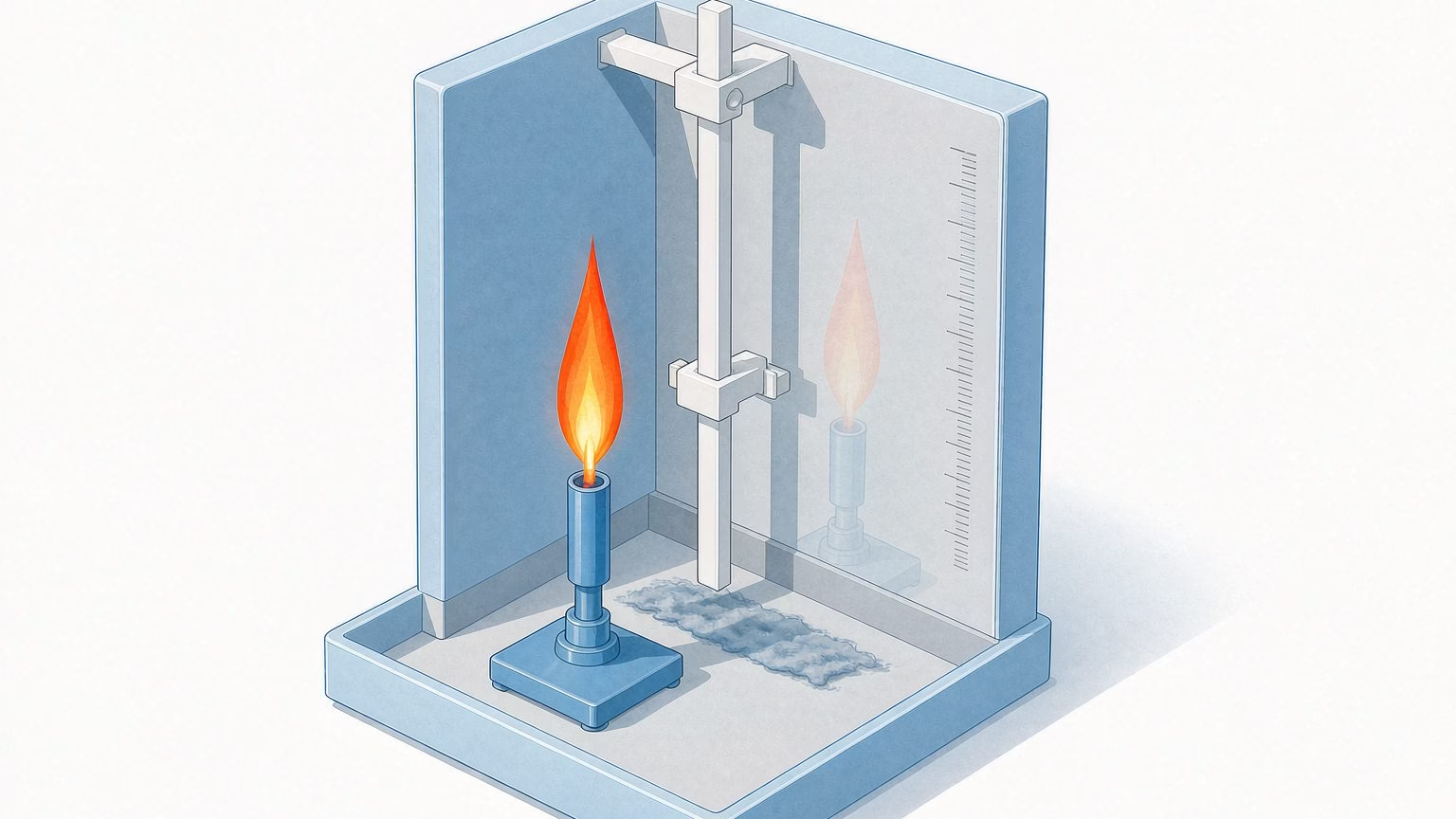
The two share apparatus in practice — the same vertical test cabinet, ignition flame and conditioning regime serve both, which is why a single textile vertical flammability tester covers the pair. What changes between them is the observation protocol and the reporting.
The Protective Clothing Chain
Workwear and firefighter-adjacent garments are not specified by ignition time alone; they use layered performance standards:
- ISO 15025:2016 provides the flame-spread procedures for protective clothing materials — procedure A (surface ignition) E procedure B (bottom-edge ignition) — on vertically oriented fabrics [3]. Which procedure the specification demands matters: edge ignition is the harsher exposure for many woven structures.
- NELL'ISO 14116:2015 sets limited flame spread requirements for clothing meant for occasional and brief flame contact. It grades fabrics into index levels (index 3 being the most demanding) by afterflame/afterglow behaviour, hole formation and flaming debris [4]. It is explicitly not a garment standard for continuous heat exposure.
- NELL'ISO 11612:2015 is the full garment-performance standard for heat and flame: the fabric passes flame spread (A1, and A2 where bottom-edge ignition is required), then code letters for convective heat (B), radiant heat (C), molten aluminium splash (D), molten iron splash (E) E contact heat (F) [5]. A garment label such as “A1 B1 C1” is a shorthand for separately measured fabric tests.
The chain matters commercially: a mill selling into workwear must test the same fabric at several points in this ladder, and a vertical flammability tester covering both ISO 15025 procedures and the ISO 6940/6941 exposures covers most of the primary spread-of-flame work.
Reading a workwear datasheet therefore means reading two separate documents: the fabric’s own test results and the garment standard’s code assignment. The codes are earned per property, so a fabric strong in radiant heat (C) can still carry a low convective (B) rating — the letters do not imply each other. Buyers matching garments to a hazard should map the hazard to the code letters first and only then compare fabric test reports against the required levels, rather than assuming a single number summarises the garment.
Apparel and Drapery: the US Methods
- ASTM D6413 — the vertical flame resistance test for textiles (the current document on the ASTM store lists no edition year on its title page; confirm the edition when ordering — 待确认) is the vertical burn used across industrial fabric specifications [6].
- ASTM D1230 — apparel textile flammability on an inclined specimen; the current edition is D1230-22 [7]. US apparel enforcement is the 16 CFR 1610 rule built around a 45-degree incline test with plain-surface and raised-surface fabric classes; raised-surface fabrics (pile, fleece) face the stricter criteria. The rule text sits on government channels that block automated access, so clause-level citations are left out here.
- NFPA 701 — flame propagation of textiles and films, the acceptance route for curtains, drapery and decorative materials in public occupancies, with small-scale and large-scale procedures 10.
These four do not interchange: D6413 is a vertical method, D1230/16 CFR 1610 is an incline method, e NFPA 701 is a drape-specific propagation test. A specification that just says “flammability tested” is not actionable until the method is named.
One practical note for buyers sourcing across markets: the same physical fabric can legitimately carry a US class, an ISO result and an NFPA 701 pass, each from its own test. None of them converts into another. When a customer requests “the European equivalent” of a US test, the honest answer is to run the ISO method on the same construction and conditioning — not to re-read the US number — and that is also the cheapest path, because a single conditioning batch feeds all of the methods.
Comparing Flame Retardant Textile Testing Methods at a Glance
| Method | Orientation | What it reports | Typical use |
|---|---|---|---|
| ISO 6940:2026 [1] | Vertical | Time to ignition / no ignition | Curtains, upholstery, industrial fabrics |
| ISO 6941:2026 [2] | Vertical | Flame spread times (marks) | Same families, spread requirement |
| ISO 15025:2016 [3] | Vertical (A surface / B edge) | Pass/fail per procedure | Protective clothing fabrics |
| NELL'ISO 14116:2015 [4] | Vertical | Limited flame spread index | Occasional-brief-contact workwear |
| NELL'ISO 11612:2015 [5] | Vertical + heat rigs | A/B/C/D/E/F codes | Full heat-and-flame garment standard |
| ASTM D6413 [6] | Vertical | Afterflame, char length | Industrial fabrics, US specs |
| ASTM D1230-22 [7] | 45° incline | Class result | Apparel textiles |
| NFPA 701 [10] | Vertical (small/large) | Propagation pass/fail | Drapery in public occupancies |
Screening Before Certification: the Oxygen Index
Limiting oxygen index (LOI) testing ranks fabrics by the minimum oxygen concentration that sustains burning — a quick, well-controlled screening number widely used in FR-fabric development. LOI correlates imperfectly with any spread-of-flame result, so it supports formulation work but does not replace ISO 6940/6941 or the clothing tests in an approval file. BRT Testing’s limiting oxygen index tester page describes the apparatus; the same instrument family serves polymers and textiles.
Building a Flame Retardant Textile Testing Plan
A testing plan that survives contact with a certification body fixes its variables in writing before the first specimen is cut. Flame retardant textile testing has more pre-test decisions than most material work, because fabric behaviour depends on construction, chemistry and history at the same time:
| Plan element | What to fix | Why it decides the result |
|---|---|---|
| Method and edition | Exact standard, part and year [1][2][3] | UN 2004 citation is a withdrawn document [8] |
| Construction state | Fabric as built: coating, lamination, quilting | A result belongs to the tested construction |
| Conditioning | Wash or cleaning cycles, drying, atmosphere | Treated fabrics lose protection with laundering |
| Orientation and exposure | Which face is exposed; surface vs edge ignition [3] | Asymmetric constructions fail from one side only |
| Specimen count and layout | Per-standard replicate rules | Statistics are fixed by the standard, not the schedule |
| Acceptance criteria | The pass line from the specification, not the lab’s habit | The lab measures; the specification decides |
What burn-test failures actually look like
Textile burn tests produce a short list of recurring failure patterns, and each one points at a different corrective action:
| Observation | Usual cause | Typical next step |
|---|---|---|
| Ignition at the standard exposure where none was expected | FR treatment absent or washed out | Verify conditioning history; re-treat or move to inherent fibre |
| Flame crosses the reference marks too quickly | Construction too open, or fibre chemistry unfavourable | Tighten construction, add FR finish, or re-specify |
| Afterflame persists after flame removal | Melt-drip or wicking behaviour in blends | Check for molten-drip contributions; adjust blend or backside |
| One face fails, the other passes | Asymmetric construction | Fix exposure direction in the specification |
| Results scatter widely between replicates | Conditioning or mounting inconsistency | Tighten conditioning and mounting procedure before retesting |
Equipping a Textile Flammability Bench
A bench that covers this method family needs less equipment than the standards list suggests, because several methods share hardware:
| Instrument | Methods served | Notes |
|---|---|---|
| Vertical flammability cabinet | ISO 6940/6941, ISO 15025 A/B, ASTM D6413 [1][2][3][6] | The workhorse; check flame application fixtures per method |
| Incline tester | ASTM D1230 / 16 CFR 1610 family [7] | Required for US apparel work |
| Oxygen index apparatus | LOI screening [as product page] | Development tool, not an approval test |
| Conditioning facilities | All methods | Wash cycles and standard atmospheres are part of the plan |
BRT Testing’s textile vertical flammability tester is built around the vertical family, and the general-purpose horizontal and vertical combustion tester covers mixed programmes that also include plastics or film specimens.
Domande frequenti
What is flame retardant textile testing in one sentence?
It is the family of standardised burn tests — ignition, flame spread, and heat-transfer measurements — used to qualify a fabric for a defined use and market, from ISO 6940/6941 vertical tests through clothing chains to the US apparel and drapery methods. The single most important rule is that the method, edition and conditioning are named before results are compared, because flame retardant textile testing results never transfer between methods.
What is the difference between ISO 6940 e ISO 6941?
ISO 6940 measures ease of ignition — how long a vertically oriented fabric resists a small defined flame before igniting. ISO 6941 measures flame spread — how quickly flame climbs the vertical specimen between reference marks. Many specifications call for both on the same fabric, because a fabric that resists ignition can still spread flame steadily once ignited.
Why did ISO 6940 e ISO 6941 change in 2026?
IL 2004 E 2003 editions were withdrawn on 13 May 2026 when the 2026 editions entered force, as part of ISO’s periodic review. The scope remains vertically oriented single- and multi-component fabrics under a small defined flame. Laboratories and suppliers should update report templates and datasheets to cite ISO 6940:2026 e ISO 6941:2026; citations of the old years reference withdrawn documents.
Which test applies to fire-resistant workwear?
Protective clothing fabrics follow ISO 15025 for flame spread (surface and bottom-edge ignition procedures), then the garment-chain standards: NELL'ISO 14116 for limited flame spread in occasional brief contact, e ENISO 11612 for full heat-and-flame performance with code letters for convective heat, radiant heat, molten metal splash and contact heat. The right entry point depends on the contact scenario the garment is certified for.
Does washing affect flame retardant textile testing?
SÌ, and it is part of the standard procedure. Treated (non-inherent) fabrics can lose protection with laundering, so specifications define how many cleaning cycles precede the burn test. A report that omits the conditioning history does not tell a buyer how the fabric performs in service. Inherent FR fibres are far less sensitive, which is why the fibre system should be stated alongside the test results.
Is ASTM D6413 the same as ISO 6941?
NO. Both apply a flame to a vertical fabric specimen, but they are separate documents with different specimen dimensions, flame application details and pass-fail conventions. D6413 reports afterflame time and char length in US industrial-fabric specifications; ISO 6941 reports flame spread times under ISO conditioning. Results are not interchangeable and specifications should name the exact standard and edition.
What is LOI testing used for in textiles?
Limiting oxygen index measures the minimum oxygen concentration in an oxygen-nitrogen atmosphere that sustains burning of the specimen. It is a cheap, repeatable screening number used heavily in FR-fabric and FR-fibre development to rank formulations. It does not replace vertical flame spread or clothing tests in approvals, because real fires involve radiative heating and construction effects LOI cannot capture.
Which standard covers curtains in public buildings?
For US occupancies, NFPA 701 is the standard acceptance test for drapery and decorative textiles and films, with small-scale and large-scale flame-propagation procedures. In markets using European methods, curtain fabrics are typically tested to ISO 6940/6941 and classified under the relevant product or building specification. Always confirm which system the local authority having jurisdiction expects before testing.
Conclusione: Un ordine decisionale
If you are setting up flame retardant textile testing for a laboratory or a product line, the order is fixed:
- Name the use case: apparel, workwear, drapery, industrial fabric.
- Name the market’s method: ISO 6940/6941:2026 for ignition and spread [1][2]; IL 15025 → 14116 → 11612 ladder for workwear [3][4][5]; D6413 / D1230 / 16 CFR 1610 / NFPA 701 for US-facing goods [6][7][10].
- Fix the conditioning (wash cycles) in the test plan before the first burn.
- Use LOI for development screening only, never as the approval test.
- Check every cited edition — 2026 was a heavy re-issue year for this family [1][2].
BRT Testing manufactures vertical flammability testers for the textile method family — start at the textile vertical flammability tester product page, or see the general-purpose horizontal and vertical combustion tester for mixed-fabric programmes. Contact us with your target standards and we will match the fixture set.
Informazioni sull'autore
Test BRT (Shenyang Baoruitong Automation Equipment) manufactures combustion and flammability test equipment, including textile vertical flammability testers, horizontal/vertical combustion cabinets and oxygen index apparatus. The content team writes for laboratory buyers in textiles, polymers and construction products, with standard editions verified against UNI and ASTM catalogue entries in November 2026.
Fonti
- DORMIRE – GRANDE 6940:2026 (Status CURRENT) — https://webstore.uni.com/en/iso-6940-2026
- DORMIRE – GRANDE 6941:2026 (Status CURRENT) — https://webstore.uni.com/en/iso-6941-2026
- DORMIRE – GRANDE 15025:2016 (Status CURRENT, 28 Nov 2016) — https://webstore.uni.com/en/iso-15025-2016
- SONNO: NON GRANDE 14116:2015 (Status CURRENT, 29 Jul 2015) — https://webstore.uni.com/en/en-iso-14116-2015
- SONNO: NON GRANDE 11612:2015 (Status CURRENT, 08 Jul 2015) — https://webstore.uni.com/en/en-iso-11612-2015
- ASTM International — D6413/D6413M, Flame Resistance of Textiles (Vertical Test) — https://store.astm.org/d6413.html
- ASTM International — D1230-22, Flammability of Apparel Textiles — https://store.astm.org/d1230-22.html
- DORMIRE – GRANDE 6940:2004 (Status WITHDRAWN AND REPLACED, 13 May 2026) — https://webstore.uni.com/en/iso-6940-2004
- DORMIRE – GRANDE 6941:2003 (Status WITHDRAWN AND REPLACED, 13 May 2026) — https://webstore.uni.com/en/iso-6941-2003
- NFPA — NFPA 701 standard development page — https://www.nfpa.org/codes-and-standards/nfpa-701-standard-development/701