- What UL 94 Flammability Testing Measures
- The HB Rating: Horizontal Burning
- The Vertical Ratings: V-0, V-1 and V-2
- How UL 94 Flammability Testing Is Performed
- UL 94 and Its International Equivalents
- Beyond UL 94: When a Rating Is Not Enough
- Common Mistakes in UL 94 Flammability Testing Programmes
- Frequently Asked Questions
- Next Steps
UL 94 flammability testing measures how a plastic behaves when a small flame is applied to it, and it reports that behaviour as a rating rather than a number. The two families most engineers meet are the horizontal HB rating and the three vertical ratings V-0, V-1 and V-2. They are not three grades of the same response: they are produced by different specimen orientations, different flame applications and different pass criteria, and the difference between V-1 and V-2 comes down to whether a falling drip sets cotton alight. This article sets out what each rating actually requires, using the criteria as published by UL Solutions, and shows where UL 94 stops and other fire tests must take over.
What UL 94 Flammability Testing Measures
UL 94 flammability testing is a small-scale, laboratory, material-level method. It does not rate a finished enclosure, a phone or a connector; it rates the plastic compound, at a specified thickness and colour, under laboratory conditions. That distinction explains most of the confusion in the field: a datasheet reading “V-0” is a statement about a material, and the finished part has to inherit it through the manufacturer’s own certification route.
The Three Specimen Geometries: Bar, Plate and Thin Film
UL Solutions groups its twelve UL 94 flame classifications by specimen form. Six ratings — 5VA, 5VB, V-0, V-1, V-2 and HB — apply to materials commonly used for enclosures, structural parts and insulators in consumer electronic products. Three — HF-1, HF-2 and HBF — apply to low-density foam used for speaker grilles and sound-damping material. The last three — VTM-0, VTM-1 and VTM-2 — apply to thin films that cannot support themselves horizontally, typically on flexible printed circuit boards 1.
The Twelve UL 94 Classifications
The twelve ratings are not interchangeable, and UL states this explicitly: a VTM-0 rating cannot be considered equivalent to V-0, because the test methods differ, and VTM-1 and VTM-2 are not equivalent to V-1 and V-2 either [1]. The safest habit is to read the rating together with the thickness and the colour it was granted for.
The HB Rating: Horizontal Burning
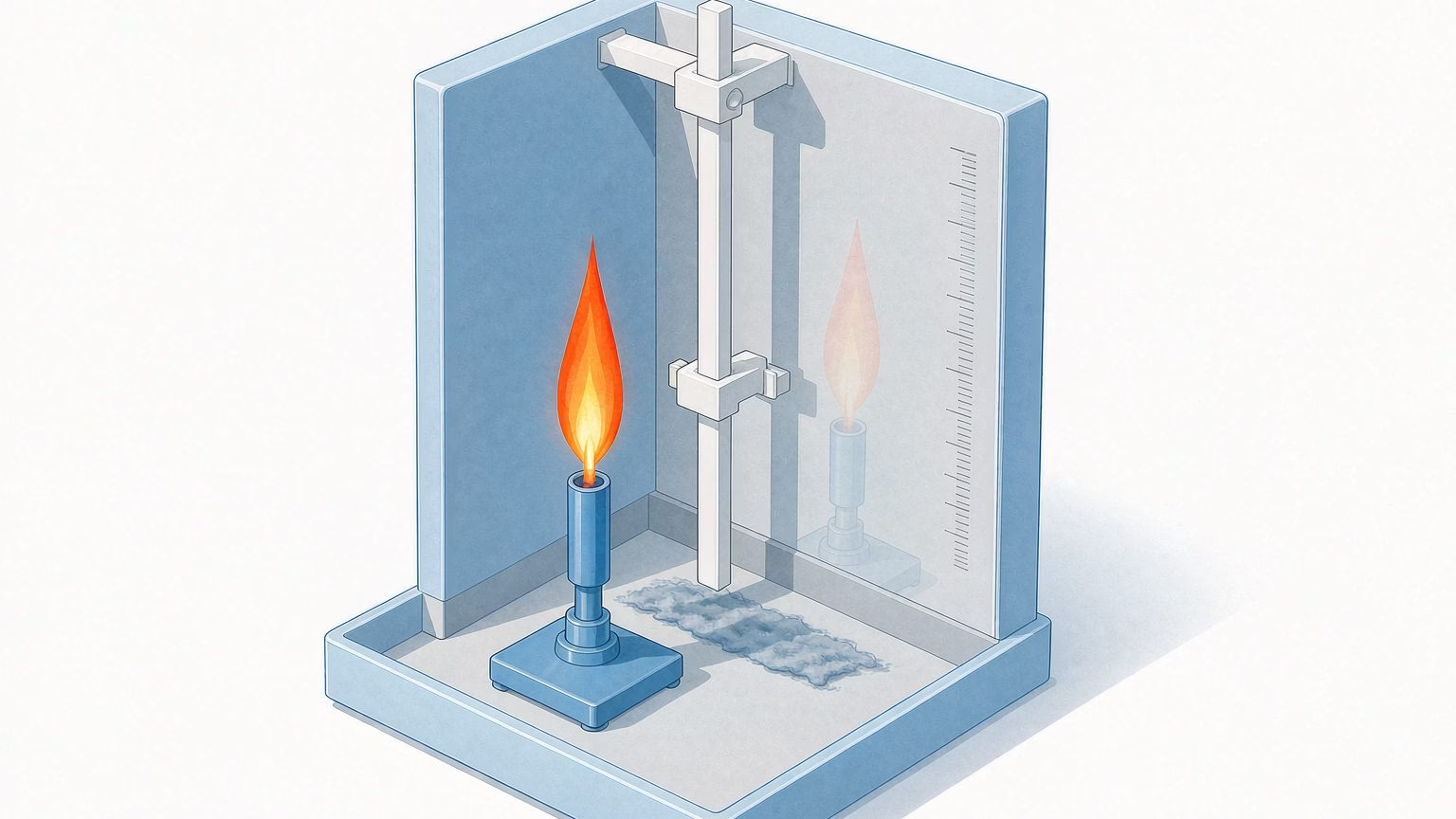
Within UL 94 flammability testing, HB is the entry rating and it works differently from the vertical family. The specimen is held horizontally, the flame is applied once for 30 seconds, and the question is how fast the flame front travels along the bar — not whether the material self-extinguishes 2. An HB rating therefore means “burns at a rate below the limit”, which is why it sits at the bottom of the ladder and why it is often the rating a moulder holds before investing in a flame-retardant compound.
How HB Is Judged: Burn Rate, Not Extinguishing
The pass criteria are expressed as a maximum burning rate that depends on specimen thickness, with a third route for specimens that never reach the first mark. A specimen that stops burning before the first mark is recorded at a burning rate of zero and passes.
| Specimen thickness | Burning rate for an HB rating |
|---|---|
| 3–13 mm | ≤ 40 mm/min |
| Less than 3 mm | ≤ 75 mm/min |
| Flame extinguished before the first mark | 0 mm/min |
The single flame application of 30 seconds, and the practice of discontinuing the application if the flame front reaches the first mark sooner, both come from the published HB test criteria [2].
The Vertical Ratings: V-0, V-1 and V-2
Most specifications that call for UL 94 flammability testing want the vertical test. The specimen is clamped vertically, a 20 mm flame from a 50 W source is applied twice for 10 seconds, and the second application begins as soon as the first burning period ends [2]. Between and after the applications, the laboratory records three things: how long the specimen keeps burning, how long it continues to glow after the flame is removed, and whether anything drips off it.
How V-0, V-1 and V-2 Are Judged
The criteria are numeric and cumulative across five specimens subjected to two flame applications each — ten applications in total. V-0 is the tightest of the three, and the difference between V-0 and V-1 is a factor of five on both the individual and the total burning time.
| Criterion | V-0 | V-1 | V-2 |
|---|---|---|---|
| Burning time of each individual specimen, after the first and second flame applications (s) | ≤ 10 | ≤ 30 | ≤ 30 |
| Total burning time across ten flame applications (s) | ≤ 50 | ≤ 250 | ≤ 250 |
| Burning and afterglow time after the second flame application (s) | ≤ 30 | ≤ 60 | ≤ 60 |
| Dripping of burning specimens that ignites cotton batting | No | No | Yes |
| Combustion up to the holding clamp | No | No | No |
Why the Cotton Pad Separates V-1 from V-2
V-1 and V-2 share identical time limits. The only difference is the cotton indicator below the specimen: for V-2 a dripping specimen is permitted to ignite the cotton; for V-1 it is not [1][2]. So the two ratings describe the same burning behaviour but a different dripping hazard, and a design that cannot tolerate a falling, burning drip should not accept V-2. This is the most misread row in the rating table.
What Thickness the Rating Actually Applies To
A UL 94 rating is granted at a tested thickness, not for the material in general. Because thickness and colour additives measurably affect the result 3, the rating that matters is the one granted at the thickness the part will actually be moulded at. A material certified V-0 at 1.5 mm is not automatically V-0 at 0.8 mm; the thin-wall rating has to exist in its own right.
How UL 94 Flammability Testing Is Performed
Conditioning comes before the flame. For the HB test the specimen is pre-treated for 48 hours at 23 °C at controlled relative humidity; for the vertical, 5V, VTM and HBF tests the pre-treatment is two days at 23 °C and 50 % relative humidity followed by seven days in a 70 °C hot-air oven [2]. That second step is often overlooked by teams who have only read a summary table, and it matters: it drives off volatiles and can change the result on the same compound.
The flame itself is defined. HB uses a 20 mm high Tirrill burner flame applied for 30 seconds. The vertical test uses a 20 mm flame from a 50 W source applied twice for 10 seconds. The 5V test is a different order of severity — a 500 W flame, 125 mm high, applied up to five times — and it is only available to materials that have already been classified V-0 or V-1 4.
| Test | Flame power and height | Flame applications | Ratings produced | Distinguishing criterion |
|---|---|---|---|---|
| HB (horizontal) | 20 mm Tirrill burner flame, 30 s | One | HB | Burning rate ≤ 40 mm/min at 3–13 mm, ≤ 75 mm/min below 3 mm |
| V (vertical, 50 W) | 20 mm | Two, 10 s each | V-0, V-1, V-2 | Burn-time limits plus cotton ignition permitted only for V-2 |
| 5V (vertical, 500 W) | 125 mm | Up to five | 5VA, 5VB | Hole formation permitted for 5VB only |
| VTM (vertical thin film) | 20 mm | Two, 3 s each | VTM-0, VTM-1, VTM-2 | Thin film; a pass in the UL 94 V test is a precondition of all VTM ratings |
| HBF (horizontal foam) | 38 mm, 60 s | One | HF-1, HF-2, HBF | Foam; rating takes calculated density into account |
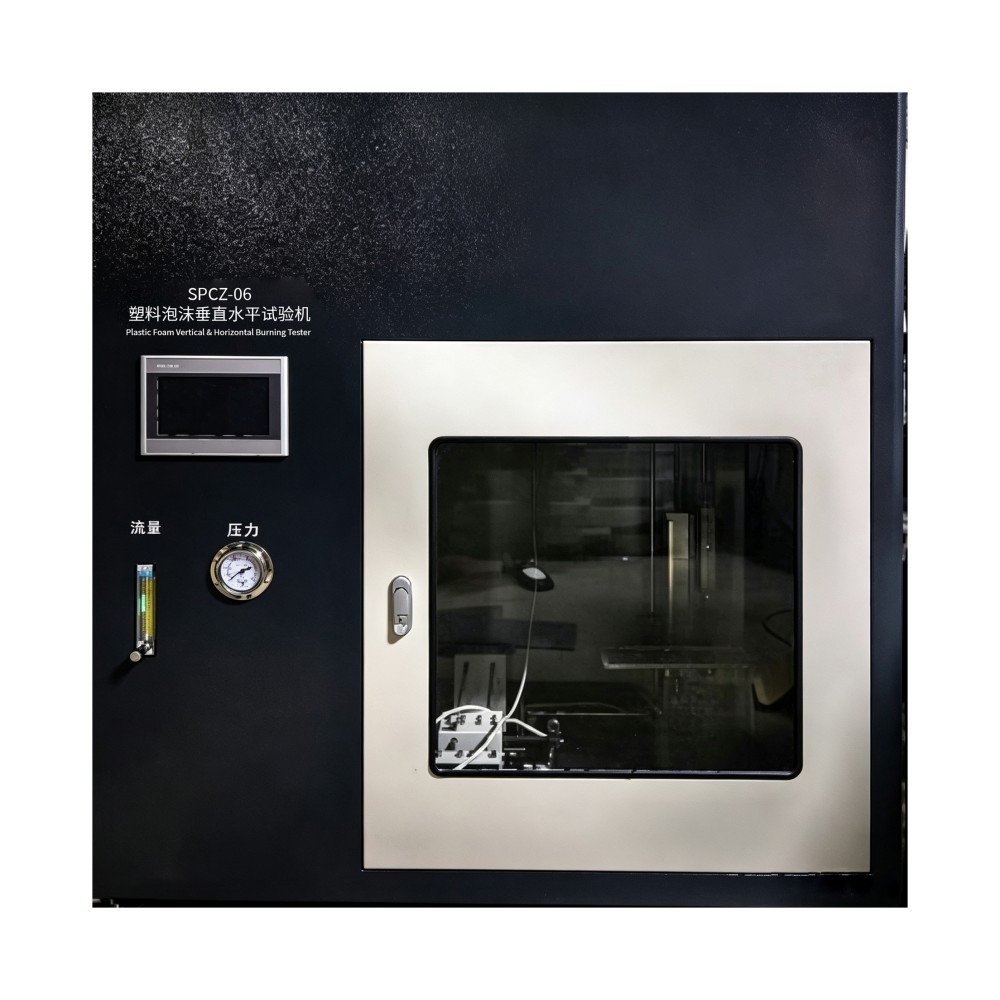
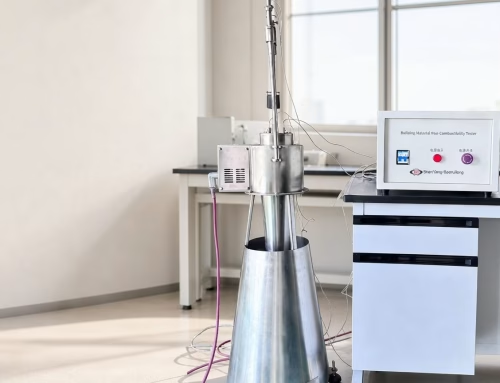
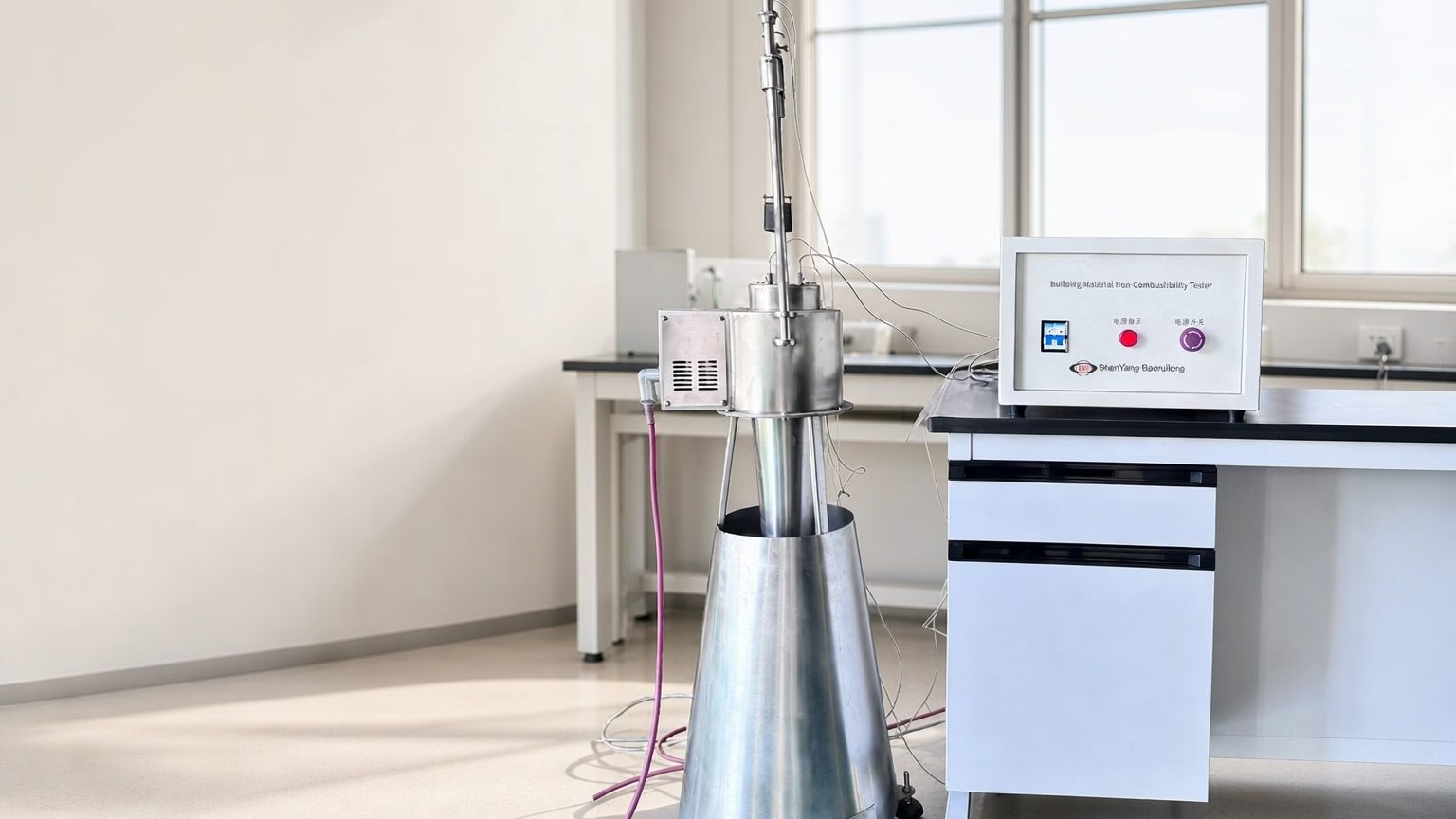
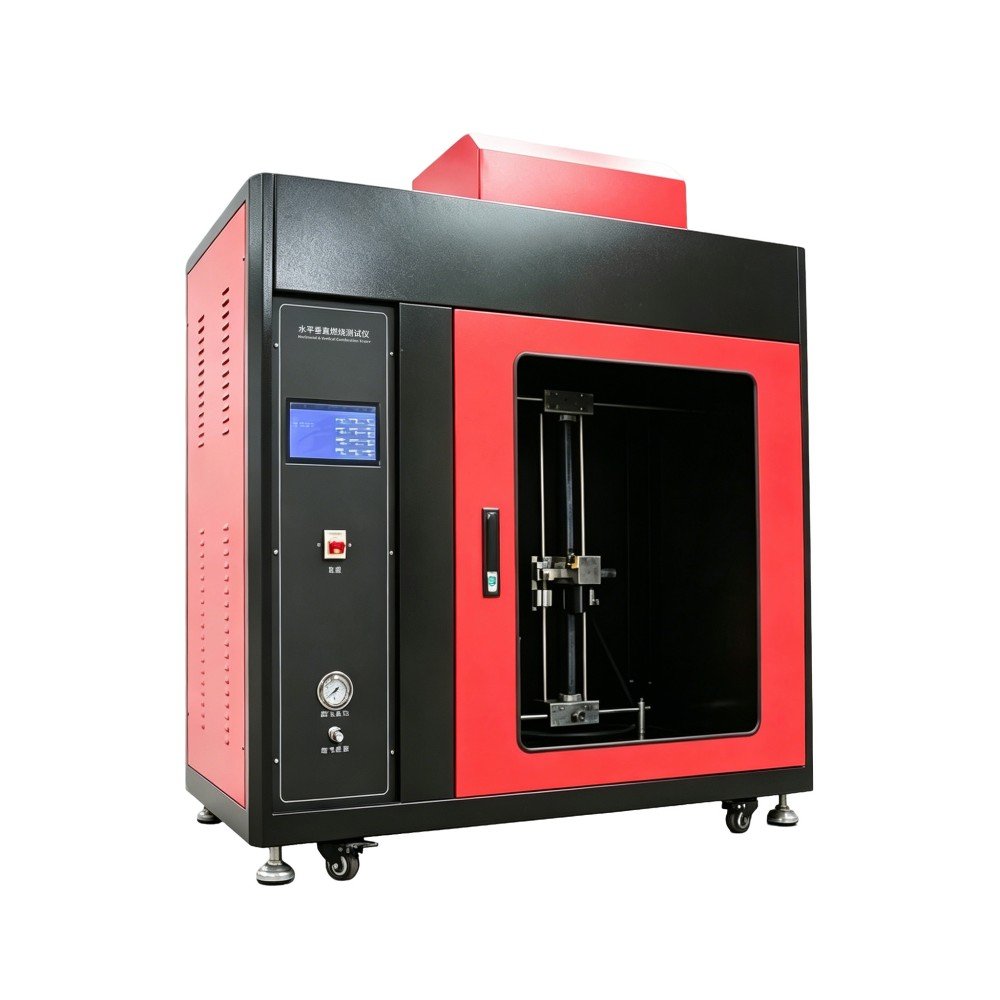
The instrumentation carries the result. Because the outcome depends on timing to the second and on whether a drip ignites a cotton pad, the test rig has to control flame height, application duration, and the geometry of the specimen relative to the burner and the cotton. That is what a purpose-built combustion tester provides: our SPCZ-05 horizontal and vertical combustion tester is built to UL 94, IEC 60695-11-10 and GB/T 2408-2021 with a 50 W burner per IEC 60695-11-4, motorised four-way specimen positioning and automatic gas shut-off, and it records afterflame time, afterglow time and dripping behaviour as separate outputs. For foam materials the geometry and burner change, so the HF-1, HF-2 and HBF ratings run on a different rig — our SPCZ-06 plastic foam vertical and horizontal burning tester covers UL 94 HBF, HF-1 and HF-2 alongside ISO 9772 and ASTM D4986.
UL 94 and Its International Equivalents
UL 94 is not the only route to the same information, and procurement documents often accept several. Knowing which method is genuinely equivalent prevents both over-testing and a false sense of compliance.
IEC 60695-11-10, ASTM D3801 and ASTM D635
IEC 60695-11-10 describes two small-scale procedures for bar specimens. Method A is a horizontal burning test determining linear burning rate; Method B is a vertical burning test determining self-extinguishing behaviour. Both use a nominal 50 W flame and are limited to solid and cellular materials with an apparent density above 250 kg/m³ 5. The 2013 second edition added specimen dimension detail, cotton-pad conditioning, and an explicit clause for specimens that burn to the holding clamp [5]. On the ASTM side, D3801 uses a 20 mm, 50 W premixed flame on vertically held specimens and states in its scope that it is equivalent to the UL 94 V-0, V-1 and V-2 test and to Method B of IEC 60695-11-10 6. D635 covers the horizontal case 7. One detail worth flagging in supplier documentation: ASTM notes that IEC 60695-11-10 has replaced ISO 1210, so a datasheet citing ISO 1210 as its basis is working from a superseded reference [6].
For the European route to a surface-spread reaction-to-fire classification, the equivalent small-flame method is EN ISO 11925-2, which we cover separately in our guide to the single-flame source test, and the wider regional picture is set out in our survey of global building material fire testing standards.
Beyond UL 94: When a Rating Is Not Enough
A UL 94 flammability testing result answers a narrow question: how does a small specimen respond to a small flame? It deliberately excludes several fire properties a design team may actually need. ASTM states this in the scope of D3801 — the test does not evaluate fire resistance as an hourly rating, flame spread, smoke characterisation or heat release rate, and it does not cover plastics used for building construction or finishing [6].
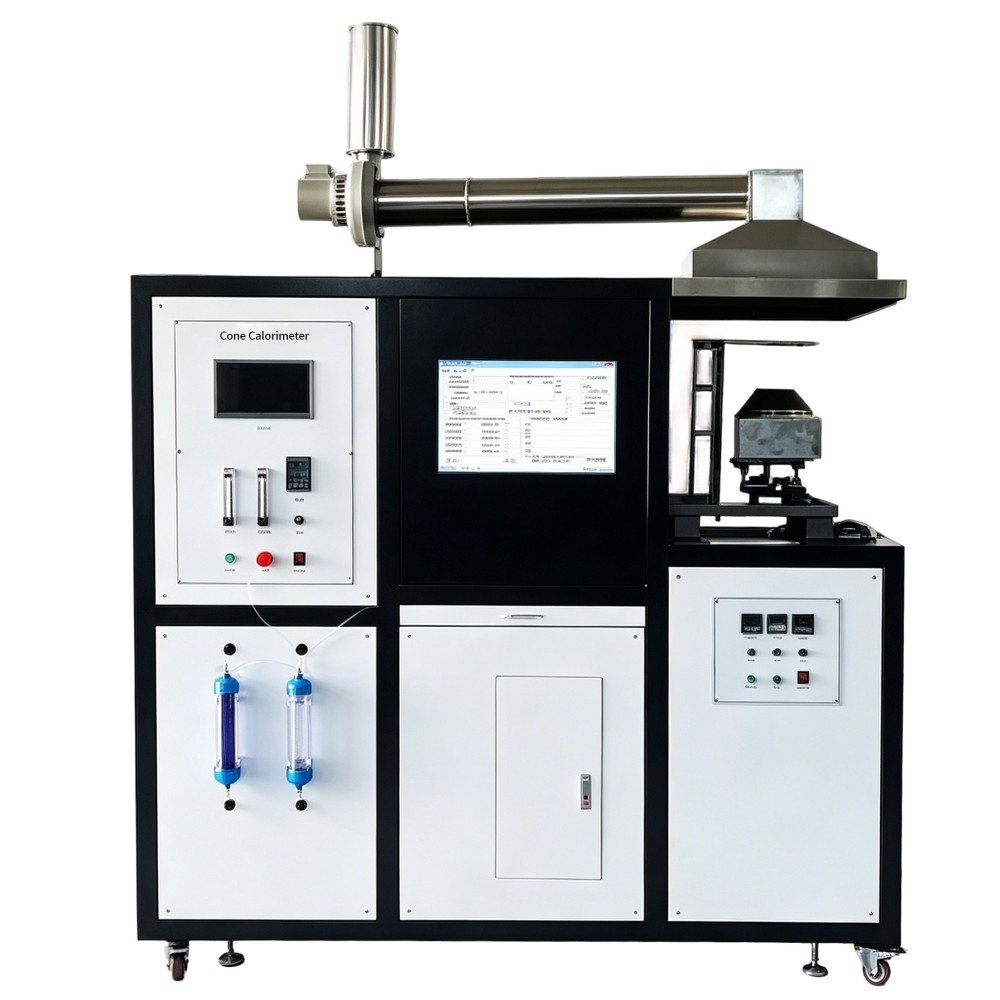
Where those properties matter, other methods take over. Heat release rate comes from the cone calorimeter, which applies a controlled radiant flux and quantifies the rate and total of heat released rather than the time to extinguish; our ZXLR cone calorimeter covers ISO 5660-1 and ASTM E1354 8, explained further in our guide to the cone calorimeter and heat release rate. Ignition resistance is measured by the limiting oxygen index, with our JYZS-10 oxygen index tester built to ISO 4589-1/-2 and ASTM D2863. Where the material is paper, board, textile or cable rather than a moulding, the geometry changes again — see the ZBY combustion tester for flame-retardant paper and board and the FCZ-50 textile vertical flammability tester.
Common Mistakes in UL 94 Flammability Testing Programmes
Five errors account for most wasted test runs and most rejected submissions.
| Common mistake | Why it costs you |
|---|---|
| Treating V-0 as the universal target | Specifying V-0 where V-2 would serve forces a more heavily filled compound, which usually costs impact strength and processability |
| Quoting a rating without thickness and colour | The rating is granted for the tested condition, so checking only the letters on a datasheet verifies nothing |
| Treating VTM and V ratings as interchangeable | UL states that they are not equivalent [1], so thin films need their own rating |
| Skipping the oven conditioning | Two days at 23 °C and 50 % RH plus seven days at 70 °C is part of the method for the vertical family [2] |
| Expecting UL 94 to prove fire performance | It does not measure heat release, flame spread or smoke [6], so those applications need a second test |
Keeping the material-level scope of UL 94 flammability testing in view resolves most of these before a specimen is ever moulded.
Frequently Asked Questions
What is UL 94 flammability testing?
UL 94 flammability testing is a small-scale laboratory method that subjects plastic specimens to a defined flame and assigns one of twelve ratings based on the measured burning behaviour. Six ratings — 5VA, 5VB, V-0, V-1, V-2 and HB — apply to materials used for enclosures, structural parts and insulators. It is a material-level test, so it characterises a compound at a stated thickness and colour rather than a finished product.
What is the difference between V-0, V-1 and V-2?
All three come from the same vertical test, with a 20 mm flame applied twice for 10 seconds. The difference is the pass limits and the drip behaviour. V-0 permits no more than 10 seconds of burning per specimen and 50 seconds in total; V-1 and V-2 permit 30 seconds per specimen and 250 seconds in total. V-2 additionally allows a dripping specimen to ignite the cotton placed below it, which V-1 does not.
Is HB better or worse than V-0?
HB sits below the vertical ratings. It is produced by a horizontal test in which the flame is applied once for 30 seconds, and it only requires the flame front to travel slower than a specified maximum rate — 40 mm/min for specimens 3 mm to 13 mm thick, and 75 mm/min below 3 mm. V-0 requires the specimen to self-extinguish within tight time limits, which is a materially harder requirement.
Is UL 94 flammability testing the same as IEC 60695-11-10?
They describe equivalent procedures, not identical documents. IEC 60695-11-10 Method B, the vertical burning test, corresponds to the UL 94 V test, and Method A corresponds to the horizontal case. ASTM D3801 states in its scope that it is equivalent both to the UL 94 V-0, V-1 and V-2 test and to Method B of IEC 60695-11-10. Procurement documents should still name the edition, because the editions have been revised separately.
How long does a UL 94 test take?
The flame exposure is short — 30 seconds for the horizontal test and two 10-second applications for the vertical test. The elapsed time is dominated by conditioning, which is 48 hours at 23 °C for the horizontal test and two days at 23 °C and 50 % relative humidity plus seven days at 70 °C for the vertical, 5V, VTM and HBF tests. Sample preparation and specimen moulding usually add more time than the test itself.
Does a UL 94 rating expire?
The rating applies to the material as certified at a given thickness and colour, so it does not lapse on a fixed date in the way a calibration does. What does change is the basis: the standard is revised, the compound formulation may change, and a new thickness needs its own rating. Suppliers should be asked for the rating at the thickness in use, not just the rating letter.
Can UL 94 replace a fire resistance test?
No. UL 94 evaluates a small specimen’s response to a small flame, and it explicitly does not measure fire resistance as an hourly rating, flame spread, smoke production or heat release rate. A wall, floor, door or cable that must hold a separating or circuit-integrity function needs a fire resistance test to ISO 834-1, EN 1363-1 or IEC 60331 instead.
Next Steps
If you are planning UL 94 flammability testing work, settle these six points in order:
- Fix the requirement first from the end product, then pick the rating that satisfies it rather than defaulting to V-0.
- Name the thickness and colour the rating must cover, and check that the certification exists at that condition.
- Confirm the equivalent method your market accepts — UL 94, IEC 60695-11-10 or ASTM D3801 and D635 — and the edition in force.
- Match the rig to the specimen form: bar specimens for HB and V, plate specimens for 5V, and the foam or film geometry where those ratings apply.
- Plan the conditioning time into the project schedule; the oven step alone is seven days.
- Identify the second test you need for the properties UL 94 does not cover, whether that is heat release rate, smoke density or fire resistance.
If you would like help mapping a material and a target rating to the right apparatus, tell us what you are testing and we will walk the criteria through with you. You can also browse the full fire and flame testing equipment range to compare configurations side by side.
About the author. This article was prepared by the application engineering team at Shenyang Baoruitong Automation Equipment Co., Ltd. (BRT Testing), which manufactures combustion testers, cone calorimeters, oxygen index apparatus, fire resistance furnaces and analytical instruments for laboratories worldwide. We build the apparatus that runs these methods, so we work with the criteria directly — but we are not a certification body, and a UL 94 rating is only valid when issued through the appropriate certification route.
Test criteria and standard editions are revised on their own schedule. The figures in this article reflect the criteria published by UL Solutions and the standard editions verified at the time of writing; confirm the current editions before quoting a rating in a specification.