Fire resistance measures how long an assembly keeps a fire on one side of it; flame retardancy measures how a material behaves once it is ignited. The first is a time rating produced by a furnace test on a full construction — a wall, a floor, a door, a column with its protection. The second is a performance description produced by igniting a small specimen with a defined flame and watching what happens. One is governed by fire-resistance classification standards such as EN 13501-2, the other by reaction-to-fire standards such as EN 13501-1 or by product-level flammability tests such as UL 94. They are not grades of the same property, and neither implies the other. Confusing them is one of the most common — and most expensive — errors in a fire specification.
Why the Two Terms Get Confused
Both words appear in the same sentence of most product datasheets, both are usually written as an abbreviation, and both sound like “this product does not burn”. That is where the resemblance ends. Fire resistance is a property of a system under load and time; flame retardancy is a property of a material under a defined ignition source 1. A mineral wool batt and a steel door can both carry an “A” or an “FR” prefix in marketing copy while being assessed by completely unrelated methods.
The confusion also has a commercial cause. Flame retardancy is cheap to test on a small specimen and can be claimed early in development, so it reaches the datasheet years before a full-scale rating exists; buyers then read the only number available. Put plainly, fire resistance vs flame retardancy is a comparison of two different questions, not two grades of one property.
Fire Resistance: A Time-Based Property of an Assembly
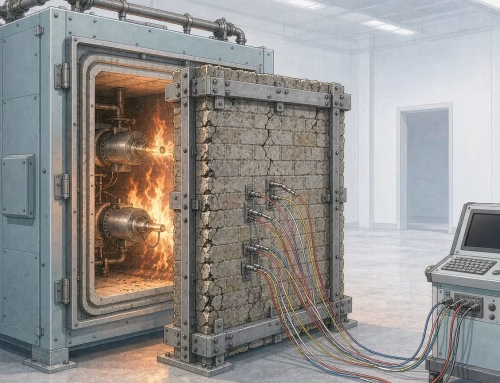
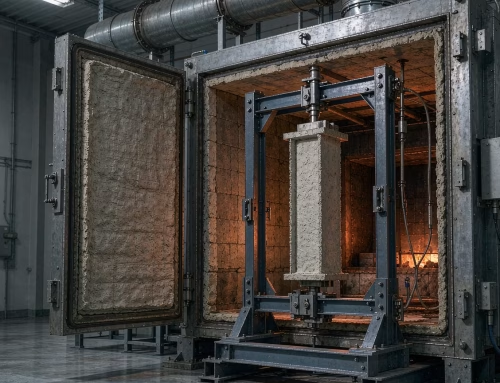
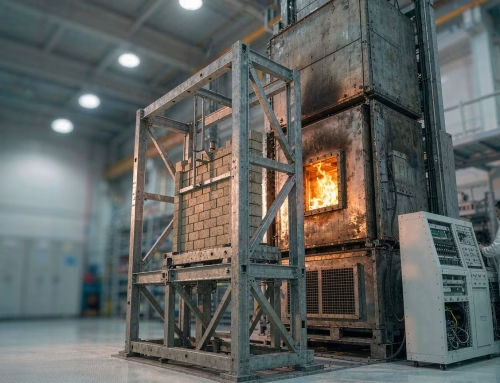
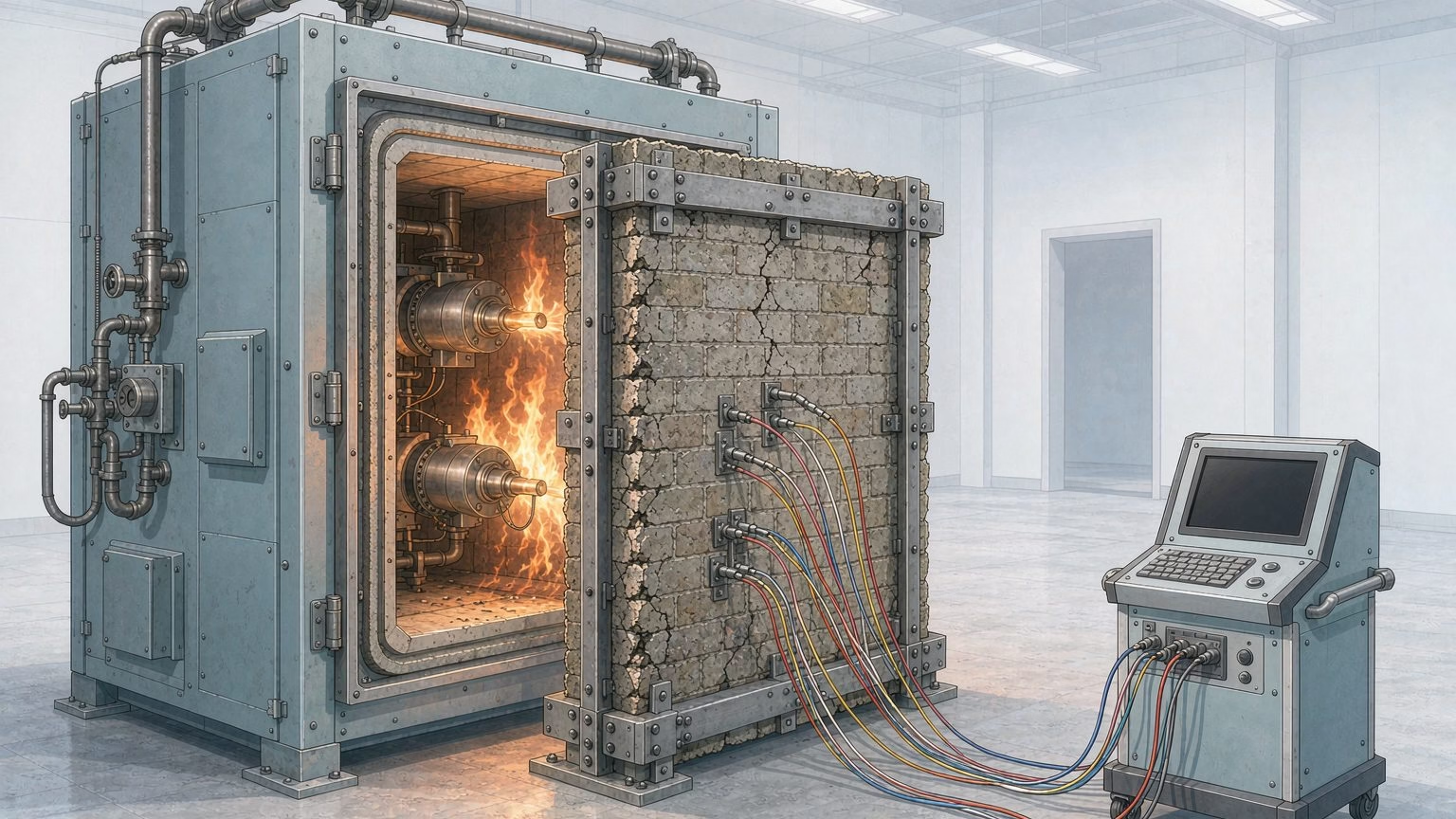
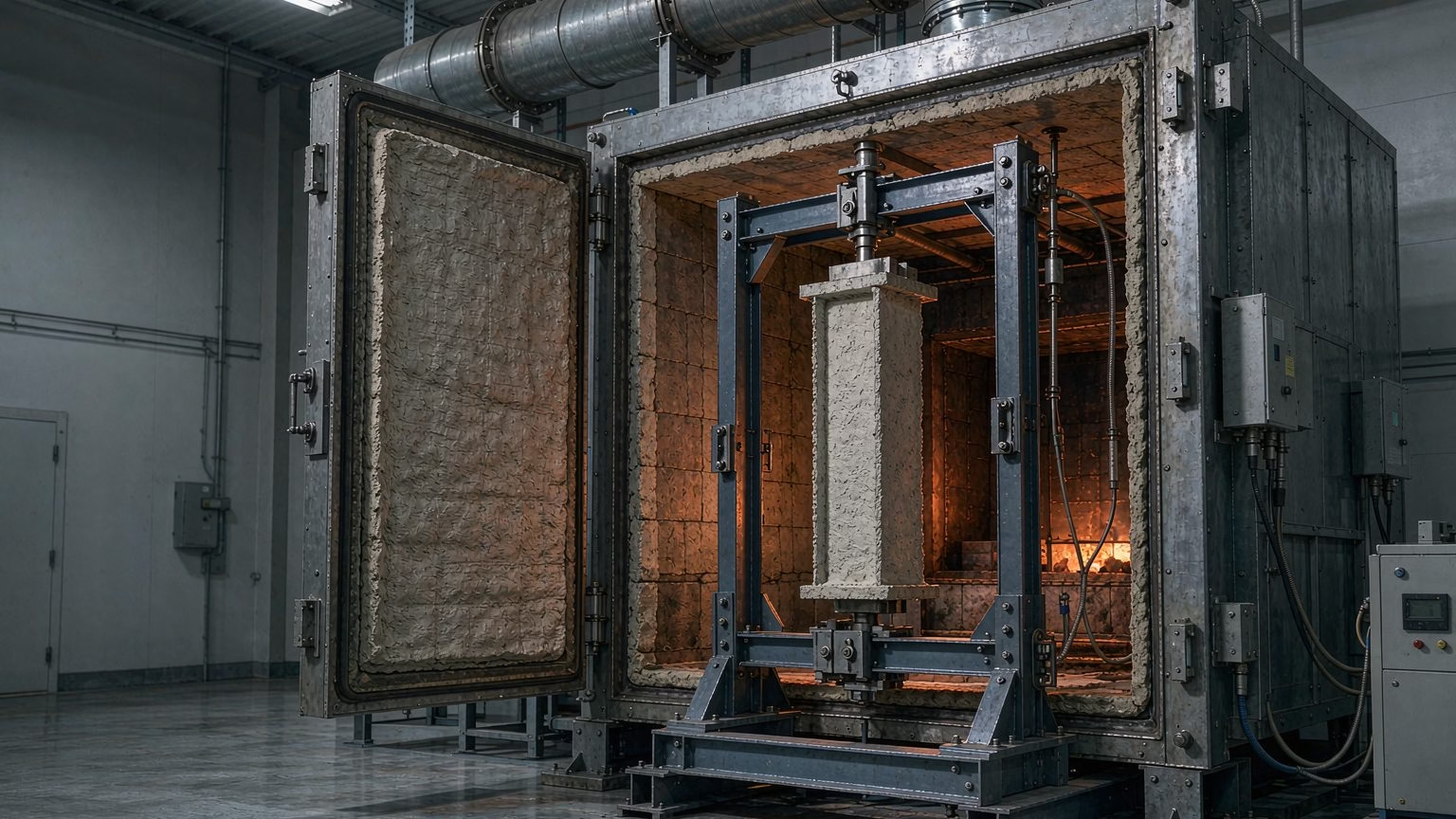
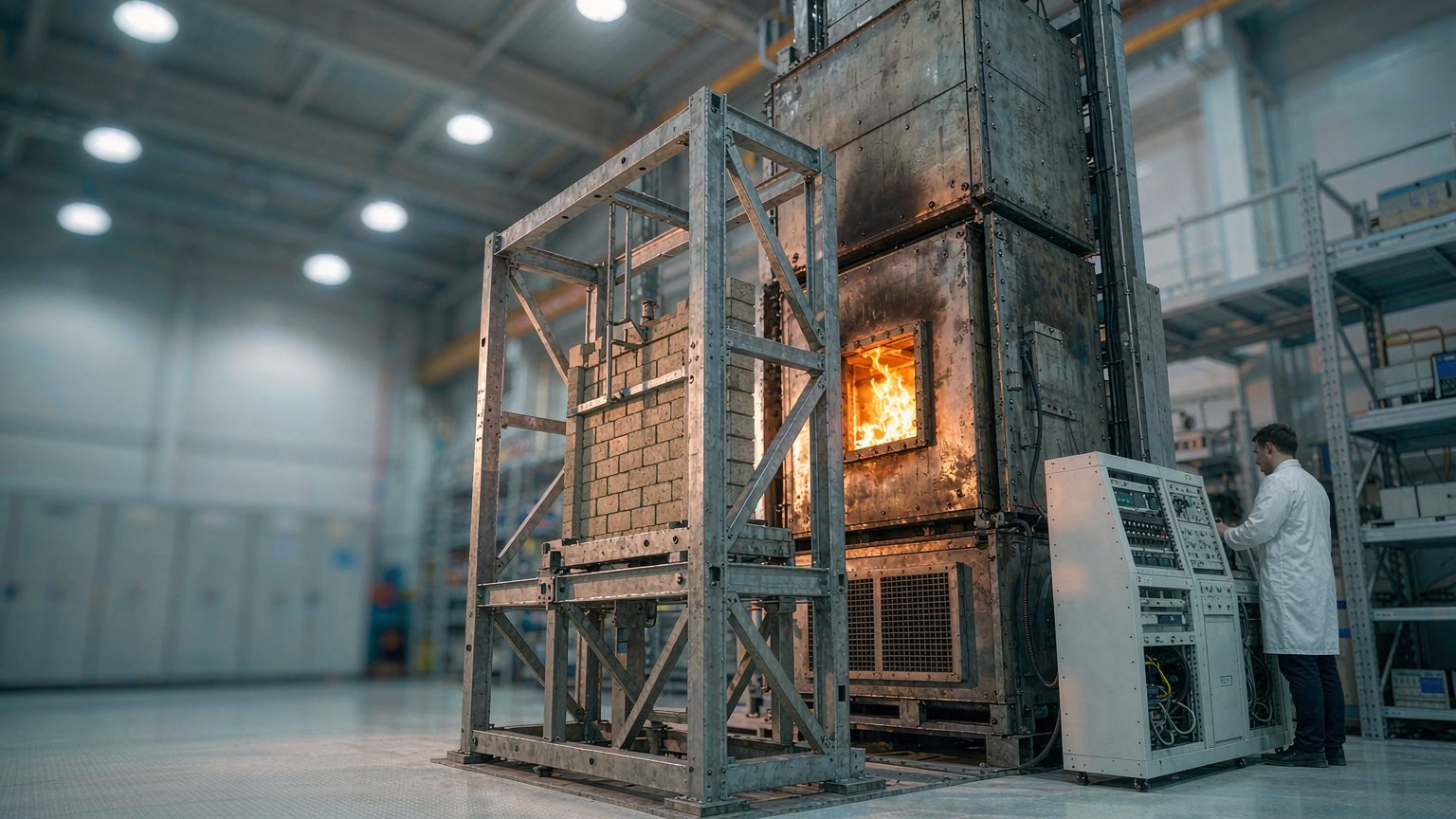
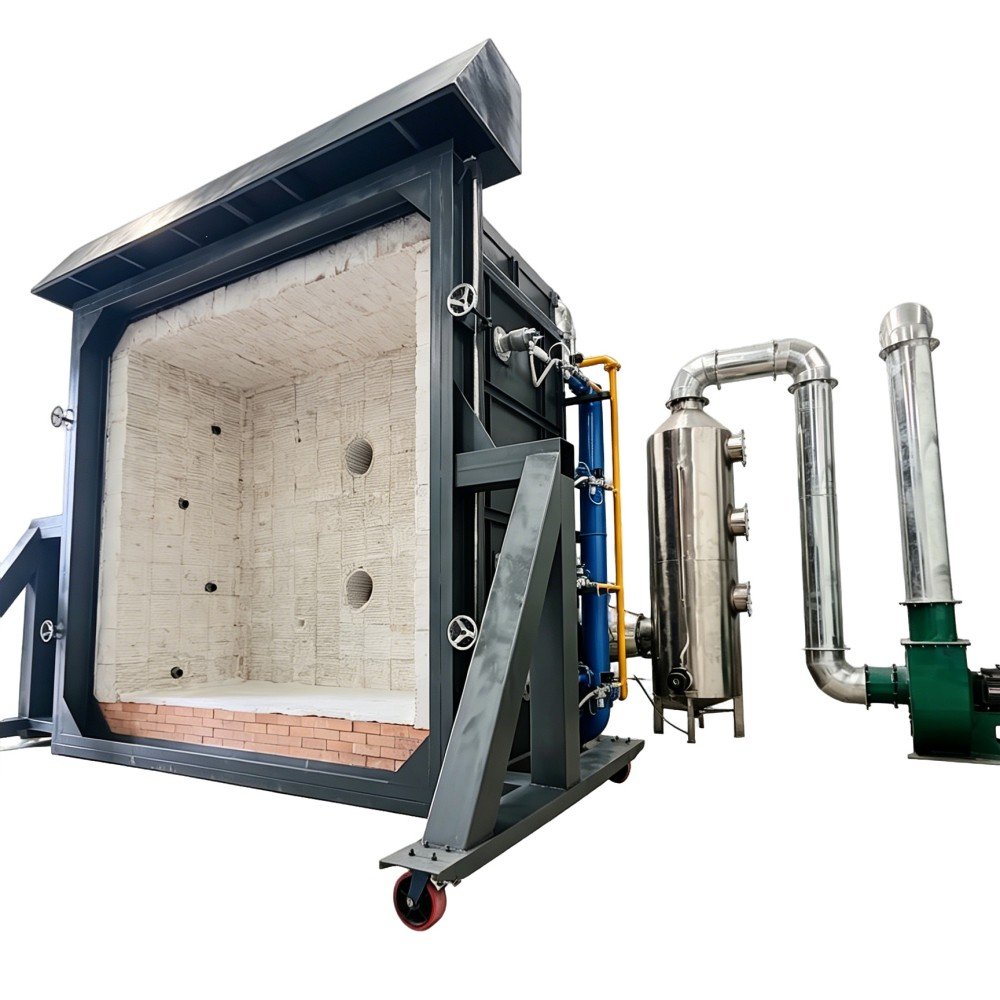
A fire-resistance test places a loaded or restrained construction in a furnace, follows a standard time-temperature curve, and records how long the construction keeps performing its separating or loadbearing function. The furnace curve is defined in EN 1363-1 and ISO 834-1, and the same heating regime — a cellulosic curve reaching roughly 1,000 °C within about an hour — underpins the American equivalent, ASTM E119 567. The output is a duration in minutes, not a pass or fail.
What the R, E and I Criteria Actually Mean
Fire resistance is reported as a set of criteria, each with its own endurance. R is loadbearing capacity: the element still carries its design load. E is integrity: no flames or hot gases pass to the unexposed side, judged by the cotton-wool pad and gap gauge. I is insulation: the average temperature rise on the unexposed face stays within the limits set by the standard. A result is always written as a combination, for example R 90 or EI 120, because a partition that holds its integrity for two hours may lose insulation after ninety minutes 4.
Other letters exist — radiation (W), mechanical action on walls (M), self-closing (C), smoke leakage (S) — and they matter in doors, facades and service shafts. The point is structural: a fire-resistance classification is a statement about which function survived for how long.
Why Fire Resistance Is Always a System Result
You cannot rate a material for fire resistance. You rate a construction. A 100 mm mineral wool layer has no fire-resistance rating on its own; the same layer inside a stud wall, with a defined board, fixing pattern and joint treatment, may achieve EI 120. Change the stud spacing or the screw type and the rating can drop, which is why fire-resistance reports always carry a field-of-application document describing what may be varied without a new test [5]. Our walk-through of the fire resistance test procedure shows how much of the work happens before the furnace is lit.
Flame Retardancy: A Material Property Under a Defined Ignition Source
Flame retardancy describes how a material responds to ignition: whether it ignites, how long it keeps burning after the flame is removed, whether it drips, and how much heat it releases. It is measured by reaction-to-fire tests, and the answer is only meaningful together with the ignition scenario used. A polymer that passes a 20 mm laboratory flame at 15 seconds of exposure is not thereby proven to survive a room fire; it is proven to behave in a defined way in a defined test.
What the Small-Scale Tests Really Measure
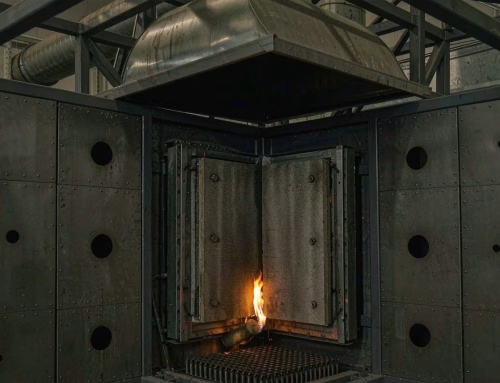
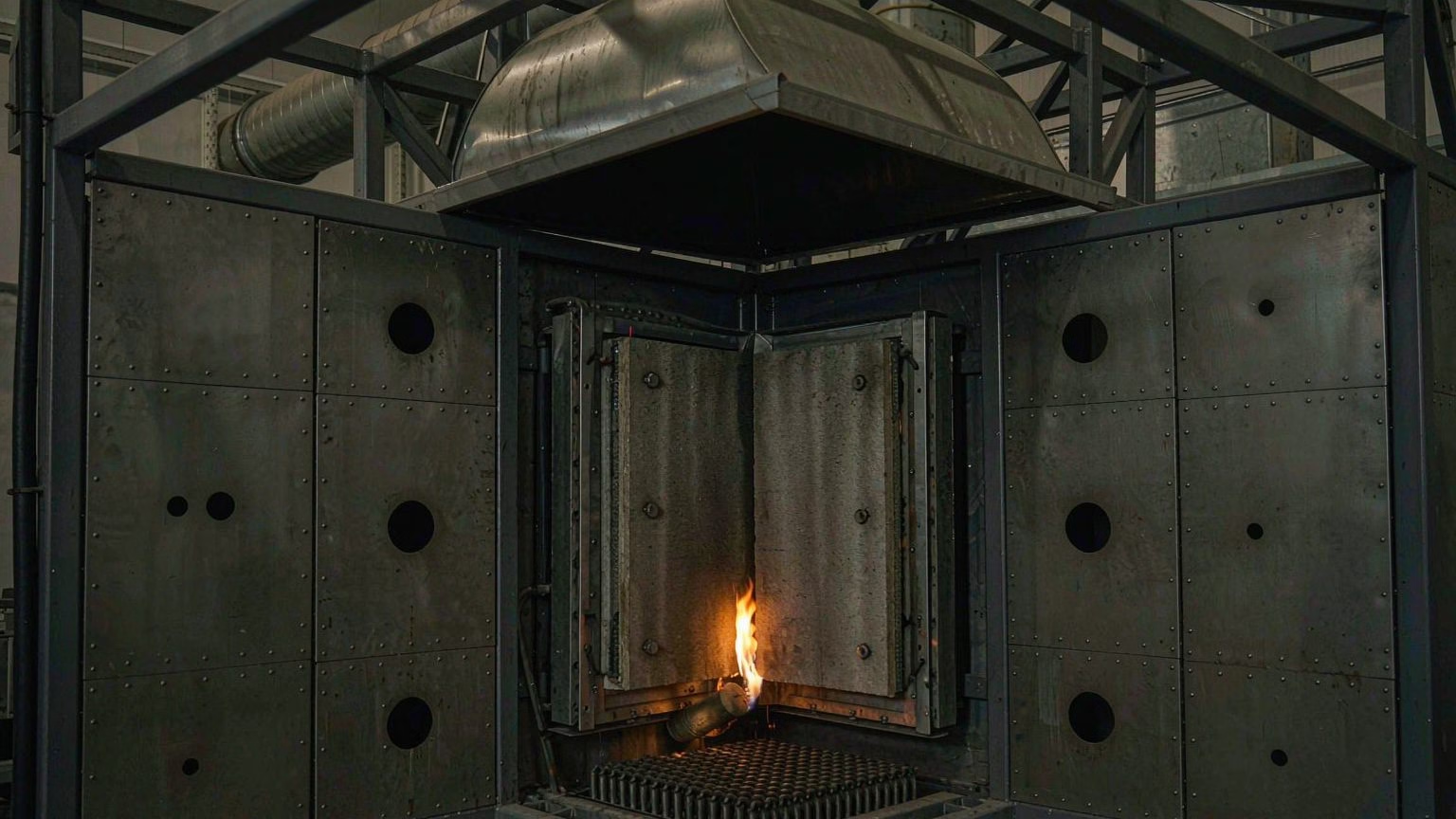
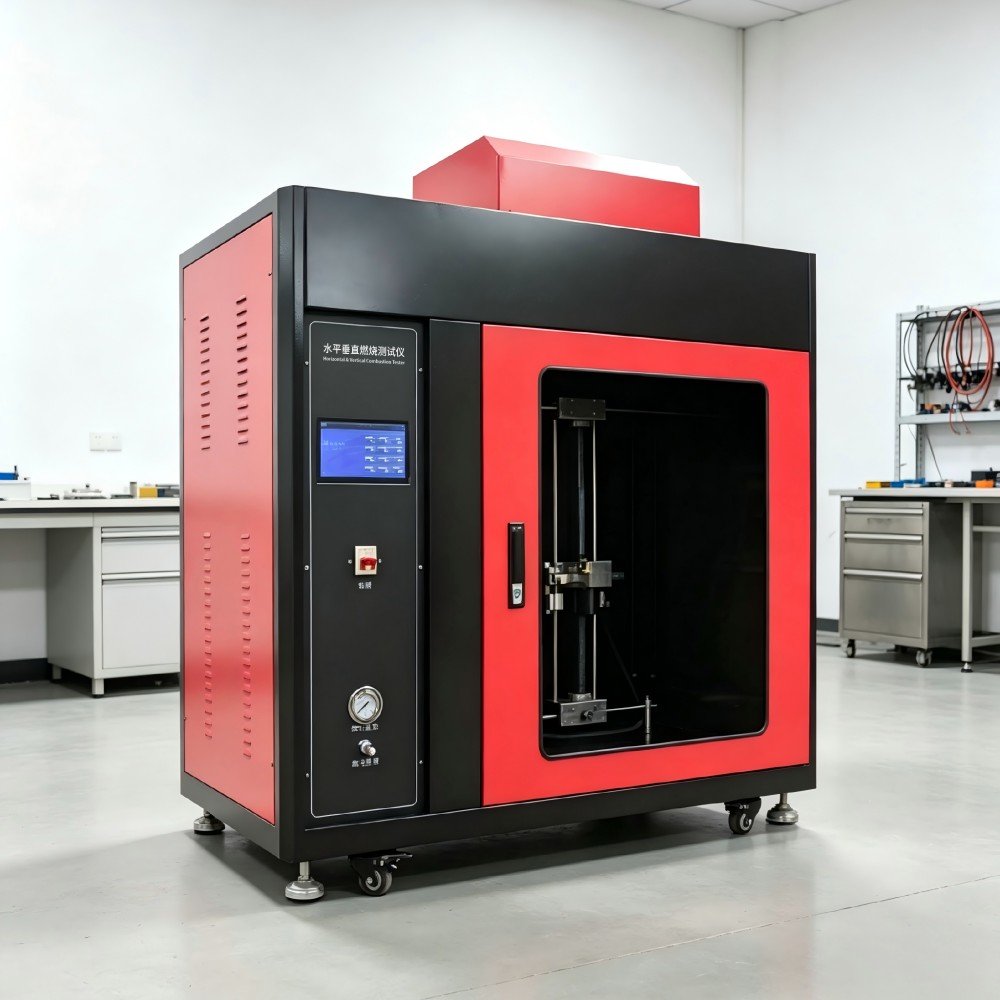
Three families do most of the work. The small-flame tests — EN ISO 11925-2 in Europe, ASTM D635 for horizontal burn rate — apply a defined flame for 15 or 30 seconds and record whether the flame front passes a mark within a set time 11. The vertical burning tests behind UL 94 — ASTM D3801 and IEC 60695-11-10 — suspend a bar over a burner and time the afterflame; V-0 requires an afterflame of no more than 10 s per specimen and no more than 50 s in total across the five specimens, with no burning drips 12. The heat-release tests, principally the SBI (EN 13823) and the cone calorimeter (ISO 5660-1), measure what the material actually contributes to a fire 1013.
Why a V-0 Rating Is Not a Fire Classification
UL 94 is a material screening test with a specimen of defined thickness, conditioned in a defined way, ignited at the bottom edge. It tells a designer whether a plastic is suitable for a housing or a connector. It says nothing about a finished wall, a cable tray in a shaft, or a facade cavity. In Europe the construction answer comes from the Euroclass system instead: A1, A2, B, C, D, E or F, assigned on the basis of EN ISO 1182, EN ISO 1716, EN 13823 and EN ISO 11925-2 results under EN 13501-1 3, with the pass criteria themselves fixed in EU law 2. Two ratings, two purposes, one word in common. Our UL 94 rating explainer covers what each suffix restricts.
A1 sits at the demanding end of that system: a specimen in a 750 °C furnace must stay within a 30 °C furnace-temperature rise, lose no more than 50 % of its mass and show no sustained flaming, while its calorific potential stays at or below 2.0 MJ/kg 89. That is a materials question, answered on a 45 mm cylinder — not a statement about how a wall will perform.
Fire Resistance vs Flame Retardancy: Side-by-Side
The table below is the fastest way to place a claim in the correct column. If a document answers the left column, it is a fire-resistance document; if it answers the right column, it is a reaction-to-fire or flammability document.
| Dimension | Fire resistance | Flame retardancy |
|---|---|---|
| Question answered | How long does the construction keep fire on one side? | How does the material behave when ignited? |
| Object tested | Full assembly, often loaded | Small specimen of defined thickness |
| Governing standards | EN 13501-2, EN 1363-1, ISO 834-1, ASTM E119 | EN 13501-1, EN ISO 1182, EN ISO 1716, EN 13823, EN ISO 11925-2, UL 94 |
| Typical output | R 60, EI 120, REI 90 | A1, A2-s1,d0, B-s2,d0, V-0, HB |
| Method | Furnace, standard time-temperature curve | Burner or radiant heater, defined exposure |
| Repeatability driver | Furnace control and specimen build | Specimen thickness, conditioning, burner alignment |
| Who needs it | Structural engineers, facade and door specifiers, building control | Product designers, compounders, procurement, cable and foam buyers |
| What it never proves | That the material is hard to ignite | That an assembly will hold back a fire |
Three Specification Mistakes That Come From Mixing the Terms
Buying a flame-retardant additive to reach a fire-resistance rating. No additive concentration converts a partition into an EI 60 wall. Fire resistance comes from build-up, mass, joints and fixings; a flame retardant may help a component pass a reaction-to-fire test, which is a different entry on the report.
Quoting UL 94 V-0 as “fire resistant”. V-0 is a vertical burning classification for a specimen. Writing “fire resistant, V-0” in a tender document invites a substitution that satisfies the letters and fails the intent, because the two claims sit in unrelated test families [12].
Assuming an A2 classification means the product is non-combustible in service. A2 allows a limited calorific contribution and is a reaction-to-fire class, not a barrier rating. It is often the right class for a composite panel — but it still says nothing about how a facade assembly behaves in a cavity fire, which is a separate large-scale question.
The reverse error is equally common: specifying an assembly-level rating for a component that will be sold loose. A fire-resistance classification belongs to the tested construction, and re-using it for a variant without a field-of-application assessment is a technical claim the test does not support.
How One Product Ends Up With Both Ratings
Products rarely carry one property in isolation. Two familiar cases show how the two families of evidence sit next to each other in a real submittal.
The Steel Column With an Intumescent Coating
A protected steel column needs a fire-resistance rating: R 60, R 90 or R 120 depending on the building. That rating comes from a furnace test of the coated section, assessed under EN 13381-8, which fixes the dry film thickness, the section factor and the primer system that produced the result 14. The coating itself, as a product placed on the market, also carries reaction-to-fire information. Change the thickness and the fire-resistance result lapses; change the formulation and both the fire-resistance assessment and the reaction-to-fire data may need revisiting. Our coating test method review maps the six routes used for these products.
The Cable That Must Both Resist Fire and Not Spread It
A fire-resistant cable is asked two questions in one specification. Circuit integrity under fire — keeping a pump or a lift supplied — is a fire-resistance property, tested in a furnace with the cable energised. Flame propagation along a bunched or single cable is a reaction-to-fire property, tested with a burner on a vertical sample. A cable can be excellent at one and ordinary at the other, and both results belong on the datasheet.
Reading a Test Report: Which Line Answers Which Question
| Line in the report | What it actually proves | Property |
|---|---|---|
| Furnace held the standard curve for 118 min | Duration of the test, not the rating | Neither on its own |
| R 90 / E 90 / I 60 | Loadbearing 90 min, integrity 90 min, insulation 60 min | Fire resistance |
| ΔT ≤ 30 °C, Δm ≤ 50 %, no sustained flaming | The specimen met the non-combustibility criteria | Reaction to fire (A1 route) |
| PCS ≤ 2.0 MJ/kg | Total calorific potential below the A1 limit | Reaction to fire |
| FIGRA ≤ 120 W/s, THR600s ≤ 7.5 MJ | Heat release growth stayed inside the B-class limits | Reaction to fire |
| Afterflame 4 s, 12 s total, no drips | Vertical burning behaviour of that specimen thickness | Flammability screening |
Equipment Each Route Requires
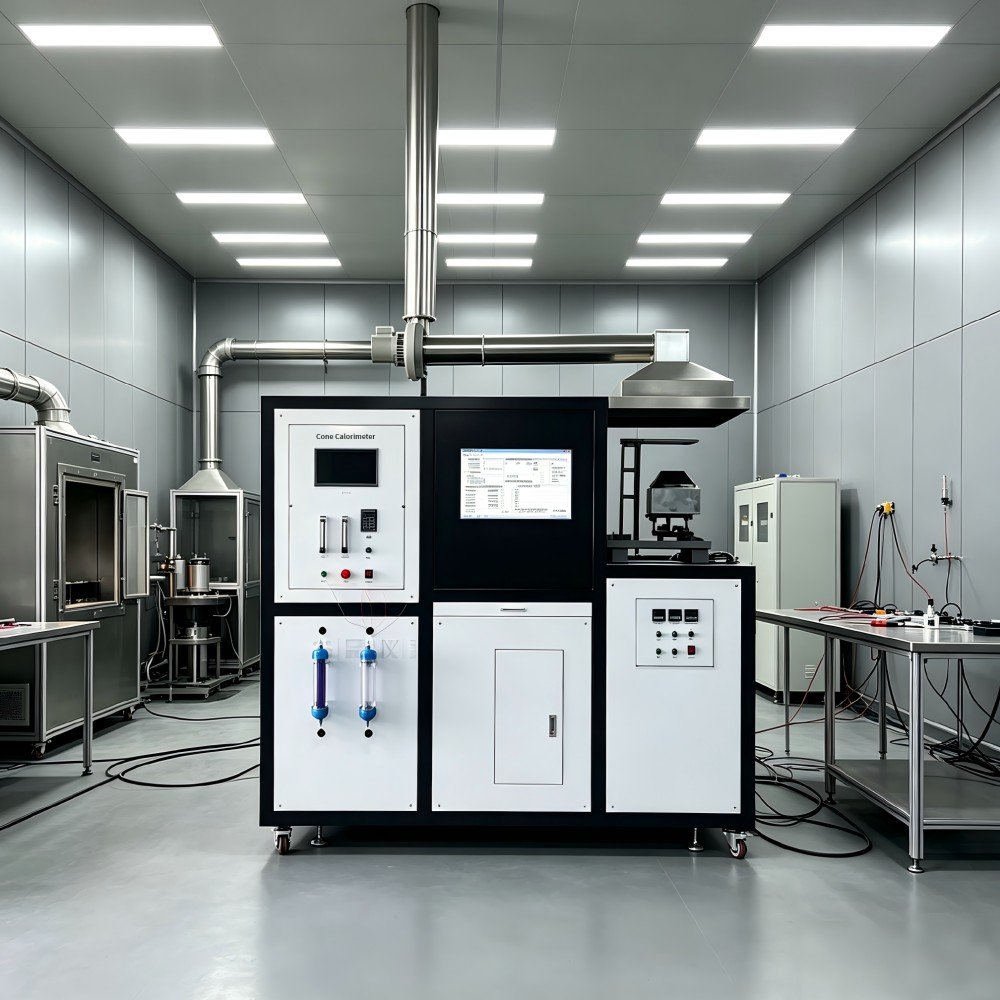
The first row is the vertical furnace route and the last is the small-flame route; heat-release work sits between them. In our own range, the NH-XL vertical integrated fire resistance furnace covers the first, the SPCZ-05 horizontal and vertical combustion tester the last, and the ZXLR cone calorimeter the heat-release row.
| Test | Standard | What the lab must control | What it outputs |
|---|---|---|---|
| Vertical furnace test | EN 1363-1, ISO 834-1, ASTM E119 | Furnace curve, pressure profile, loading, thermocouple grid | R / E / I duration |
| Non-combustibility | ISO 1182 | 750 °C furnace stability, specimen mass, thermocouple position | ΔT, Δm, flaming time |
| Calorific potential | EN ISO 1716 | Bomb calorimeter calibration, sample homogeneity | PCS in MJ/kg |
| SBI | EN 13823 | Burner output, hood flow, gas analysis, specimen mounting | FIGRA, THR600s, SMOGRA, LFS |
| Cone calorimeter | ISO 5660-1 | Heat flux uniformity, oxygen analysis, specimen orientation | HRR curve, ignition time, MARHE |
| Small flame | EN ISO 11925-2 | Flame application time, burner angle, mark position | Fs within 20 s or 60 s |
| Vertical burning | ASTM D3801 / IEC 60695-11-10 | Flame height, application points, cotton pad | V-0, V-1, V-2 |
Where Flame Retardancy Claims Break Down in Service
A flame-retardant claim belongs to a specimen conditioned to a defined moisture content, at a defined thickness, with a defined additive loading. In service all three can drift. Thin sections ignite more readily because there is less material to absorb heat, and repeated washing, leaching or UV exposure can migrate an additive or remove it. A reworked compound may sit below the tested loading.
None of this argues against the test; it argues for writing the claim precisely. “V-0 at 1.6 mm, 23 °C / 50 % RH, virgin compound” is honest. “Flame retardant” alone is not. Weathering steps exist in the reaction-to-fire standards because the fresh sample is the best-case sample.
Specifying Both Properties Correctly: Four Questions
Before writing a fire requirement, answer four questions in order. First: is it about a construction holding a fire back for a period, or a material’s contribution to a fire? Second: if a construction, what are the load, the fixing pattern and the substrate the rating depends on? Third: if a material, which classification system does the authority having jurisdiction accept — Euroclass, UL 94, or a national class such as GB 8624? Fourth: which result will be checked at site, and with what sampling?
Answering them changes the tender document and the equipment list: a lab with a furnace, an SBI rig and a cone calorimeter is answering three different questions, which is how our fire and flame testing equipment range is organised.
Frequently Asked Questions
Can a material be flame retardant but not fire resistant?
Yes, and it is the normal case. A flame-retardant plastic may pass a vertical burning test at a given thickness while contributing nothing to the fire resistance of the wall it sits in. Fire resistance depends on the assembly, its joints and its fixings. A material claim cannot substitute for an assembly rating, and no additive loading converts a partition into an EI-rated construction.
Does fire resistance include flame retardancy?
Not by definition. A fire-resistance test records whether an assembly keeps its loadbearing capacity, integrity and insulation over time under a standard furnace curve. It does not report ignitability or heat release. In practice the components of a rated assembly are usually also tested for reaction to fire, because building regulations require both, but the two results remain separate evidence with separate scopes.
Is A1 the same as non-combustible?
A1 is the highest reaction-to-fire class and requires both a non-combustibility result and a calorific potential limit, so it is the closest thing to a non-combustible classification in the Euroclass system. The word “non-combustible” itself is defined nationally and is not interchangeable with A1 in every jurisdiction. Always quote the class and the standard, not the adjective.
Which standard applies to a wall, EN 13501-1 or EN 13501-2?
Both, for different questions. EN 13501-2 classifies fire resistance — the R, E and I ratings of the wall as a construction. EN 13501-1 classifies the reaction to fire of the products that go into it. A wall specification usually needs an EI rating from the first and a Euroclass from the second for each facing and insulation component.
Why do two labs give different UL 94 results for the same compound?
Because the result depends on thickness, conditioning, flame application time and operator technique more than on the polymer grade. A 1.6 mm bar and a 3.0 mm bar of the same compound can land in different classes, and a specimen conditioned at 70 °C can behave differently from one conditioned at 23 °C. The rating is only meaningful with its thickness and conditioning stated.
Do I need a cone calorimeter if I already have an SBI?
They answer different questions. The SBI produces the FIGRA and THR600s values used for B, C and D classification and simulates a corner fire. The cone calorimeter gives a continuous heat release rate curve at a chosen irradiance, which is what fire models and research programmes need. Many labs run both, and the two datasets are complementary rather than duplicative.
The Decision Order
When a fire requirement lands on your desk, work in this sequence:
- Decide whether the requirement is about containment over time or about material behaviour — the two answers never share a test.
- If it is containment, identify the construction, the load and the fixing pattern before looking for a rating.
- If it is material behaviour, identify the classification system the market accepts: Euroclass, UL 94, or a national scheme.
- Ask for the report, not the certificate summary — the report carries the thickness, conditioning and field-of-application limits.
- Check that both properties are covered where the regulation requires both, and that neither claim is being used to imply the other.
If you are building or extending a laboratory around these two families of tests, tell us which route you need and we will map the equipment, the calibration consumables and the specimen preparation each one demands.
Written by the BRT Testing application engineering team, Shenyang Baoruitong Automation Equipment Co., Ltd. — manufacturers of fire and flame testing equipment for laboratories, certification bodies and manufacturers.