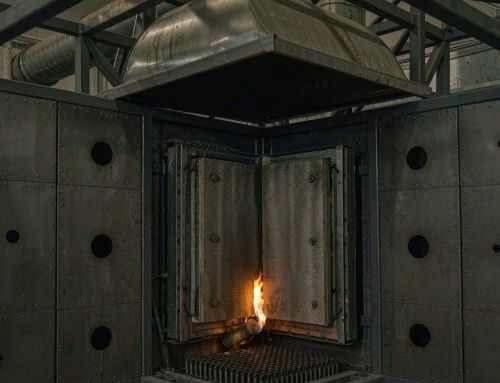
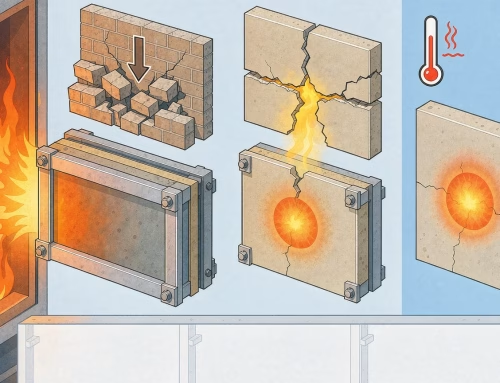
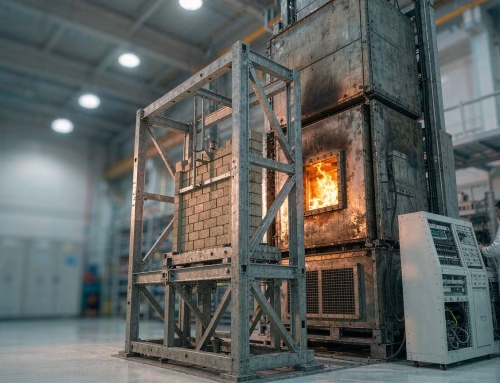
Fire resistance testing for steel structures produces a time rating for a protected member — an R 60 or R 90 — not a property of the steel itself. The rating depends on four things acting together: how heavily the member is loaded, how quickly it heats up (its section factor), what protection is applied and how thick that protection is. The test follows a standard furnace curve defined in EN 1363-1, ISO 834-1 or ASTM E119, and the result is then extended to other sections by calculation in an assessment report. Understanding that chain is the difference between a specification that can be met and one that produces a coating nobody can install.
Why Steel Needs a Fire Resistance Strategy
Structural steel does not burn, and that is precisely the problem. Above roughly 400 °C its yield strength begins to fall, and by 600 °C a loaded member can lose more than half of its room-temperature capacity. EN 1993-1-2 provides the reduction factors used in European design, and the same behaviour drives the American and Asian approaches 7. A bare beam that carries a full office load at 20 °C may fail structurally long before any flame reaches it, simply because the fire has heated it.
So the design question is never “is steel combustible”. It is “how long can this member keep carrying its load in a fire”, which is a time, and time is what the furnace test measures. ISO 13943 keeps the vocabulary honest here: fire resistance is a property of an element or assembly under defined exposure, and it is not the same thing as the reaction to fire of the materials inside it 10.
What the Rating Actually Describes
Load Ratio and Critical Temperature
Two members with identical protection can earn different ratings because they carry different loads. The ratio of the load in fire to the member’s capacity at ambient temperature — the load ratio or utilisation — sets the temperature at which the member is considered to have failed. A heavily loaded column might reach its limit near 400 °C; a lightly loaded beam might survive to 700 °C.
That temperature is the critical temperature, and it is the number the protection has to delay. A protection system is not rated in degrees; it is rated in minutes to reach a temperature that depends on the load. This is why a coating thickness table without a stated load ratio is not a specification.
Section Factor: Why Shape Matters More Than Mass
Heat enters a steel section through its surface and is absorbed by its mass. The ratio of exposed surface area to volume — the section factor, expressed as Am/V in m⁻¹ — captures that balance, and it changes dramatically between section types.
| Member type | Indicative Am/V | Consequence for protection |
|---|---|---|
| Heavy universal column, boxed or partially exposed | Low | Thinner protection; slow heating |
| Universal beam, three-sided exposure | Moderate | Standard thickness tables apply |
| Open web and cellular members | High | Thickness rises sharply; thin webs heat first |
| Hollow section, fully exposed | High | Often needs boards rather than thin-film coating |
| Small angle or tie, all sides exposed | Very high | Protection may be uneconomic; redesign is common |
The pattern is simple: the more surface per unit of steel, the faster the member heats and the more protection it needs. A fabricator who substitutes a hollow section for a universal column at the same load can double the required thickness without changing the rating.
The Three Protection Routes and Their Tests
Fire resistance testing for steel structures only becomes meaningful once the protection route is fixed, because each route is assessed by a different standard and produces a different kind of document. Each route has its own test standard, and the evidence they produce is not interchangeable.
Intumescent Coatings: EN 13381-8
Reactive coatings swell on heating to form an insulating char. Their fire performance is assessed under EN 13381-8, which combines furnace tests on coated members with a calculation method that extends the results across a range of section factors, steel temperatures and coating thicknesses 6. The output is not a single test report but an assessment: a table of dry film thicknesses against Am/V and fire resistance period, valid only for the primer, the coating and the member types named in that document.
Boards, Sprays and Passive Systems: EN 13381-4
Passive protection — mineral fibre boards, cementitious sprays, vermiculite blends — is assessed under EN 13381-4, which follows a similar logic: test a representative set of members, then calculate the rest 5. Passive systems are less sensitive to application thickness than thin-film coatings but more sensitive to fixings and joints, and the assessment document carries the same field-of-application limits.
Concrete Fill and Composite Action: EN 1994-1-2
A steel beam acting compositely with a concrete slab, or a hollow section filled with concrete, gains fire resistance from the concrete as well as from any applied protection. EN 1994-1-2 provides the design rules, and furnace tests on loaded composite members provide the evidence 8. This route is common in car parks and in buildings where the slab already exists for other reasons.
The Standards a Steel Rating Comes From
| Standard | What it defines | What the buyer receives |
|---|---|---|
| EN 1363-1 | Furnace test principles and the standard temperature curve | Test conditions, not a rating 2 |
| ISO 834-1 | The cellulosic time-temperature curve used internationally | The heating regime behind the rating 3 |
| EN 1363-2 | Alternative curves, including the hydrocarbon curve | Applicable to tunnel and petrochemical cases 9 |
| ASTM E119 | The North American building-construction furnace test | A rating in hours, in the ASTM system 4 |
| EN 13381-4 | Assessment of passive protection to steel members | Thickness tables by Am/V and period [5] |
| EN 13381-8 | Assessment of reactive protection to steel members | DFT tables by Am/V and period [6] |
| EN 13501-2 | Classification of fire resistance from test evidence | The R (and where relevant E, I) class 1 |
| EN 1993-1-2 | Structural fire design of steelwork | The design method that sets the critical temperature [7] |
The important consequence: a furnace test report is not a rating, and an assessment is not a certificate. A steel protection package normally needs a test report, an assessment report and a classification, and the three documents answer different questions.
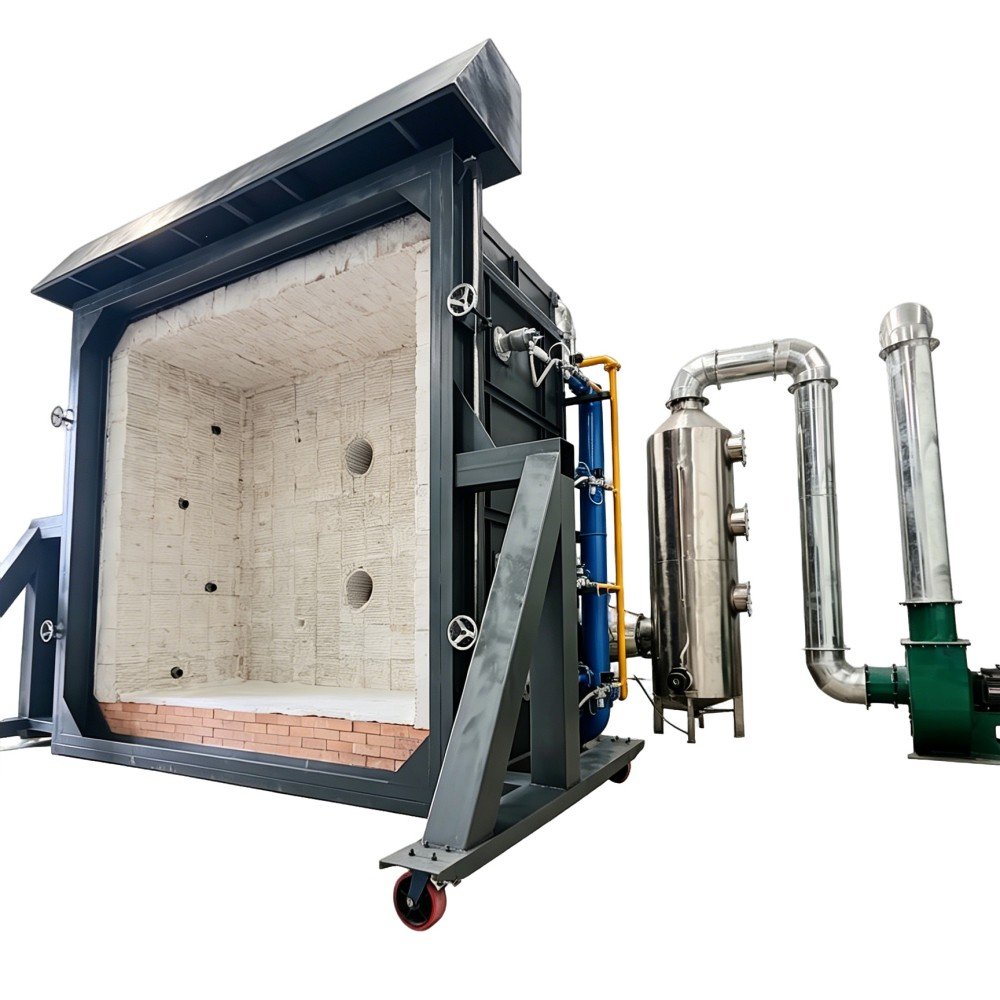
How the Furnace Test Is Run on a Steel Member
Loaded and Unloaded Tests
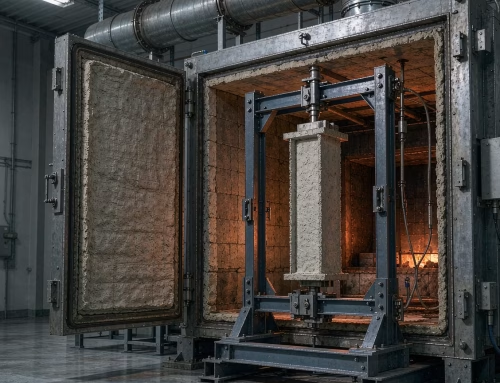
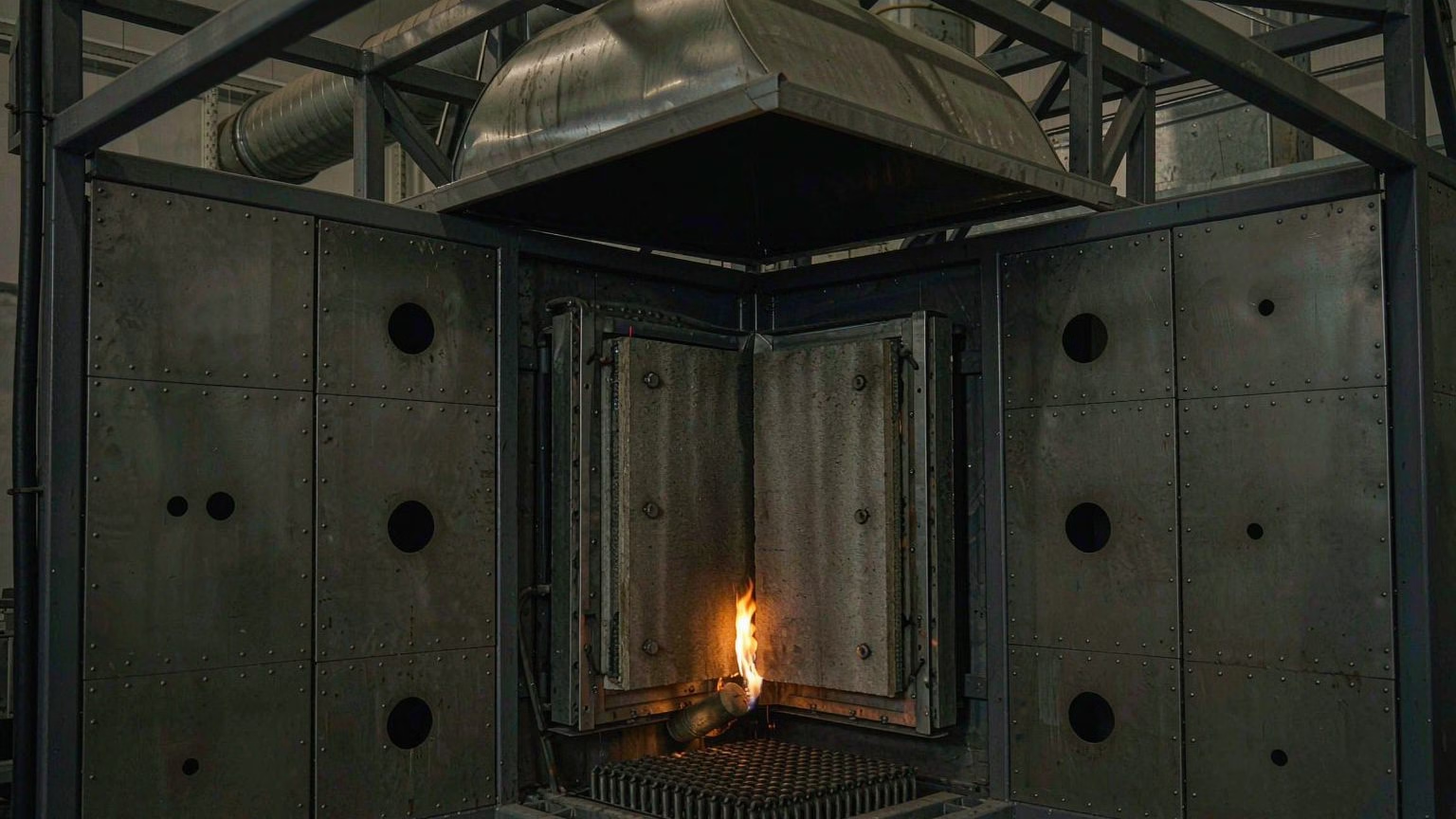
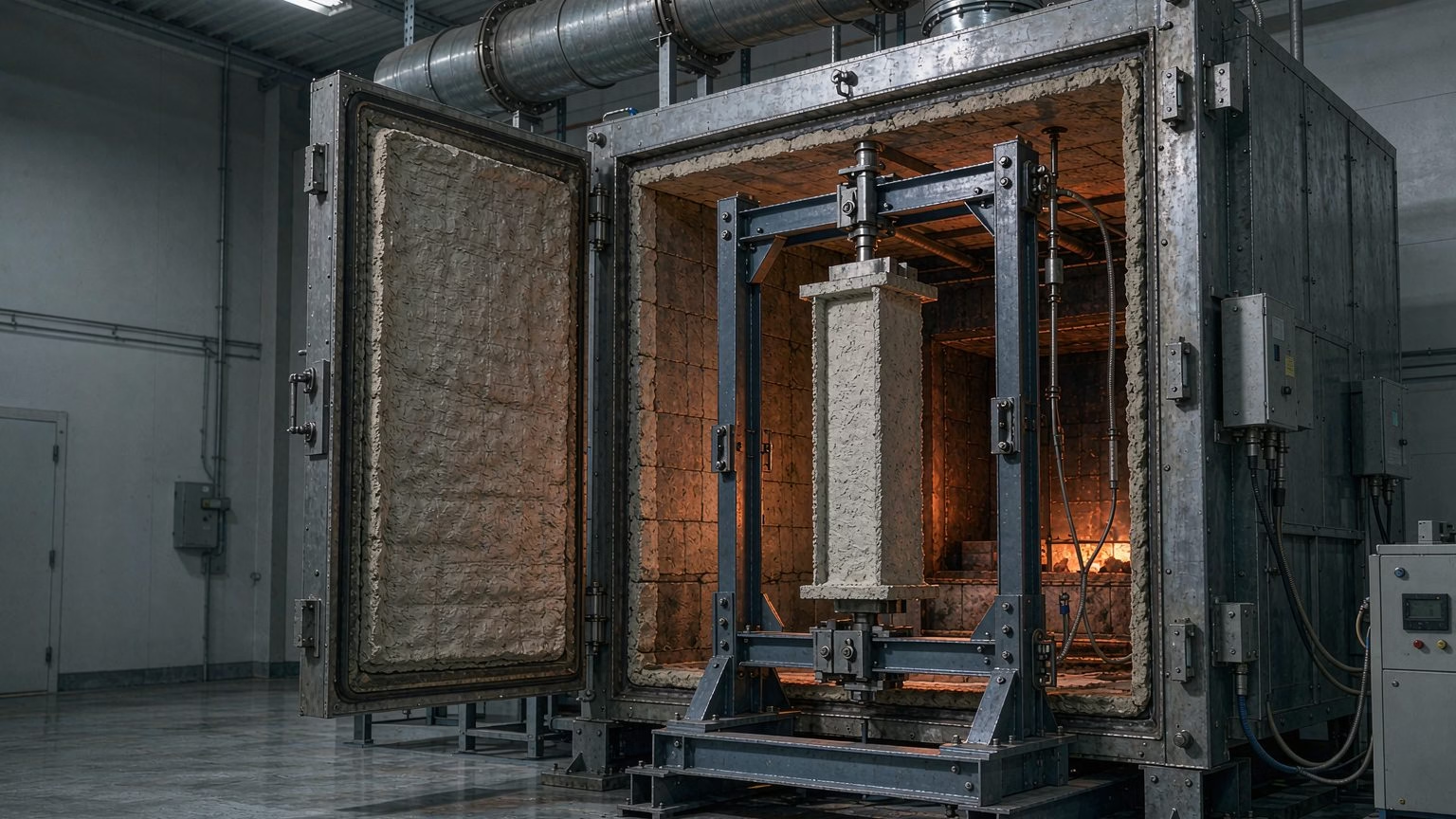
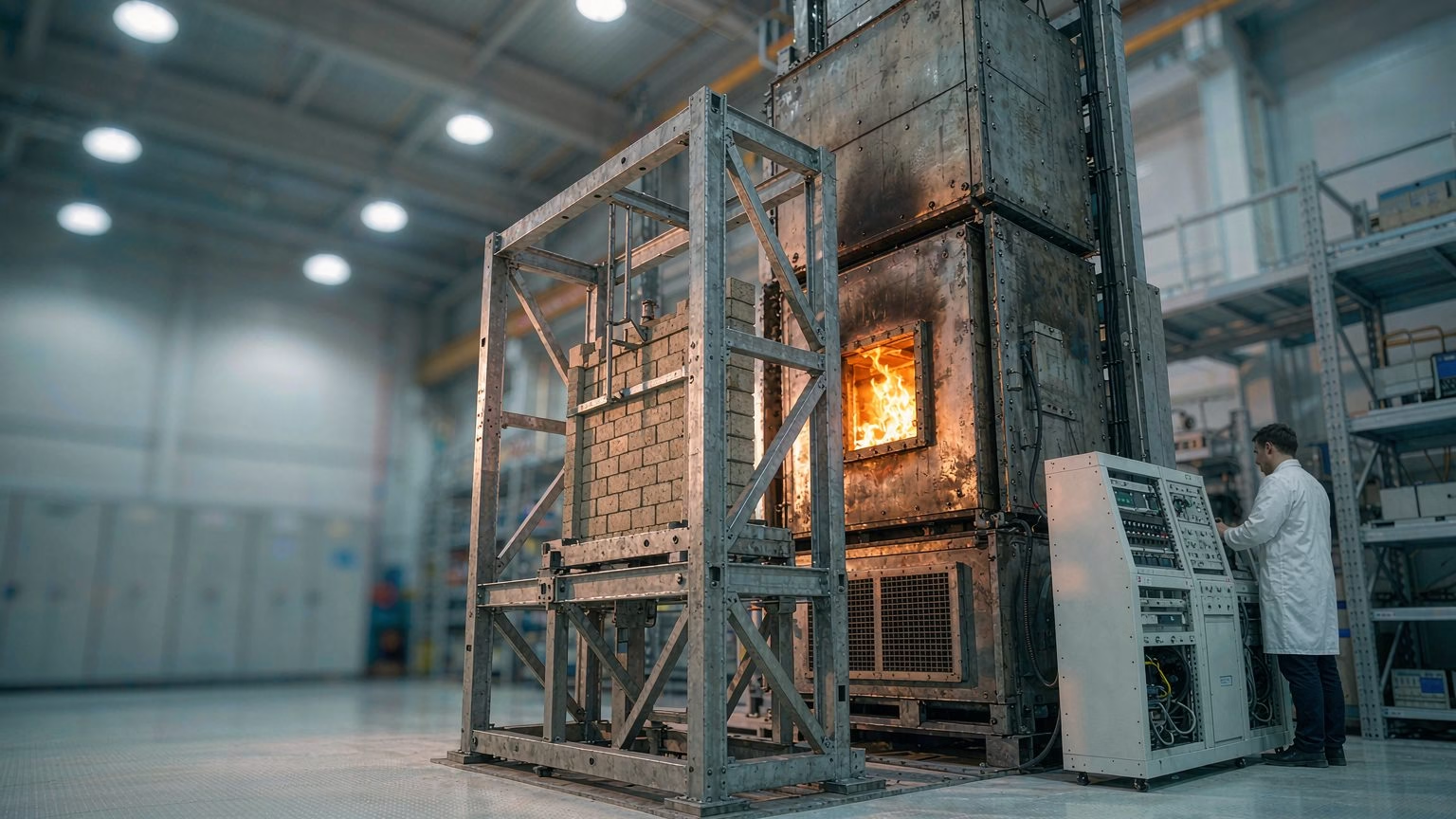
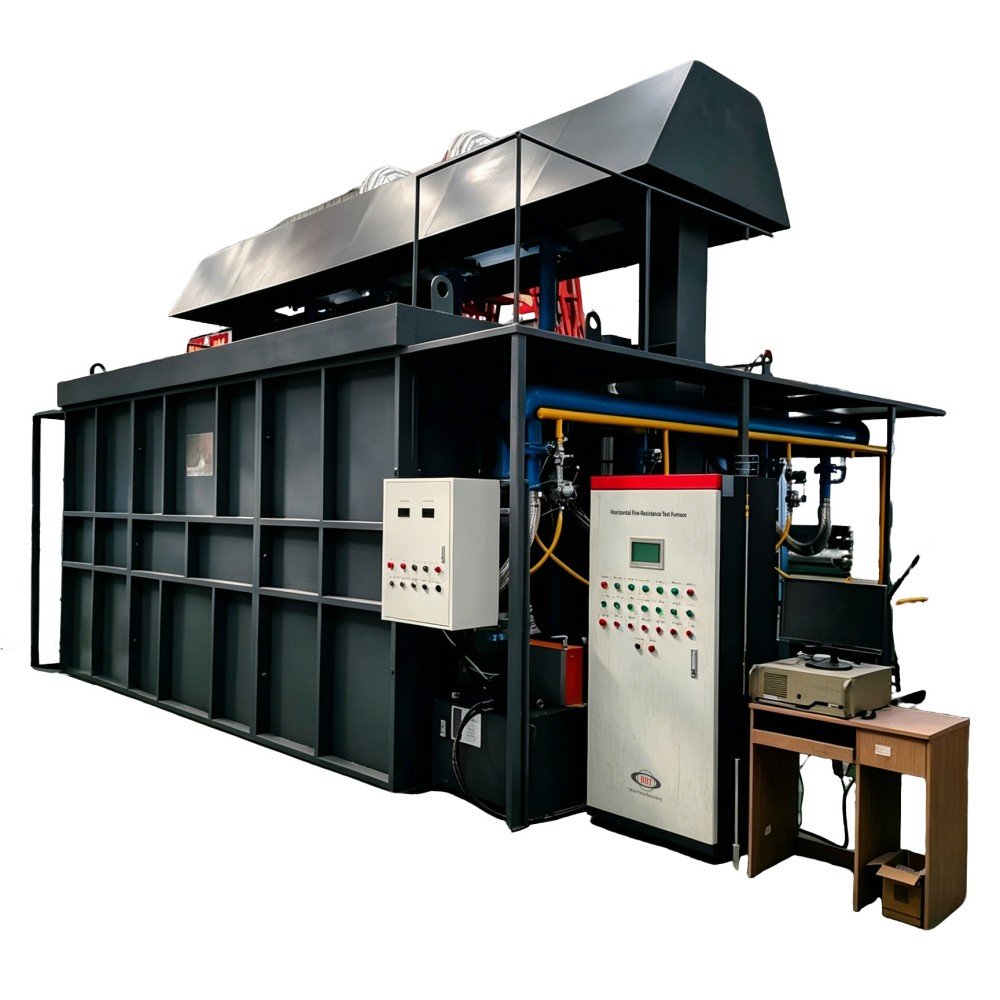
A loaded test is the more convincing evidence: the member carries a defined load in the furnace, and the test ends when it can no longer do so, or when the target period is reached. Unloaded tests measure only the temperature history of the steel and the protection, and the structural conclusion is then derived by calculation. Both appear in assessment documents, and a report should state which was used — a thickness table built on unloaded tests carries more design assumptions than one built on loaded tests. Columns are normally tested in a vertical bench such as the NH-XL vertical integrated fire resistance furnace, beams and slabs in a horizontal one.
Where the Thermocouples Are
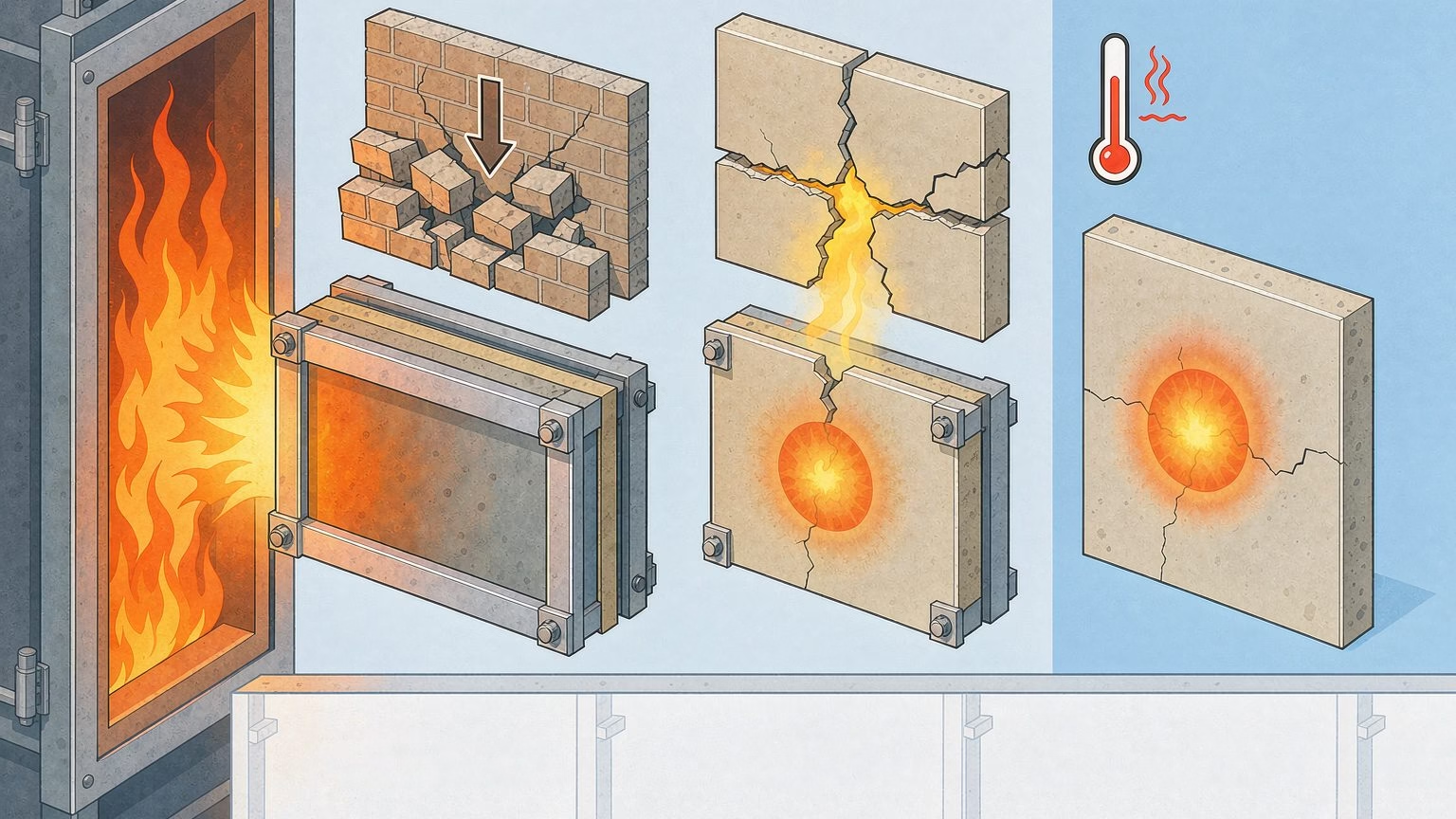
Steel temperatures are not uniform. A protected beam heats at the flange tips, at the web, and at the connection differently, and the assessment is only valid if the temperatures were measured where the critical section actually is. For intumescent systems the coating has to swell to work, so the test also records whether the char stayed intact, whether it delaminated and whether the section deformed enough to open a gap. A report that gives only a pass or fail hides the information a designer needs.
What the Furnace Must Hold
The furnace must follow the specified curve within the tolerances of EN 1363-1, maintain the pressure regime and, for loaded members, apply the load without introducing eccentricity [2]. For hydrocarbon exposure the EN 1363-2 curve rises far faster, which changes the protection performance and sometimes the protection type — a cellulosic-rated coating is not automatically valid for a jet-fire scenario [9].
Reading an Assessment Report: What Voids a Rating
An assessment is a set of limits, not a licence. The table below lists the changes that most often take a project outside its scope.
| Change on site or in procurement | Effect on the rating |
|---|---|
| Different primer beneath the intumescent | Voids the assessment unless the primer is listed |
| Thickness below the tabulated DFT for that Am/V | Rating no longer supported |
| Substitution of a hollow section for an open section | New Am/V, new thickness, often new assessment |
| Change of member size within the table’s range | Usually covered, provided Am/V and temperature limits are respected |
| Partial exposure assumed, full exposure built | Rating invalid; exposure condition is part of the assessment |
| Different topcoat or seal coat | May be acceptable if listed; otherwise void |
| Off-site application with a different shop system | Requires the assessment to cover that system |
The section factor and the dry film thickness are the two numbers that decide most disputes, because both are measurable on site and both are easy to get wrong in a tender.
Hollow Sections, Cellular Beams and Connections
Two geometries cause disproportionate trouble. Hollow sections have high section factors and, in thin-wall cases, heat through quickly; intumescent coatings can be used but the thickness may become impractical, and boards or concrete filling are frequently the better answer. Cellular and castellated beams concentrate heat in the web openings, and the assessment has to cover the opening geometry rather than the parent section.
Connections deserve separate attention. A protected member with an unprotected connection can fail at the joint, and the assessment should say whether the connection is inside or outside its scope. This is the same principle that governs fire-resistance testing of any assembly: the rating belongs to the construction that was tested, not to the largest component in it.
Specifying and Verifying on Site
Three verification steps prevent most failures. First, measure the dry film thickness on the applied member, at the specified frequency, using a gauge calibrated for the coating type — a nominal thickness on a drawing is not evidence. Second, confirm the primer and topcoat against the assessment document, because a substitute primer is the single most common cause of a voided intumescent rating. Third, record the exposure condition actually built: three-sided protection specified, four-sided exposure installed, means the numbers no longer apply.
On the laboratory side, the same discipline applies. Accreditation to ISO/IEC 17025 means the furnace calibration, the thermocouple replacement schedule and the load measurement are documented, which is what makes a test report defensible years later 11. Our fire resistance test procedure walk-through covers the furnace-side controls in detail.
Five Mistakes in Steel Fire Protection Programmes
Before any test is booked, one assumption does most of the damage: treating the required period as a fixed number for the building type. In North America, construction type and the associated ratings are set by the code and described in NFPA 220, while European practice derives the period from the building’s use, height and fire-fighting provisions 12. Getting that number wrong makes every later decision wrong.
Specifying a rating without a load ratio. R 90 at one utilisation is a different thickness from R 90 at another, and the assessment table is only valid inside its stated limits.
Using a generic thickness table. Published tables belong to a specific product and a specific assessment. Applying one manufacturer’s table to another’s coating is a technical claim with no evidence behind it.
Protecting the member and forgetting the connection. The joint is part of the load path, and an unprotected connection can govern the failure.
Assuming a hydrocarbon rating from a cellulosic test. The two curves are different, and the protection that passes one may not pass the other [9].
Skipping the site thickness survey. Without measured DFT, there is no way to demonstrate that the installed protection matches the assessed system.

Frequently Asked Questions
What does an R 60 rating mean for a steel column?
It means the protected column maintained its loadbearing capacity for 60 minutes under the standard furnace curve, at the load and exposure conditions of the test. R denotes loadbearing capacity in the EN 13501-2 classification. The rating belongs to that member, that protection and that load, not to the steel grade in general.
How is the section factor Am/V used?
It relates the exposed surface area of the member to its volume, so it expresses how fast the steel will heat. Protection thickness is tabulated against Am/V in the assessment document, which is why a change from an open section to a hollow section can change the required thickness even at the same load and the same rating.
Is intumescent coating always the cheapest option?
Not when the section factor is high. Thin-film coatings become expensive and difficult to apply at large thicknesses, and boards or concrete filling can be more practical for hollow sections and cellular members. The comparison should be made at the required DFT, not at a nominal one.
Can a steel rating be extended to another member size?
Yes, within the limits of the assessment. EN 13381-8 and EN 13381-4 exist precisely to extend a small number of tests across a range of sections by calculation. The extension is only valid inside the tabulated ranges of Am/V, steel temperature and coating thickness.
Does a hydrocarbon fire need a different test?
Yes. The hydrocarbon curve in EN 1363-2 heats far faster than the cellulosic curve in ISO 834-1, which changes how protection performs. Tunnels, petrochemical structures and offshore modules are normally assessed against the hydrocarbon exposure, and a cellulosic rating should not be read across.
What documents should a steel protection package contain?
A furnace test report, an assessment report with field-of-application limits, a classification document where one is issued, and the manufacturer’s application instructions including primer compatibility. Site records of measured dry film thickness complete the package, and without them the installed system cannot be shown to match what was assessed.
The Decision Order
- Establish the required rating from the building code, in the classification system the authority uses.
- Determine the load ratio for each member, and from it the critical temperature.
- Calculate Am/V for every distinct member type, including connections.
- Select the protection route against that section factor — coating, board, spray or concrete fill.
- Obtain the assessment document and read its field-of-application limits before pricing.
- Specify the primer, the topcoat and the exposure condition, then verify DFT on site.
If you are setting up or extending a furnace capability for loaded steel members, tell us the member types and the target periods and we will map the furnace, the loading frame and the instrumentation — our fire and flame testing equipment range covers both vertical and horizontal configurations. Fire resistance testing for steel structures ends with a file, not with a number: test report, assessment, classification and site records together are what support an R 90 years after the building is handed over.
Written by the BRT Testing application engineering team, Shenyang Baoruitong Automation Equipment Co., Ltd. — manufacturers of fire resistance furnaces and reaction-to-fire test systems.