How Does a Spectrophotometer Measure Absorbance?
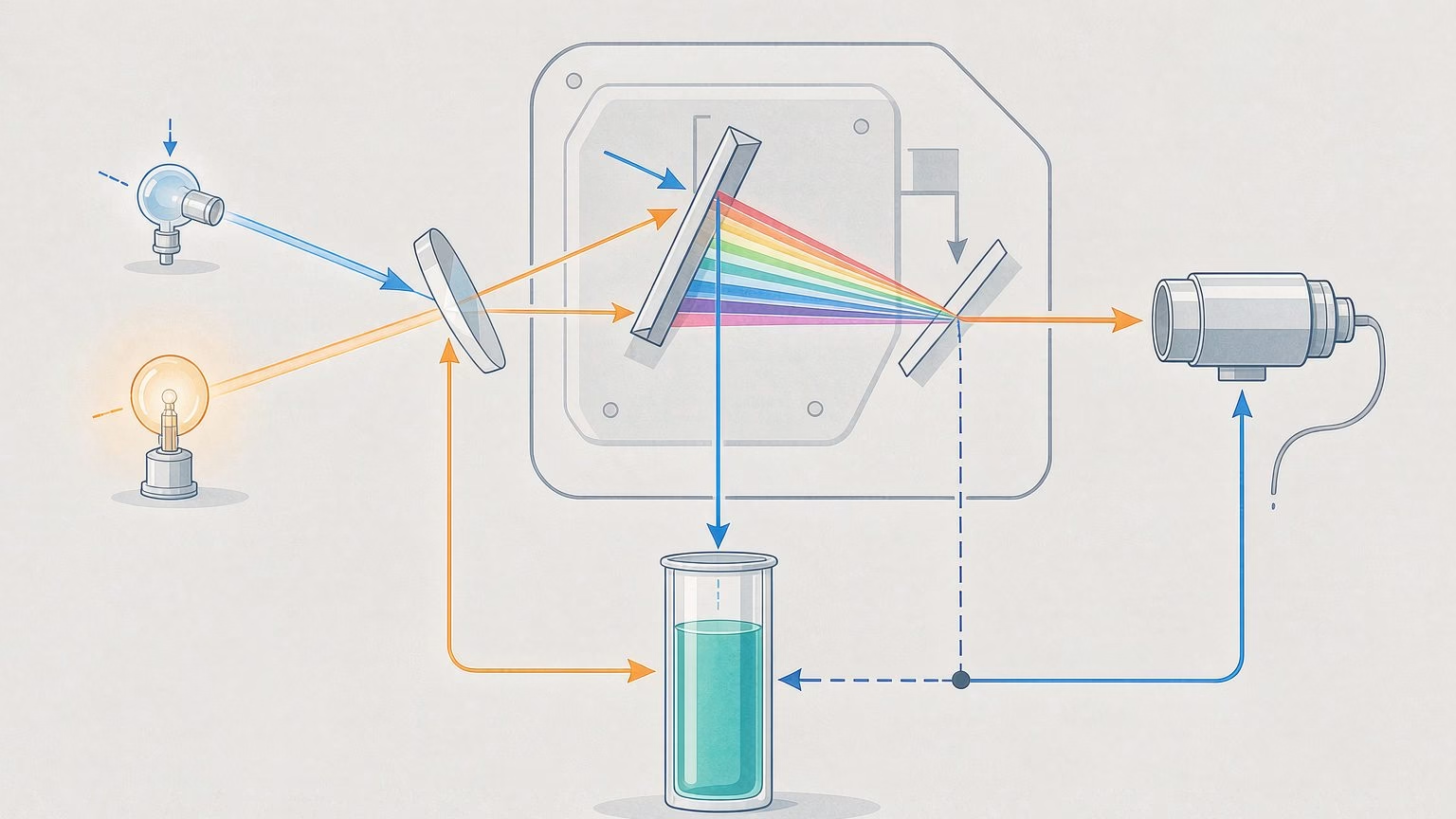
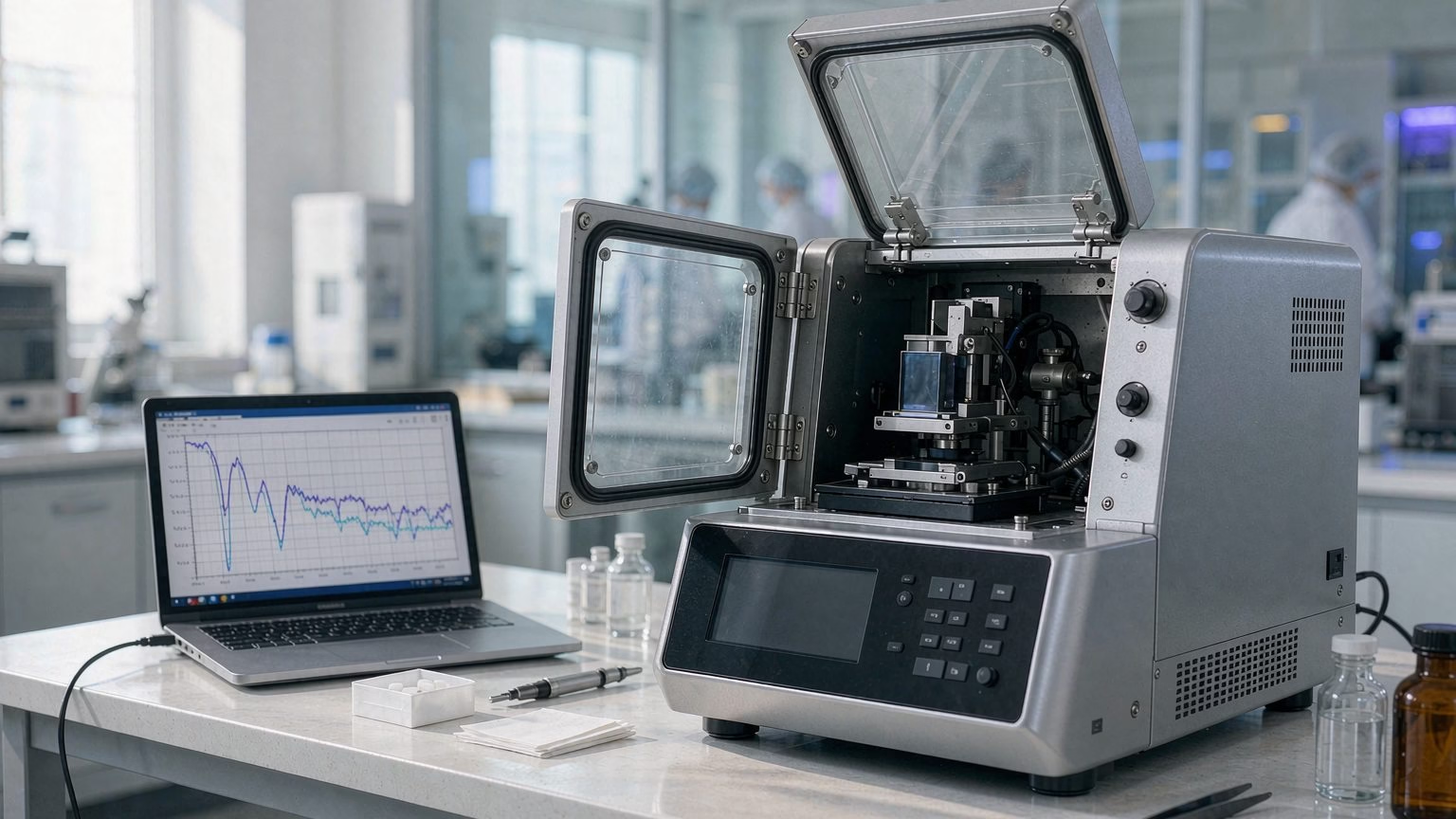
A spectrophotometer does not measure darkness; it measures a ratio. Two readings of the same light beam — one through the reference, one through the sample — are divided to give transmittance and then converted with a negative logarithm to give absorbance. This article follows that chain from lamp to detector, explains why the scale has to be logarithmic, sets out the Beer-Lambert relationship and the six ways the reading departs from it, and shows how to verify that the number the instrument prints is one you can defend.