The short answer: flame spread testing for wall coverings is decided less by the facing than by what the facing is stuck to. أ 0.5 mm decorative film on a calcium-silicate board and the same film on a plywood substrate can land in different classes, because every route — ASTM E84 in the Steiner tunnel, في 13501-1 through EN ISO 11925-2 and EN 13823, NFPA 286 in a room corner, ايزو 5658-2 on a vertical radiant panel — tests an assembly, not a sheet. Choose the route your market requires, test the mounting your customer will actually build, and state the substrate, adhesive and mass per unit area on the report. A class letter without those three facts is not a specification.
Why Flame Spread Testing for Wall Coverings Is Different
A wall covering is thin, flexible, often coated, and always installed over something else. Each of those properties changes the fire behaviour in a way that a panel test does not capture.
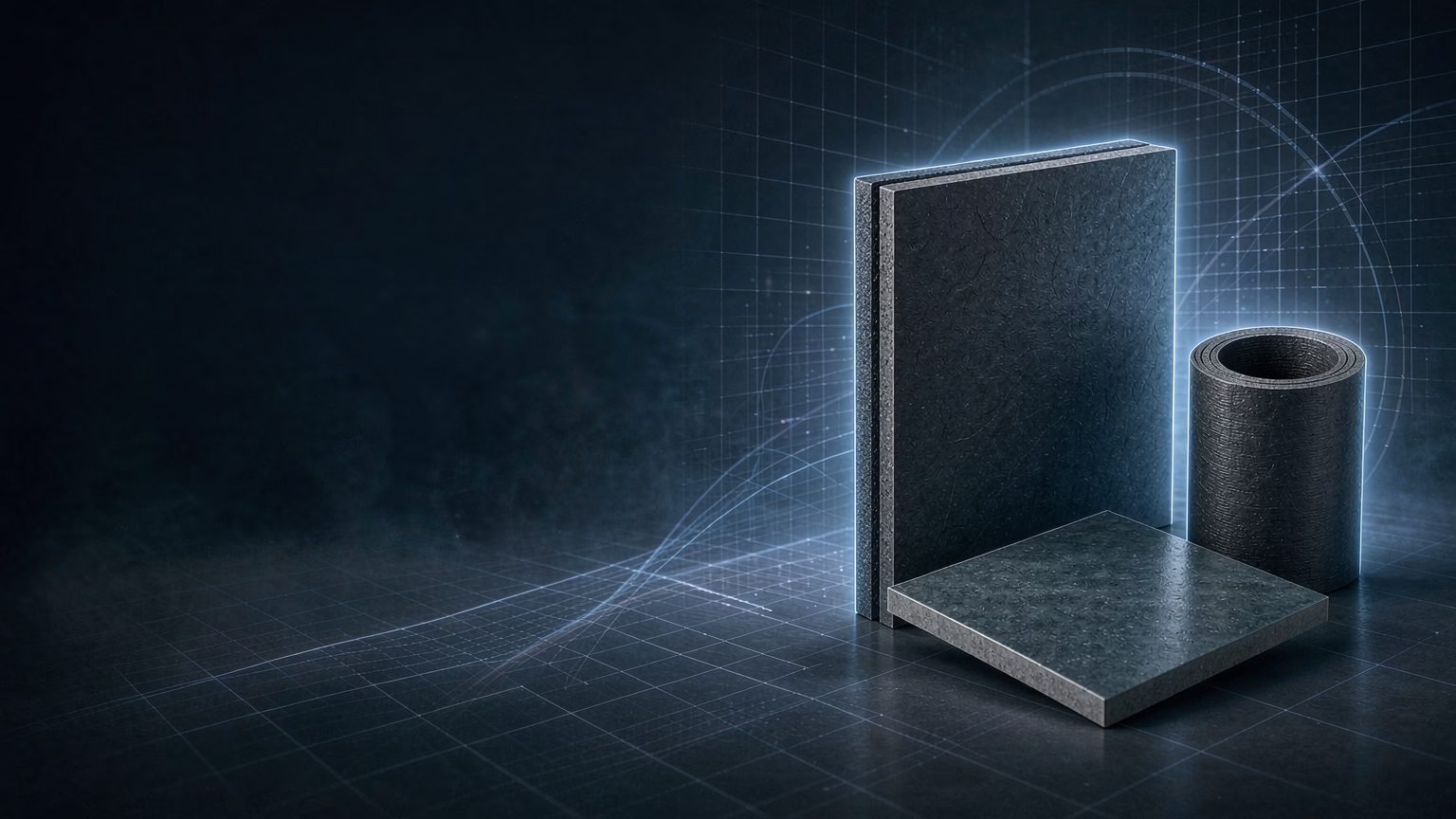
Thinness means low thermal inertia. أ 0.4 mm vinyl facing heats through in seconds, so the substrate’s response arrives almost immediately rather than after a delay. Flexibility means the covering can curl, shrink or peel away from the substrate when heated, exposing bare substrate to the flame and changing the flame path mid-test. A coating means the binder chemistry — plasticised PVC, acrylic, textile fibre, paper — governs ignition and drip behaviour far more than the backing does.
The substrate decides the result
Most routes specify a standard substrate so that laboratories can compare products. That convention is useful for ranking products and dangerous for predicting performance, because the standard substrate may be nothing like the wall a customer will build. A covering classified on a non-combustible substrate can drop several classes when applied to a combustible one, and the drop is not predictable from the facing alone. The European test suite handles this through substrate selection and conditioning rules, and those rules have themselves been revised: في 13238:2010, which set out the conditioning and substrate-selection logic, is now listed as withdrawn and replaced in the UNI catalogue 10. Any test report older than that revision should be checked for which substrate rules it followed.
The adhesive is part of the specimen
Adhesives are rarely the first thing a specifier asks about, and they are frequently the reason a result changes. A water-based adhesive adds moisture that must be driven off before testing; a solvent adhesive may contribute its own fuel load; a pressure-sensitive film adhesive behaves differently again. Where a covering is supplied as a self-adhesive product, the release liner is removed and the adhesive is tested in place. Where it is supplied dry, the laboratory has to know which adhesive the customer intends to use, because testing with the wrong one produces a result nobody can defend.
The Four Routes Used for Flame Spread Testing for Wall Coverings
Four routes cover most of the market. They are not interchangeable, and their results are not comparable with each other.
ASTM E84 and UL 723: the tunnel class
ASTM E84 measures surface burning characteristics in the Steiner tunnel, أ 7.6 m horizontal chamber with the specimen forming the ceiling and two burners at one end providing the ignition source 1. The output is a flame spread index and a smoke developed index. Class A corresponds to a flame spread index of 0 ل 25 with a smoke developed index not exceeding 450; Class B covers 26 ل 75 and Class C covers 76 ل 200, both with the same smoke ceiling.
The awkward part for wall coverings is geometric. The specimen is tested face-down in a horizontal ceiling position, while a wall covering in service is vertical. The tunnel produces a defensible ranking and is embedded in North American codes, but it does not reproduce the upward, wall-driven spread that a real corridor fire produces.
في 13501-1 through EN ISO 11925-2 and EN 13823
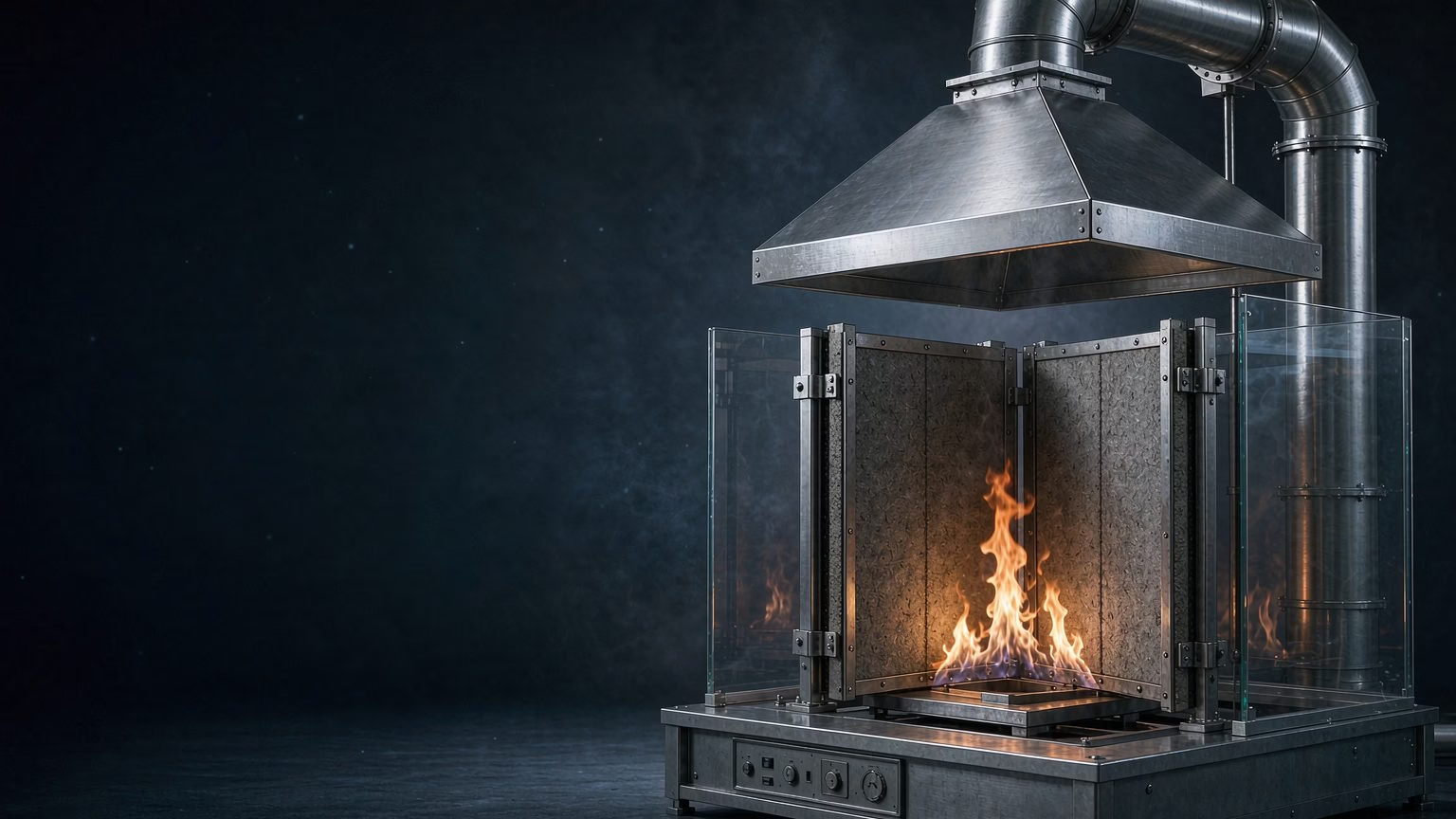
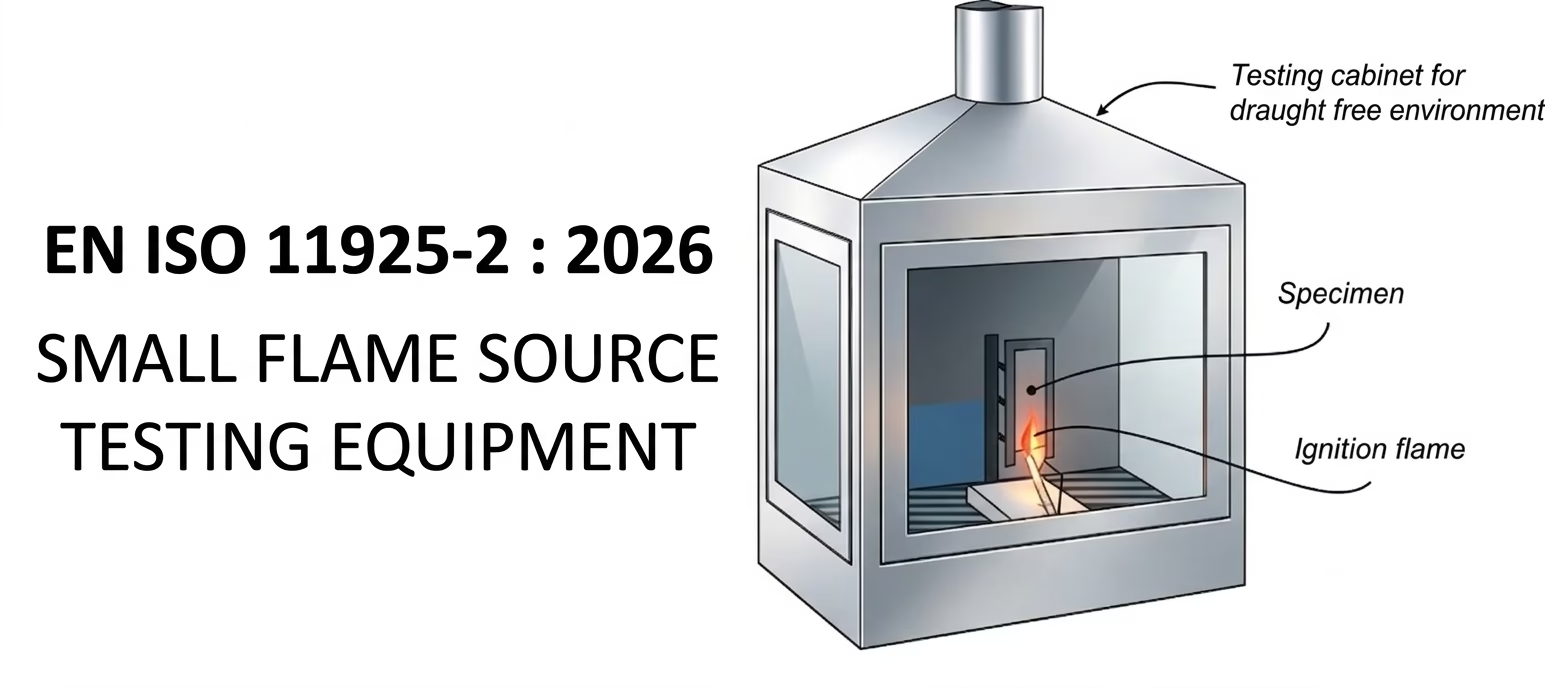
The European route builds a class from two tests. EN ISO 11925-2 applies a small direct flame to a vertically mounted specimen for a defined exposure period and records whether the flame tip reaches the 150 mm mark within the prescribed time, and whether flaming debris ignites the filter paper beneath 3. في 13823, the single burning item test, exposes a corner assembly to a 30 kW sandbox burner and reports fire growth rate, total heat release, lateral flame spread and smoke production 4. في 13501-1 then converts those outputs into a class from A1 to F, with s1 to s3 for smoke and d0 to d2 for flaming droplets 5.
Two details matter for wall coverings. أولاً, EN ISO 11925-2:2026 is the current edition — the 2020 edition has been superseded, so a test report citing the 2020 text is citing a withdrawn document. ثانية, the SBI specimen is a corner of two wings, and the covering has to be mounted on the substrate the sponsor declares. The substrate is therefore visible in the result, which is exactly why the declaration matters.
NFPA 286: the room corner route
NFPA 286 evaluates the contribution of wall and ceiling interior finish to room fire growth in a full-scale room corner configuration 2. It exists because the tunnel and the small-flame tests do not answer the question that matters most for a lined corridor or a public interior: does the lining let a small fire become a large one? For textile, expanded and heavily embossed coverings, and for products where the tunnel result looks good but the installed behaviour does not, NFPA 286 is the route that regulators reach for.
ايزو 5658-2: lateral spread for transport
ايزو 5658-2 measures lateral flame spread along a specimen surface in a vertical configuration using a radiant panel, and is the reference method for surface flammability in marine and transport applications 6. It reports the critical heat flux at extinguishment rather than an index, which makes it a physically interpretable number: the flux below which the flame will not keep spreading. For a cruise ship or ferry interior, this is the route that decides whether a decorative wall lining is acceptable.
| Route | Apparatus | Output | Governs |
|---|---|---|---|
| ASTM E84 / أول 723 | Steiner tunnel, horizontal | Flame spread index, smoke developed index | North American codes, Class A/B/C |
| في 13501-1 | الهيئة الفرعية للتنفيذ + small flame | Euroclass A1–F, s1–s3, d0–d2 | EU CE marking, UK and Gulf adoption |
| NFPA 286 | Full-scale room corner | Heat release, flame spread, smoke | Interior finish where tunnel is insufficient |
| ايزو 5658-2 | Vertical radiant panel | Critical flux at extinguishment | Marine and transport surface flammability |
| ايزو 9705-1 | Full-scale room corner | Heat release rate, smoke | Research and product development 7 |
Reading the Class Letters Correctly
A Euroclass is three statements, not one. The main letter describes contribution to fire growth; the s rating describes smoke; the d rating describes flaming droplets or particles. A covering rated B-s1,d0 is a materially different product from one rated B-s3,d2 even though both carry a B.
| Classification | What it asserts | Practical reading for a wall covering |
|---|---|---|
| A2-s1,d0 | Very limited contribution, minimal smoke, no droplets | Achievable only with an essentially inorganic facing |
| B-s1,d0 | Limited contribution, minimal smoke, no droplets | The usual target for a coated glass-fibre or mineral facing |
| C-s2,d0 | Moderate contribution, moderate smoke, no droplets | Common for treated textile and heavier vinyl |
| D-s2,d2 | Acceptable contribution, moderate smoke, droplets present | Restricted to circulation areas with other protection |
| E | Only resisted a small flame for a short time | Not a wall lining for escape routes |
| F | No performance determined | Declare honestly rather than imply a class |
Two mistakes recur. The first is treating an ASTM E84 Class A as equivalent to a Euroclass B. The two use different apparatus, different specimen orientations and different metrics; the tunnel is horizontal and the SBI is a corner, so a “Class A” claim tells a European reviewer nothing about Euroclass. The second is quoting the main letter and dropping the s and d suffixes, which is exactly the information a fire engineer needs when specifying a protected escape route.
The Mounting Rules That Decide Pass or Fail
Because every route tests an assembly, the report has to state the mounting. For a wall covering that means the substrate type and thickness, the adhesive type and application rate, the mass per unit area of the covering, whether seams are included, and whether the specimen was tested as a free-standing assembly or fixed to a rigid backing.
The last point is where thin products most often go wrong. A covering tested free-standing can behave better than the same covering glued to a combustible board, because heat escapes from both faces. A covering tested on a non-combustible board can behave better than the same covering on plywood. Neither result is wrong; both are conditional, and the condition is the specification. A practical rule for suppliers: test on the worst substrate you intend to allow in your installation instructions, then forbid anything worse in writing.
What Changes When the Covering Is Thin
Four properties drive the result on a thin covering, and all four belong on the datasheet.
| Property | How it moves the result | What to do about it |
|---|---|---|
| Mass per unit area | The strongest single predictor. Light coverings follow the substrate; heavy ones carry enough fuel to spread on their own | Declare it; test the lightest and heaviest variants |
| Surface texture | Embossing, flocking and deep relief concentrate fuel and create air channels | Textured products are the ones most likely to need the room corner route |
| Thermoplastic behaviour | Softening and flowing produces flaming droplets, which is what the d rating records | A thermoset or mineral facing usually holds its shape |
| Colour and formulation | Pigment loading and additive levels differ between colourways of one base product | Put the darkest or most heavily loaded colourway in the programme |
Product Standards Are Not Test Standards
A frequent source of confusion is the difference between the standard that tells you how to test and the standard that tells you what a product must be. For wallcoverings in roll and panel form, في 15102 performed the second job — and both the 2007 edition and the 2007+A1:2011 consolidation are now listed as withdrawn and replaced in the UNI catalogue 8. That has a direct consequence: a declaration of performance that cites EN 15102:2007+A1:2011 is citing a superseded document, and the fire classification attached to it should be re-checked against whatever replaced it before the product is placed on the EU market.
The lesson generalises. Separate the product standard from the test standard, and check the status of both. Test methods get revised on their own schedule — EN ISO 11925-2 moved to a 2026 طبعة, في 13823 is at 2020+A1:2022 — and a report that is technically correct under one edition may not satisfy a notified body working to another.
| Document type | Example | What to check before quoting it |
|---|---|---|
| Test method | EN ISO 11925-2, في 13823, ASTM E84 | Edition year and whether it is still current |
| Classification | في 13501-1 | Edition year and the s/d suffixes |
| Product standard | في 15102 | Whether it is current or withdrawn and replaced |
| Mounting and conditioning | في 13238 series | Which substrate rules the report followed |
Building a Test Programme for a Wall Covering Range
Work in this order and most of the cost falls away. أولاً, list the markets you actually sell into and map each to its route; there is no point running a tunnel test for a product that only ships within the EU. ثانية, fix the worst-case construction — lightest and heaviest mass per unit area, darkest colourway, thickest embossing, and the most combustible substrate you will permit. ثالث, test that worst case in the route that governs your largest market. Fourth, use the resulting data to write installation instructions that are narrower than the test conditions, never wider.
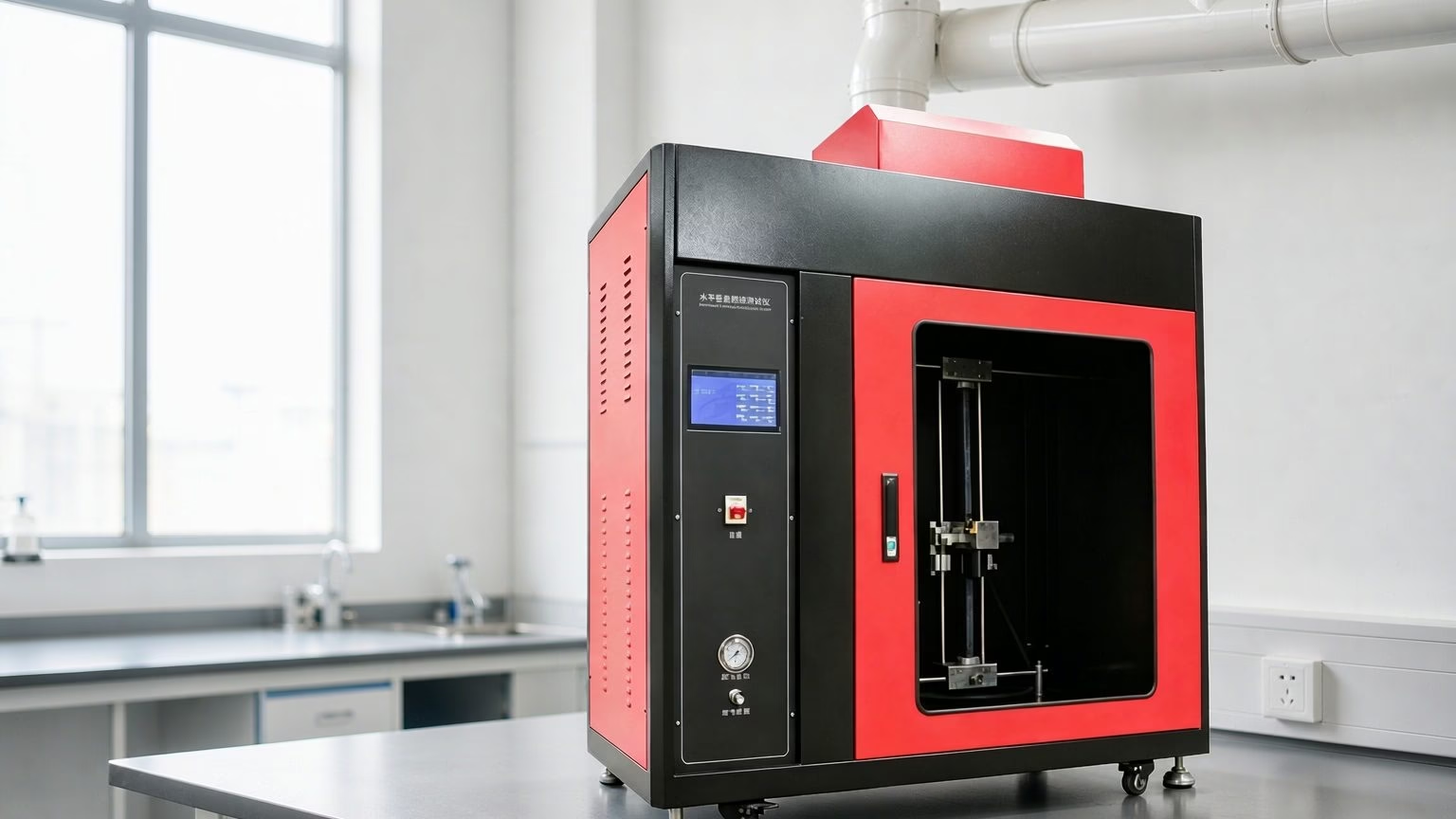
For suppliers running several routes, the equipment overlaps more than expected. A single burning item apparatus covers EN 13823, a small-flame cabinet covers EN ISO 11925-2, and a radiant panel covers lateral spread work. ال single burning item test apparatus و building material combustibility test apparatus are the two units most wall covering manufacturers end up needing first; ال radiant heat flux tester covers the panel work and the المسعر المخروطي supports development and comparative screening. All four sit under the fire and flame testing equipment category.
If your interest is the general method rather than wall coverings specifically, the overview of how to test flame spread on building materials covers the same apparatus across product types. ال EN ISO 11925-2 single flame source test article walks through the small-flame procedure step by step, و في 13501-1 Euroclass SBI guide explains how SBI outputs become classes. For the wider regulatory picture across regions, see fire testing standards for interior building materials.
الأسئلة المتداولة
What is the difference between ASTM E84 Class A and Euroclass B?
They come from different apparatus and are not equivalent. ASTM E84 places the specimen face-down as the ceiling of a horizontal tunnel and reports a flame spread index, with Class A defined as an index of 0 ل 25 and smoke not exceeding 450. Euroclass B is built from a vertical small-flame test and a corner SBI test. A Class A result does not establish a Euroclass, and a Euroclass does not satisfy a North American code official.
Does the substrate really change the flame spread result?
نعم, and often by more than one class. Every route tests a mounted assembly, so a thin covering on a non-combustible board can perform substantially better than the same covering on plywood. That is why reports must state substrate type and thickness. Test on the worst substrate you will permit in your installation instructions, then restrict installations in writing to that or better.
When do I need NFPA 286 instead of ASTM E84?
When the question is whether a lining will let a small fire grow into a room fire, rather than how a specimen ranks in a tunnel. NFPA 286 uses a full-scale room corner and is the route regulators specify for interior finish where the tunnel result is not considered sufficient, particularly for textile, expanded and heavily embossed coverings. It is also the test most likely to expose a product that passes the tunnel on a favourable substrate.
Which edition of EN ISO 11925-2 should a test report cite?
ال 2026 طبعة, which took effect on 28 January 2026 and replaced the 2020 طبعة. A report citing the 2020 text is citing a withdrawn document, and a notified body working to the current edition may not accept it. The same discipline applies across the suite: في 13823 is at 2020+A1:2022 and EN 13501-1 is at 2018, so each citation needs its own check.
Is EN 15102 still current for wallcoverings?
No. Both EN 15102:2007 and the consolidated EN 15102:2007+A1:2011 are listed as withdrawn and replaced. A declaration of performance that cites either is citing a superseded product standard, and the fire classification attached to it should be re-verified against the replacement before the product is placed on the EU market.
What is the critical heat flux in ISO 5658-2?
It is the radiant flux below which a flame will no longer continue to spread along the specimen surface, reported in kilowatts per square metre. Because it is a physical threshold rather than an index, it translates directly into a design statement: this lining will not sustain lateral spread below that flux. That is why marine and transport rules use it for surface flammability of wall and ceiling linings.
Does the colour of a wall covering affect its fire class?
It can, because pigment loading and flame-retardant additive levels change between colourways of the same base product. A class obtained on a light colourway does not automatically transfer to a heavily pigmented one. If your range includes dark or strongly coloured variants, include the worst case in the test programme rather than assuming equivalence.
خاتمة: Specify the Assembly, Not the Sheet
The sequence that avoids most failures is short. Identify the route your market requires. Fix the worst-case construction across mass per unit area, texture, colourway, adhesive and substrate. Test that worst case. Publish installation instructions that are narrower than the tested condition. Record the substrate, adhesive and mass per unit area on the face of the report, not in an annex.
If you are building or extending a wall covering test capability, the BRT application team can advise on specimen sizes, mounting frames and the substrate set that matches your target markets. Start from the fire and flame testing equipment category or send us your target markets and product range and we will map them to the routes and apparatus you need.
Written by the BRT Testing fire application team, شركة شنيانغ باورويتونج لمعدات التشغيل الآلي, المحدودة. — manufacturers of reaction-to-fire and fire-resistance test equipment for laboratories and manufacturers worldwide.
مصادر
- ASTM International — E84 Standard Test Method for Surface Burning Characteristics of Building Materials — https://store.astm.org/e84.html
- NFPA — NFPA 286, Standard Methods of Fire Tests for Evaluating Contribution of Wall and Ceiling Interior Finish to Room Fire Growth — https://www.nfpa.org/codes-and-standards/nfpa-286-standard-development/286
- UNI — EN ISO 11925-2:2026, Reaction to fire tests — Ignitability of products subjected to direct impingement of flame — https://webstore.uni.com/en/en-iso-11925-2-2026
- UNI — EN 13823:2020+A1:2022, Reaction to fire tests for building products — https://webstore.uni.com/en/en-13823-2020-a1-2022
- UNI — EN 13501-1:2018, Fire classification of construction products and building elements — https://webstore.uni.com/en/en-13501-1-2018
- UNI — ISO 5658-2:2006, Reaction to fire tests — Spread of flame — Lateral spread on building and transport products in vertical configuration — https://webstore.uni.com/en/iso-5658-2-2006
- UNI — ISO 9705-1:2016, Room corner test for wall and ceiling lining products — https://webstore.uni.com/en/iso-9705-1-2016
- UNI — EN 15102:2007+A1:2011, Decorative wallcoverings (withdrawn and replaced) — https://webstore.uni.com/en/en-15102-2007-a1-2011
- ASTM International — E162 Standard Test Method for Surface Flammability of Materials Using a Radiant Heat Energy Source — https://store.astm.org/e0162-22.html
- UNI — EN 13238:2010, Conditioning procedures and general rules for selection of substrates (withdrawn and replaced) — https://webstore.uni.com/en/en-13238-2010