The Short Answer
“Fire rating” is shorthand, و “fire resistance rating” is a defined quantity — that is the whole difference, and it is worth money. A fire resistance rating is a number of minutes that an element of construction has held, under a standardised furnace fire, against defined criteria such as loadbearing capacity, integrity and insulation, tested to ISO 834-1 or EN 1363-1 and classified by EN 13501-2 123. “Fire rating”, by contrast, appears in everyday speech and in weak specifications, and can mean almost anything: a fire resistance rating, a reaction to fire class, a flame spread index, or nothing enforceable at all. If a drawing says “fire rating” without naming a standard, a criterion and a number of minutes, it has not yet specified anything. The fix is always the same three-part sentence: which test, which criterion, how many minutes.

Why the Vocabulary Splits
Fire safety engineering needs to separate two physically different questions, and the standards were written to keep them apart. The first question is how a product behaves when it is exposed to fire — does it ignite, how fast does flame spread across it, how much heat and smoke does it release. That is reaction to fire, and in Europe it is classified through EN 13501-1 into the Euroclass letters A1 through F, with additional smoke and droplet classifications [1]. The second question is how long an element of construction holds a fire back — how many minutes a wall, floor or door continues to separate spaces or carry load while a fully developed fire burns on one side. That is fire resistance, tested to the ISO 834-1 or EN 1363-1 exposure and classified through EN 13501-2 [2][3]. Both questions matter, both are answered by measurement, and neither answer can be derived from the other, which is why keeping the vocabulary straight is not pedantry but the cheapest form of quality control available on a fire specification.
A Rating Is a Time, a Class Is a Category
The two outputs do not even have the same shape. A fire resistance rating is expressed in minutes drawn from a standard series — 15, 20, 30, 45, 60, 90, 120, 180 و 240 are the usual steps — and is attached to an element of construction, not to a material [2]. A Euroclass is a letter with suffixes, attached to a product in a defined end-use application, and says nothing about minutes [1]. “This wall is REI 60” و “this board is B-s1,d0” are both complete statements, but they cannot be compared with each other, and neither can be shortened to “fire rated” without losing the information that made it useful.
The Two Systems Behind the Numbers
| European route | North American route | |
|---|---|---|
| Fire resistance test | ايزو 834-1 [3] / في 1363-1 4 | ASTM E119 5; NFPA 251 8 |
| Fire resistance classification | في 13501-2:2023, letters R/E/I plus minutes [2] | Rating in hours reported directly from the test |
| Reaction to fire classification | في 13501-1:2018, Euroclass A1–F, s and d suffixes [1] | ASTM E84 flame spread index and smoke developed index 6 |
| Cables | Excluded from EN 13501-1 and covered by EN 13501-6 [1] | Separate listing and cable standards |
| Joints and service penetrations | Separate element standards; joints to the element parts | ASTM E1966 for fire-resistive joint systems 7 |
Why the Insulation Limits Differ
The two fire resistance systems heat the specimen on a similar curve but judge it differently. The European insulation criterion fails when the mean temperature rise on the unexposed face exceeds 140 K, or when any single point exceeds 180 K above the initial temperature [4]. The ASTM E119 route uses an average unexposed-surface temperature rise of 250 °F (about 139 درجة مئوية) and a single-point rise of 325 °F (about 181 درجة مئوية), and adds a hose stream exposure for many assemblies [5]. A number that satisfied one system therefore needs re-checking against the other before it is written into a specification for the other market.
What a Fire Resistance Rating Actually Commits You To
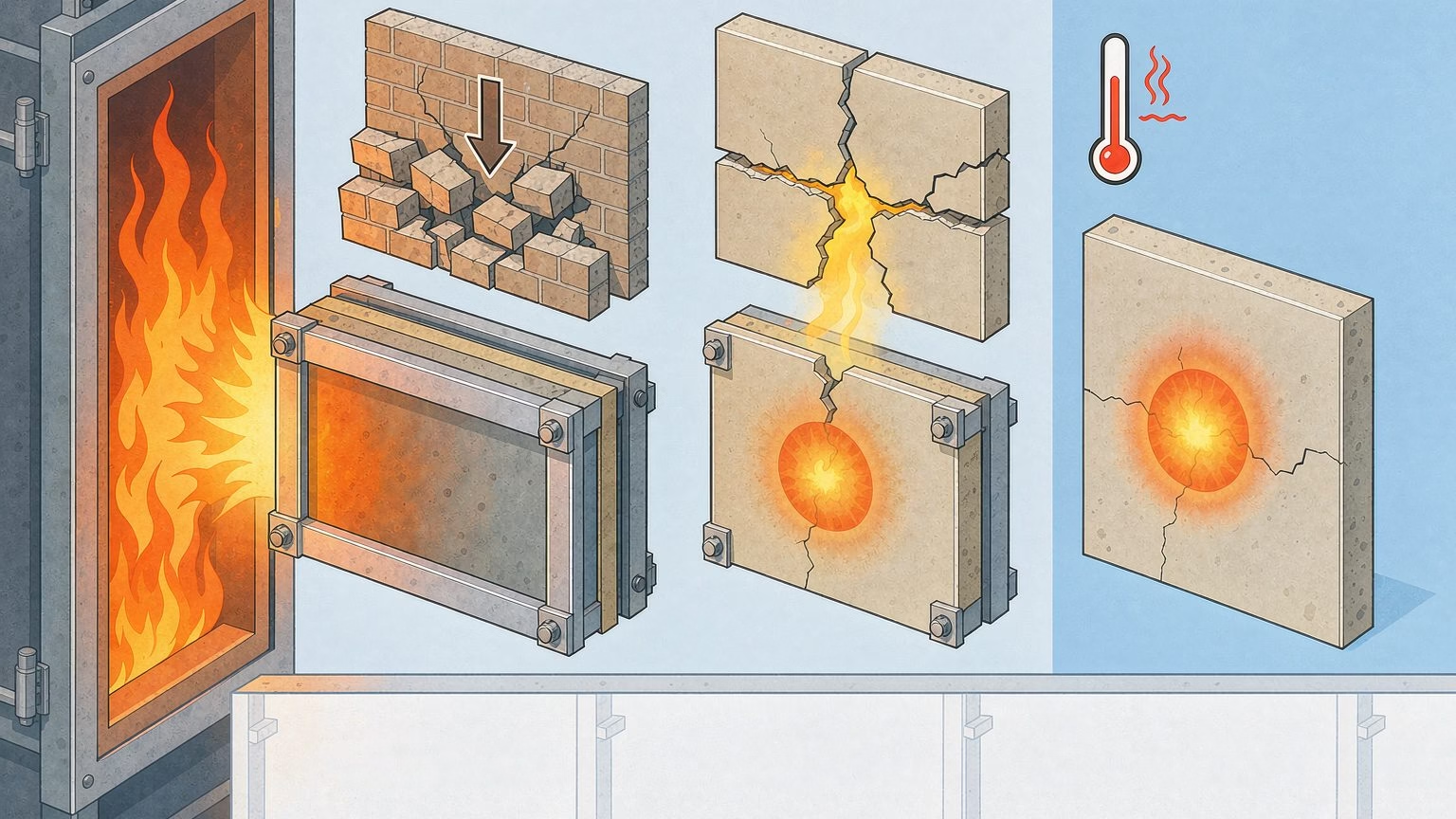
| Criterion | Question it answers | Failure looks like |
|---|---|---|
| R — loadbearing capacity | Does the element still carry load? | Collapse, or deflection beyond the limits in EN 1363-1 [4] |
| E — integrity | Does it still block flame and hot gases? | Sustained flaming on the unexposed face, or an opening the gap gauges can enter |
| I — insulation | Has heat come through? | Mean rise over 140 K, or a single point over 180 K [4] |
The Rating Is the Shortest of the Three
Because each criterion is timed independently, a single furnace run produces three numbers, and the reported fire resistance rating is governed by whichever fails first [2]. A wall that holds integrity for 90 minutes and insulation for 47 minutes is an EI 45 wall, not an EI 90 wall with a note. This is also why a fire resistance rating cannot be upgraded by argument: the number belongs to the tested assembly, and a variant needs either a new test or an extended application rule.
The Minutes Are Furnace Minutes
A fire resistance rating is measured against the ISO 834-1 standard time-temperature curve, now in its 2025 طبعة, which reaches 842 °C at 30 minutes and 945 °C at 60 minutes [3]. Those minutes are comparable exposure units, not predictions of how long a real fire will last. A compartment fire can be hotter or cooler than the curve, shorter or longer, and the standards themselves frame the output as data for classification rather than as an assessment of the building. Specifiers who treat a 60-minute rating as “one hour of safety in a real fire” are reading more into the number than it carries. Our ايزو 834 temperature-time curve explained article unpacks the curve itself.
Variants Need Rules, Not Opinions
The rating belongs to the assembly as it was tested, which raises the practical question every project eventually asks: what happens when one detail changes? The answer is that variants are covered by extended application rules, not by engineering judgement in a meeting. A board thickness, a stud gauge, a joint type or an opening can only be carried across to a new configuration where a published rule says it can. Where no rule exists, the variant needs a new furnace run. This is the second most common source of surprise in fire engineering projects, after the loose vocabulary itself: a team assumes that “the same fire rating” transfers to a slightly different build-up, and the assumption turns out to be unsupported by anything either the test report or the classification standard actually says.
Two Worked Examples Where the Distinction Paid
The Submittal That Could Not Be Checked
A contractor submits an alternative partition with “the same fire rating” as the specified wall. The specification itself says “1 hour fire rating”. Nobody can compare the two products, because the phrase does not say which of the two questions is being answered. If the original document had said “EI 60 to EN 1364-1, classified by EN 13501-2” [2], the review would have taken minutes: the alternative either carries a classification to the same standard with the same criteria, or it does not. As written, the submittal cycle runs until someone traces the original test report, which is exactly the work the specification was supposed to save.
The Board That Was Asked the Wrong Question
A manufacturer’s datasheet leads with a Euroclass, because boards are products and products are classified by reaction to fire [1]. A specifier reads “Class B” as some kind of wall performance and writes it into an element schedule. The wall then has to be sourced as an assembly with its own test, and the board class, while perfectly real evidence about how the board contributes to a fire, was never evidence about how long a wall built from it holds fire back. Nothing in the chain was dishonest; the two questions were simply allowed to answer each other’s mail.
What “Fire Rating” Usually Turns Out to Mean
| When someone says | What they usually mean | What to write instead |
|---|---|---|
| “This board has a fire rating” | A Euroclass from EN 13501-1, or a flame spread index | “Class B-s1,d0 to EN 13501-1” [1] |
| “This wall has a fire rating” | A fire resistance rating from a test report | “REI 60 to EN 1365-1 / EN 13501-2” [2] |
| “The door has a fire rating” | An EI or E rating for a doorset | “EI 30 doorset, tested and classified” |
| “This cable has a fire rating” | A reaction to fire class for cables | The cable classification standard, named |
| “Two-hour fire rating” | A 120-minute rating under ASTM E119 | “2 h rating to ASTM E119” [5] |
Why the Loose Phrase Survives
The phrase also survives because the two families of evidence are usually produced by different organisations at different times. The product datasheet arrives from the board manufacturer, carries a reaction to fire class, and is written long before anyone has decided how the wall will be built. The element classification arrives from a furnace test commissioned months later, often by a different party, and belongs to an assembly that nobody has written a datasheet for. Each document is internally consistent, and the only place the mismatch becomes visible is the specification that has to hold both.
The phrase survives because it is convenient and because most listeners fill in the right meaning most of the time. It fails at exactly the moments that matter: a tender, a substitution, or a review. If a supplier offers an alternative product with “the same fire rating”, and the original document never said which rating, nobody can tell whether the substitution is like-for-like. The cheapest quality control step in fire specification is a search of the document for the words “fire rating” and replacing each with a standard, a criterion and a number.
Where the Confusion Costs Money
| Failure | Cause | Cost |
|---|---|---|
| Product rejected at approval | “Fire rating” on the submittal, no standard named | Re-submittal cycle |
| Wrong test commissioned | Reaction to fire test ordered for an element | Furnace time and fees wasted |
| Substitution accepted | No criterion to compare against | Performance quietly downgraded |
| Element fails in review | REI result used where only EI was tested | Redesign of the load path |
| Mixed-system numbers | 140 K / 180 K limits quoted in an ASTM document | Non-compliant specification |
| Cable clause unenforceable | في 13501-1 classes applied to cables [1] | Clause void at review |
Equipment Behind Both Numbers
| Equipment | Which question it answers | Product page |
|---|---|---|
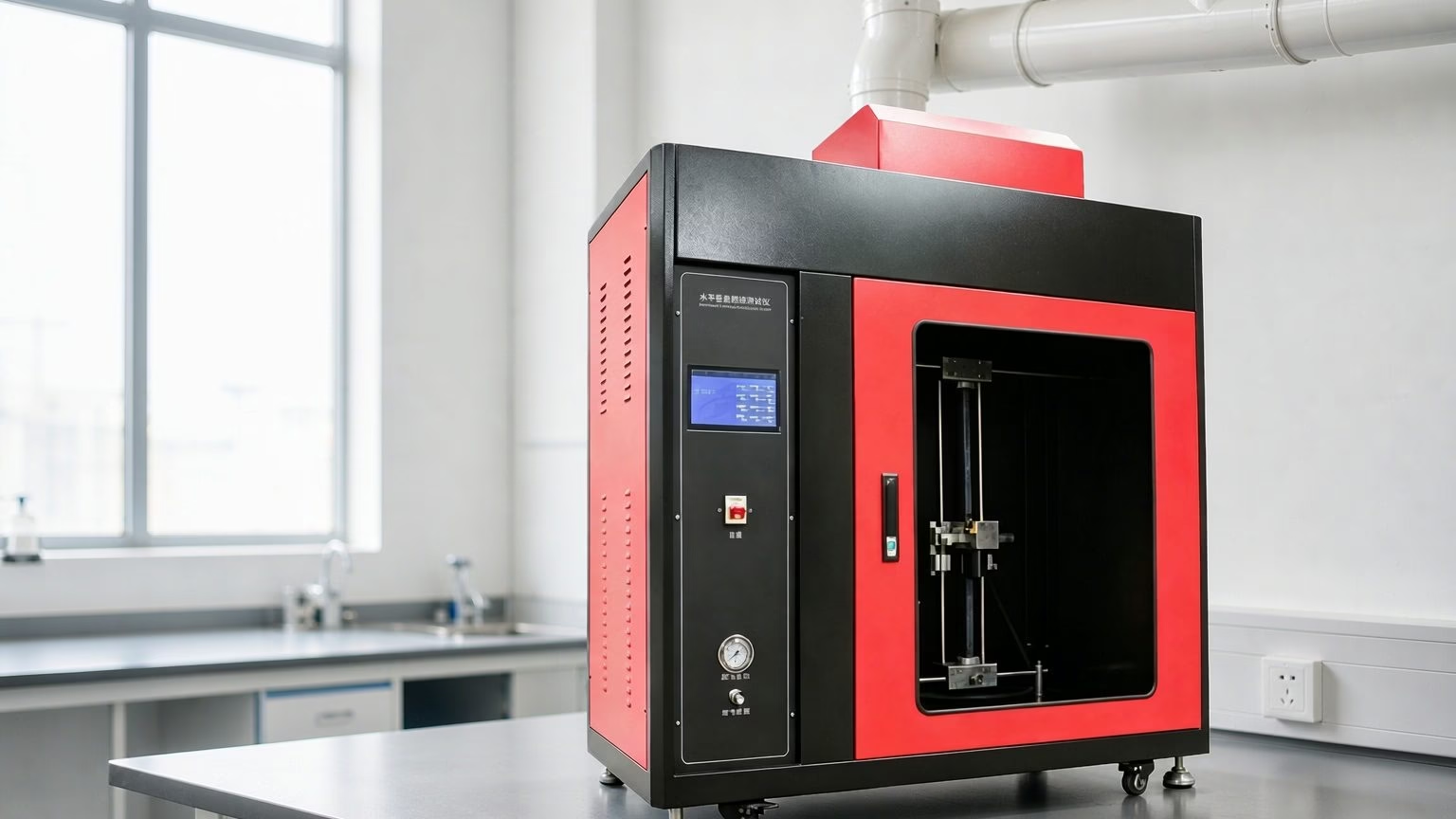
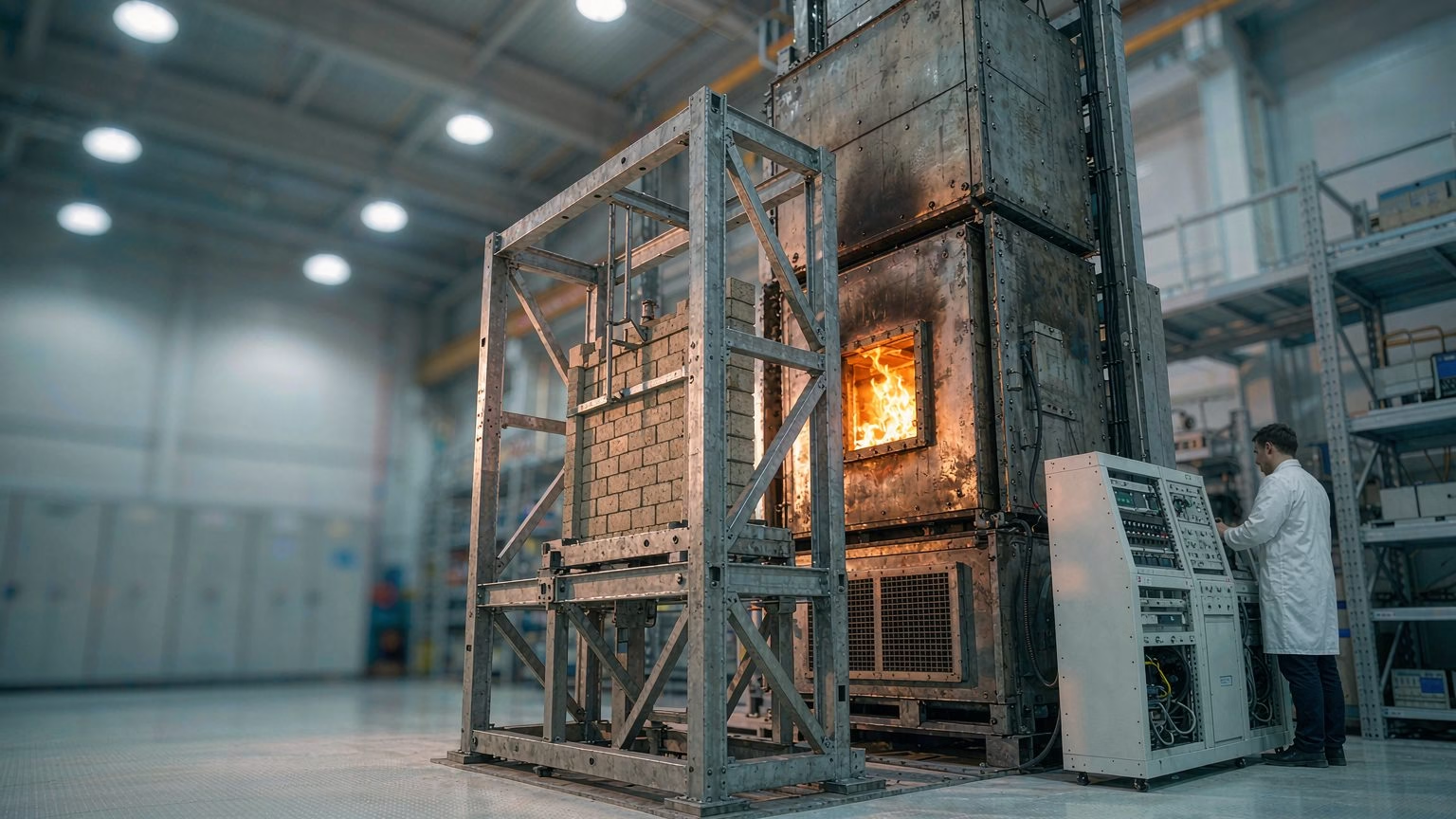
| Vertical integrated fire resistance test furnace | Fire resistance of walls, partitions and doorsets | Vertical integrated fire resistance test furnace |
| Horizontal fire resistance test furnace | Fire resistance of floors, roofs and horizontal elements | Horizontal fire resistance test furnace |
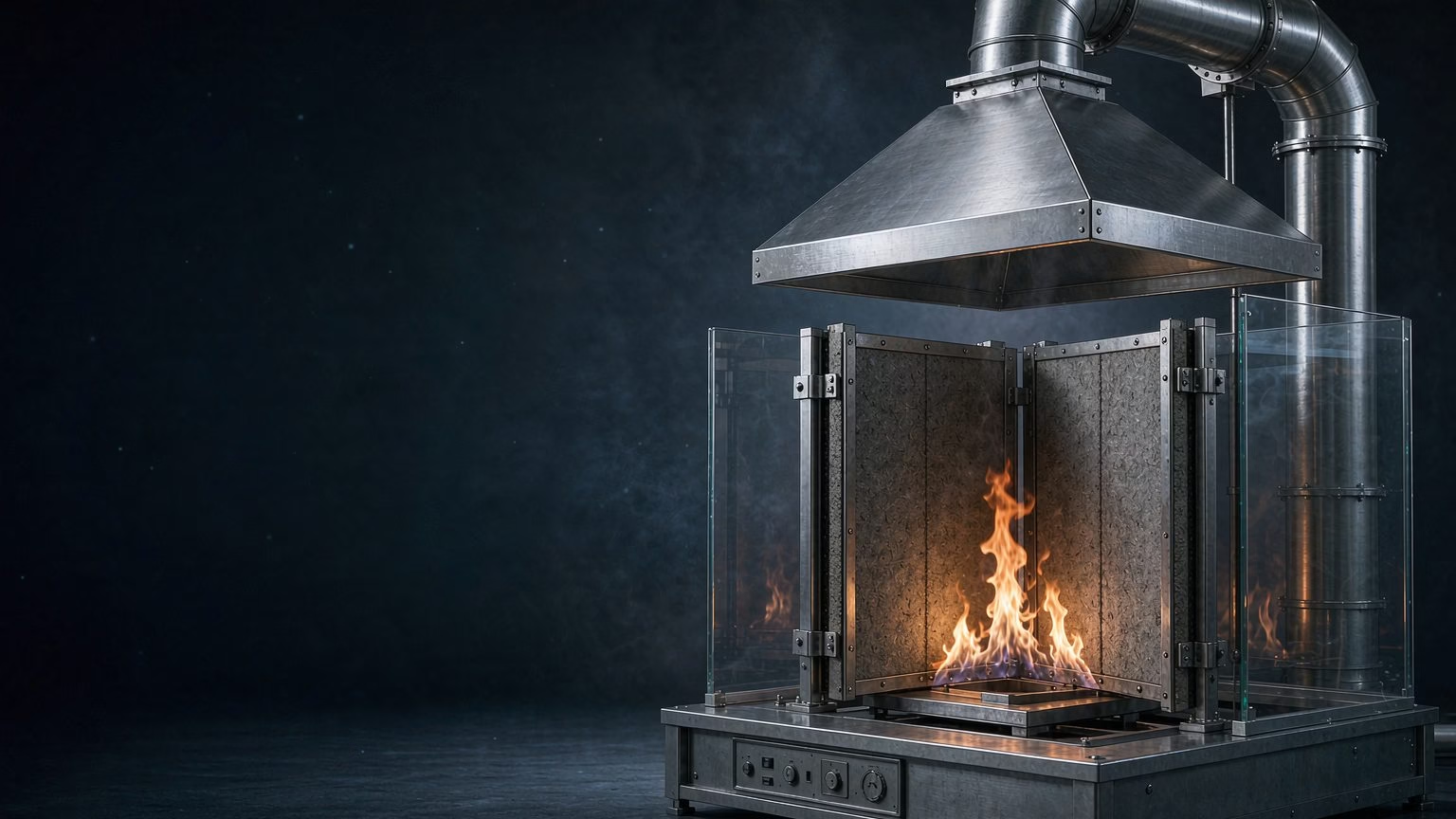
| Single burning item test apparatus | Reaction to fire classes for many construction products | Single burning item test apparatus |
| Non-combustibility apparatus | The A1 and A2 routes through ISO 1182 | Non-combustibility apparatus |
A laboratory that has to answer both questions needs both families of equipment, because the fire resistance furnace and the reaction to fire rigs do not substitute for each other. ال reaction to fire testing overview explains the second family, و في 13501-1 Euroclass and SBI testing guide goes deeper into how the classes are produced. For the related but distinct contrast between a material property and an element performance, see the difference between fire resistance and flame retardancy, و beginner’s guide to building material fire classification covers the class ladder for newcomers.
الأسئلة المتداولة
Is a fire rating the same as a fire resistance rating?
Not exactly. A fire resistance rating is a defined quantity: minutes against a standard furnace fire, judged on loadbearing capacity, integrity and insulation, classified by EN 13501-2 or reported from an ASTM E119 test. “Fire rating” is everyday shorthand that may refer to that, to a reaction to fire class, or to nothing enforceable.
What units is a fire resistance rating expressed in?
Minutes in the European system, drawn from the series 15, 20, 30, 45, 60, 90, 120, 180 و 240, and written with the criteria achieved, such as REI 60 or EI 30. The North American ASTM E119 route reports ratings in hours, such as a 2-hour rating.
Can a material have a fire resistance rating?
No. Fire resistance belongs to elements of construction — walls, floors, doors, beams — tested as assemblies. Materials and products receive reaction to fire classifications such as the Euroclass letters of EN 13501-1. A board cannot be REI 60; a wall built from it can be.
What is the difference between fire resistance and reaction to fire?
Fire resistance asks how long an element holds a fire back; reaction to fire asks how a product contributes to a fire while it burns. The first is measured in minutes against a furnace curve, the second is a class from tests such as the single burning item test, and neither substitutes for the other.
Does a 60-minute rating mean one hour of safety in a real fire?
No. The rating is measured against the ISO 834-1 standard time-temperature curve, which is a reference exposure for comparing assemblies. A real compartment fire can be hotter, cooler, faster or slower than the curve, so the minutes are comparable exposure units rather than a prediction of survival time.
Why do European and American ratings not match?
Because the criteria differ. The European insulation limits are a mean rise of 140 K and a single point of 180 K, while ASTM E119 uses average and single-point rises of 250 °F and 325 °F, and adds a hose stream exposure for many assemblies. An assembly tested in one system has to be re-checked before being specified in the other.
What should replace the words “fire rating” in a specification?
A standard, a criterion and a number: for example “REI 60 to EN 1365-1, classified by EN 13501-2” for an element, or “Class B-s1,d0 to EN 13501-1” for a product. Every instance of the bare phrase should be replaced before the document goes out.
خاتمة: A Decision Order
- Decide which question is being asked. How a product contributes to fire, or how long an element holds fire back [1][2].
- Name the system. European work runs ISO 834-1 / في 1363-1 into EN 13501-2; North American work runs ASTM E119 [2][3][4][5].
- Name the criterion. ر, E, I or a combination for resistance; a class letter plus suffixes for reaction to fire [1][2].
- Give the number in the right units. Minutes from the standard series, or hours on the ASTM route — never “fire rating” on its own [2][5].
- Check the market. 140 K / 180 K and 250 °F / 325 °F are different limits; keep one system per document [4][5].
- Sweep the document. Search for “fire rating” and replace every hit with a standard, a criterion and a number.
If your laboratory has to produce either number, the fire resistance furnace comes first and the reaction to fire rigs second, because the rating questions arrive before the class questions in most programmes.
Talk to BRT Testing about a vertical integrated fire resistance test furnace for the rating side of the programme, or تواصل معنا with the standards you are targeting.
Written by the BRT Testing application engineering team. BRT Testing manufactures fire and flame testing equipment for construction products, cables and plastics. Standard editions were verified against the UNI standards store and the ASTM store on 28 أكتوبر 2026.
مصادر
- UNI Ente Italiano di Normazione — EN 13501-1:2018, Fire classification of construction products and building elements — Part 1: Classification using data from reaction to fire tests — https://webstore.uni.com/en/en-13501-1-2018
- UNI Ente Italiano di Normazione — EN 13501-2:2023, Fire classification of construction products and building elements — Part 2: Classification using data from fire resistance tests, excluding ventilation services — https://webstore.uni.com/en/en-13501-2-2023
- UNI Ente Italiano di Normazione — ISO 834-1:2025, Fire resistance tests — Elements of building construction — Part 1: General requirements — https://webstore.uni.com/en/iso-834-1-2025
- UNI Ente Italiano di Normazione — EN 1363-1:2020, Fire resistance tests — Part 1: General requirements — https://webstore.uni.com/en/en-1363-1-2020
- ASTM International — E119, Standard Test Methods for Fire Tests of Building Construction and Materials — https://store.astm.org/e119.html
- ASTM International — E84, Standard Test Method for Surface Burning Characteristics of Building Materials — https://store.astm.org/e84.html
- ASTM International — E1966-15, Standard Test Method for Fire-Resistive Joint Systems — https://store.astm.org/e1966-15.html
- National Fire Protection Association (NFPA) — NFPA 251, Standard Methods of Tests of Fire Resistance of Building Construction and Materials — https://www.nfpa.org/codes-and-standards/nfpa-251-standard-development/251