- The Short Answer
- What the Non-Combustibility Test Actually Measures
- One Furnace, Four Rulebooks
- The Pass Criteria, By Market
- Specimens and Conditioning: Where Most Retests Come From
- What the Apparatus Must Deliver
- Running the Test: From Stabilisation to Reported Result
- Non-Combustibility Is Not Fire Resistance
- Where the Test Sits in the Euroclass System
- What Changed in ISO 1182:2020 and GB/T 5464-2026
- Specifying a Non-Combustibility Apparatus
- Frequently Asked Questions
- Is the non-combustibility test the same as ASTM E136?
- What is the difference between ISO 1182 and EN ISO 1182?
- How long does a non-combustibility test take?
- How many specimens do I need?
- Can I test coated or laminated products?
- What is a passing result for ISO 1182?
- Why does my furnace fail calibration at 750 °C?
- Does a non-combustibility test replace a fire resistance test?
- Conclusion: The Decision Order
The Short Answer
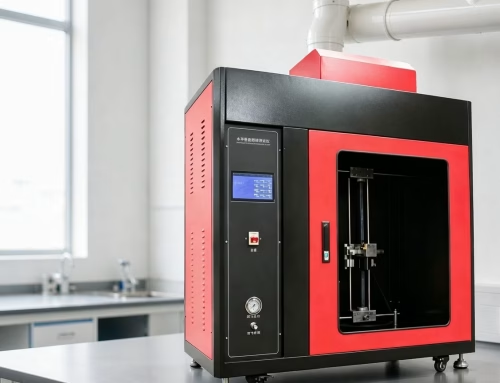
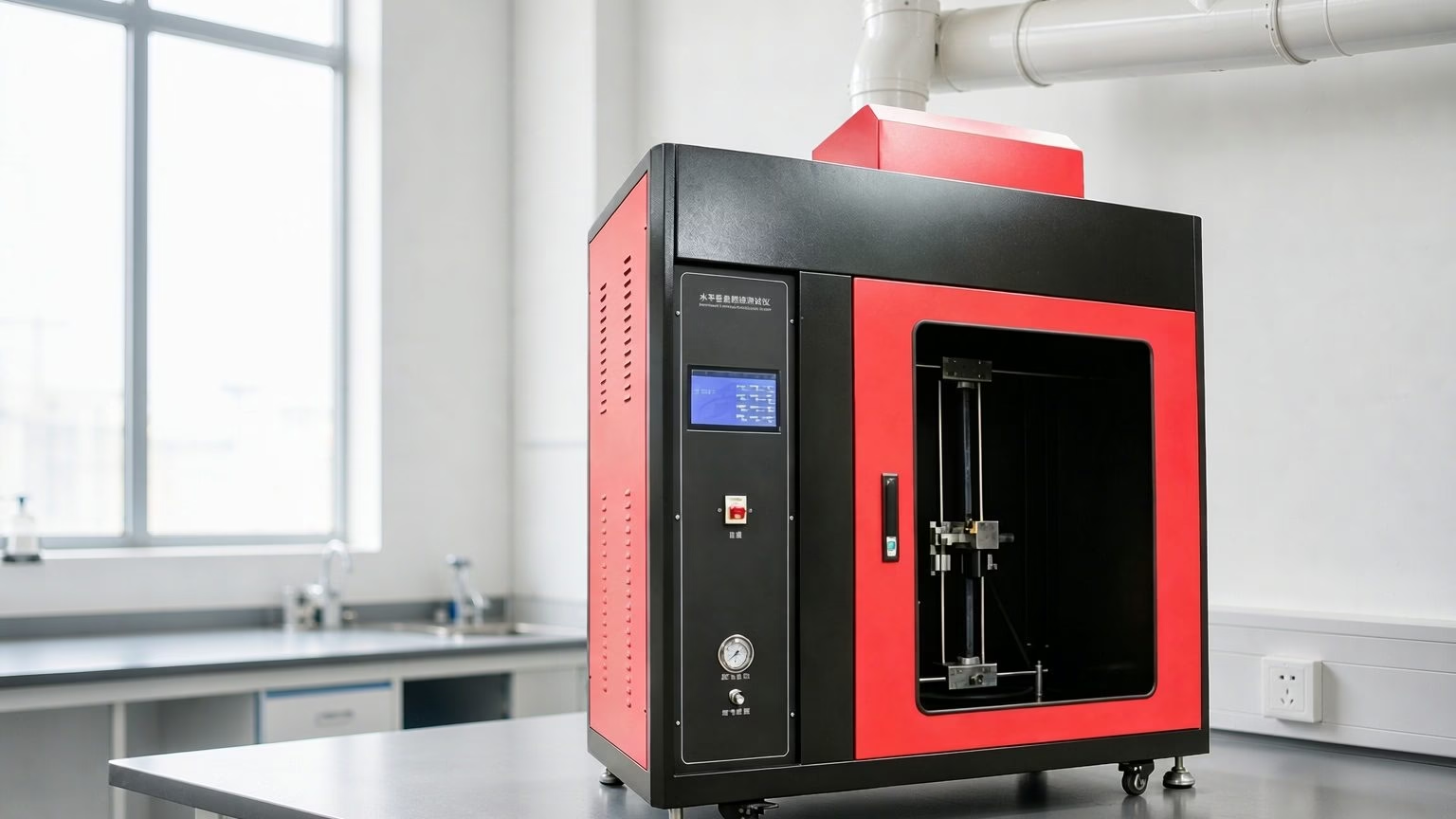
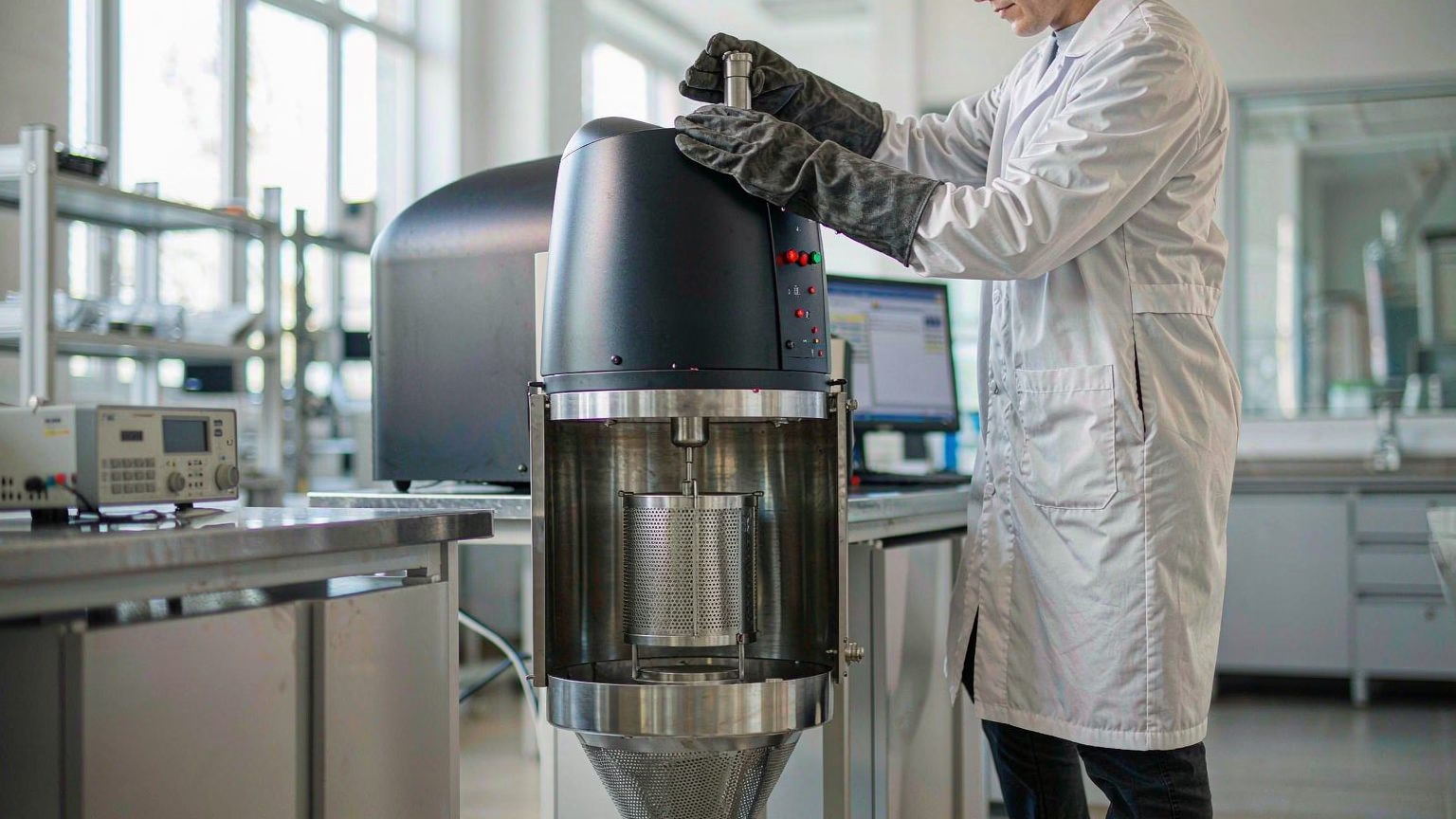
The non-combustibility test is the 750 °C tube-furnace method defined by ISO 1182. A cylindrical specimen is lowered into a pre-stabilised furnace and observed for a defined exposure period; the result is expressed as furnace temperature rise, mass loss and duration of sustained flaming. If you need one bench that can serve ISO 1182:2020, ASTM E136, ASTM E2652, GB/T 5464-2026 and IMO FTP Code Part 1, specify a cone-stabiliser furnace with two furnace thermocouples — the single-thermocouple layout predates the 2020 edition and cannot claim it. The JBR20 non-combustibility apparatus is built to that configuration.
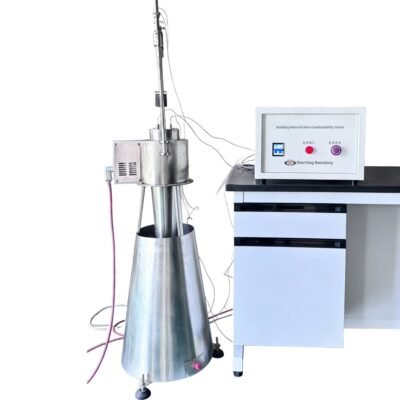
BRT JBR20 Non-Combustibility Testing Apparatus
What the Non-Combustibility Test Actually Measures
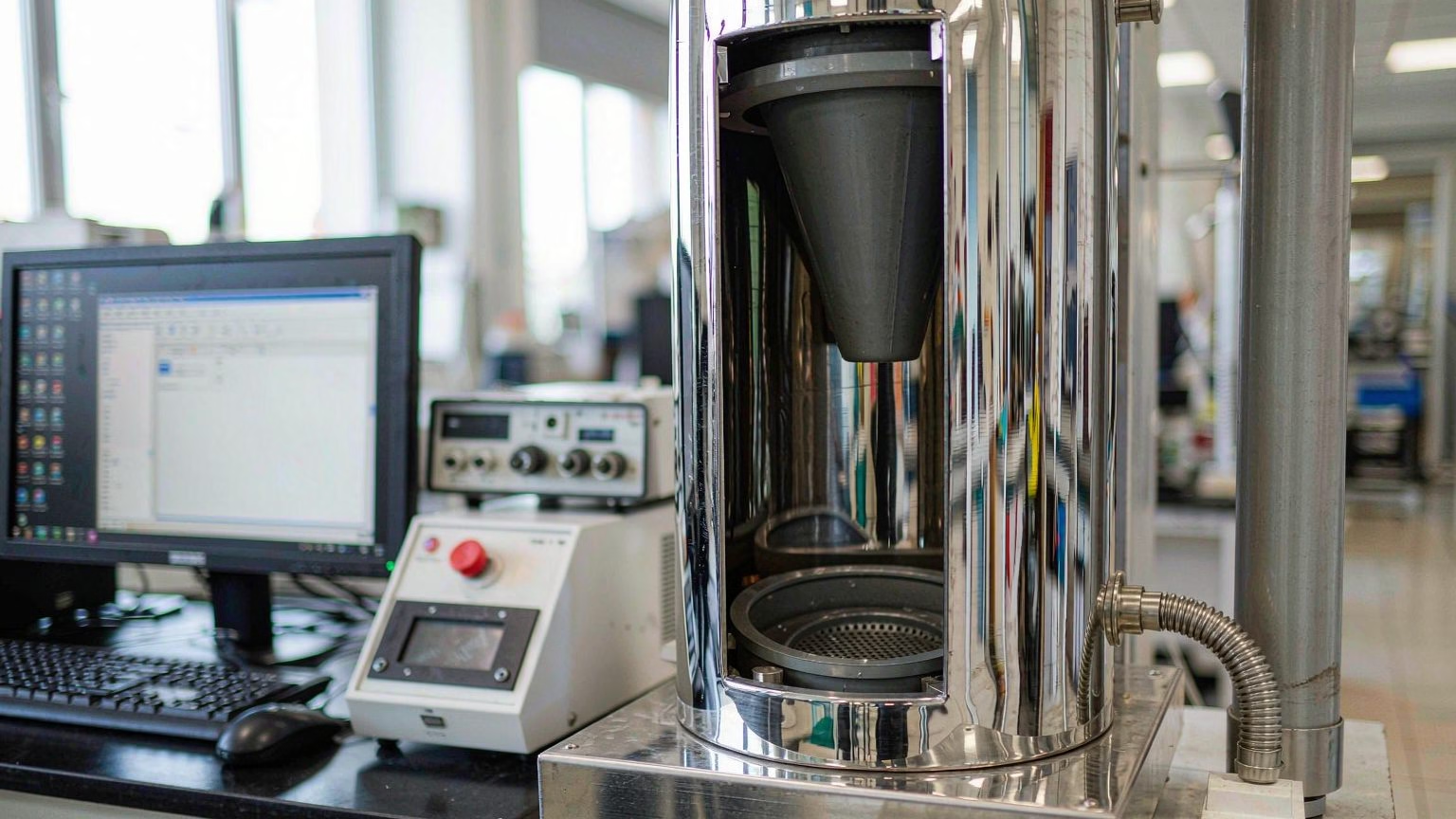
The test does not tell you how a material behaves in a real fire. It tells you whether a small, standardised specimen adds measurable heat and flame to a furnace already held at 750 °C 1. That distinction is the whole point: the method is a screening tool for materials that should not contribute to fire development at all.
Three quantities come out of a run, and each attacks a different part of that question:
- Furnace temperature rise (ΔT) — how much hotter the furnace became because the specimen was inside it.
- Mass loss (Δm) — how much of the specimen decomposed or burned away.
- Sustained flaming (t_f) — how long the specimen kept burning under its own steam.
A result that shows a small ΔT, little mass loss and no sustained flaming is read as “does not significantly contribute to fire” — the working definition of non-combustible in most building codes 5. The method is also deliberately narrow: ASTM states that no intrinsic property is measured, that self-heating is not assessed, and that results apply only to the specific apparatus and condition used 7. Treat it as a classification instrument, not a fire-safety verdict.
One Furnace, Four Rulebooks
The same physical setup sits underneath ISO 1182, ASTM E136, ASTM E2652, GB/T 5464 and IMO FTP Code Part 1. What changes between them is who wrote the rule, which edition is in force, and — in exactly one place — how many thermocouples the furnace must carry.
| Standard | Issuing body | Edition in force | Furnace thermocouples | Primary use |
|---|---|---|---|---|
| ISO 1182:2020 | ISO | 6th edition, 2020 | Two | The global benchmark; feeds EN 13501-1 A1/A2 and IMO FTP Part 1 |
| EN ISO 1182:2020 | CEN | 2020 | Two | CE marking under the Construction Products Regulation |
| ASTM E136-24c | ASTM | 2024c (Option A or B) | One | North American non-combustible classification |
| ASTM E2652-22 | ASTM | 2022 | One | Cone-stabiliser route, technically equivalent to ISO 1182:2010 |
| GB/T 5464-2026 | SAMR | 2026, effective 2026-10-01 | Two | Chinese Class A1/A2 assessment under GB 8624 |
| BS 476-4 | BSI | 1970 | One | Legacy UK route, still cited in older specifications |
| IMO FTP Code Part 1 | IMO | 2010, in force since 2012-07-01 | Two | Marine bulkheads, decks and insulation 11 |
Which Rulebook Applies to Which Market
A laboratory selling into several markets does not need several machines. It needs one furnace whose geometry satisfies the strictest of the applicable documents, and a procedure that switches criteria rather than hardware. ISO 1182:2020 is the natural anchor: EN ISO 1182:2020 is the CEN adoption of the same text, GB/T 5464-2026 is a modified adoption of it 8, and IMO FTP Code Part 1 uses a furnace of the same family [11].
The One Real Hardware Difference: One Furnace Thermocouple or Two
ASTM is unusually candid about the split. ASTM E2652-22 is described as technically equivalent to ISO 1182:2010, and its Note 1 states plainly that ISO 1182:2020 added a second furnace thermocouple while the ASTM method continues to use one [7]. ASTM E136-24c carries the same asymmetry, and it accepts two furnace designs: Option A, the classic ceramic tube with concentric refractory tubes, and Option B, the cone-shaped airflow stabiliser design — which is the same design as E2652 6.
That gives a buyer a clean decision rule. If your scope includes ISO 1182:2020 or GB/T 5464-2026, the furnace must have two wall thermocouples. A single-thermocouple furnace can still run the older ISO 1182:2010 procedure and the ASTM methods, but it cannot produce a current-edition ISO or Chinese result — and that gap is not fixable with a software update.
The Pass Criteria, By Market
The apparatus is shared; the pass/fail numbers are not 4. Averaged across the required number of specimens, the thresholds differ enough that a material classified one way in Europe can fail in a marine application.
| Scheme | Temperature-rise limit | Mass-loss limit | Sustained flaming | Source |
|---|---|---|---|---|
| EN 13501-1 Class A1, via ISO 1182 | Average furnace rise ≤ 30 °C | ≤ 50 % | No sustained flaming at all | 3 |
| EN 13501-1 Class A2, via ISO 1182 | Average furnace rise ≤ 50 °C | ≤ 50 % | ≤ 20 s | [3] |
| IMO FTP Code Part 1 | Furnace thermocouple rise ≤ 30 °C and surface thermocouple rise ≤ 30 °C | ≤ 50 % | ≤ 10 s | [3] |
| Typical non-combustible declaration | Furnace rise ≤ 30 °C | ≤ 50 % | 0 s | [5] |
Two details in that table are routinely missed. The IMO route constrains the surface thermocouple as well as the furnace thermocouple — so a furnace bought only for ISO 1182 needs specimen-surface and centre channels before it can support marine work. And the A1 flaming criterion is zero, not “a short flare”; A2 is the class that tolerates up to 20 seconds.
Specimens and Conditioning: Where Most Retests Come From
Non-Combustibility Test Specimens: Geometry and Number
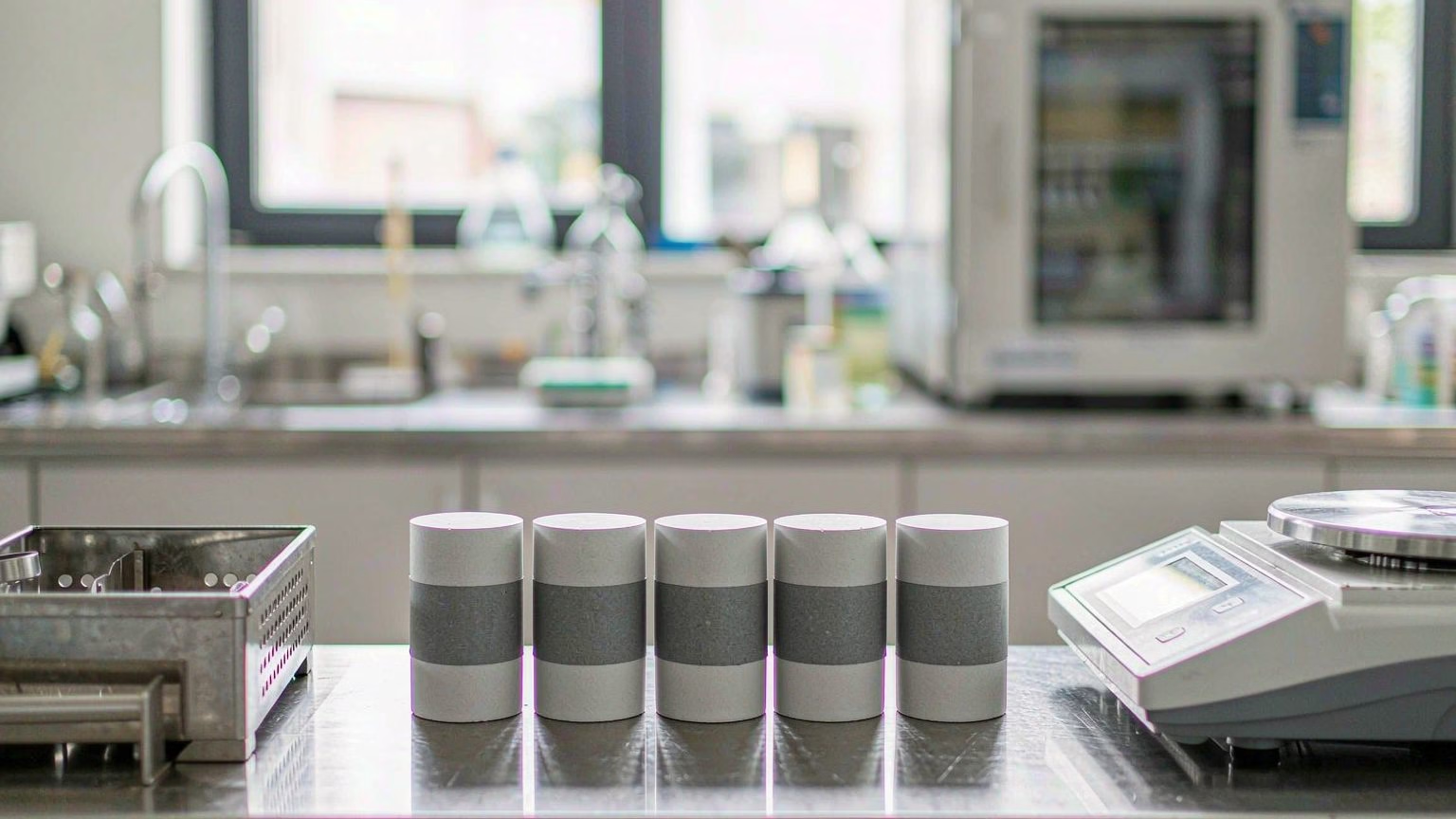
The specimen is a cylinder, nominally Ø45 mm by 50 mm high, and the standard requires a defined number of parallel specimens so that the reported figure is an average rather than a single lucky run [1]. Three practical consequences follow. A material supplied as a thin sheet has to be built up into the required cylinder rather than tested flat. Granular and loose-fibre products go into a container rather than being pressed into shape. And because the result is an average, one anomalous specimen drags the whole declaration — which is usually why a borderline product reports differently between two laboratories.
Substantial Components and the Coating Trap
The test applies to homogeneous products and to the substantial components of non-homogeneous products [1]2. In plain terms: you test the part of a composite that carries the fire performance, not the decorative face. This is where quotations go wrong most often — a mineral core with a thin applied film is a core test, not a panel test, and the wrong sample produces a number no certification body will accept, at full sample-preparation cost.
Conditioning compounds the risk. The regime sits in a separate document — EN 13238 in Europe, with the equivalent Chinese procedure referenced alongside the test method [8]. A laboratory that conditions to a different schedule than the one its accreditation covers can pass the furnace run and still lose the certificate.
What the Apparatus Must Deliver
The furnace is a simple object with unforgiving tolerances, and the difference between a compliant bench and a lookalike is almost entirely in the instrumentation. That is the distinction the non-combustibility apparatus specification in this section is designed to test.
Furnace Tube, Thermocouples and the Airflow Stabiliser
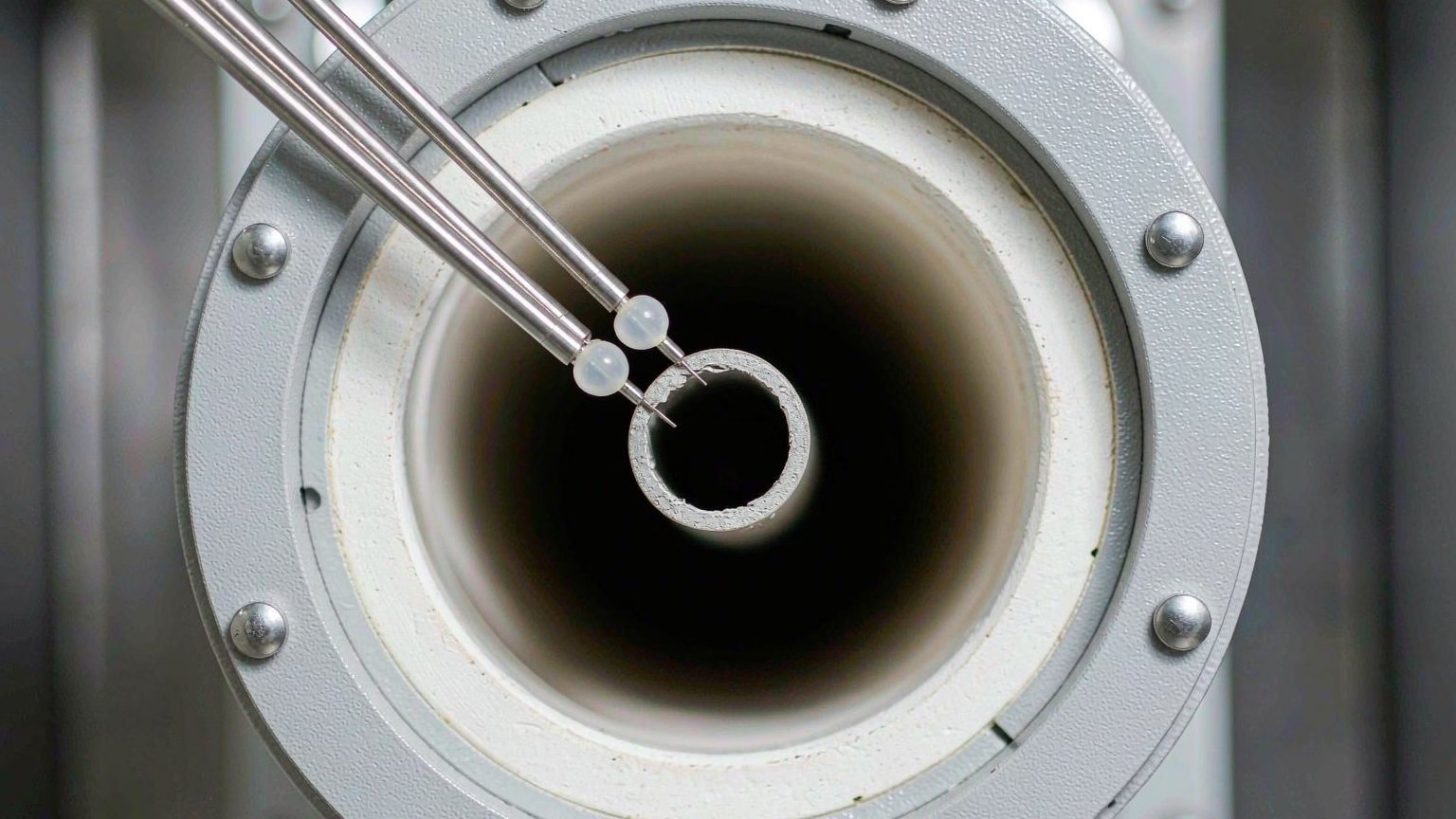
The refractory tube is specified by dimension, not description: a defined height, bore and wall thickness in an alumina-based refractory, with an open-ended cone-shaped airflow stabiliser above it to keep the convection regime repeatable [1]. Thermocouples are Class 1 Type K, and ISO 1182:2020 requires two in the furnace wall rather than one [7]. The standard also carries a normative annex for the additional measurement channels — specimen surface and specimen centre — so those probes are part of the specification, not an optional extra [1]. For IMO FTP Code Part 1 work the surface channel is mandatory in practice, because the pass criteria reference it directly [3].
Stabilisation, Drift and Voltage Compensation
Before a specimen goes near the furnace, the furnace has to be at 750 °C and genuinely steady. The standard’s acceptance logic hinges on how little the furnace drifts over a defined period [1], and that is what furnace calibration verifies — which is why mains quality matters more than it looks. A heating circuit that follows the building’s supply voltage will wander in temperature, and a run performed during a voltage sag has to be repeated. Power compensation — holding heating power stable and empty-furnace temperature variance inside a small band while the supply moves — converts a furnace from “reaches 750 °C” into “stays at 750 °C”. A staged soft-start curve is its companion: it protects the heating elements from thermal shock, the usual cause of a furnace drifting out of tolerance eighteen months after installation.
Running the Test: From Stabilisation to Reported Result
| Stage | What happens | Recorded output |
|---|---|---|
| Conditioning | Specimens conditioned per the applicable procedure | Specimen mass before test |
| Stabilisation | Furnace driven to 750 °C and held until drift is inside tolerance | Drift over the check period |
| Insertion | Specimen holder lowered to the defined position in the tube | Time zero |
| Exposure | Specimen held in the furnace for the standard duration | Furnace, surface and centre temperature curves |
| Observation | Sustained flaming watched and timed continuously | Duration of sustained flaming |
| Post-test | Specimen cooled, residue collected and reweighed | Mass loss, absolute and percentage |
| Reporting | Averaged across the required parallel specimens | ΔT, Δm, t_f and a pass/fail against the target class |
The data volume is the part buyers underestimate. One run produces three continuously logged temperature curves, a flaming record and a mass measurement — which is why automatic flame-duration logging matters. Manual stopwatch timing is a documented error source that hides in the final report.
Non-Combustibility Is Not Fire Resistance
This is the most expensive confusion in the field. Non-combustibility asks what a material contributes to a fire. Fire resistance asks how long an assembly — a wall, a door, a duct penetration — holds back a fire already burning next to it. Different standards, different specimens, different apparatus, different reports.
| Document pair | What the two actually cover | The trap |
|---|---|---|
| ASTM E136 and ASTM E119 | 750 °C material combustibility, versus fire resistance of building constructions | Adjacent numbers, unrelated tests |
| BS 476-4 and BS 476-20 / BS 476-22 | Non-combustibility, versus fire resistance of elements 13 | One standard family, two different questions |
| GB/T 5464 and the element fire-resistance family | Material-level test, versus loadbearing capacity, integrity and insulation of elements [8] | Different committees and different specimens |
A specification that asks for a “non-combustible fire-rated wall” without separating the two is asking for two certificates, and only one of them comes off a 750 °C tube furnace.
Where the Test Sits in the Euroclass System
The non-combustibility test is one input into a classification decision 12, never the decision itself. That is the single most useful thing to understand before quoting a European certification programme.
| Target class | Role of the non-combustibility test | Partner test required |
|---|---|---|
| A1 | Required | Gross heat of combustion — ISO 1716, adopted in China as GB/T 14402-2026 10 |
| A2 | Alternative to the heat-of-combustion test | Plus a main fire test, in practice the EN 13823 single burning item test |
| B, C, D | Not used | EN 13823 plus a small-flame test |
| E | Not used | Small-flame test alone |
| F | Not used | No performance determined |
A supplier with a clean ISO 1182 report has satisfied one of two conditions for A1, and possibly only half of A2: the furnace is necessary, never sufficient. For the routing logic across all four EN 13501-1 tests, see our guide to reaction to fire testing and the Euroclass and SBI testing walkthrough. The single burning item half of the pair is covered by the SBI test apparatus, the heat-of-combustion half by the gross heat of combustion tester — confirm the model against your target class, since the two halves of A1 are often procured a year apart.
What Changed in ISO 1182:2020 and GB/T 5464-2026
Four changes in the current editions change what you should buy.
| Change | What it says | Why it changes a purchase |
|---|---|---|
| A second furnace thermocouple | ISO 1182:2020, the sixth edition, added a second furnace thermocouple so furnace temperature is the average of two readings rather than one, damping point-to-point variation [2][7] | A furnace offered as “ISO 1182 compliant” without a dated thermocouple count is an open question |
| Annex C became normative | The latest edition carries a normative annex for the additional measurement thermocouples — the specimen surface and centre channels [1] | Read the annex wording before accepting a quotation that lists those probes as accessories |
| China moved onto the 2020 text | GB/T 5464-2026 was published on 2026-03-31, takes effect on 2026-10-01, and was drafted as a modified adoption of ISO 1182:2020; it fully replaces GB/T 5464-2010, an identical adoption of ISO 1182:2002 [8]9 | Documentation still naming GB/T 5464-2010 describes a withdrawn document — a real qualification question, not a formality |
| The heat-of-combustion partner moved too | GB/T 14402-2026 replaced the old gross-heat-of-combustion standard on the same effective date, adopting ISO 1716:2018 [10] | A Chinese Class A1 declaration needs both documents current, not one |
Taken together, the direction is consistent: the newer editions want more measurement channels and more stable furnace conditions, which is a hardware requirement rather than a documentation exercise.
Specifying a Non-Combustibility Apparatus
Ten questions separate a specification from a wish list. Each maps to a clause in the standard, and each is cheap to ask before purchase and expensive to discover after.
| Specification point | What to demand | Why it matters |
|---|---|---|
| Furnace thermocouples | Two, in the furnace wall, Class 1 Type K | A single-thermocouple furnace cannot claim ISO 1182:2020 or GB/T 5464-2026 |
| Additional probes | Specimen surface and specimen centre channels | Required in practice for IMO Part 1; normative annex in the 2020 edition |
| Furnace tube | Height, bore and wall thickness to the standard’s figures | Geometry sets the convection regime; a “similar” tube is a different test |
| Airflow stabiliser | Open-ended cone, per the apparatus clause | Repeatability depends on it, not on the furnace alone |
| Stabilisation | Achieved drift at 750 °C, stated as a number | This is what furnace calibration actually verifies |
| Power regulation | Compensation for mains voltage fluctuation | A voltage sag during a run invalidates the run |
| Heating control | Staged soft-start ramp | Protects the elements; element decay is the usual drift cause |
| Flame logging | Automatic detection and timing of sustained flaming | Manual stopwatch timing is a documented error source |
| Data handling | Raw curve export and query by run | Test reports need the curves, not just the summary line |
| Calibration evidence | Certificate traceable to the national standard | Required for ISO/IEC 17025 accreditation |
If your scope is wider than the furnace test, the same category holds the rest of the chain: the fire and flame testing equipment range covers the single flame source route through the building material combustibility apparatus and the heat-release route through the cone calorimeter, covered method-side in our ISO 5660 cone calorimeter guide. For how these standards travel between regions, see the global building material fire testing standards overview.
Frequently Asked Questions
Is the non-combustibility test the same as ASTM E136?
Not identical, but closely related. ASTM E136-24c and ISO 1182 both expose a specimen to a 750 °C furnace and both report a temperature rise, a mass loss and a flaming observation. The differences are the pass criteria, set per market, and the thermocouple count: E136 uses one furnace thermocouple while ISO 1182:2020 requires two [6][7]. A cone-stabiliser furnace built to the current ISO configuration serves both routes.
What is the difference between ISO 1182 and EN ISO 1182?
They are the same technical text issued by two bodies. ISO 1182:2020 is the international standard; EN ISO 1182:2020 is the European adoption, published by CEN and used as the basis for CE marking under the Construction Products Regulation [2][12]. A report citing EN ISO 1182:2020 is a report citing ISO 1182:2020, and no laboratory needs separate apparatus for the two.
How long does a non-combustibility test take?
Budget more than the furnace run. Specimen conditioning comes first and can take a day or longer, then the furnace has to be stabilised at 750 °C before the first specimen goes in, then each specimen is exposed and finally cooled before it can be weighed. The exposure itself is short compared with the stabilisation and conditioning that bracket it, and a full parallel set multiplies the exposure step.
How many specimens do I need?
The standard requires a set of parallel specimens and averages the result, rather than accepting a single run [1]. The practical consequence is that you should cost a test programme, not a test. Ask the laboratory how many specimens it prepares per material and how it treats a specimen that fails to stabilise, because the quotation is usually written per material with the specimen count buried in the assumptions.
Can I test coated or laminated products?
Not as a finished panel. ASTM E2652 explicitly excludes laminated and coated materials from its scope [7], and ISO 1182 addresses homogeneous products and the substantial components of non-homogeneous ones [1][2]. In practice you test the layer that carries the fire performance — typically the core — and you confirm with your certification body whether the remaining component is dealt with as a separate test item.
What is a passing result for ISO 1182?
It depends on the class you are declaring, not on the method alone. For European Class A1, the averaged furnace temperature rise must stay at or below 30 °C, the averaged mass loss at or below 50 %, and there must be no sustained flaming [3]. Class A2 relaxes the temperature rise to 50 °C and the flaming limit to 20 seconds [3]. Marine work under IMO FTP Code Part 1 also constrains the specimen surface thermocouple [3].
Why does my furnace fail calibration at 750 °C?
Usually because the heating circuit follows the building supply rather than holding power steady, or because the heating elements have aged and the soft-start profile no longer compensates. Furnace calibration checks the drift at temperature, not the ability to reach it, so a furnace reporting 750 °C on the display can still fail [1]. Power compensation and a staged ramp address both causes, and both should be confirmed as fitted features rather than software options.
Does a non-combustibility test replace a fire resistance test?
No, and the two are routinely confused in specifications. Non-combustibility describes what a material contributes to a fire; fire resistance describes how long an assembly holds a fire back. They use different apparatus and produce different certificates. A specification that asks for both should expect two separate reports, and the non-combustibility half comes off a 750 °C tube furnace.
Conclusion: The Decision Order
Work in this order and the procurement question answers itself:
- List the markets you must certify for. Europe, North America, China and marine each add a rulebook.
- Check which edition is in force in each. ISO 1182:2020 and GB/T 5464-2026 both require two furnace thermocouples.
- Confirm the class you are declaring. A1 needs the non-combustibility test and the heat-of-combustion test; A2 needs one of them plus a main fire test.
- Specify the furnace, not the price. Thermocouple count, tube geometry, drift and power compensation decide whether the bench is compliant in three years.
- Confirm the probe channels and the calibration evidence before ordering. IMO Part 1 work needs the surface channel, and accreditation-ready documentation is far cheaper up front than as a retrofit.
Shenyang Baoruitong Automation Equipment Co., Ltd. (BRT) manufactures the JBR20 non-combustibility apparatus and the wider fire and flame testing equipment range, and supplies 200+ testing equipment models to laboratories in 50+ countries under an ISO 9001/13485 certified quality system. To confirm a configuration against your target class and market, send the standard list you must certify against — the specification answer usually comes down to two questions about thermocouples and probe channels.