- الجواب القصير
- Two Words, Two Kinds of Claim
- Why the Distinction Changes a Specification
- The Test Behind “Non-Combustible”
- The Tests Behind “Flammability”
- The Grey Zone: Materials That Pass One and Fail the Other
- Flammable, Combustible and Fire Retardant Are Three Different Words
- What the Classification Systems Do With Each Word
- Reading a Report: Where Each Word Appears
- How to Ask for the Right Test
- Equipment Behind Both Words
- الأسئلة المتداولة
- What is the difference between flammability and combustibility?
- Is a non-combustible material also non-flammable?
- Which standard proves non-combustibility?
- Can a material be flammable but not combustible?
- Where does fire retardant fit?
- Does ASTM E84 measure combustibility?
- Which word should a specification use?
- خاتمة: A Decision Order
- About the Author
- مصادر
الجواب القصير
Flammability is a graded property — how readily a material ignites and how it burns under a defined ignition source — while combustibility is a binary verdict about whether a material burns at all under one specific, very hot test. Flammability is reported as a rate, a time, an index or a class, and it only means something when the method is named: a linear burning rate from a 50 W flame, an oxygen index, an afterflame time 58. Combustibility is decided in a furnace at 750 درجة مئوية, where a specimen either passes or fails, and the result is written as non-combustible or combustible 34. Every combustible material is flammable to some degree. A non-combustible material is not flammable in the furnace sense — but that does not make it inert in a real fire.
Two Words, Two Kinds of Claim
Both words describe burning, so they get used interchangeably in sales copy and in specifications. They are not interchangeable, because they make different kinds of claim: one describes behaviour on a scale, the other asserts a category.
Flammability is a measurement
There is no single test called “the flammability test”. There are tests for ignitability, for flame spread, for burning rate, for heat release, for afterflame time and for the minimum oxygen concentration that sustains burning. Each produces a number, and the number belongs to that method. ايزو 13943 is the vocabulary standard for fire safety terms used across ISO and IEC fire standards 1, and ASTM E176 does the same job for ASTM fire standards 2; both exist precisely because a bare adjective is not a result.
Combustibility is a verdict
Combustibility asks one narrow question under one defined condition: when a small specimen is held in a furnace at 750 درجة مئوية, does it burn? ايزو 1182 specifies that furnace method, and its scope is careful about what can be tested — homogeneous products and the substantial components of non-homogeneous products [3]. ASTM E136 asks the same question with the same 750 °C tube furnace and returns a pass or fail for a material [4].
Neither standard invents the word “non-combustible” on its own authority. They produce the measurements; the classification document — EN 13501-1 in Europe — turns those measurements into the A1 and A2 classes 6.
Where the confusion comes from
Three habits collapse the distinction. Sales copy prefers “non-combustible” because it sounds absolute and needs no method. Translation pairs the two English words with a single local term, so the nuance disappears on the way into a purchase order. And the word “flammable” is used in ordinary speech as a synonym for “burns”, which is exactly the claim combustibility is supposed to settle. The result is specifications that say “must be non-flammable” and suppliers who answer with whichever certificate they already hold.
Why the Distinction Changes a Specification
The practical cost of confusing the two is a test programme that answers the wrong question. The table below maps the intent to the evidence.
| If the requirement is | The correct evidence | What would be wrong |
|---|---|---|
| “It must not burn at all” | ايزو 1182 furnace result plus ISO 1716 calorific value, classified under EN 13501-1 | A burning rate, which presumes the material does burn |
| “It must not spread flame along a surface” | ASTM E84 flame spread index, or EN 13823 الهيئة الفرعية للتنفيذ | A non-combustibility pass, which says nothing about spread |
| “It must stop burning when the flame is removed” | Afterflame and afterglow times from a vertical test | A furnace result, which has no ignition source in the same sense |
| “It must not sustain burning in air” | Oxygen index to ISO 4589-2 | A horizontal rate, which needs a flame to keep going |
| “It must not feed a fire once ignited” | Heat release rate to ISO 5660-1 | Any single-word adjective |
The Test Behind “Non-Combustible”
ايزو 1182 and ASTM E136 are the two furnace routes, and they agree on the temperature because 750 °C is the reference condition both inherited.
What the furnace records
A cylindrical specimen is lowered into a pre-heated tube furnace and held there while furnace temperature, specimen surface and centre temperatures, mass and any flaming are logged [3]. Three outputs decide the outcome: the maximum temperature rise, the mass loss, and the duration of sustained flaming. A material that flames briefly and stops has not automatically failed — the criterion is sustained flaming, and the standard defines what that means.
How the verdict becomes a class
في 13501-1 applies the pass values. For A1 the thresholds are a temperature rise of no more than 30 درجة مئوية, mass loss of no more than 50 %, no sustained flaming and a gross calorific value of no more than 2.0 MJ/kg; A2 widens the temperature and flaming limits to 50 °C and 20 s and the calorific value to 3.0 MJ/kg, then adds the SBI test [6]. The calorific value comes from ISO 1716, which burns a sample in an oxygen bomb 7.
That second measurement is what stops most products reaching A1. A mineral board with three percent organic binder can sit stable in the furnace and still fail on calorific value, because the bomb does not care where the carbon sits in the formulation. Our A1 classification guide works through the same two routes from the certificate side.
The Tests Behind “Flammability”
Flammability is a family, not a test. Four measurements cover most of what specifications actually mean.
| Measurement | معيار | What it returns | Typical question it answers |
|---|---|---|---|
| Linear burning rate | اللجنة الانتخابية المستقلة 60695-11-10, Method A [5] | mm/min along a horizontal bar | How fast does the flame front travel |
| Ignitability under a small flame | EN ISO 11925-2 9 | Ignition within a defined exposure | Does a small flame start it at all |
| Oxygen index | ايزو 4589-2 [8] | Minimum O₂ concentration to sustain candle-like burning | How easily does it keep burning in air |
| Afterflame and drip behaviour | اللجنة الانتخابية المستقلة 60695-11-10, Method B [5]; ايزو 9773 10 | Seconds, and whether drips ignite cotton | Does it keep burning once the flame is gone |
The oxygen index deserves a note because it is the one metric in this list that is not a rate and not a class. ايزو 4589-2:2017 determines the minimum oxygen concentration that supports candle-like combustion [8]. A material with a high index needs an oxygen-rich atmosphere to keep burning, which is a genuinely different statement from “it burns slowly”.
The Grey Zone: Materials That Pass One and Fail the Other
Three product types show why the two words cannot be swapped.
Paper-faced gypsum board. The gypsum core is non-combustible in the furnace sense; the paper facing is not. The product as a whole is therefore assessed as a non-homogeneous item, and its reaction-to-fire class is not A1 even though the core would qualify on its own [3].
Mineral board with an organic binder. The furnace result can be clean and the calorific value can still exceed 2.0 MJ/kg, which moves the product from A1 to A2 without any change in how it behaves in a small flame [6][7].
Phenolic and other charring foams. These can show a high oxygen index and still produce a fast-growing fire in a compartment, because the index measures candle-like burning in a controlled atmosphere and not heat release under irradiation.
In each case the sentence “it is non-combustible” is either false or irrelevant, and the sentence “it has low flammability” is true but incomplete. The specification has to name the measurement.
Flammable, Combustible and Fire Retardant Are Three Different Words
The third word causes as much trouble as the first two.
Fire retardant describes a formulation intent, not a measured property. A flame-retardant grade is one designed to resist ignition or slow spread; whether it does so, and by how much, is established by whichever test the specification names. A product can carry the label and still fail a rate limit in the thickness band it is sold in.
Flammable in ordinary English means “burns easily”. In fire-testing English it is not a threshold at all — it is the umbrella term for the behaviours listed above. The only place the word carries a hard numeric boundary is liquid classification, where hazard codes split liquids by flash point. That vocabulary is not transferable to a building product, and a specification that borrows it usually means something else.
What the Chinese terms add
Buyers sourcing from China meet a second vocabulary, and it maps onto the English pair only partly. 不燃 means non-combustible and corresponds to the furnace verdict. 可燃 means combustible, and 易燃 means readily ignitable — a stronger claim than either English word makes on its own. 阻燃 means flame retardant, which is the formulation intent described above, not a measured class. When a quotation sheet says 阻燃, the question to ask is which test produced the number behind it, because the term itself carries no limit.
That last point is where flammability and combustibility diverge most sharply in practice: one is a quantity that has to be measured and can be compared, the other is a category that either applies or does not.
What the Classification Systems Do With Each Word
| System | Uses “combustible” as | Uses “flammable” as | Consequence |
|---|---|---|---|
| في 13501-1 | Indirectly, through A1 and A2 limits [6] | Not used as a term | Products are classified A1 to F, with s and d sub-classes |
| ASTM E136 | Yes — pass or fail at 750 درجة مئوية [4] | لا | Gives a material verdict, not a class |
| ASTM E84 | No — surface burning only 11 | لا | Returns flame spread and smoke indices; Class A is 0 ل 25 |
| ايزو 4589-2 | لا | No — returns an index [8] | A number, not a category |
The lesson from the table is that “combustible” is a term of art in North American material testing and an inference in the European class system. Nobody in either system classifies a product as “flammable”; they classify it as A1, B-s1,d0 or Class A, and each of those tokens encodes a specific test.
Reading a Report: Where Each Word Appears
| Where you see it | What it usually means | What to check |
|---|---|---|
| “Non-combustible to ASTM E136” | A material-level verdict at 750 درجة مئوية | That the tested material is the one you are buying, at the same density |
| “Class A” | ASTM E84 surface burning, flame spread 0 ل 25 [11] | That nobody is quoting it as a non-combustibility result |
| “A1” أو “A2” | في 13501-1 class, from furnace plus calorimeter | That the certificate lists the full designation with s and d sub-classes |
| “Flame retardant” | A formulation claim | That a named test with a numeric limit is also quoted |
| “Self-extinguishing” | A vertical test observation | Which standard, and what the afterflame limit was |
How to Ask for the Right Test
| Step | Action | لماذا |
|---|---|---|
| 1 | Write the sentence about flammability and combustibility that you need to be true | “It must not burn at 750 درجة مئوية” و “it must stop burning when the flame is removed” need different tests |
| 2 | Name the standard, not the adjective | An adjective cannot be audited |
| 3 | Fix the specimen configuration | Density, thickness and facings all change the outcome |
| 4 | Ask for raw values, not pass marks | A pass without numbers cannot be compared or defended |
| 5 | Check the classification document | The class, not the test report, is what a building official reads |
Equipment Behind Both Words
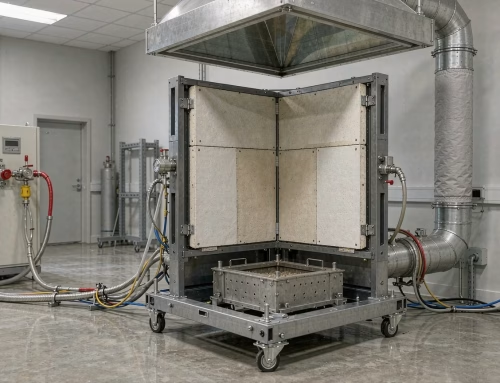
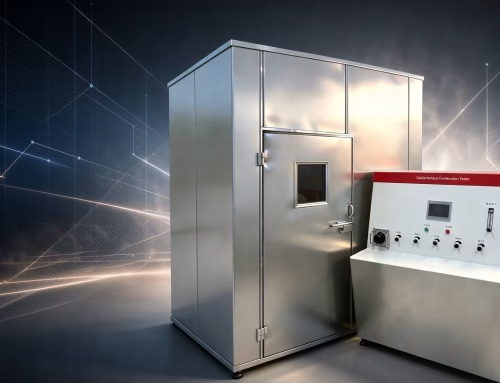
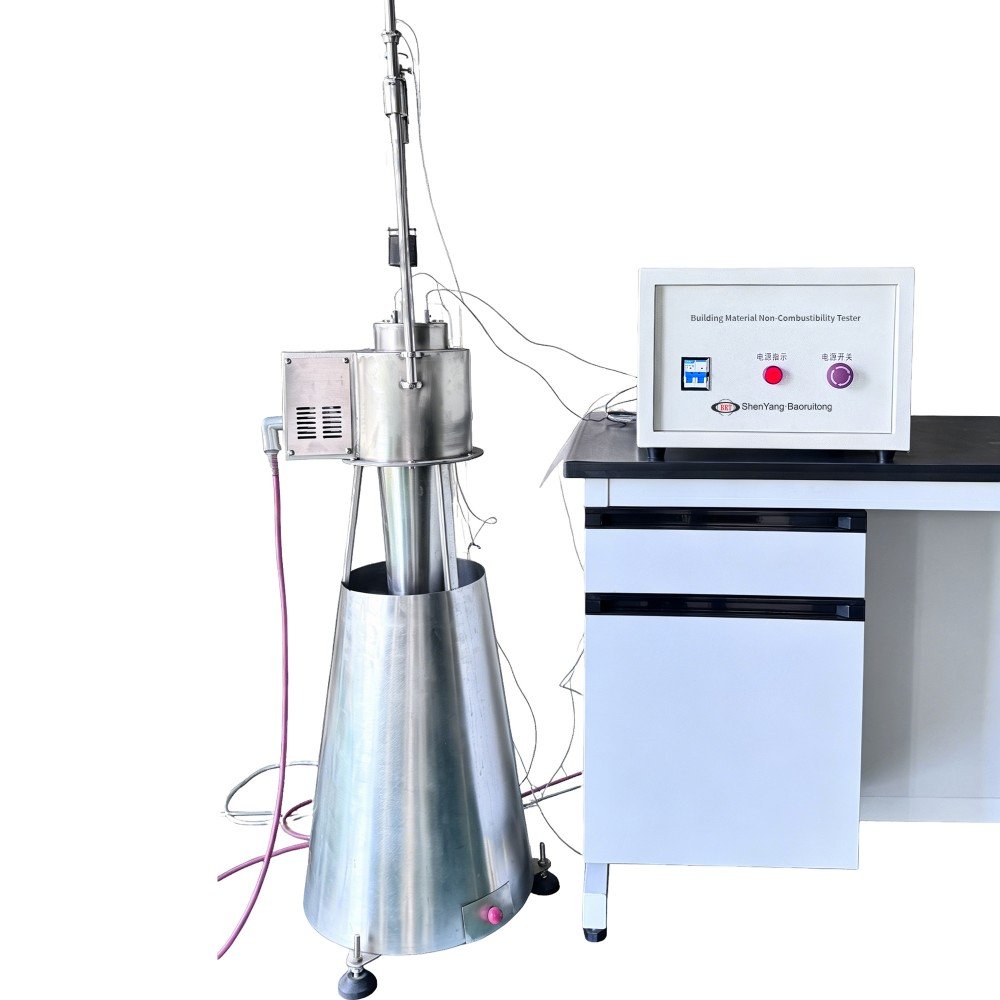
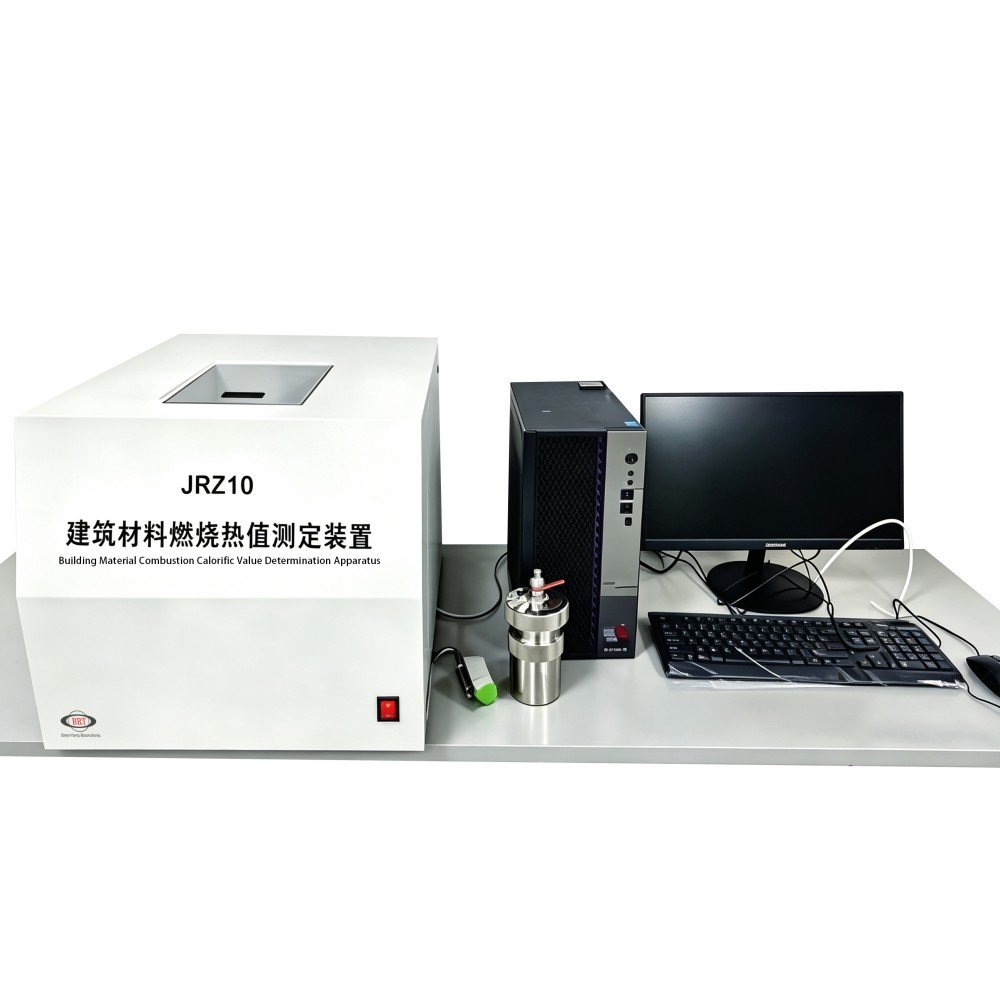
The combustibility route needs a furnace and a calorimeter. ال non-combustibility apparatus runs the ISO 1182 tube furnace method at 750 درجة مئوية, و gross heat of combustion tester runs the ISO 1716 bomb method that decides the calorific value limit.
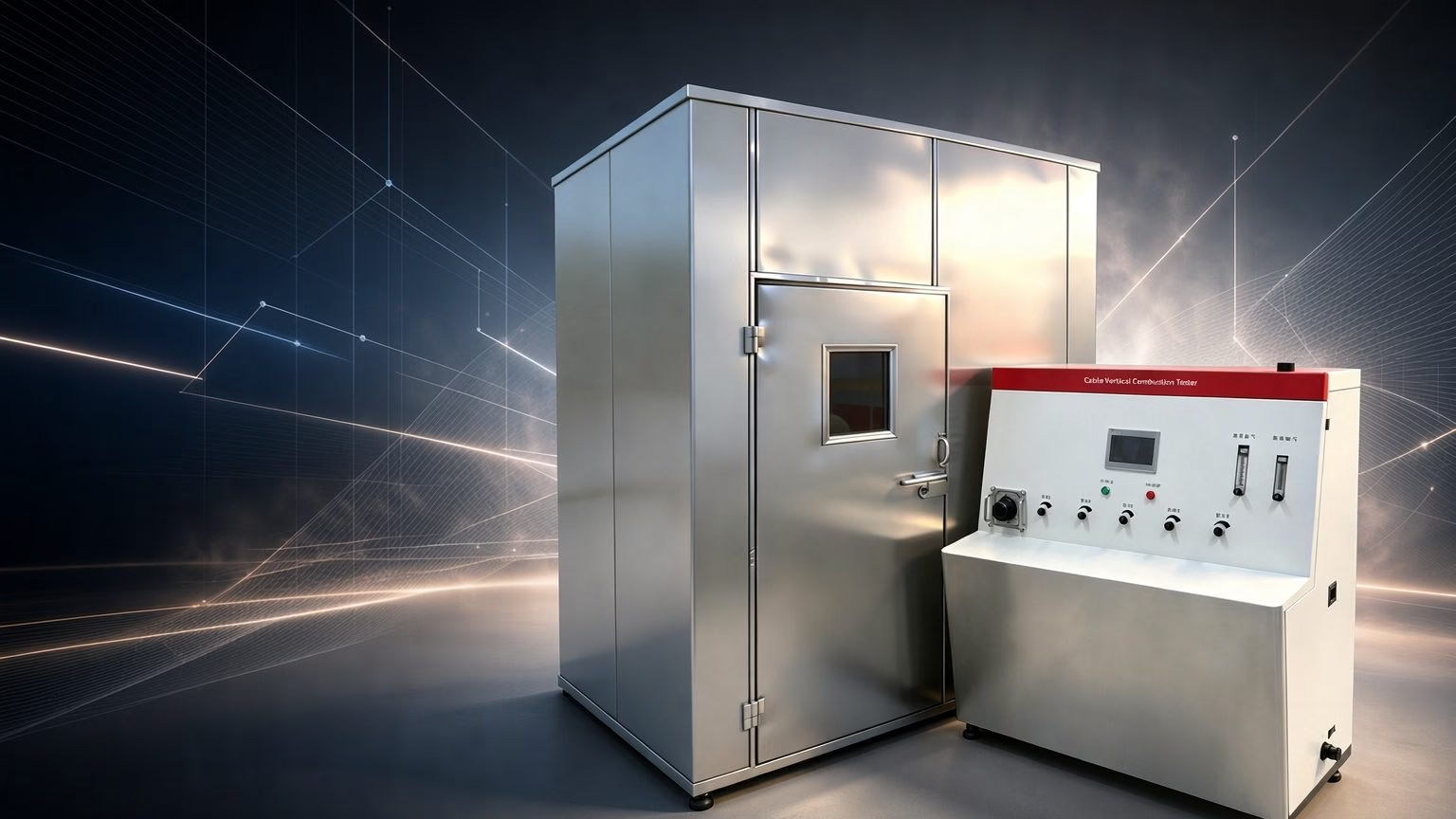
The flammability route needs a flame and a fixture. ال horizontal and vertical combustion tester covers the 50 W bar methods, و oxygen index tester returns the ISO 4589-2 index. For single-flame-source work the building material combustibility test apparatus runs EN ISO 11925-2. ال fire and flame testing equipment category lists the full range.
الأسئلة المتداولة
What is the difference between flammability and combustibility?
The difference between flammability and combustibility is that one is a graded property and the other is a category. Flammability describes how a material ignites and burns under a defined ignition source, and is reported as a rate, a time, an index or a class. Combustibility is a binary verdict about whether a material burns in a furnace at 750 درجة مئوية. One produces a measurement that depends on the method; the other produces a category.
Is a non-combustible material also non-flammable?
In the furnace sense, yes — it did not sustain burning at 750 درجة مئوية. In ordinary language the answer is more careful, because a non-combustible core can carry a combustible facing, and the product as a whole is then assessed as a non-homogeneous item rather than as an A1 material. The word applies to what was tested, not to the trade name.
Which standard proves non-combustibility?
ايزو 1182 in the ISO system and ASTM E136 in the ASTM system, both using a vertical tube furnace at 750 درجة مئوية. ايزو 1182 covers homogeneous products and the substantial components of non-homogeneous products, and ASTM E136 returns a pass or fail for a material. The A1 class itself comes from EN 13501-1, which applies limits to those results.
Can a material be flammable but not combustible?
That combination is unusual but not impossible, because the two tests use different conditions. A material that resists a 750 °C furnace can still show measurable behaviour in a small-flame ignitability test if it carries a thin organic coating or surface treatment. What matters is which layer was tested and which one the specification is describing.
Where does fire retardant fit?
Fire retardant describes a formulation intent, not a measured property. A flame-retardant grade is designed to resist ignition or slow spread, but whether it does so is established by whichever test the specification names, at the thickness and density being supplied. The label alone is not evidence.
Does ASTM E84 measure combustibility?
لا. ASTM E84 is a surface burning test that reports a flame spread index and a smoke developed index for a specimen in a horizontal tunnel. Class A corresponds to a flame spread index of 0 ل 25. It says nothing about calorific value or about whether the material would pass a 750 °C furnace test.
Which word should a specification use?
Neither, on its own. A specification should name the standard, the specimen configuration and the numeric limit, for example ISO 1182 with the EN 13501-1 A1 limits, أو ISO 4589-2 with a minimum oxygen index. An adjective cannot be audited, and a supplier cannot be held to a word that has two meanings.
خاتمة: A Decision Order
- Start from the difference between flammability and combustibility, then decide which claim you need: “does not burn at 750 درجة مئوية” is combustibility; “burns slowly, or stops when the flame is removed” is flammability.
- Name the standard and the edition, never the adjective alone.
- Fix density, thickness and facings, because all three move the result.
- For the A classes, ask for both the furnace result and the calorific value — one without the other is not a class.
- Ask for raw values alongside any pass mark, so the result can be compared and defended.
- Convert the result into the classification the market reads: an EN class, a GB class or an ASTM verdict.
Talk to BRT Testing about the non-combustibility apparatus و gross heat of combustion tester behind the A classes, أو تواصل معنا with the claim you need to support.
About the Author
Written by the BRT Testing application engineering team in Shenyang, الصين. BRT Testing builds non-combustibility, calorimetric and flame test equipment for construction and plastics laboratories, and supports manufacturers preparing EN 13501-1, ايزو 1182 and ASTM E136 submissions. Standard editions and status were checked against the UNI store and the ASTM store on 3 November 2026.
مصادر
- UNI — ISO 13943:2023, Fire safety — Vocabulary (current, in force 15 سبتمبر 2023) — https://webstore.uni.com/en/iso-13943-2023
- ASTM — E176, Standard Terminology of Fire Standards — https://store.astm.org/e176.html
- UNI — ISO 1182:2020, Non-combustibility test (current, 4 يونيو 2020) — https://webstore.uni.com/en/iso-1182-2020
- ASTM — E136, Assessing Combustibility of Materials Using a Vertical Tube Furnace at 750 °C — https://store.astm.org/e136.html
- IEC — IEC 60695-11-10:2013, 50 W horizontal and vertical flame test methods — https://webstore.iec.ch/en/publication/2938
- UNI — EN 13501-1:2018, Reaction to fire classification (current, 19 December 2018) — https://webstore.uni.com/en/en-13501-1-2018
- UNI — ISO 1716:2018, Determination of the heat of combustion (current, 4 May 2018) — https://webstore.uni.com/en/iso-1716-2018
- UNI — ISO 4589-2:2017, Oxygen index (current, 12 April 2017) — https://webstore.uni.com/en/iso-4589-2-2017
- UNI — EN ISO 11925-2:2026, Ignitability under direct impingement of flame (current, 28 January 2026) — https://webstore.uni.com/en/en-iso-11925-2-2026
- UNI — ISO 9773:2024, Thin flexible vertical specimens (current, 13 سبتمبر 2024) — https://webstore.uni.com/en/iso-9773-2024
- ASTM — E84, Surface Burning Characteristics of Building Materials — https://store.astm.org/e84.html