The short answer: the difference between a fire retardant coating and a fire resistant coating is the question each one answers. A fire retardant coating limits how fast fire spreads over the surface it covers, and earns a reaction-to-fire class such as B-s1,d0 under EN 13501-1 or a flame spread index under ASTM E84. A fire resistant coating protects a structural element so that it keeps its loadbearing capacity for a stated period, and earns a fire resistance rating such as R 90 under EN 13501-2 or an hourly rating under ASTM E119. One result is a class with no time in it; the other is a period with no class in it. They are not interchangeable, they are not convertible, and specifying one when the project needs the other is the most expensive mistake in this category.

Fire Retardant Coating vs Fire Resistant Coating: Two Questions, Two Units
The confusion is easy to understand, because both products are sold as coatings, both are applied by brush, spray or roller, and both are described as fire protection. Everything after that diverges.
A fire retardant coating is a surface treatment. It works on the material it covers — timber, cable, textile, foam, a plastic housing — by changing how that surface ignites and how fast flame travels across it. Its output is a classification: a Euroclass with smoke and droplet suffixes, or a flame spread index with a smoke developed index. There is no time dimension, because the test ends when the specimen behaviour has been recorded, not when the specimen fails.
A fire resistant coating is a structural protection. It works on a steel beam, a column or a concrete element by slowing the rate at which heat reaches the substrate, so that the element stays below its critical temperature for a defined period under a defined heating curve. Its output is a period in minutes and an associated section factor or thickness. There is no surface spread class in it, because the test does not measure spread; it measures whether the element still carries its load.
| Question asked | Product class | Test family | Output | Classified by |
|---|---|---|---|---|
| How fast will fire spread over this surface? | Fire retardant coating | Reaction to fire | Class letter, smoke and droplet suffixes | EN 13501-1 5 |
| How long will this element keep working? | Fire resistant coating | Fire resistance | Period in minutes, e.g. R 60 or R 90 | EN 13501-2 6 |
What a Fire Retardant Coating Actually Does
A retardant coating intervenes at ignition. Depending on chemistry it may release water, form a thin char, dilute combustible gases or interrupt the radical chain reaction in the flame. The measurable consequences are a longer time to ignition, a slower flame front and, often, a lower peak heat release rate.
Reaction to fire: the class route
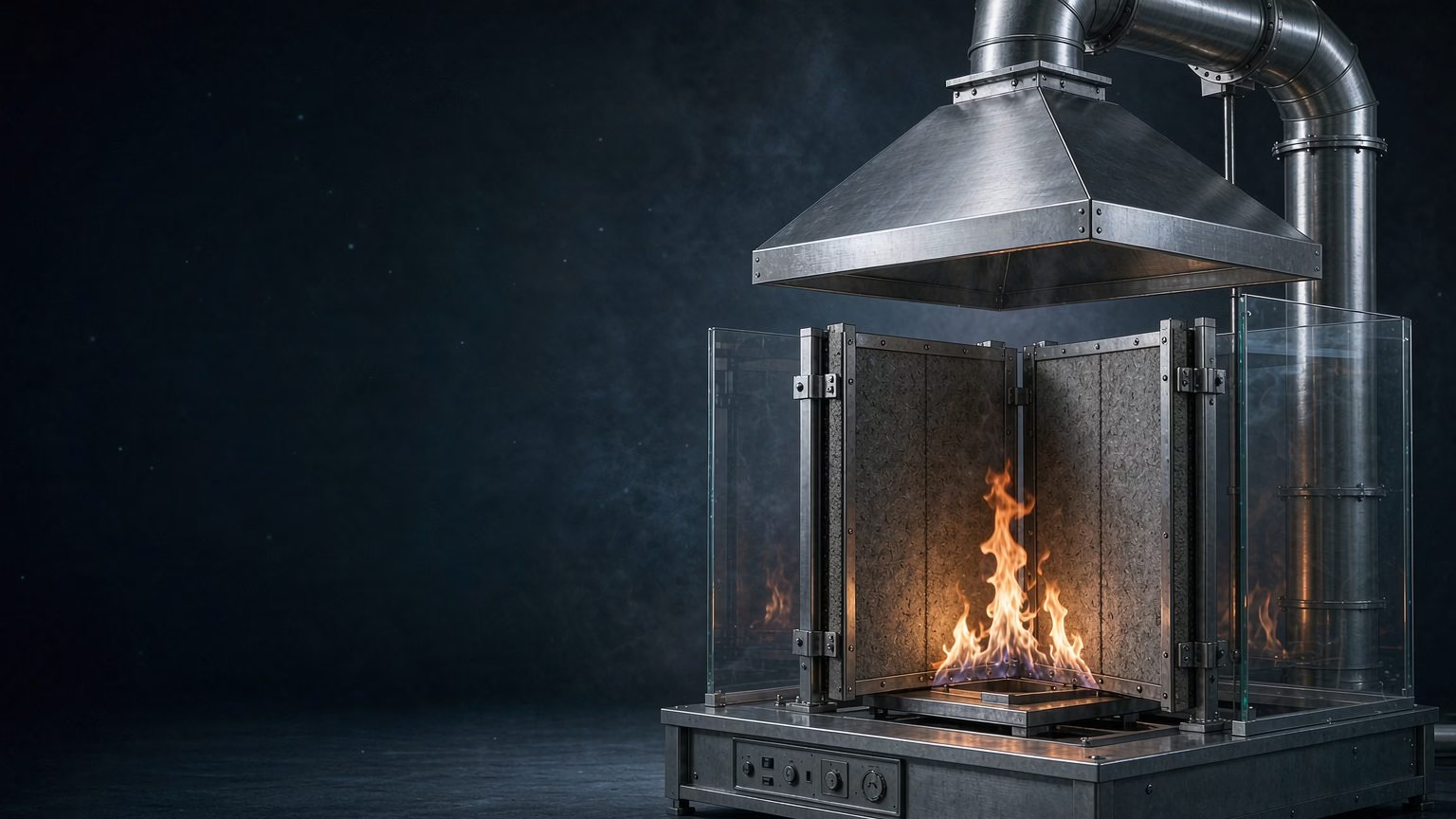
In the European system the class is assembled from two tests. EN ISO 11925-2 applies a small flame directly to a vertically mounted specimen and records whether the flame tip reaches the 150 mm mark within the prescribed time and whether flaming debris ignites the filter paper below 8. EN 13823 exposes a corner assembly to a 30 kW burner and reports fire growth rate, total heat release, lateral flame spread and smoke production 7. EN 13501-1 then converts those outputs into A1 to F with s1 to s3 and d0 to d2 [5].
In North America the usual route for a coating on a wall or ceiling lining is ASTM E84, the Steiner tunnel, which returns a flame spread index and a smoke developed index 9. For fire-retardant paints on wood there is a smaller dedicated method, ASTM D3806, a two-foot tunnel evaluation that is often used for screening and product development 11.
Where the class stops
A class says nothing about structure. A coating rated B-s1,d0 on a given substrate has demonstrated how that coated substrate behaves as a surface; it has not demonstrated that a steel beam beneath it will survive ninety minutes. Nor does the class transfer freely between substrates — a coating developed for timber may behave quite differently on a plastic foam, and the mass per unit area of the substrate is part of the specimen.
This is why a datasheet that offers “Class B-s1,d0 fire protection for steel” is telling you something about the coating’s own surface behaviour and nothing about the steel.
What a Fire Resistant Coating Actually Does
A fire resistant coating intervenes at heat transfer. It sits between the fire and the element and slows conduction, either by insulating passively — mineral fibre, vermiculite or cementitious sprays and boards — or by reacting. Reactive protection is the intumescent type: on heating, the binder softens and a gas-generating agent expands the char, producing a thick, low-conductivity layer that stands off the steel. EN 13381-8 covers applied reactive protection to steel members; EN 13381-4 covers applied passive protection 12.
The section factor is the specification
This is the part that separates a competent specification from a hopeful one. An intumescent coating has no fire rating of its own. Its performance depends on how fast heat can accumulate in the steel, and that rate depends on the ratio of heated surface area to steel volume — the section factor, usually written Hp/A. A heavy, stocky column absorbs heat slowly and needs less protection. A slender beam with a large perimeter relative to its mass heats quickly and needs more.
The consequence is that a manufacturer’s assessment produces a table, not a number: dry film thickness against section factor against fire resistance period. EN 13381-8 exists to generate exactly that relationship from furnace tests on loaded members [1]. Quoting a single thickness without the section factor and period it belongs to is meaningless, in the same way that quoting a tyre pressure without a vehicle would be.
Passive versus reactive protection
Passive systems are thicker, heavier and generally more tolerant of site conditions, and they are the default where the specifier wants a robust installation. Reactive systems are thinner, can be left with a decorative finish, and are common on exposed steelwork in car parks and atria. Both are legitimate; the difference matters for inspection, because an intumescent film that has been over-coated with the wrong topcoat or damaged during fit-out may no longer behave as tested.
| Protection type | Standard for assessment | Typical form | Main site risk |
|---|---|---|---|
| Reactive, intumescent | EN 13381-8 [1] | Thin film, 0.3–several mm DFT | Wrong topcoat, mechanical damage, missed thickness |
| Passive, spray or board | EN 13381-4 [2] | Cementitious spray, boards, blankets | Voids, fixings, incomplete coverage at connections |
| Reactive, hydrocarbon | UL 1709 12 | High-build intumescent | Curve mismatch with the design fire |
Why the Section Factor Changes Everything
Three variables decide whether an intumescent coating achieves its period: the steel section, the dry film thickness, and the heating regime. Change any one and the assessment no longer applies.
| Variable | Why it matters | What the specification must state |
|---|---|---|
| Section factor (Hp/A) | Sets how fast the steel heats | The actual value for each member, not a typical one |
| Dry film thickness | Sets the insulation built up | Minimum DFT plus a site measurement regime |
| Fire resistance period | Sets the target | R 30/60/90/120 matched to the element’s function |
| Heating curve | Sets the test severity | Cellulosic or hydrocarbon, per the design fire |
| Steel critical temperature | Sets the failure point | The assumed limiting temperature, usually declared |
| Topcoat and finish | Can change reaction behaviour | Whether a compatible decorative coat is permitted |
None of these are optional. A specification that lists a product name and a period, without section factors and DFT, has not specified anything that a contractor can install and an inspector can verify.
The Two Test Regimes Side by Side
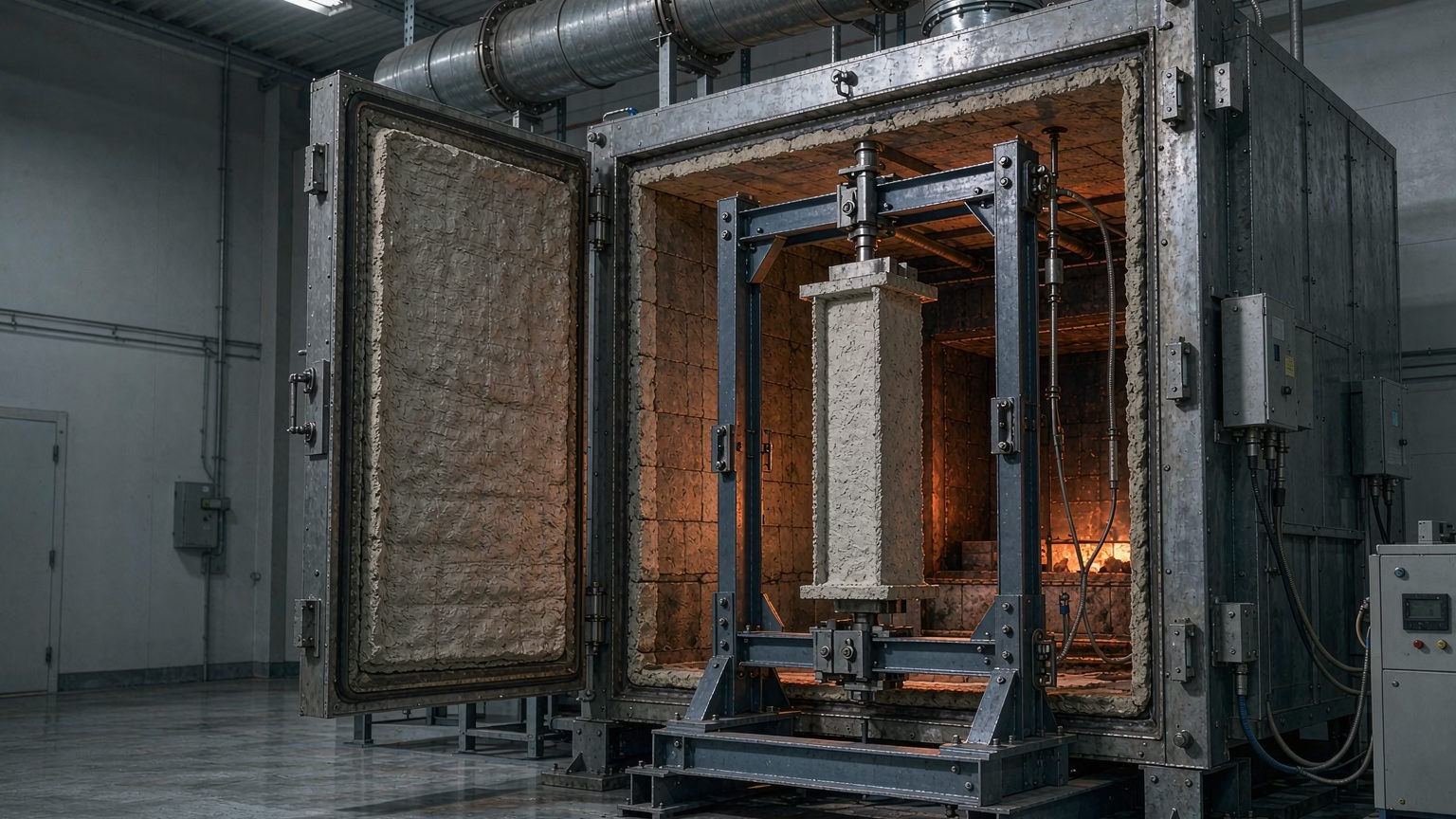
Fire resistance tests for structural protection are run in furnaces against a defined temperature-time relationship. EN 1363-1 establishes the general principles for European fire resistance testing 3, and ISO 834-1 provides the international temperature-time curve, with the 2025 edition now current 4. ASTM E119 performs the equivalent role in North America 10. For hydrocarbon fires, UL 1709 applies a much steeper rapid-rise curve intended for petrochemical and offshore conditions [12].
What the furnace actually measures
Three things, none of which is flame spread. It measures the furnace atmosphere against the specified curve, the temperature of the protected element, and whether the element still carries its load at each criterion point. A coating passes or fails on the temperature it allows the steel to reach, not on how it looks after the test.
| Element | Reaction to fire (retardant) | Fire resistance (resistant) |
|---|---|---|
| Governing question | Contribution to fire growth | Retention of function over time |
| Specimen | Coated product on a declared substrate | Loaded structural member with coating applied |
| Apparatus | Small flame cabinet, SBI rig, tunnel | Fire resistance furnace with loading frame |
| Heating | Local flame or 30 kW burner | Furnace atmosphere to a standard curve |
| Output | Class plus s and d suffixes | Period plus limiting criteria |
| Extrapolation | Limited to tested substrate and build | To a range of section factors and thicknesses |
The extrapolation column is the one people miss. A reaction-to-fire result is bounded by the specimen; a fire resistance assessment deliberately extends beyond the tested members to a matrix of section factors, which is why EN 13381-8 assessments are long documents with tables rather than single certificates.
Where Specifications Go Wrong
In any fire retardant coating vs fire resistant coating comparison, five errors account for most of the disputes in this category.
The first is using a reaction-to-fire class as if it were a fire resistance rating. A supplier who says “Class B-s1,d0” in response to a question about a 90-minute column has answered a different question, and the answer will not survive a plan check.
The second is quoting an intumescent thickness without a section factor. Thickness is an output of the assessment for a specific member, not an input chosen from a brochure.
The third is testing a coating on the wrong substrate. A retardant coating assessed on a non-combustible board tells you little about the same coating on oriented strand board, and the class does not travel.
The fourth is ignoring the topcoat. Decorative finishes applied over an intumescent film can change its expansion behaviour, and the assessment usually names the compatible systems.
The fifth is applying a cellulosic assessment to a hydrocarbon risk. A coating assessed to a cellulosic curve and installed where a pool fire is the design case has been specified against the wrong fire.
Writing a Specification That Cannot Be Misread
A specification good enough to be installed and inspected has four parts, and each maps to a standard.
| Part | What to write | Evidence to demand |
|---|---|---|
| Function | “Protect steel column to R 90” or “limit surface spread to B-s1,d0” | The classification report, with edition year |
| Geometry | Section factor for each member family, or the declared substrate for a retardant coating | Assessment tables, not a product name |
| Thickness | Minimum DFT per member family, with measurement method | Site measurement records at agreed frequency |
| Regime | Cellulosic or hydrocarbon, and the curve used | Test report citing EN 1363-1, ISO 834-1, ASTM E119 or UL 1709 |
For suppliers, the reverse discipline applies: publish the matrix, not the headline. The coating that performs best in a single furnace run may not be the one that covers the widest section factor range at an economic thickness.
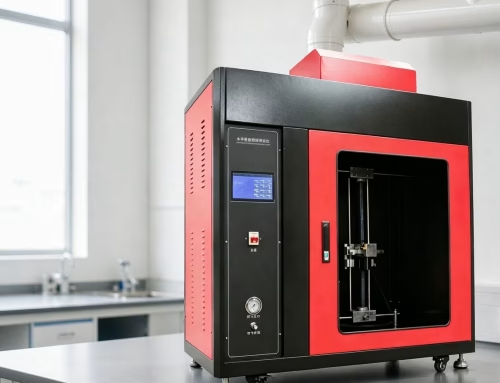
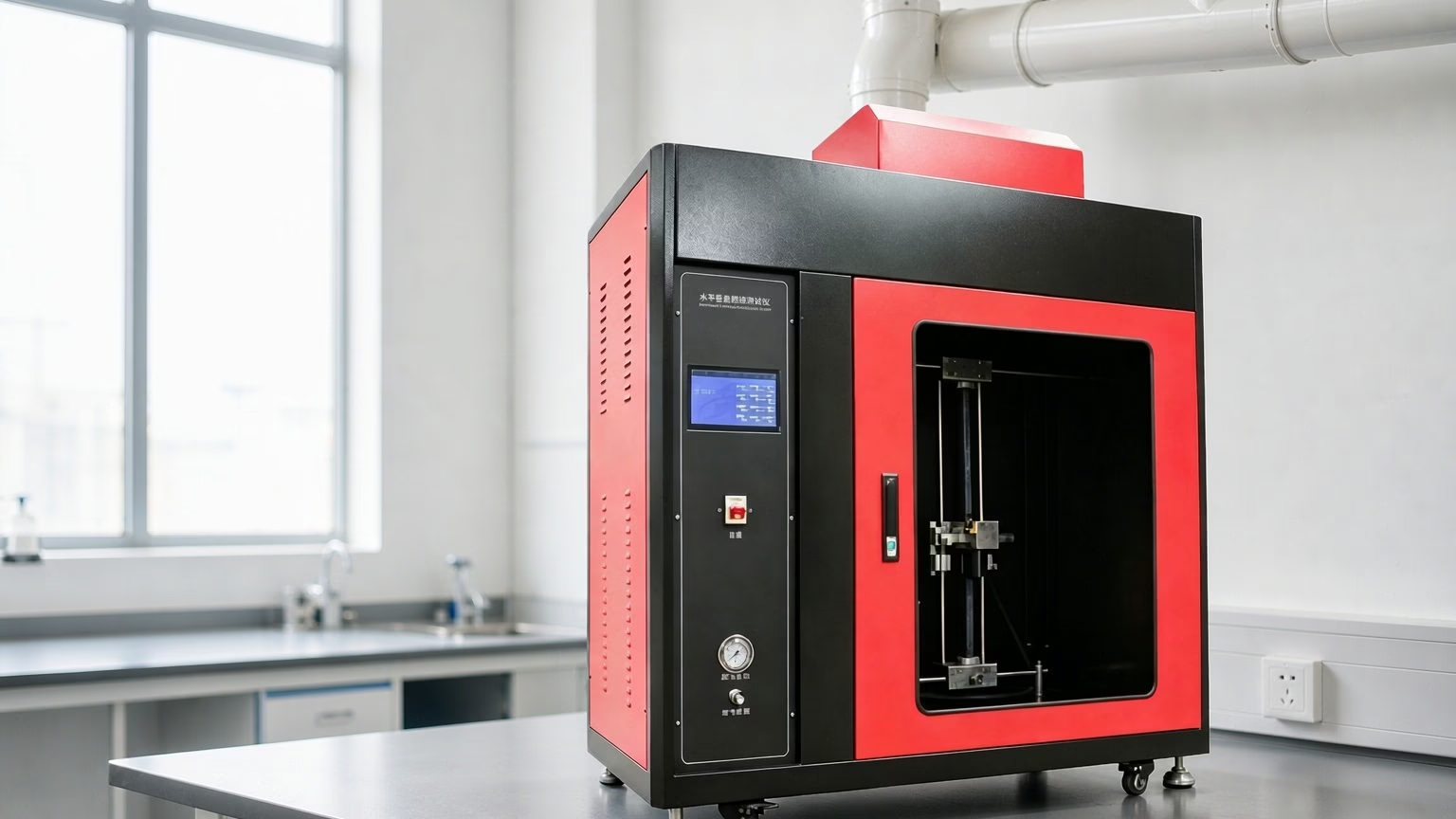
If you are running either kind of assessment, the apparatus differs accordingly. Reaction-to-fire work on coatings uses a small flame cabinet, an SBI rig or a tunnel; fire resistance work on protected steel needs a loaded furnace. The steel fire retardant coating test furnace and the vertical integrated fire resistance test furnace cover the structural side, while the cone calorimeter supports formulation development and the horizontal fire resistance test furnace covers horizontal elements. All four sit under the fire and flame testing equipment category.
Two existing articles go deeper on the adjacent questions: fire retardant coating testing methods and equipment covers the reaction-to-fire side in detail, and fire resistance testing for steel structures covers the structural criteria. For the conceptual distinction between flame retardancy and fire resistance at material level, see fire resistance versus flame retardancy, and for the heating curve itself see the ISO 834 temperature-time curve explained.
Frequently Asked Questions
Can a fire retardant coating be used to protect structural steel?
Only as a surface treatment, not as structural protection. A retardant coating can improve how the coated steel behaves as a surface in a reaction-to-fire test, but it has not been assessed to keep a loaded member below its critical temperature for a stated period. Structural protection requires an assessment to EN 13381-8 or EN 13381-4, or to ASTM E119 or UL 1709 where those apply.
What is a section factor and why does it change the coating thickness?
The section factor is the ratio of heated perimeter to cross-sectional area of a steel member, written Hp/A. It describes how quickly the steel absorbs heat: a slender member with a large perimeter heats fast and needs more protection than a stocky one. Intumescent assessments therefore publish thickness against section factor against period, not a single thickness for all members.
Does a B-s1,d0 class mean the coating is fire resistant?
No. B-s1,d0 is a reaction-to-fire classification: it describes limited contribution to fire growth, minimal smoke and no flaming droplets, as defined in EN 13501-1. It contains no time element and says nothing about structural performance. Fire resistance is classified separately under EN 13501-2 as a period, such as R 60 or R 90.
What is the difference between EN 13381-8 and EN 13381-4?
EN 13381-8 covers applied reactive protection to steel members, which in practice means intumescent coatings. EN 13381-4 covers applied passive protection, such as sprays and boards. Both produce an assessment of the contribution the protection makes to the fire resistance of the member, and both express the result against section factor and period.
Why does the heating curve matter for an intumescent coating?
Because the coating is assessed against one curve and behaves differently under another. A cellulosic curve, as in EN 1363-1 or ISO 834-1, rises comparatively gradually; a hydrocarbon curve such as that in UL 1709 rises very steeply and reaches high temperatures within minutes. A product assessed on the cellulosic curve and installed where a pool fire is the design case has been assessed against the wrong fire.
Can I apply a decorative topcoat over an intumescent coating?
Only if the assessment permits it. Decorative finishes can change how the intumescent char expands, and most assessments name the compatible topcoat systems explicitly. An unlisted topcoat can invalidate the assessment even though the coating underneath is unchanged, which is why finish schedules belong with the fire strategy rather than with the interior designer.
Is ASTM D3806 a substitute for ASTM E84?
No, they operate at different scales. ASTM D3806 is a two-foot tunnel method for small-scale evaluation of fire-retardant paints, typically used for screening and development. ASTM E84 is the 25-foot Steiner tunnel that produces the flame spread and smoke developed indices used in North American codes. A D3806 result supports development; an E84 result supports a code claim.
Conclusion: Name the Question Before You Name the Product
The fire retardant coating vs fire resistant coating decision comes down to one question: is the requirement about surface spread or structural survival. Answer that first, then let it choose the standard family. Match the standard family to the market — EN 13501-1 and EN 13501-2 in Europe, ASTM E84 and ASTM E119 in North America, UL 1709 for hydrocarbon risk. For structural protection, obtain the section factor matrix and specify by member family, not by product name. For surface treatment, fix the substrate and film build. Then write the specification so that a contractor can install it and an inspector can measure it.
If you are setting up either test capability, the BRT application team can advise on furnace loading, thermocouple placement and specimen preparation for coated steel. Start from the fire and flame testing equipment category or send us the elements and periods you need to cover.
Written by the BRT Testing fire application team, Shenyang Baoruitong Automation Equipment Co., Ltd. — manufacturers of reaction-to-fire and fire-resistance test equipment for laboratories and manufacturers worldwide.
Sources
- UNI — EN 13381-8:2013, Test methods for determining the contribution to the fire resistance of structural members — Applied reactive protection to steel members — https://webstore.uni.com/en/en-13381-8-2013
- UNI — EN 13381-4:2013, Applied passive protection to steel members — https://webstore.uni.com/en/en-13381-4-2013
- UNI — EN 1363-1:2020, Fire resistance tests — General requirements — https://webstore.uni.com/en/en-1363-1-2020
- UNI — ISO 834-1:2025, Fire-resistance tests — Elements of building construction — https://webstore.uni.com/en/iso-834-1-2025
- UNI — EN 13501-1:2018, Fire classification of construction products and building elements — https://webstore.uni.com/en/en-13501-1-2018
- UNI — EN 13501-2:2023, Classification using data from fire resistance tests — https://webstore.uni.com/en/en-13501-2-2023
- UNI — EN 13823:2020+A1:2022, Reaction to fire tests for building products — https://webstore.uni.com/en/en-13823-2020-a1-2022
- UNI — EN ISO 11925-2:2026, Ignitability of products subjected to direct impingement of flame — https://webstore.uni.com/en/en-iso-11925-2-2026
- ASTM International — E84 Standard Test Method for Surface Burning Characteristics of Building Materials — https://store.astm.org/e84.html
- ASTM International — E119 Standard Test Methods for Fire Tests of Building Construction and Materials — https://store.astm.org/e119.html
- ASTM International — D3806 Standard Test Method of Small-Scale Evaluation of Fire-Retardant Paints (2-Foot Tunnel Method) — https://store.astm.org/d3806-19.html
- UL Standards & Engagement — UL 1709, rapid rise fire tests of protection materials for structural steel — https://www.shopulstandards.com/ProductDetail.aspx?productId=UL1709