SBI vs Cone Calorimeter: The Short Answer
Choosing between an SBI vs cone calorimeter purchase comes down to one question: are you classifying products for the market, or characterising materials for development? The cone calorimeter works at bench scale on a 100 mm × 100 mm specimen and is the instrument of choice for formulation work, screening and research. The SBI apparatus works at intermediate scale on a 1.5 m corner assembly and is the instrument that separates Euroclass A2, B, C and D. If your laboratory issues classifications that a notified body or a customer will rely on, you need the SBI apparatus. If your laboratory decides which formulation to take forward, the cone calorimeter is faster and cheaper per answer.
Many established reaction-to-fire laboratories eventually run both, because the two answer questions the other cannot. What follows is where they genuinely differ, and where the choice is not really a choice at all.
The Core Difference in an SBI vs Cone Calorimeter Choice
In any SBI vs cone calorimeter comparison, it is worth remembering that both are oxygen-consumption calorimeters. That shared pedigree hides a fundamental divergence in what they are asked to do.
Bench Scale vs Intermediate Scale
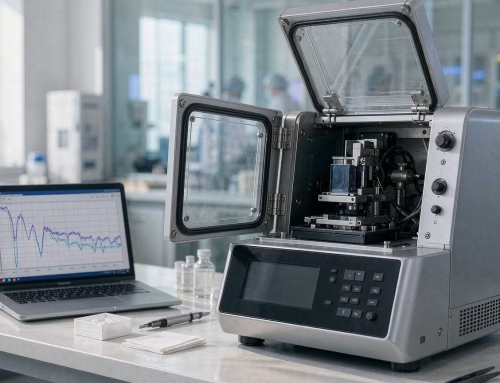
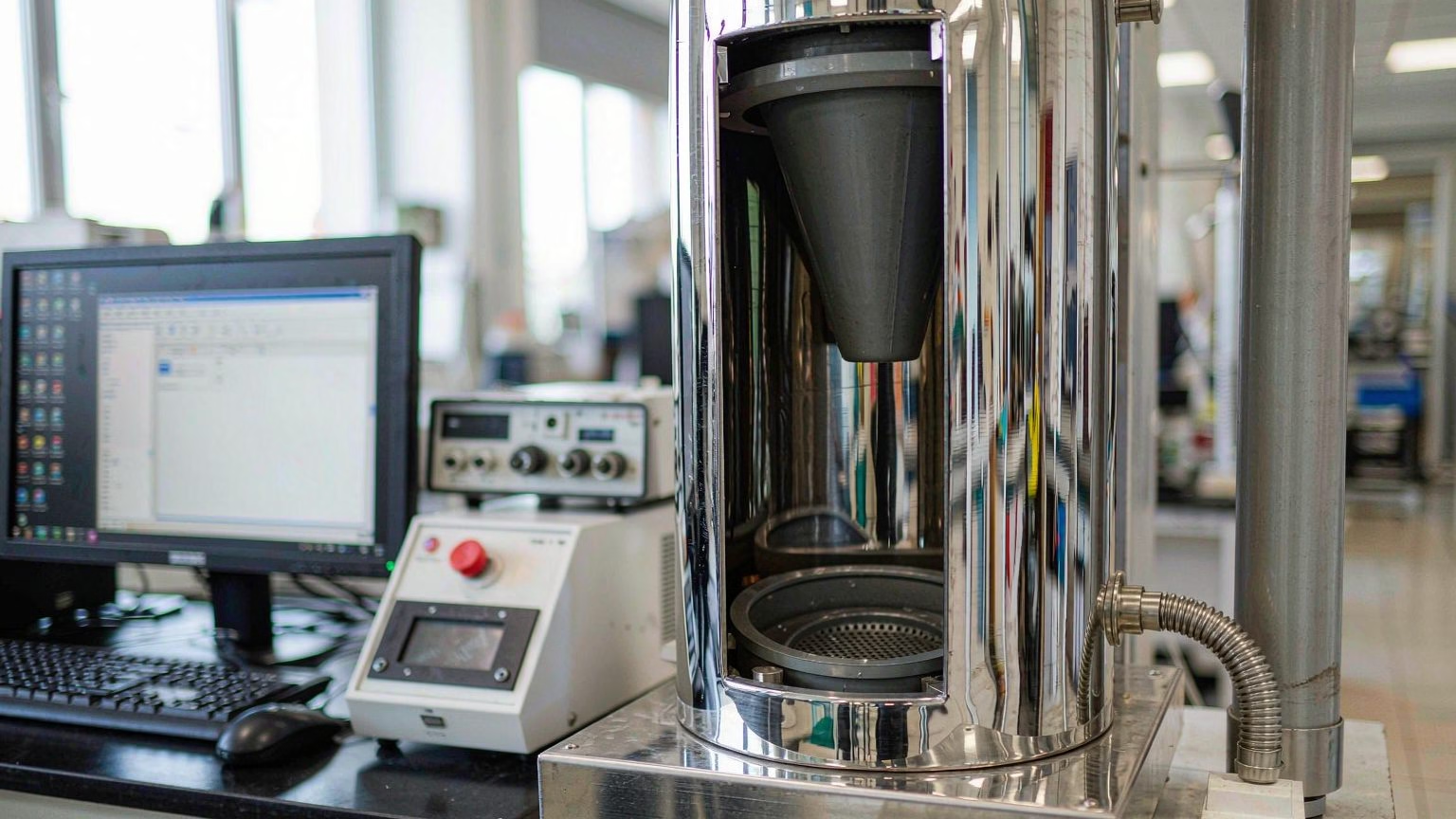
The cone calorimeter exposes a flat specimen of roughly 100 mm square to a controlled radiant heat flux, normally between 0 and 75 kW/m², and ignites it with a spark. Because the specimen is small and the radiant field is uniform, the instrument produces highly repeatable data under tightly controlled conditions. It is a materials instrument.
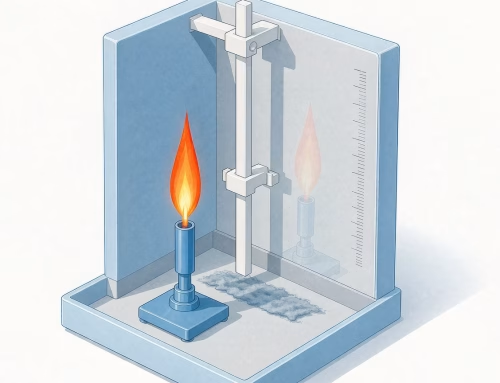
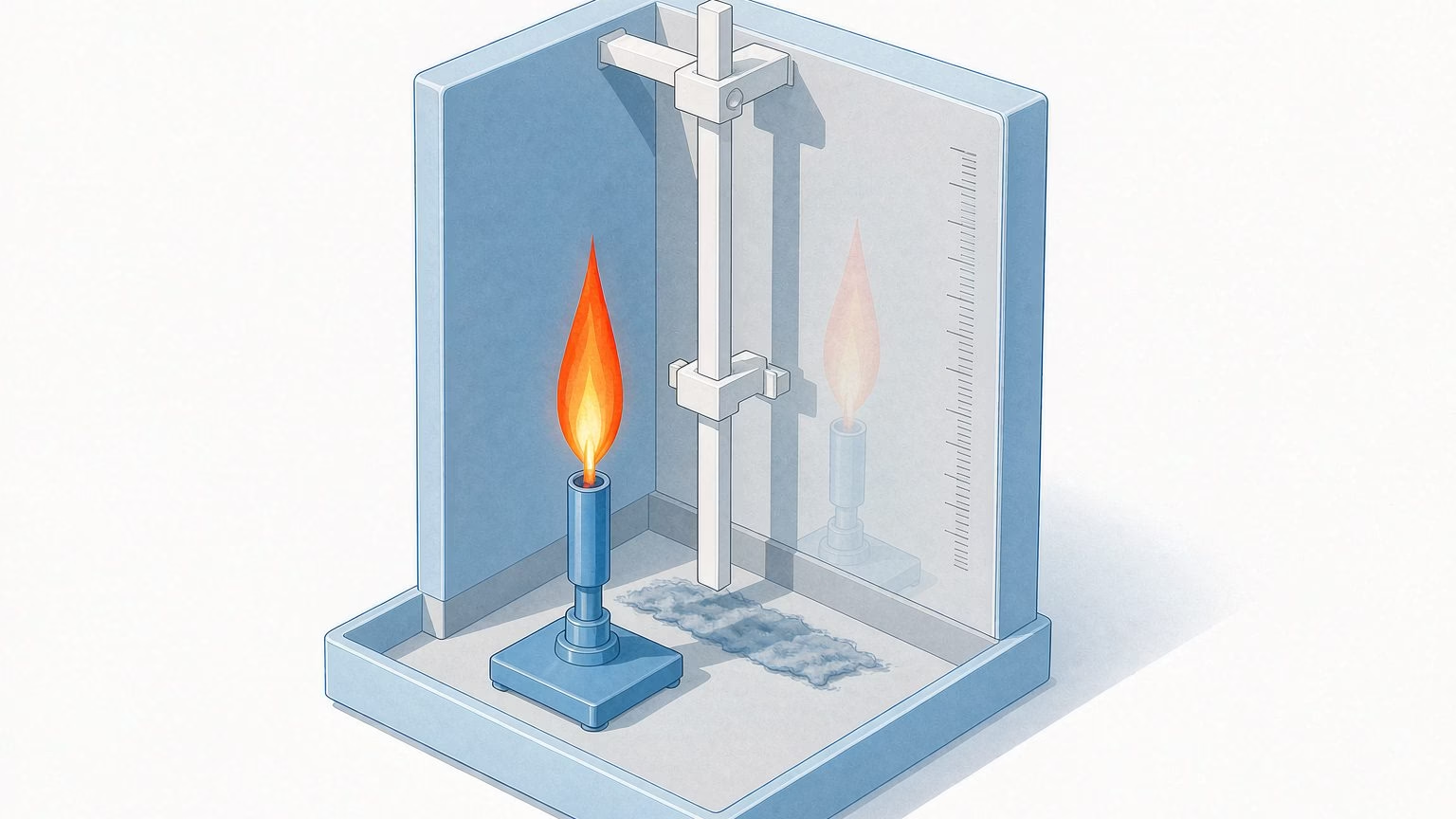
The SBI apparatus mounts two specimens at 90° to form a corner, positions a 30.7 kW propane sandbox burner at the foot of that corner, and burns for 20 minutes. The corner geometry is the whole point: a flat specimen radiates heat away from itself, while a corner traps heat so flame and hot gas climb faster. A product that looks harmless flat can behave very differently in a corner — and real rooms have corners.
The price of that realism is variance. The SBI test involves a large assembly, an operator-built specimen mount and a 20-minute burn, all of which introduce scatter that the bench-scale method avoids. The standard addresses this directly: precision data from multi-laboratory round-robin exercises is published in the method’s annexes precisely because users need to know how much scatter to expect.
Why Oxygen Consumption Calorimetry Is Common to Both
Both instruments determine heat release by measuring how much oxygen the exhaust stream loses, because the energy released per unit mass of oxygen consumed is approximately constant across organic fuels — conventionally taken as 13.1 × 10³ kJ per kilogram of oxygen. This is why both systems depend so heavily on a stable gas analysis train, and why an unstable exhaust flow damages results on either instrument. The difference is that on the cone calorimeter the flow is small and tightly controlled, while on the SBI apparatus it is a large industrial extraction system that must hold 0.50–0.65 m³/s.
SBI vs Cone Calorimeter: Side by Side
| Attribute | SBI apparatus | Cone calorimeter |
|---|---|---|
| Primary test method | EN 13823 | ISO 5660-1; ASTM E1354 |
| Specimen geometry | Two wings forming a 90° corner; long wing 1,000 × 1,500 mm, short wing 495 × 1,500 mm | Flat plate approximately 100 × 100 mm |
| Ignition source | Propane sandbox burner at 30.7 ± 2.0 kW, 20 minutes exposure | External radiant flux up to 75 kW/m² plus spark igniter |
| Primary outputs | FIGRA, THR600s, SMOGRA, TSP600s, lateral flame spread, flaming droplets | Peak heat release rate, time to ignition, total heat release, mass loss rate, smoke and gas yields |
| Regulatory role | Mandatory for Euroclass A2, B, C and D for essentially flat construction products | Research, product development, and specific sector schemes in marine, rail and cable applications |
| Typical throughput | Low; specimen conditioning of at least 72 h plus assembly build time dominates | High; small specimens condition quickly and runs are short |
| Data variability | Higher, and characterised by published round-robin precision data | Lower, under controlled flux and specimen geometry |
| Infrastructure | Test room of roughly 2.4 × 3.0 × 3.0 m, industrial extraction, 315 mm duct | Benchtop footprint with local extraction and a small exhaust duct |
What Each Instrument Measures
Cone Calorimeter Outputs
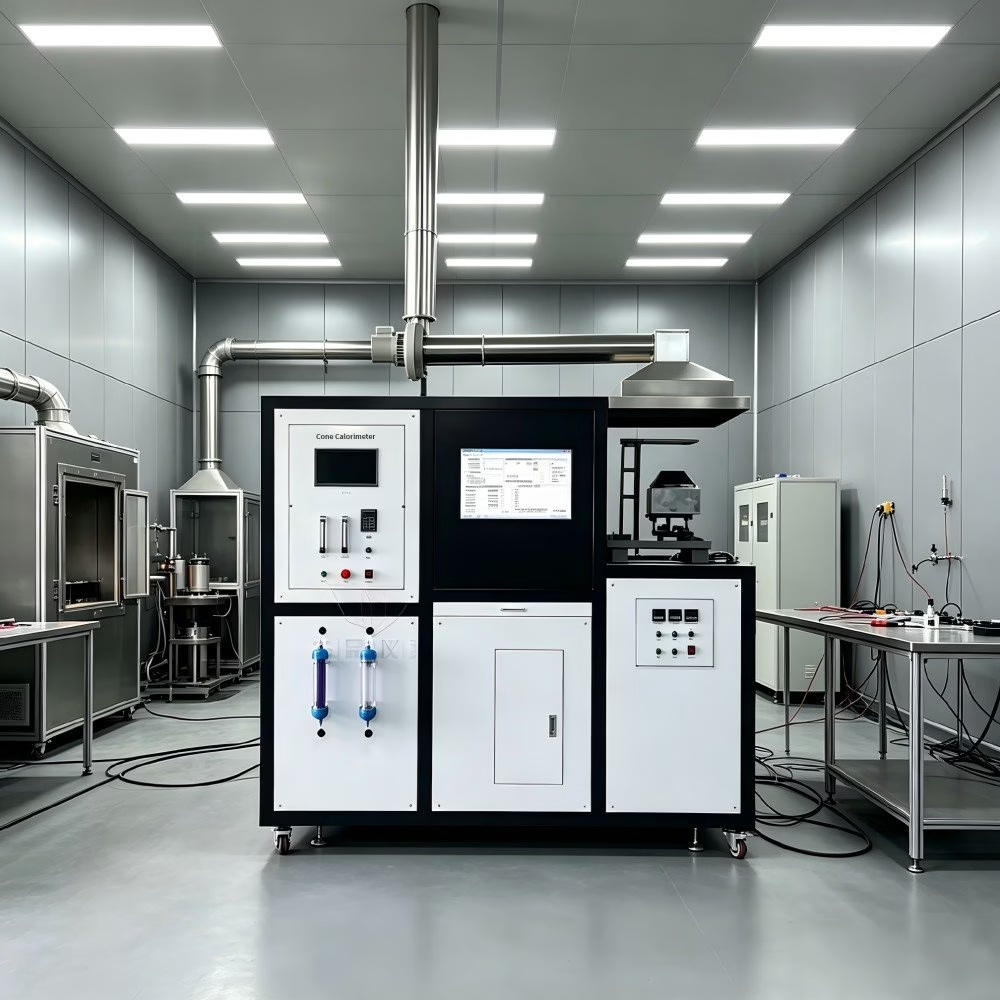
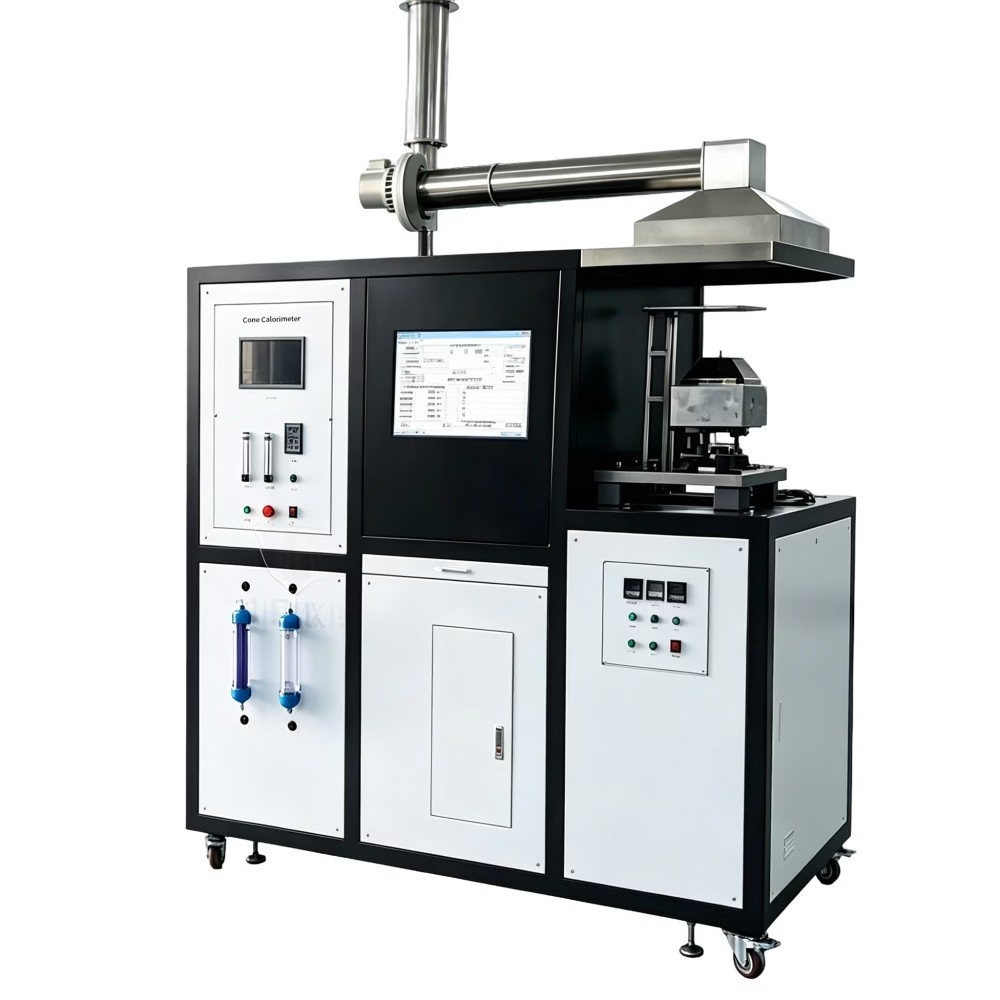
The cone calorimeter reports continuous properties of the material rather than a pass or fail: peak heat release rate, time to ignition at a given flux, total heat released, mass loss rate, effective heat of combustion, and smoke and gas yields. Because the imposed radiant flux is controlled, the same material can be compared across fluxes — which is precisely what development teams need when they want to know how a formulation behaves as fire exposure intensifies.
Where a cone calorimeter is coupled to an FTIR gas analyser, it also produces species-specific data on combustion products. The instrument’s own requirements are strict on the gas side: the oxygen analyser must be of the paramagnetic type, with drift and noise within tight limits, and the sampling system’s transport delay is constrained so that the time axis stays meaningful. Our guide to ISO 5660 cone calorimeter heat release rate covers the method in detail.
SBI Apparatus Outputs
The SBI apparatus reports classification quantities. FIGRA measures how fast heat release grows relative to elapsed time; THR600s measures how much heat the product contributes in the first ten minutes; SMOGRA and TSP600s do the same for smoke; lateral flame spread and droplet observations are recorded visually. These are not material properties — they are the numbers that a classification standard compares against fixed limits.
That is the crucial asymmetry. Cone calorimeter data informs a decision you make. SBI data determines a label your customer depends on. For how those labels are assembled, see our guide to EN 13501-1 Euroclass classification.
SBI vs Cone Calorimeter: Where Each Carries Regulatory Weight
For construction products placed on the European market, the division is stark. If a product falls into Euroclass A2, B, C or D and is essentially flat — wall panels, insulation boards, cladding, ceiling systems, composite panels — the SBI test is not optional. The class cannot be issued without it, and the CE marking process depends on the classification. There is no substitute, and no bench-scale shortcut.
The cone calorimeter’s regulatory role is narrower but real. Rail and marine schemes use bench-scale heat release data as part of their compliance structures, and cable applications have their own programmes. In those contexts the cone calorimeter is not a research luxury but a specified instrument.
When You Need an SBI Apparatus
Four situations make the SBI apparatus the right purchase.
- You issue Euroclass classifications. Compliance testing, CE marking support or third-party certification for construction products sold in Europe requires this instrument.
- You are a notified body or an accredited reaction-to-fire laboratory. The scope itself demands the method.
- You are a manufacturer running in-house QA against a certified classification. An SBI apparatus lets you check production against the classified configuration without sending every batch out, provided your results agree with the certifying laboratory.
- Your product’s behaviour is geometry-sensitive. Products whose performance depends on joints, surface layers or assembly behaviour need the corner configuration to show it.
When a Cone Calorimeter Is the Right Choice
The cone calorimeter wins in three different circumstances.
- Formulation and development work. You need to compare candidates quickly and cheaply, at controlled flux, with repeatable data. Building an SBI assembly for each variant is not workable.
- Screening before expensive testing. A bench-scale result tells you whether a formulation is worth the cost of a full intermediate-scale campaign, and it flags candidates that will fail early heat release limits.
- Fundamental material characterisation. Ignition behaviour, heat release curves and gas yields under imposed flux are material properties that no classification test reports.
Running Both in One Laboratory
Where both instruments are present, three practical decisions arise: whether to share gas analysis, how to schedule them, and how to keep the two data streams comparable.
Sharing gas analysis hardware between a cone calorimeter and an SBI duct system is technically possible and saves both footprint and capital cost, but it introduces a dependency: one analyser serving two instruments means maintenance, calibration and downtime are shared. Laboratories that need independent uptime often keep the analysers separate and share only the reference standards and calibration suite.
Scheduling is easier to manage than it looks, because the throughput profiles differ. Cone calorimeter runs are short and numerous; SBI runs are long, few, and dominated by specimen preparation and conditioning. A laboratory can typically run development work in parallel with classification campaigns without conflict.
The comparability question is the one that catches people out. Because both instruments measure heat release by oxygen consumption, engineers sometimes treat their outputs as interchangeable. They are not. A cone calorimeter reports peak heat release under an imposed flux; the SBI apparatus reports an index derived from an intermediate-scale corner exposure. The numbers are not converted into one another, and a specification that asks for “heat release rate data” should state which instrument and which method is intended.
SBI vs Cone Calorimeter: Cost and Infrastructure
Capital cost is only part of an SBI vs cone calorimeter comparison. The SBI apparatus carries a test room requirement, industrial extraction, a 315 mm duct, a larger specimen build workload and a longer test cycle. Its consumables run to sampling line parts, calibration gases and n-heptane. Its calibrations are also more involved: the step calibration must hold the measured-to-delivered heat release ratio continuously within 100 ± 5%, and the n-heptane check targets 4,456 ± 222.8 MJ/kg.
The cone calorimeter’s infrastructure is smaller and its consumables cheaper per run, but a fully specified instrument needs reference heat flux meters with periodic calibration, which is a recurring cost that is easy to miss at the budget stage. The full parameter set expected of fire testing instruments is listed on our fire test parameters page.
Frequently Asked Questions
Can a cone calorimeter replace the SBI test for Euroclass classification?
No. Euroclass A2, B, C and D for essentially flat construction products are separated by FIGRA and THR600s values produced only by the EN 13823 SBI test. The cone calorimeter works at bench scale on a 100 mm specimen under imposed radiant flux and reports material properties, not classification quantities. There is no route from cone calorimeter data to a Euroclass label.
What is the main difference between SBI vs cone calorimeter testing?
Scale and purpose. The cone calorimeter tests a small flat specimen at controlled radiant flux to characterise a material; the SBI apparatus tests a 1.5 m corner assembly with a 30.7 kW burner to classify a product. Both use oxygen consumption calorimetry, but one informs development decisions and the other produces a regulatory label.
In SBI vs cone calorimeter testing, which is better for development?
The cone calorimeter, by a wide margin. Its small specimens condition quickly, its runs are short, its imposed flux is controlled and its repeatability is high. That combination lets a development team compare many formulations in the time it would take to build and run a single intermediate-scale campaign, and it identifies candidates that will not survive the classification limits.
Do the two instruments give comparable heat release numbers?
No, and treating them as interchangeable is a common mistake. The cone calorimeter reports peak heat release rate under an imposed radiant flux. The SBI apparatus reports FIGRA, an index derived from dividing heat release by elapsed time during an intermediate-scale corner exposure. The exposure conditions and the quantities themselves differ, so the outputs are not converted into one another.
Can one gas analysis system serve both instruments?
Technically yes, and it saves footprint and capital cost. The trade-off is shared downtime: one analyser serving two instruments means maintenance and calibration interrupt both. Laboratories that need independent uptime usually keep separate analysers and share only reference standards and the calibration suite.
What infrastructure does an SBI apparatus need that a cone calorimeter does not?
A test room of roughly 2.4 × 3.0 × 3.0 m, an industrial extraction system holding 0.50–0.65 m³/s, and a duct of 315 mm internal diameter with a measurement section. The cone calorimeter needs only a benchtop footprint with local extraction and a small duct. The SBI test also needs more specimen preparation space, since assemblies can take hours to build.
How long does each test take?
A cone calorimeter run is short, typically minutes, with quick specimen conditioning between runs. An SBI test involves at least 72 hours of conditioning to constant mass, hours of assembly work for multi-layer specimens, and a 21-minute recorded burn with the main burner ignited at 300 seconds. Total laboratory time per SBI specimen is therefore dominated by preparation, not by the burn itself.
Choosing Between SBI vs Cone Calorimeter: A Sequence
- Establish whether you need to issue Euroclass classifications. If yes, the SBI apparatus is mandatory and the decision ends there.
- If not, establish whether your work requires characterising materials under controlled radiant flux, which points to the cone calorimeter.
- Check whether any sector scheme you serve — rail, marine, cable — specifies bench-scale heat release data.
- Assess throughput honestly, including specimen conditioning and assembly time, not just run duration.
- Cost the infrastructure, not just the instrument: test room, extraction, ducting, reference standards and consumables.
- If both are needed, decide whether they will share gas analysis hardware or run independently, and plan calibration capacity accordingly.
If the decision is still open, or if you are equipping a new reaction-to-fire laboratory, the technical team can review your intended scope against both instruments — reach them through the contact page. The hardware itself is described on our single burning item SBI test apparatus and cone calorimeter pages. Related reading: the SBI apparatus compliance guide and how EN 13823 data shapes classification.
References
- NEN — NEN-EN 13823:2020+A1:2022 en, current edition, 101 pages, published 1 August 2022. nen.nl
- BSI Knowledge — Reaction to fire tests for building products: building products excluding floorings exposed to the thermal attack by a single burning item. knowledge.bsigroup.com
- ASTM — E1354 Standard Test Method for Heat and Visible Smoke Release Rates Using an Oxygen Consumption Calorimeter. store.astm.org
- ASTM — E1354 standard overview page. store.astm.org
- NEN — NEN-EN 13501-1:2019 en, fire classification of construction products and building elements. nen.nl
- NSAI Standards — I.S. EN 13823:2020, superseded by I.S. EN 13823:2020+A1:2022. shop.standards.ie
- European Commission — CE marking for manufacturers under the Construction Products Regulation. ec.europa.eu
- RISE Research Institutes of Sweden — fire safety and reaction-to-fire research. rise.se
- BRE Group — fire testing, certification and research. bre.co.uk
About This Guide
Prepared by the technical content team at Shenyang Baoruitong Automation Equipment (BRT), a manufacturer of reaction-to-fire and fire resistance test equipment. Specimen dimensions, burner output, exhaust flow and calibration targets quoted for the SBI apparatus come from EN 13823 and its annexes; the oxygen consumption constant and the radiant flux range quoted for the cone calorimeter come from ISO 5660-1 and ASTM E1354. Where a figure describes laboratory practice rather than a standard limit, it is presented as such.