Horizontal and vertical flammability testing differ in what the flame is allowed to do: in the horizontal test the flame runs along a bar and the result is a burning rate, while in the vertical test the flame attacks the underside of a clamped bar and the result is whether the material stops burning by itself. That single change of orientation alters the heat feedback, the direction of the melt flow and the failure criterion, which is why a material that passes a horizontal test comfortably can fail a vertical one badly. This comparison of horizontal vs vertical flammability testing sets out both set-ups, the standards behind each, and the practical reasons the two results are never interchangeable.
Why Orientation Is Not a Format Detail in Horizontal vs Vertical Flammability Testing
Turning a specimen through ninety degrees does more than change the camera angle. It changes the physics.
What Changes When the Specimen Stands Up
In a horizontal test, the flame front travels sideways and buoyancy pulls hot gas away from the unburned material. The specimen is supported along its length and the polymer melt tends to stay where it is. In a vertical test, hot combustion products rise along the specimen face, preheating the material above the flame, and the melt can drip away from the burning zone or fall onto whatever is below. Both effects make the vertical test harsher for most thermoplastics, and both are genuine features of how a vertical cable or a wall panel burns in practice.
What Each Orientation Is Asking
The horizontal question is “how fast does this material carry a flame?” — a rate, expressed in millimetres per minute, that lets a specifier accept or reject a material for a low-risk application. The vertical question is “does this material extinguish itself once the ignition source is removed, and does it shed burning material?” — a self-extinguishing judgement with a dripping component. Those are different questions about different fire scenarios, and the reports that answer them are not convertible.
Horizontal Flammability Testing
In horizontal vs vertical flammability testing, the horizontal route is the entry-level screen for plastics, and it is where most material specifications start.
The Test Set-Up
A bar specimen is clamped horizontally at one end, a defined flame is applied to the free end for a set period at a specified angle, and the time the flame front takes to travel between marked distances is recorded. The specimen is supported so that it does not sag into the flame, and the laboratory records the burn rate for the thickness tested 4. The apparatus is deliberately simple, which is why horizontal testing is cheap and repeatable, and why it is often the first test a compounder runs on a new formulation.
What a Horizontal Result Looks Like
The output is a burning rate in millimetres per minute, sometimes with a note that the flame extinguished before reaching the first mark. A rate-based result is easy to specify and easy to compare across suppliers, but it says nothing about whether the material will stop burning on its own once the flame is removed — because in this orientation the question does not arise in the same way. Horizontal data is therefore common in datasheets for general-purpose grades and rare as the sole evidence for an enclosure or a structural part.
Where Horizontal Testing Is Right
Horizontal testing fits when the fire risk is a small ignition source on a horizontal surface, when the material is being screened before a more expensive test, or when the relevant product standard calls for a horizontal rate. It is also the more realistic orientation for materials that will only ever be used flat and supported, such as certain films, sheets and interior panels in low-hazard positions.
Vertical Flammability Testing
Vertical testing is the harsher orientation and the basis of almost every rating that appears on a plastics datasheet.
The Test Set-Up
The bar is clamped vertically, the burner is positioned below the free end, and the flame is applied for a defined period — twice, in the most widely used procedure, with the afterflame time measured after each application. Cotton is placed below the specimen to record whether burning material drips and ignites it 3. The flame size, the distance to the specimen and the application times are all fixed by the method, which is why vertical results are comparable between laboratories that follow the same edition.
What a Vertical Result Looks Like
The output is a set of times — afterflame, afterglow — plus an observation about dripping and whether the specimen burned up to the holding clamp. Those observations convert into a rating rather than a number. The rating criteria themselves are set out in the method, and our UL 94 rating explainer walks through the burn-time and cotton-ignition thresholds behind HB, V-0, V-1 and V-2, so they are not repeated here.
Where Vertical Testing Is Right
Vertical testing fits anything that will stand upright in service — enclosures, connectors, terminal blocks, cable management, appliance housings — and anything where a dripping, burning melt is a credible hazard. It is also the orientation that procurement usually means when it asks for a “flammability rating”, which is why the vertical method carries most of the commercial weight.
Horizontal vs Vertical Flammability Testing: Side-by-Side
| Horizontal | Vertical | |
|---|---|---|
| Specimen position | Clamped flat, free end exposed | Clamped upright, lower end exposed |
| Flame application | One application at a defined angle | Two applications from below, in the common procedure |
| Heat feedback to unburned material | Limited; buoyancy carries heat away | Strong; hot gas rises along the specimen |
| Melt behaviour | Stays largely in place | Can drip away or onto the cotton below |
| Primary measurement | Burning rate in mm/min | Afterflame and afterglow times, dripping, extent of burn |
| Form of result | Number | Rating category |
| Typical use | Screening, low-hazard flat products, rate specifications | Enclosures, connectors, parts that stand upright |
| Failure mode it detects | Fast flame travel | Failure to self-extinguish, dripping ignition |
The Standards Behind Each Orientation
Orientation determines which standard applies, and the standards are not written to be interchangeable.
| Orientation | Standard | What it measures | Specimen form |
|---|---|---|---|
| Horizontal | ASTM D635 | Rate of burning, extent and time of burning | Bar clamped flat |
| Horizontal | IEC 60695-11-10 Method A | 50 W small-flame behaviour in horizontal position | Bar clamped flat |
| Vertical | ASTM D3801 | Comparative burning characteristics in vertical position | Bar clamped upright |
| Vertical | IEC 60695-11-10 Method B | 50 W small-flame behaviour in vertical position | Bar clamped upright |
| Vertical, 500 W | IEC 60695-11-20 | 5V performance, only for materials already V-0, V-1 or V-2 | Bar, larger flame |
| Oxygen index | ISO 4589-2 / ASTM D2863 | Minimum oxygen concentration sustaining combustion | Small vertical bar |
Horizontal: ASTM D635 and IEC 60695-11-10 Method A
ASTM D635 is the North American method for rate of burning and extent of burning of plastics in a horizontal position [4]. IEC 60695-11-10 covers 50 W horizontal and vertical flame test methods in a single document, with the horizontal procedure as Method A 5. The former ISO 1210 horizontal and vertical method has been withdrawn, so international work now routes through the IEC text or through national adoptions of it.
Vertical: ASTM D3801 and IEC 60695-11-10 Method B
ASTM D3801 measures comparative burning characteristics of solid plastics in a vertical position [3], and IEC 60695-11-10 Method B is the corresponding 50 W vertical procedure [5]. The 500 W variants used for the 5V ratings sit in IEC 60695-11-20 and are only applicable to materials that have already achieved a V-0, V-1 or V-2 result 6. Thickness and colour are part of the rating, not incidental details: a V-0 at 1.5 mm does not imply V-0 at 0.8 mm.
Foams and Thin Films Behave Differently Again
Low-density foams and thin films cannot be held in a rigid bar, so they have their own specimen forms and methods. Foam testing uses larger specimens and horizontal or vertical procedures specific to cellular materials, while thin films are tested in a supported vertical configuration. Treating a foam result as equivalent to a solid-bar result is a common and consequential error, and it is one reason the material category is written into the rating.
Oxygen Index: A Different Axis Entirely
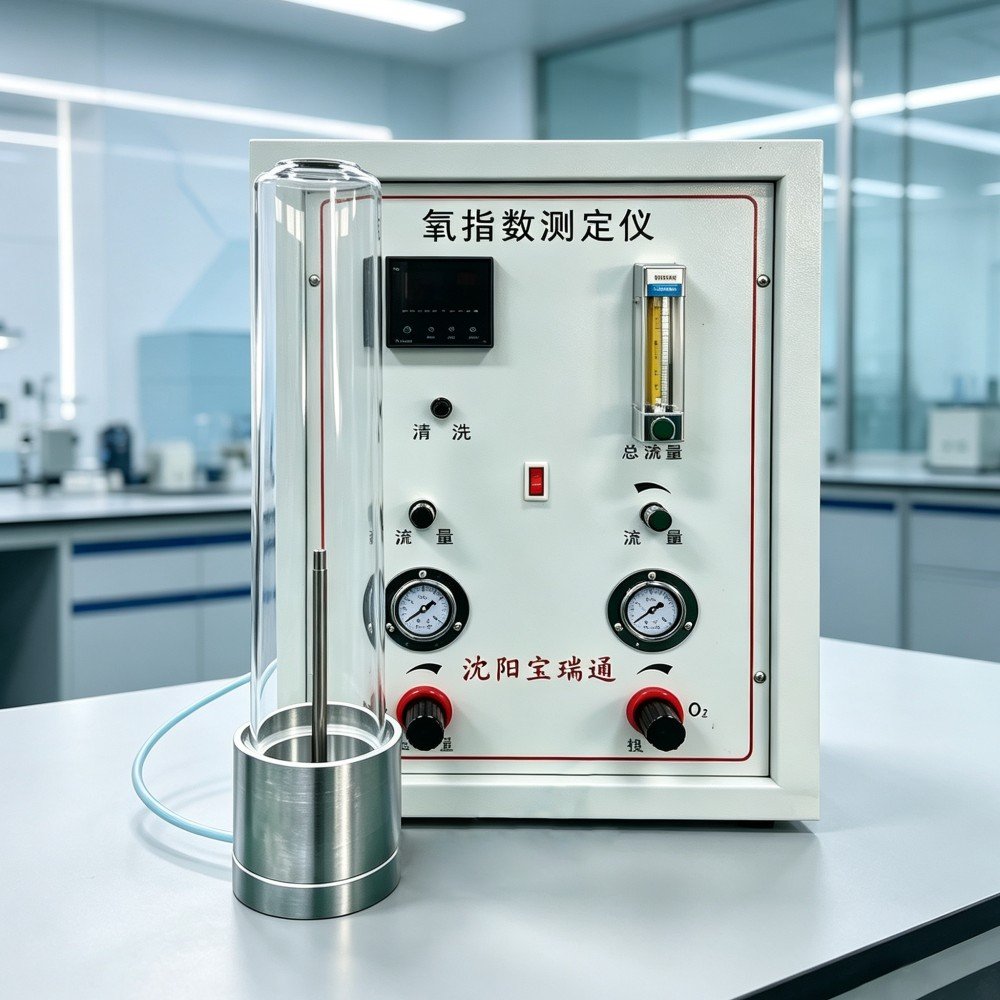
Oxygen index measures the minimum oxygen concentration that sustains combustion of a small vertical specimen, per ISO 4589-2 or ASTM D2863 78. It is often quoted next to flammability ratings, but it is not an orientation test and it does not predict a UL 94 outcome. It ranks formulations, and that is all it should be used for.
What Moves a Result More Than Orientation Does
Orientation sets the question. These variables often decide the answer, and they are the ones most often left out of a datasheet.
| Variable | Effect on the result | What the report should state |
|---|---|---|
| Thickness | Thinner sections heat through faster and drip more readily | The thickness at which the rating was granted |
| Pigment and colour | Some pigments change burning behaviour noticeably | The colour tested, matched to production |
| Conditioning | Moisture affects afterflame time and dripping | Conditioning temperature, humidity and duration |
| Flame calibration | An uncalibrated flame shifts every number | Fuel, flame height and the check performed |
| Specimen preparation | Moulded versus machined edges change ignition and travel | How the specimen was made and finished |
| Operator technique | Flame distance and dwell time vary between people | The procedure and any internal repeatability data |
Why the Two Results Never Convert
There is no formula that turns a horizontal burning rate into a vertical rating, and any supplier who offers a conversion for horizontal vs vertical flammability testing is improvising. The reason is structural: the horizontal test measures how fast a flame front advances under conditions where buoyancy removes heat, while the vertical test measures whether the material extinguishes under conditions where buoyancy feeds heat back into it. A material can be slow to burn sideways and still fail to self-extinguish when held upright, because the mechanisms are different.
The practical consequence for specification writing is simple. State the orientation, the standard and edition, the thickness and the colour, and ask for the report that matches. “Flame retardant” without those four items is a marketing phrase, not a specification.
Specifying Equipment That Covers Both
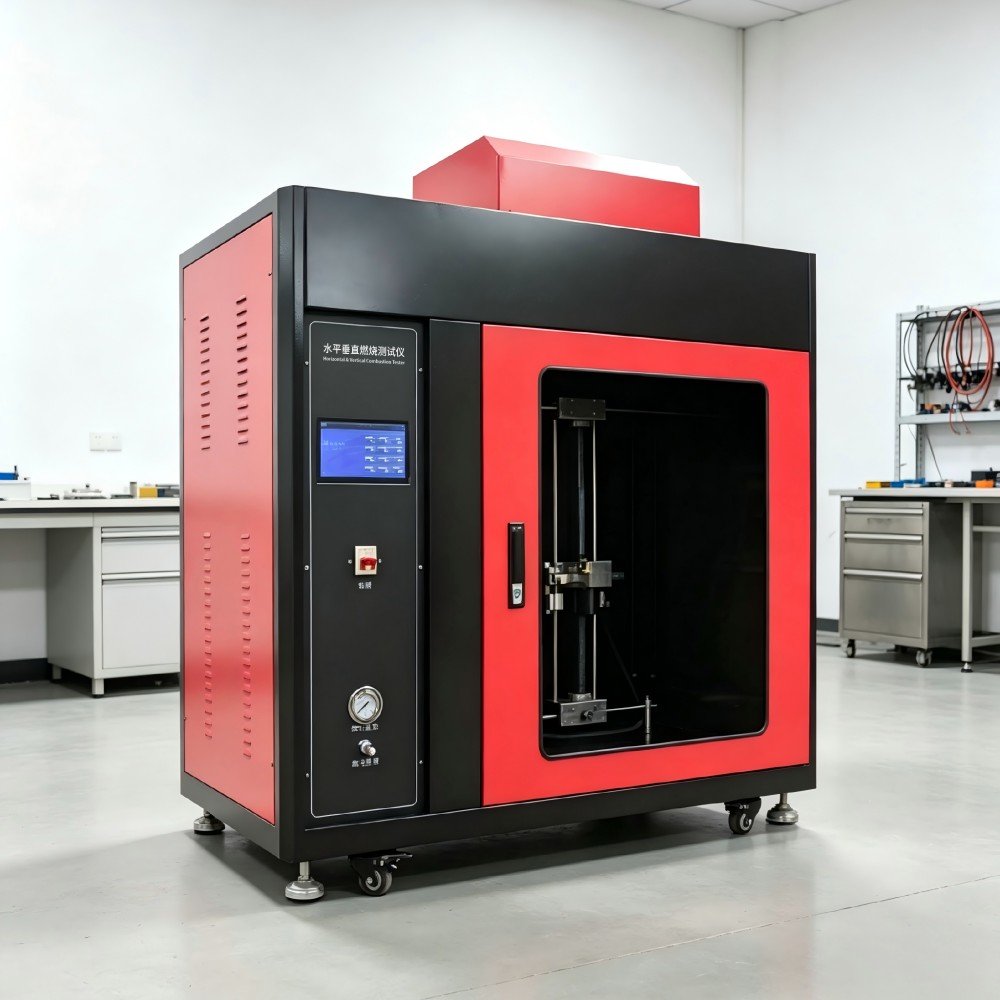
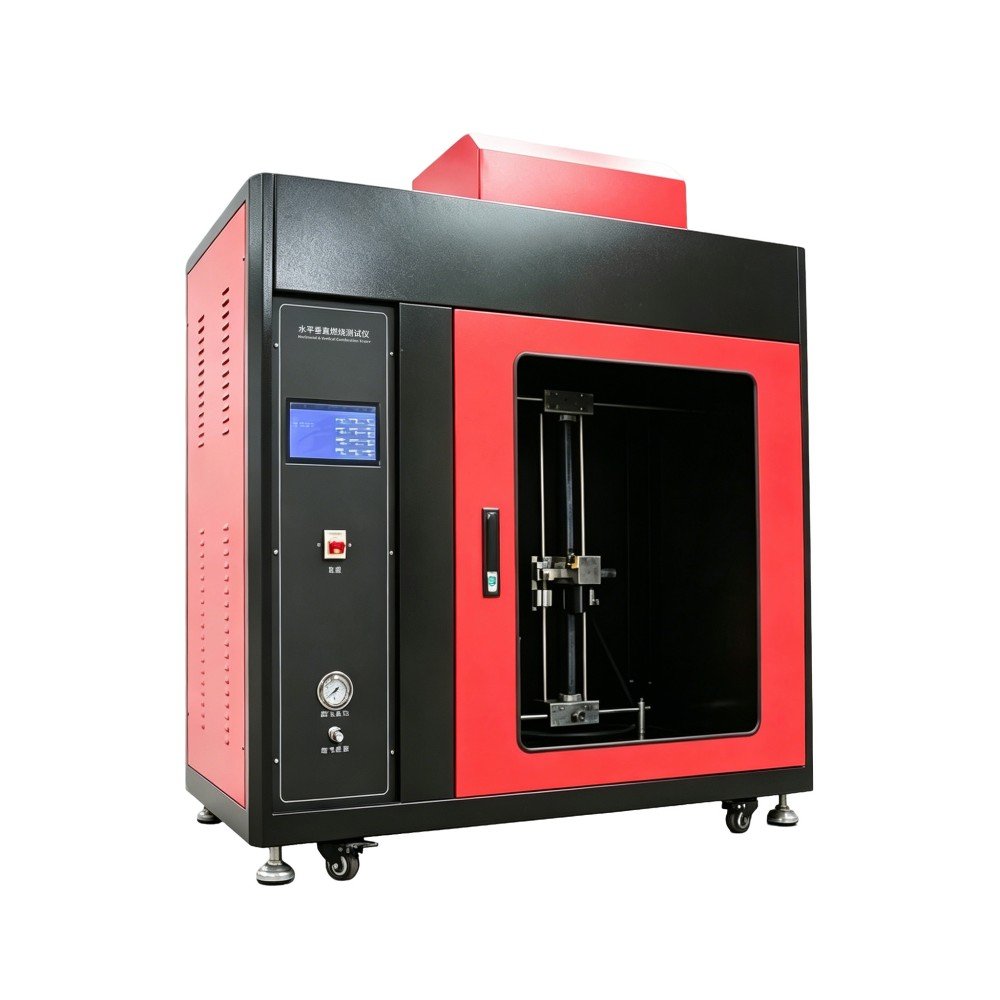
Most laboratories need both orientations, and buying them as one bench avoids a second burner, a second extraction point and a second calibration routine. What to check:
- Both specimen holders supplied and independently adjustable, with the flame angle and distance set by gauge rather than by eye.
- Timing resolution fine enough for the afterflame intervals the method requires, with the timer started by the operator at the moment of flame withdrawal.
- Burner and gas control that hold a stable flame height, with the specified fuel and a documented calibration check.
- Cotton and drip tray positioned as the method requires, since dripping evidence is part of the vertical result.
- Extraction that removes combustion products without disturbing the flame or the buoyant plume — the most commonly underestimated installation issue.
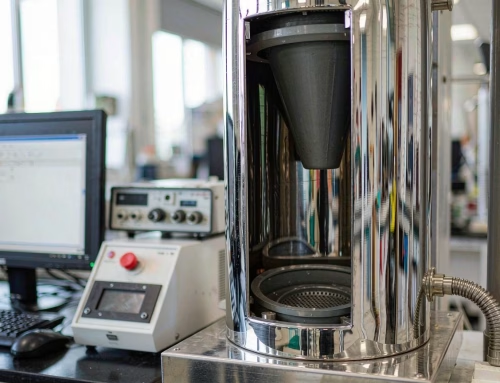
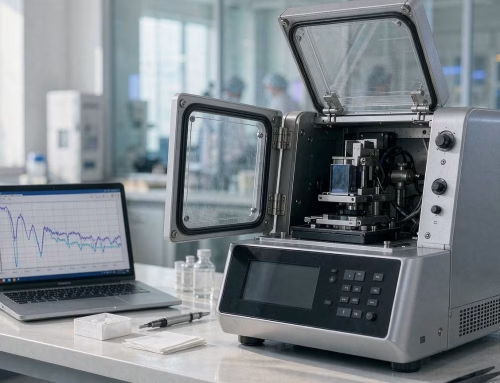
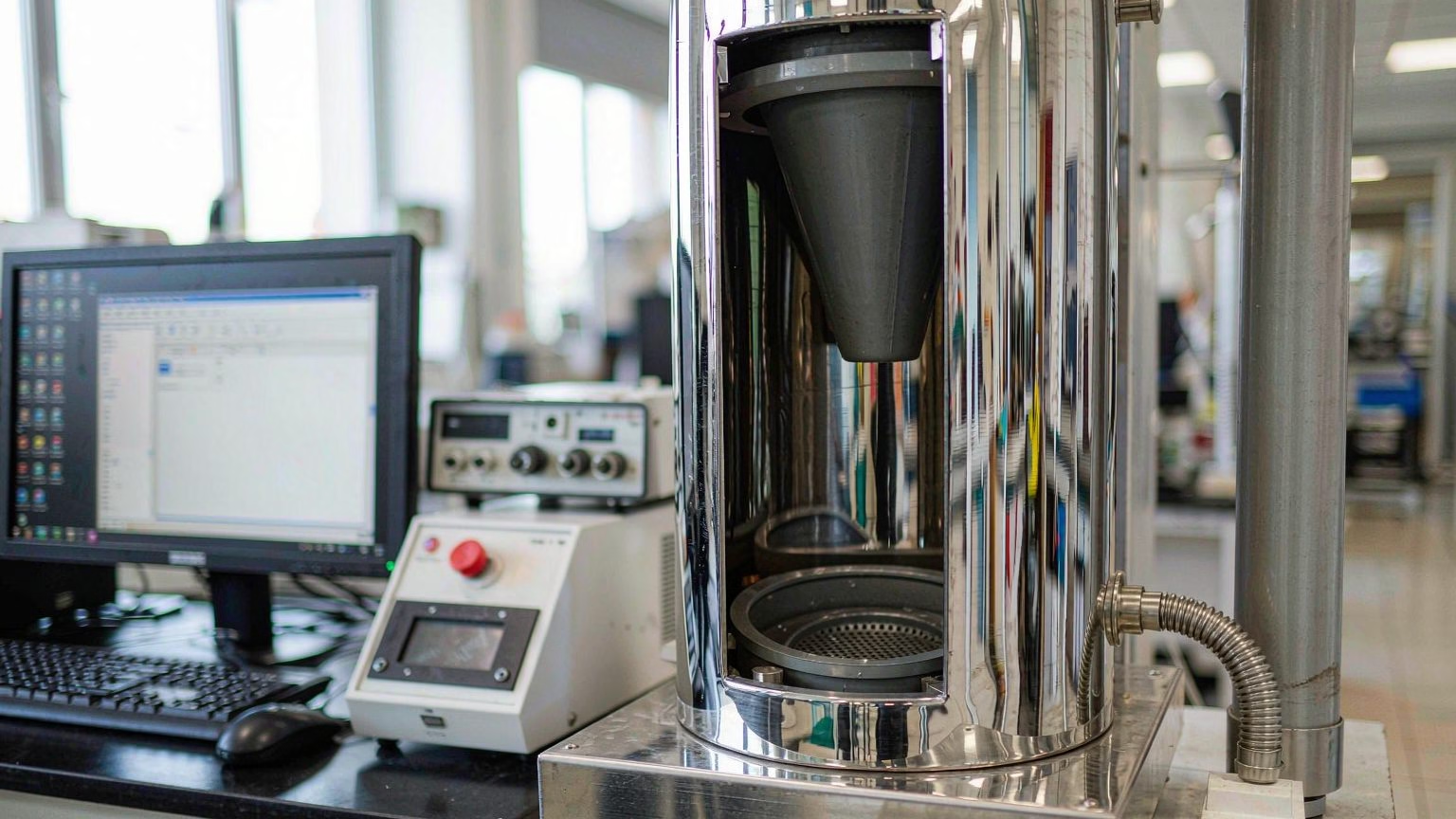
BRT Testing builds a horizontal and vertical combustion tester that covers both orientations on one frame, and a vertical and horizontal burning tester for plastic foam for cellular materials, which need different specimen handling. Oxygen index capability is a separate bench — see the limiting oxygen index tester and the automatic touch-screen oxygen index tester — and the whole group sits under fire and flame testing equipment. Confirm the current specimen holder set and gas configuration on each product page before ordering.
Common Mistakes
Quoting a horizontal rate as a vertical rating. The two are different measurements. A datasheet line that mixes them is unusable for compliance work.
Ignoring thickness. Ratings are thickness-specific. A rating quoted without a thickness cannot be applied to a drawing.
Testing a pigmented grade against a natural reference. Colour changes burning behaviour; the reference must match the production colour.
Assuming a foam result transfers to a solid part. Different specimen forms, different methods, different outcomes.
Skipping flame calibration. An uncalibrated burner makes every result in the report provisional, however careful the operator.
Frequently Asked Questions
What is the difference between horizontal and vertical flammability testing?
The orientation changes what the flame does to the specimen. In horizontal testing the flame travels along a supported bar and the result is a burning rate. In vertical testing the flame attacks the underside of an upright bar and the result is whether the material self-extinguishes, plus whether it drips burning material onto cotton below.
Which test is harsher for plastics?
Vertical testing is generally the harsher of the two, because hot combustion products rise along the specimen and preheat the material above the flame, while molten polymer can drip away from the burning zone. Many materials that pass a horizontal rate requirement will not achieve a vertical self-extinguishing rating.
Can a horizontal result be converted into a vertical rating?
No. There is no accepted conversion between the two, because they measure different properties under different heat feedback conditions. A specification must state the orientation, the standard and edition, the thickness and the colour, and be supported by a report for that combination.
Which standards apply to each orientation?
For horizontal testing the common references are ASTM D635 and IEC 60695-11-10 Method A. For vertical testing they are ASTM D3801 and IEC 60695-11-10 Method B, with the 500 W procedures of IEC 60695-11-20 used for the 5V ratings. National adoptions may add their own editions and tolerances.
Does specimen thickness affect the result?
Yes, substantially. Thinner specimens heat through faster, drip more readily and often burn differently from thick ones. Ratings are granted at a stated thickness, and a result at one thickness does not automatically apply to another, which is why thickness belongs in every specification.
Where does oxygen index fit?
Oxygen index is a separate measurement, not an orientation of the burning test. It reports the minimum oxygen concentration that sustains combustion of a small vertical specimen, and it is useful for ranking formulations and controlling batches. It does not predict a horizontal burn rate or a vertical rating.
Can one machine run both horizontal and vertical tests?
Yes. Combined horizontal and vertical combustion testers carry both specimen holders on one frame, with a shared burner, gas control and timing system. Check that the flame angle and distance are set by gauge for each orientation, and that the extraction system does not disturb the flame during either test.
Next Steps
Before you specify horizontal vs vertical flammability testing, settle four things in writing:
- The orientation the product standard or customer actually requires.
- The standard and edition, since tolerances differ between revisions.
- The thickness and colour to be tested, matching production.
- The report format the receiving authority will accept.
If you need a bench that covers both orientations, or help mapping a product to the right method, send us the material, thickness range and target rating and our application team will propose a configuration. Get in touch with those details, or browse the fire and flame testing equipment range.
About the author. This article was prepared by the BRT Testing application engineering team at Shenyang Baoruitong Automation Equipment Co., Ltd., which manufactures fire and flame testing equipment for plastics, cables, building materials and textiles. Method descriptions follow the published standards cited below; where an instrument configuration is mentioned, the product page is the controlling document.