- EN 13501-1 Euroclass: The Short Answer
- What the EN 13501-1 Euroclass System Covers
- Reading an EN 13501-1 Euroclass String
- Test Routes to Each EN 13501-1 Euroclass
- The Thresholds Behind Each EN 13501-1 Euroclass
- Where the Single Burning Item Test Sits
- Subscripts: fl and L
- What Changed and What Did Not
- Getting an EN 13501-1 Euroclass for Your Product
- Frequently Asked Questions
- What does EN 13501-1 Euroclass actually classify?
- What is the difference between A2 and B in the EN 13501-1 Euroclass system?
- Why do some classes have an fl or L subscript?
- Can a product with the same material have two different classes?
- Does an EN 13501-1 Euroclass prove fire resistance?
- Which tests are needed for class B?
- How long does an EN 13501-1 Euroclass classification last?
- Working Through an EN 13501-1 Euroclass: A Sequence
EN 13501-1 Euroclass: The Short Answer
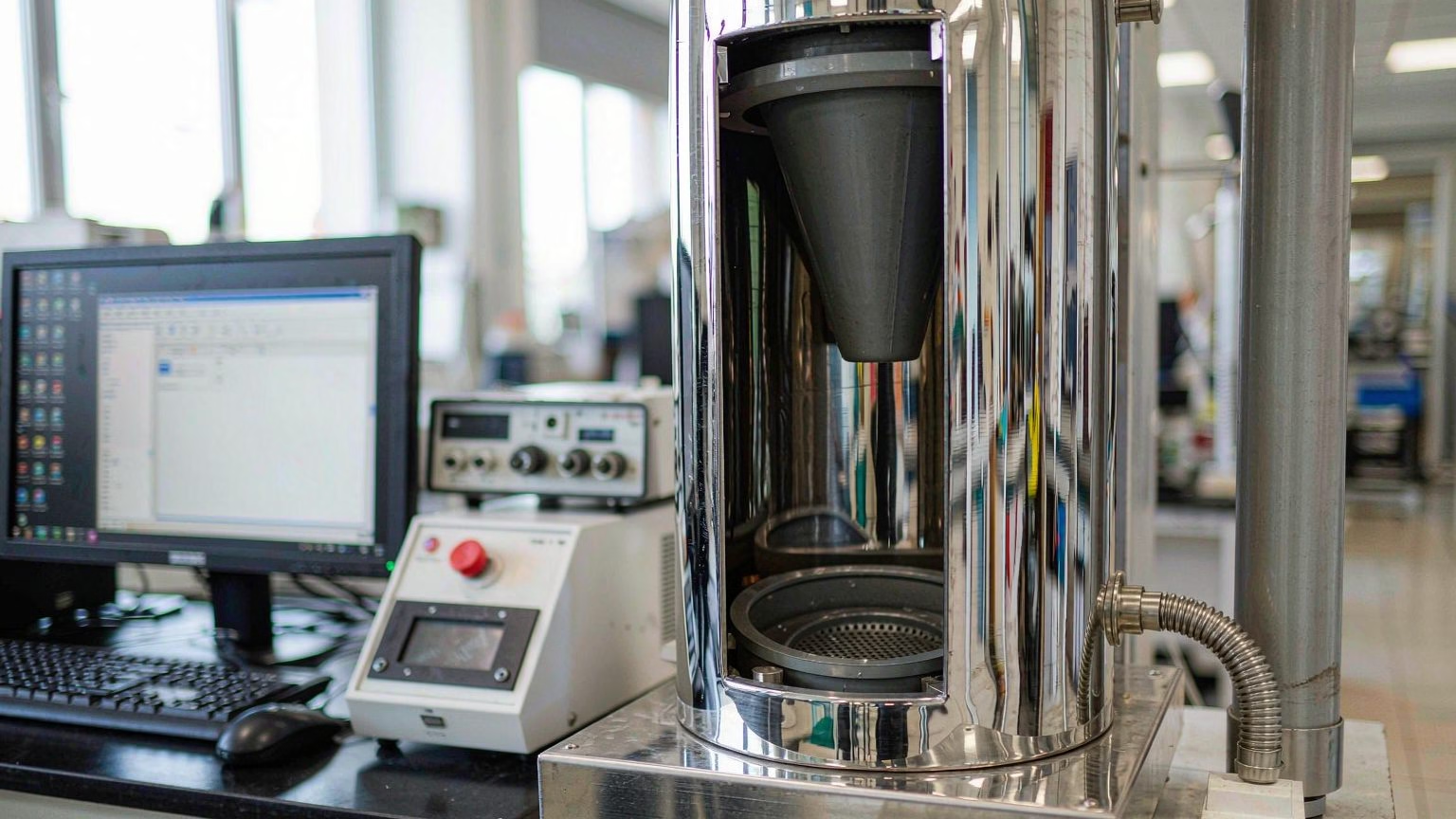
EN 13501-1 Euroclass is the European classification system for how construction products behave in a fire — not how long they resist one, but what they contribute to it. It sorts products into seven main classes from A1 to F, then adds a smoke sub-class (s1 to s3) and a flaming droplet sub-class (d0 to d2). A complete class reads like B-s2,d0. The classification is built from test results, and for essentially flat products the decisive test is the single burning item method, EN 13823.
Three things about the system cause most confusion in practice. It covers three product categories that run on different test programmes. Its subscripts — fl for floorings, L for linear pipe insulation — change the meaning of a class. And the class belongs to the product as tested, substrate and fixing method included, not to the material in the abstract.
What the EN 13501-1 Euroclass System Covers
The classification standard applies to construction products and building elements, including products incorporated within building elements. It is organised into three categories, each treated separately.
Three Product Categories, Three Test Programmes
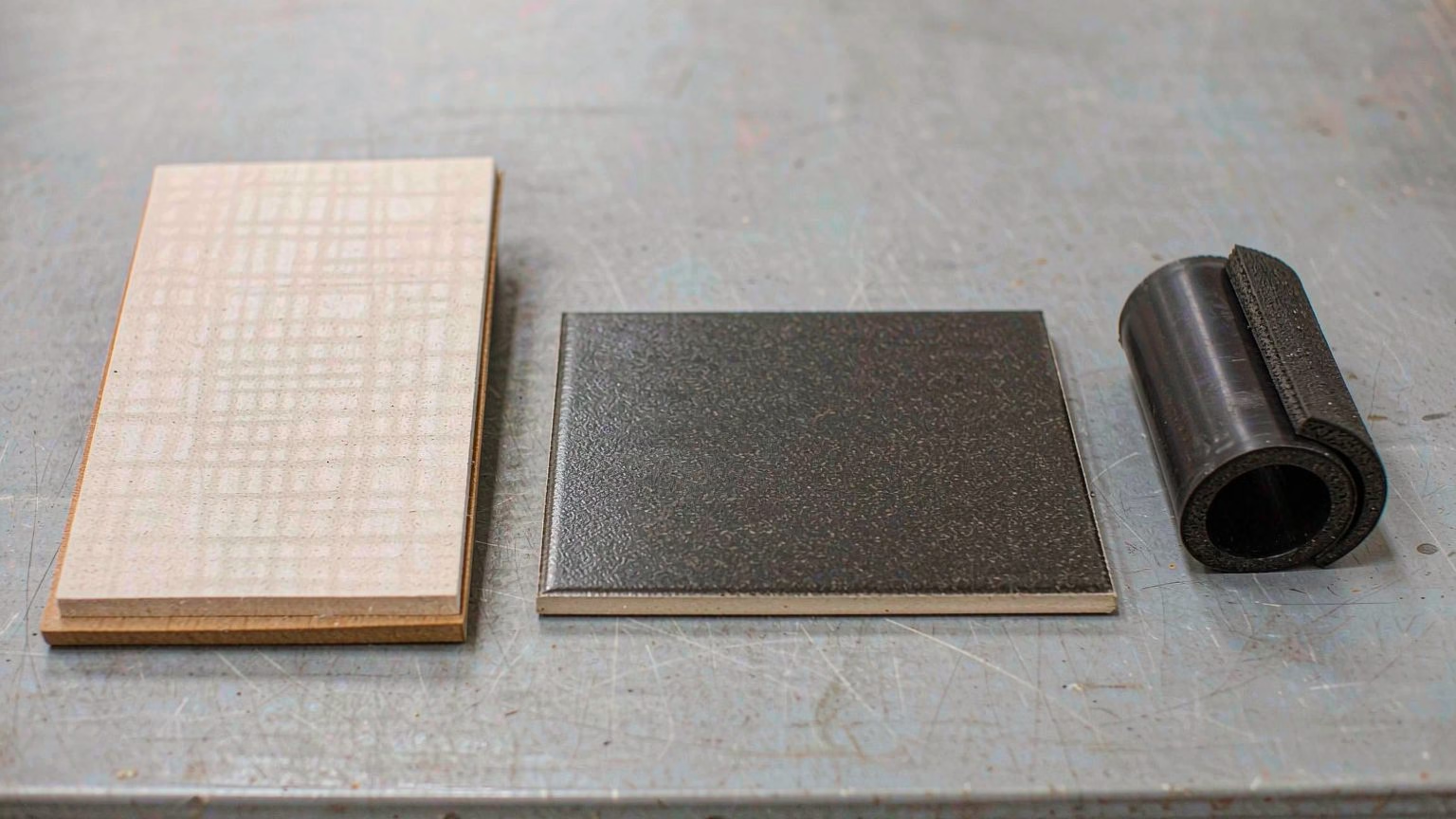
The first and largest category is construction products excluding floorings and excluding linear pipe thermal insulation products. The second is floorings. The third is linear pipe thermal insulation products. The categories exist because the fire scenario differs: a floor cannot shed burning droplets onto the room below, and a pipe insulation product presents a different geometry to a flame than a wall panel does.
Power, control and communication cables sit outside this standard entirely, covered by a separate classification standard. Products are always considered in relation to their end-use application, which is why the classification report documents the construction that was tested.
What Reaction to Fire Is Not
Reaction to fire describes a product’s contribution to a fire in its early, growing stage: whether it ignites, how fast it releases heat, how far flame spreads, how much smoke it produces and whether it sheds burning material. Fire resistance is a different property classified under a different standard, expressed in minutes, and it describes how long an assembly prevents a fully developed fire from passing from one side to the other.
A single project frequently needs both. A wall lining may need an EN 13501-1 Euroclass for the material and a fire resistance rating for the partition structure behind it. Passing one says nothing about the other, and the two are routinely confused in specifications.
Reading an EN 13501-1 Euroclass String
A euroclass is three pieces of information written together, and each piece is determined independently.
The Main Class: A1 to F
The letter describes contribution to fire. A1 and A2 are non-combustible in the sense that they make no significant contribution to a developing fire. B through D range from very limited to medium contribution. E describes a product that resists a small flame for only a short time, and F means no performance was determined — either the product was not tested or it failed to reach class E.
The gap between A2 and B is the widest in the system, because A1 and A2 are reached through the non-combustibility route rather than through the burning-item test. That distinction drives most of the cost difference between classifying a product as A2 and classifying it as B.
The Smoke Sub-Class: s1 to s3
The s value describes smoke production during burning, from s1 for the lowest output through s3 for the highest. It is not reported for products in classes E and F, because smoke production is not characterised at those levels. Smoke and heat performance do not track each other: a product can achieve a strong main class while producing substantial smoke, which is why high-rise and means-of-escape applications often specify the smoke sub-class explicitly.
The Droplet Sub-Class: d0 to d2
The d value describes flaming droplets and particles, assessed over the first 600 seconds of exposure. d0 means none were observed; d1 means none persisted longer than 10 seconds; d2 covers everything else. For products used above occupied space, or above combustible materials, this sub-class carries real weight — falling burning material ignites surfaces below and injures people directly.
Test Routes to Each EN 13501-1 Euroclass
Which tests are required depends on the class being claimed. The combinations are fixed by the classification standard.
| Class | Test programme | Notes |
|---|---|---|
| A1 | EN ISO 1182 non-combustibility and EN ISO 1716 gross calorific potential | No smoke or droplet sub-class is added |
| A2 | EN ISO 1182 or EN ISO 1716, plus EN 13823 | Carries s and d sub-classes |
| B, C, D | EN ISO 11925-2 small flame, plus EN 13823 | The SBI test separates one class from the next |
| E | EN ISO 11925-2 only | No smoke sub-class reported; d2 applies |
| F | No performance determined | Product failed to reach E, or was not classified |
| Floorings | EN ISO 11925-2, plus EN ISO 9239-1 radiant panel for classes Bfl to Dfl | EN 13823 does not apply to floorings |
The Thresholds Behind Each EN 13501-1 Euroclass
Behind the letters are numeric criteria. For the non-combustibility route these come from the furnace and calorific value tests; for classes B to D they come from the burning-item test.
| Class | Non-combustibility criteria | Burning-item criteria |
|---|---|---|
| A1 | Furnace temperature rise ≤ 30 °C, mass loss ≤ 50%, no sustained flaming; gross calorific potential below 2.0 MJ/kg | Not required |
| A2 | Temperature rise ≤ 50 °C, flaming ≤ 20 s; gross calorific potential ≤ 3.0 MJ/kg | FIGRA ≤ 120 W/s and THR600s ≤ 7.5 MJ |
| B | — | FIGRA ≤ 120 W/s (FIGRA0.2MJ), THR600s ≤ 7.5 MJ, no lateral flame spread to the wing edge |
| C | — | FIGRA ≤ 250 W/s (FIGRA0.4MJ), THR600s ≤ 15 MJ, same lateral spread condition |
| D | — | FIGRA ≤ 750 W/s (FIGRA0.4MJ), same lateral spread condition |
| s1 | — | SMOGRA ≤ 30 m²/s², TSP600s ≤ 50 m² |
| s2 | — | SMOGRA ≤ 180 m²/s², TSP600s ≤ 200 m² |
| d0 / d1 / d2 | — | No droplets / none persisting beyond 10 s / everything else |
One detail that trips people up: the class B limit is applied to FIGRA0.2MJ while the class C and D limits use FIGRA0.4MJ. Both values come from the same test run; the lower threshold starts the search earlier and exists to catch products that release heat very early. How those limits combine with the other parameters is worked through in our guide to how EN 13823 SBI test data shapes classification.
Where the Single Burning Item Test Sits
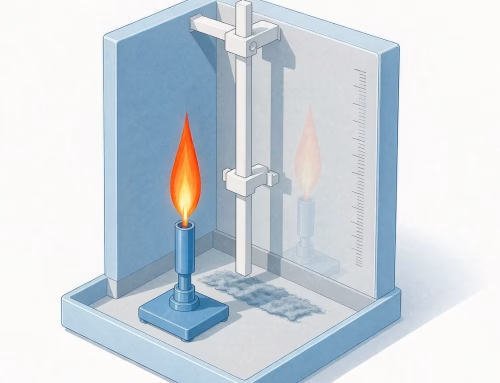
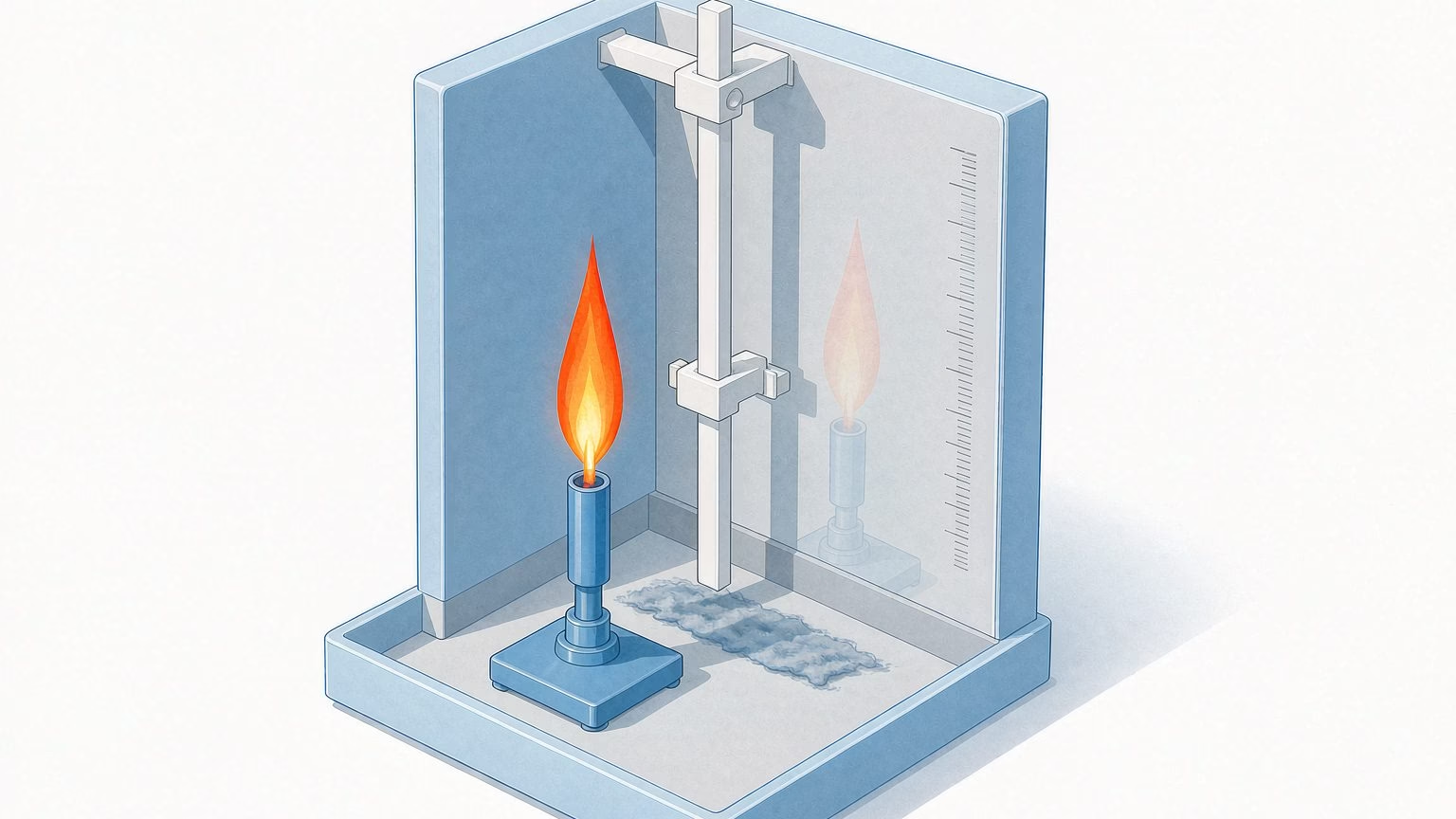
For essentially flat construction products other than floorings, EN 13823 supplies the evidence that separates A2, B, C and D. It does this by placing two specimen wings at 90° to form a corner, attacking them with a 30.7 kW propane burner for 20 minutes, and measuring heat release and smoke production in the exhaust duct. The outputs — FIGRA, THR600s, SMOGRA, TSP600s, lateral flame spread and flaming droplets — map directly onto the class and sub-class limits above.
Because the SBI test carries that much weight in the EN 13501-1 Euroclass outcome, the instrument’s stability matters to the classification. A drifting analyser or an unstable exhaust flow does not produce a wrong class label by itself, but it produces results that will not repeat — and a notified body that cannot reproduce your numbers will not certify your product. The apparatus and its requirements are described on our single burning item SBI test apparatus page.
Subscripts: fl and L
Subscripts change what a class means, and they are frequently omitted in marketing material — which should raise a question.
Floorings carry the subscript fl, so a class reads A2fl-s1 or Bfl-s1. Flooring classifications come from a different test programme and are not interchangeable with the equivalent letter for a wall product. Linear pipe thermal insulation products carry the subscript L: A2L, BL and so on. Products that carry neither subscript — wall panels, ceiling boards, cladding, insulation boards — are classified under the main category.
If you see a class quoted for a flooring without the fl subscript, or for pipe insulation without the L, the figure has either been transcribed carelessly or borrowed from a different product category. Either way it is worth querying before it goes into a specification.
What Changed and What Did Not
The current edition of the classification standard is EN 13501-1:2019, a 55-page document available through national standards bodies. It replaced earlier editions from 2007 and 2013/2014, and it retains the seven main classes, the two sub-class systems and the product category structure described above.
The test methods the classes depend on have moved since. The SBI method is now at EN 13823:2020+A1:2022, and that edition changed the duct flow probe from bi-directional to hemispherical, shifted the Reynolds correction coefficient from 1.08 to 1.24, introduced a CO₂ correction into the heat release calculation, and moved the smoke production rate baseline window from 390–450 s to 210–270 s. The classification parameters did not change, but the measurement basis did — which is why two reports that quote the same FIGRA are not necessarily comparable if they were produced under different editions. Our EN 13823 calibration guide covers what that means for a laboratory’s own records.
Getting an EN 13501-1 Euroclass for Your Product
Four decisions shape the route: which product category you fall into, which main class you need to reach, whether the smoke and droplet sub-classes are specified by your market, and how the product will actually be installed.
The third decision is often overlooked. A manufacturer targeting the general market may qualify for class B and stop there, then discover that a specific project requires B-s1,d0 because of the building type. The fourth decision is the one that most often invalidates a report after the fact: changing the substrate, the fixing method, the joint detail or the surface finish can shift the measured behaviour, so the classification describes the configuration tested and nothing else.
Documentation matters too. In the European market, the classification feeds into the Declaration of Performance that accompanies a CE-marked product, and the declaration is the legally valid proof of the class — not a datasheet. The supporting equipment for the wider testing programme sits under fire and flame testing equipment, and the underlying parameters are listed on our fire test parameters page.
Frequently Asked Questions
What does EN 13501-1 Euroclass actually classify?
It classifies reaction to fire — how a construction product behaves during the early, growing stage of a fire: how readily it ignites, how fast it releases heat, how far flame spreads, how much smoke it produces and whether it sheds flaming droplets. It does not classify fire resistance, which is a separate property covered by a different standard and expressed in minutes.
What is the difference between A2 and B in the EN 13501-1 Euroclass system?
A2 and B differ in the route used to reach them. A2 requires evidence from the non-combustibility route — the furnace test or the gross calorific potential test — alongside the burning-item test. B relies on the small flame test plus the burning-item test. The numeric limits applied to the burning-item results are similar, which is why the route rather than the number usually drives cost.
Why do some classes have an fl or L subscript?
Because the product category changes the test programme. Floorings are classified through a radiant panel method and carry the fl subscript, for example Bfl-s1. Linear pipe thermal insulation products carry the L subscript. Products without a subscript are classified under the main category for construction products. The subscripts are not decorative — they indicate that a different method produced the class.
Can a product with the same material have two different classes?
Yes, and this is common. The classification belongs to the product as tested, including its substrate, thickness, joints and fixing method. A product applied over one substrate with one fixing pattern may reach a different class than the same material applied over a different substrate. That is why the classification report documents the build-up in detail.
Does an EN 13501-1 Euroclass prove fire resistance?
No. Reaction to fire and fire resistance are separate properties classified under separate standards. A product can hold a strong reaction-to-fire class and a modest fire resistance rating, or the reverse, because the two describe different things: contribution to a growing fire versus the ability of an assembly to contain a fully developed one.
Which tests are needed for class B?
Class B requires the small flame test under the single flame source method together with the burning-item test. The burning-item results supply the FIGRA and THR600s values compared against the limits, and also determine the smoke and droplet sub-classes. Classes C and D use the same combination with looser limits.
How long does an EN 13501-1 Euroclass classification last?
The classification reflects the product as tested at the time of testing, so its validity depends on the product remaining unchanged. Changes to formulation, substrate, thickness, fixing method or joint detail can invalidate it for the intended application, and a change in the applicable standard edition may require the underlying tests to be repeated. Market surveillance and project specifications increasingly check that the tested configuration matches what is being supplied.
Working Through an EN 13501-1 Euroclass: A Sequence
- Establish which of the three product categories your product falls into — that fixes the test programme.
- Identify the main class you need, and whether the smoke and droplet sub-classes are specified for your target market.
- Map the class onto the required test combination before budgeting, because the A1/A2 route and the B/C/D route differ.
- Define the exact construction to be tested — substrate, thickness, joints, fixing method, surface finish — and keep it fixed.
- Confirm the edition of the test methods your laboratory will use, then read the results accordingly.
- Check that the final declaration of performance quotes the class with its subscripts, for the configuration supplied.
If you are working out which route your product range needs, our team can help map it — reach them through the contact page. Related reading: the SBI test apparatus compliance guide, EN ISO 11925-2 single flame source testing, and global building material fire testing standards.
References
- NEN — NEN-EN 13501-1:2019 en, fire classification of construction products and building elements, 55 pages, published 1 January 2019. nen.nl
- NSAI Standards — I.S. EN 13501-1:2019, classification using data from reaction to fire tests. shop.standards.ie
- BSI Knowledge — Reaction to fire tests for building products: building products excluding floorings exposed to the thermal attack by a single burning item. knowledge.bsigroup.com
- NEN — NEN-EN 13823:2020+A1:2022 en, current edition, 101 pages, published 1 August 2022. nen.nl
- NBS — IS EN 13823:2020 (+A1:2022), Amendment 1 issued July 2022. thenbs.com
- European Commission — CE marking for manufacturers under the Construction Products Regulation. ec.europa.eu
- RISE Research Institutes of Sweden — fire safety and reaction-to-fire research. rise.se
- BRE Group — fire testing, certification and research. bre.co.uk
About This Guide
Prepared by the technical content team at Shenyang Baoruitong Automation Equipment (BRT), a manufacturer of reaction-to-fire and fire resistance test equipment. The class structure, test routes and thresholds described here come from EN 13501-1 and the test methods it references; the current edition of the classification standard is EN 13501-1:2019. A classification is valid only for the configuration tested, and the declaration of performance — not this article — is the authoritative statement of a product’s class.